
 Worksheets
Chemistry 8th grade level
Total questions: 49
Worksheet time: 49mins
Atoms are made up of subatomic particles called
protons, futons, electrons
electrons, neutrons, protons
neutrons, atomic number, element
protons, neutrons, enzymes
What subatomic particles are located in the nucleus
protons, electrons
neutrons, electrons
protons, neutrons
electrons, protons
Which of the following best describes the relationship between cells and living things in general?
All living things are made up of one or more cells.
The larger the living thing, the larger its cells.
There is one kind of cell of which all living things are made.
The number of cells in all living things is the same.
If we have any substance, it can be concluded that a chemical change has happened if–
the matter is stirred thoroughly
there is a decrease in mass
the state of matter changes
there is a color change.
Which of the following would indicate the formation of a new substance?
a liquid turns to a solid
Bubbles and fizzing occur
A liquid turns to a solid
a solid dissolves in a liquid
Which of the following would indicate the formation of a new substance?
a solid stays a solid
two liquids are mixed and it warms up
an explosion
A piece of paper is crumpled.
When two liquids are mixed, the container feels colder to the touch. This is evidence of what?
chemical change
physical change
state of matter change
no change
When two liquids are mixed, the color and temperature stay the same. This is evidence of what?
physical change
No change
state of matter change
chemical change
Which of the following is an example that includes evidence of a chemical change?
A sample of a mineral is broken down into smaller pieces
A sample of zinc is placed in water and it settles to the bottom.
Sugar that is burned gives off an odor and turns brown and then black.
A solid block of ice is heated, and it completely melts into a liquid.
A physical change can be distinguished from a chemical change because this happens in a physical change:
A new substance is produced, but the new substance has properties identical to the original substance.
An entirely new substance with new properties forms as a result of the change.
The properties of the substance may change, but no new substances are produced.
The properties of the substance change for only a short time but will return to their original state.
During digestion the body uses both physical and chemical changes to move and process food. Which of the following is an example of a physical change?
Teeth breaking food down into smaller pieces
Protein breaking down into amino acids in the stomach
Enzymes breaking down carbohydrates into simple sugars
Hydrochloric acid breaking down fats in the stomach
When two liquids are mixed, the color and temperature stay the same. This is evidence of what?
physical change
No change
state of matter change
chemical change
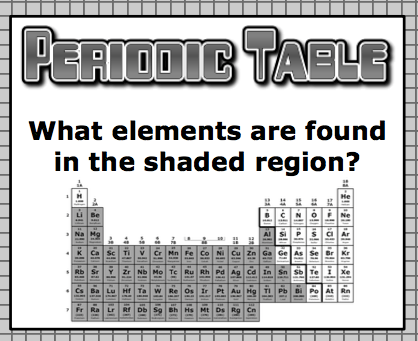
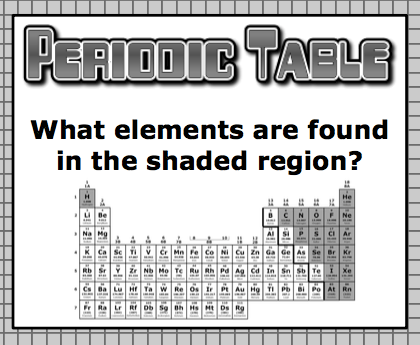
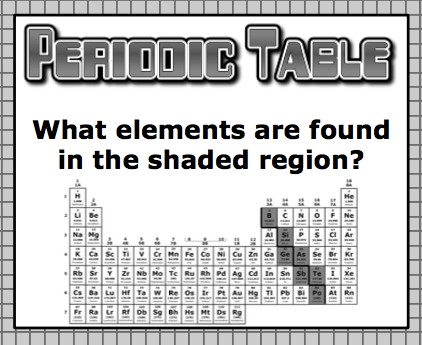
What are the three main groups of the periodic table?
groups
metal
nonmetals
metalloids
periods
What are the vertical columns on the periodic called?
groups
periods
nonmetals
metals
metalloids
What do the vertical columns on the periodic table tell us?
The number of orbitals
The number of valence electrons (electrons on the outer most shell)
What are the horizontal rows on the periodic table called?
periods
groups
metals
nonmetals
metalloids
What do the horizontal rows on the periodic table tell us?
The number of orbitals
The number of valence electrons (the electrons on the outer most shell)
What does the number of proton tell us?
electrons
atomic number
atomic mass
neutrons
How do you calculate the number of neutrons? *
Mass = Atomic number - Neutrons
Mass - Atomic number = Neutrons
Atomic number = Neutrons

How many protons and electrons does nickel have?
28
58.69

What is the atomic mass?
58.693
28

How many orbitals does Nickel have?
3
4
5
10
Using the periodic table. What Element has the Atomic number of 8?
Hydrogen
Helium
Oxygen
Neon
Which of the following pairs of elements belong to the same period?
Na and Cl
Na and Li
Na and Cu
Na and Ne
Which of the following pairs of elements belong to the same group?
H and He
Li and Be
C and Pb
Ga and Ge

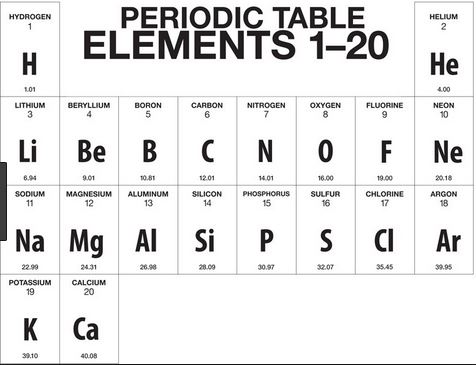
How many valence electrons does Hydrogen Have?
1 Valence electron
2 Valence electron
3 Valence electron
4 Valence electron
5 Valence electron
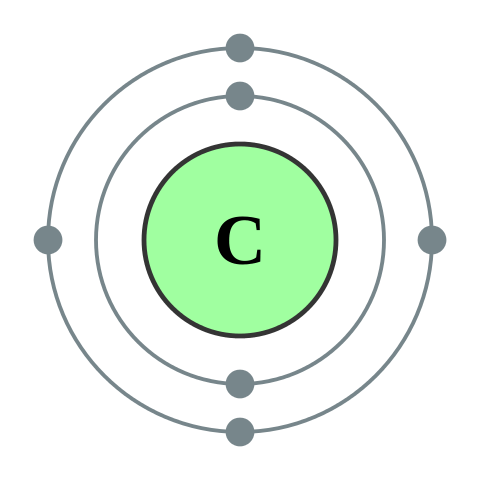
How many valence electrons does carbon have?
4
5
6
7
Valence electrons are in the...
Innermost energy level of the atom.
Middle energy level of the atom.
Outermost energy level of the atom.
energy levels of the atom.

What is the name of the family that is highlighted?
Alkali Metal Family
Halogen Family
Noble Gas Family
Transition Metal Family

Which element has 3 valence electrons?
A
B
E
C


To which group does this atom belong?
1
3
13
11



