wayground logo

Free Printable Worksheets

Font size

S
M
L
XL
Worksheets

5th Grade Science Galileo Review EOY 2022

Total questions: 104

Worksheet time: 1hrs 18mins

Name
Class
Date
1.
How are electromagnets different from magnets?
a)
magnets can be turned on/off
b)
you can turn an electromagnet on/off
c)
magnets are more powerful
d)
magnets have a North and South pole
2.
Like poles on a magnet
a)
attract
b)
repel
3.
Unlike poles on a magnet
a)
repel
b)
attract
4.
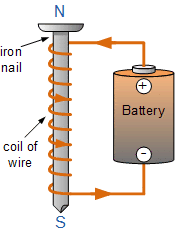
What is this?
a)
magnet
b)
electromagnet
c)
series circuit
d)
parallel circuit
5.
What is magnetism?
a)
invisible objects coming together
b)
a force that either attracts or repels certain materials
c)
full of electricity
d)
metals
6.
How do you make an electromagnet stronger?
a)
Add a motor and/or lightbulbs
b)
Add more light bulbs and/or wire coils
c)
add more wire coils and/or a switch
d)
add more wire coils and/or batteries
7.
A coil that is magnetized only when an electric current flows through it is _____________.
a)
a battery
b)
a generator
c)
a conductor
d)
an electromagnet
8.
What are the ends of a magnet called?
a)
East and west poles
b)
Left and Right ends
c)
North and South ends
d)
North and South poles
9.
Any material that attracts iron or materials containing iron is a(n) 
a)
A. electric generator
b)
B. solenoid
c)
C. magnet
d)
D. magnetic force
10.
In order for an electromagnet to be formed, an __________ current must pass through a coil of __________ wrapped around an ________ core.
a)
wire, iron, electric
b)
electric, wire, iron
c)
iron, electric, wire
d)
excited, hair, apple
11.

Some constellations or patterns of stars are visible from different places on Earth only during a part of the year. Why are certain patterns of stars not visible everywhere on Earth all year long?

a)

Sun's rotation

b)

Earth's rotation

c)

Sun's revolution

d)

Earth's revolution

12.

Which of the following explains why we have night and day?

a)

the phase of the moon

b)

the rotation of Earth on its axis

c)

the revolution of Earth around the sun

d)

the alignment of planets

13.

The picture shows coal, one of Earth's energy resources.

Why is coal a nonrenewable resource?

a)

It is difficult to mine because it is deep inside Earth.

b)

It is a resource that can easily be replaced as it is used.

c)

It is a resource that cannot be replaced as fast as people use it.

d)

It is the resource that fuels many power plants that make electricity.

14.

Kofi wants to know how two magnets behave when they are together. The magnets below show her experiment.


What must be true of the magnets shown?

a)

The poles of the magnet attract each other

b)

The poles of the magnet repel each other

c)

The two poles are opposites, south and north.

d)

The two poles are opposites, north and south.

15.

Lu Chen is comparing the physical properties of water as a gas and as a solid. Which of the statements best describes how these two are different?

a)

Solid water is much warmer than water vapor.

b)

Solid water has its particles farther apart than water vapor.

c)

Solid water has a definite shape and water vapor does not.

d)

Solid water has the same mass as the same volume of water vapor.

16.

Substances can change in different ways. Sometimes they produce new substances. This is called a chemical change. Which is an example of a chemical change?

a)

an ice cube melting

b)

a pencil snapping in two

c)

an eraser getting smaller

d)

a cake baking in an oven

17.

Christina knows that wind and water are two sources of energy. Which of the following statements can Christina say is true about both wind and water?

a)

They are limited in supply on Earth.

b)

They can be used to generate electricity.

c)

They can replace all other energy sources.

d)

They can be used to produce solar energy.

18.

Tyler does a report about objects in motion for science class. He gives examples of animals, people, cars, and airplanes as objects that can be in motion. Which of the following statements can Tyler include in his report about motion?

a)

All objects in motion are accelerating.

b)

Gravity has no effect on objects in motion.

c)

Motion is the change of position of an object.

d)

Objects in motion always change their direction.

19.

Which two measurements are needed in order to calculate the speed of a moving object?

a)

height of the moving object; mass of the moving object

b)

height of the moving object; distance traveled

c)

time traveled; mass of the moving object

d)

distance traveled; time traveled

20.

In order to find out which towel brand holds the most water, we should do an ____________________.

a)

hypothesis

b)

investigation

c)

science project

d)

conclusion

21.

You need to collect ____________ in your experiment that supports your hypothesis.

a)

graphs

b)

plants

c)

microscopes

d)

data

22.

The _______________ during an experiment is what changes or is different.

a)

hypothesis

b)

conclusion

c)

variable

d)

conclusion

23.

_________________ is what stays the same during an experiment.

a)

data

b)

control

c)

variable

d)

research

24.

You use this instrument to measure temperature.

a)

sieve

b)

hot plate

c)

anemometer

d)

thermometer

25.

What are the poles of a magnet called?

a)

East and South

b)

South and North

c)

North

d)

I don't know

26.

Buried remains of ancient plants and animals that we now use as fuel.

a)

hydrocarbons

b)

alternative energy

c)

fossil fuels

d)

sediment

27.

Earth rotates on this imaginary line.

a)

diagonal

b)

axis

c)

radius

d)

diameter

28.
which is the 3rd moon phase?
a)
Full Moon
b)
Waning Crescent
c)
Waxing Gibbous
d)
First Quarter
29.
which is the 6th planet?
a)
Uranus
b)
Venus
c)
Saturn
d)
Mars
30.
To change a solid to a liquid, what do you add?
a)
heat
b)
water
c)
cold
d)
mass
31.

We can hear a musical instrument because it produces _______ energy.

a)

sound

b)

thermal

c)

mechanical

d)

light

32.

The force that pulls objects toward the center of the earth is what?

a)

Force

b)

Gravity

c)

Friction

d)

Motion

33.
Which word describes a push or pull on an object?
a)
Position
b)
Hypothesis
c)
Mass
d)
Force
34.
Which is true about energy?
a)
Energy can cause motion
b)
Energy cannot be stored
c)
Energy can be destroyed
d)
Energy cannot be stored
35.

Potential energy is:

a)

Distance

b)

Stored energy

c)

movement

d)

Energy of mass

36.

Which energy will melt ice?

a)

sound energy

b)

light energy

c)

force energy

d)

heat energy

37.

What causes things to move?

a)

magnet

b)

force

c)

roll

d)

slide

38.
True or false:  At the peak of the lift hill, a rollercoaster car has more potential energy than any other form of energy.
a)
True
b)
False
39.
What is a force?
a)
A push 
b)
A pull
c)
Push or a pull
40.

What causes heat when rubbing your hands together?

a)

Friction

b)

Gravity

41.
What are the three states of matter?
a)
solid, volume, mass
b)
density, volume, mass
c)
solid, liquid, gas
d)
density, gas, volume
42.
Something that takes up space and has mass.
a)
volume
b)
matter
c)
mass
d)
density
43.
A state of matter that has a definite volume and shape.
a)
solid
b)
liquid
c)
gas
d)
matter
44.
The amount of space something takes up
a)
density
b)
volume
c)
mass
d)
matter
45.
Liquid matter takes the shape of _______.
a)
a gas
b)
water
c)
a pet
d)
Its container
46.
The amount of matter something contains is its ______________.
a)
gas
b)
solid
c)
weight
d)
mass
47.
What is the measure of gravity on an object?
a)
matter
b)
mass
c)
weight
d)
volume
48.
Volume is ______________.
a)
length X width
b)
height X length
c)
length X width X height
d)
width X height
49.
A combination of substances that are not chemically combined is called a(n)____________. 
a)
mixture
b)
compound
c)
physical
50.
An element is made up of only one kind of _____.
a)
isotope
b)
plastic
c)
atom
d)
metal
51.

Melting Ice

a)

Physical Change

b)

Chemical Change

52.

Toasting Bread

a)

Physical Change

b)

Chemical Change

53.

Rotting Fruit (Like a brown banana)

a)

Physical Change

b)

Chemical Change

54.

Dissolving salt in water

a)

Physical Change

b)

Chemical Change

55.

What is the process by which a chemical change occurs?

a)

Conservation of Matter

b)

Physical Change

c)

Chemical reaction

d)

Condensation

56.

What always happens during a chemical change?

a)

The material and its properties change

b)

The material dissolves

c)

The total mass of the material changes

d)

The material changes state from a solid to a liquid

57.

Conservation of matter applies to physical and chemical changes

a)

True

b)

False

58.

The mixing of two or more substances can result in a new substance.

a)

True

b)

False

59.

The total mass after a chemical reaction is that same as the total mass before a chemical reaction

a)

True

b)

False

60.

What is energy?

a)

moving energy

b)

stored energy

c)

renewable energy

d)

The ability to do work.

61.

What is NOT a renewable energy source?

a)

coal

b)

wind

c)

solar

d)

water

62.

Which of these energy sources come from inside the earth's crust?

a)

oil

b)

coal

c)

solar

d)

gas

63.

Which of these things are examples of renewable energy sources?

a)

wind

b)

solar

c)

water

d)

oil

64.

Identify the type of energy

a)

Electrical Energy

b)

Mechanical energy

c)

Sound energy

d)

Thermal energy

65.

Can the electricity go through ?

a)

Yes.

b)

No, because it is open.

c)

Yes, because it is closed.

66.
Which of the following is made out of matter?
a)
A pencil
b)
Love
c)
Light
d)
The Sound
67.
Which of the following is made out of matter?
a)
Words
b)
Anger
c)
Air
d)
Empty space
68.
Which is not an example of matter?
a)
Eggs
b)
Light
c)
Birds
d)
Humans
69.
How do you measure mass?
a)
With a thermometer.
b)
With a graduated cylinder
c)
With a scale
d)
With a ruler
70.
How do we know air is matter?
a)
Air will take up space (volume in a balloon
b)
A balloon with air has more mass (heaviness) than a balloon without air.
c)
Actually, air isn't matter.
d)
Both explanations with the balloon involving volume and mass.
71.
In order to evaporate, do you need to add or take away energy?
a)
Add more energy
b)
Take away energy
c)
Neither because you don't need to do anything with energy
d)
Neither because it's impossible
72.
In order to freeze, do you need to add or take away energy?
a)
Add more energy
b)
Take away energy
c)
Neither because you don't need to do anything with energy
d)
Neither because it's impossible
73.
When condensation happens, are the particles starting to move faster or slower?
a)
Faster
b)
Slower
c)
They move at the same speed
d)
They never moved int he first place
74.
A cloud forms and rains. What phase change is this?
a)
Condensation
b)
Sublimation
c)
Melting
d)
Freezing
75.
Light is a KIND of ENERGY.
a)
True
b)
False
76.
Which are the two type of light sources?
a)
Artificial and Natural
b)
Natural and Invented
c)
Artificial and Not Artificial
d)
All of them
77.
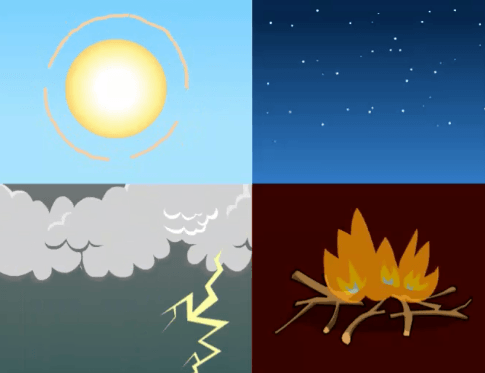
Which of these are examples of NATURAL sources of light?
a)
Sun 
b)
Stars
c)
Lightning
d)
ALL of them
78.
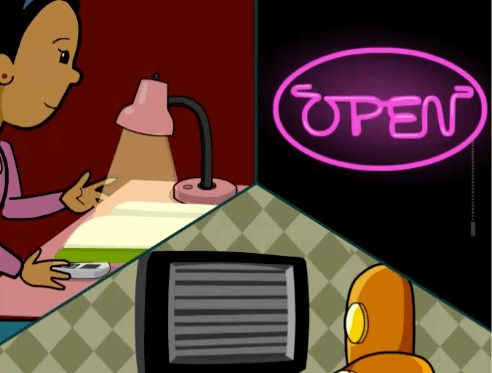
Which of these are examples of ARTIFICIAL sources of light?
a)
Lightbulbs
b)
Neon signs
c)
Televisions
d)
ALL of them
79.
Which of these is our MAIN (most important) source of light?
a)
Lightbulbs
b)
The Sun
c)
Fire
d)
All of them
80.
How does light travel/move?
a)
In ONE direction, VERY fast
b)
In ALL directions, VERY fast
81.
What happens when light hits an object?
a)
Some of the light jumps in different directions
(bounces)
b)
Some of the light gets absorbed by the object.
c)
Some of the light bounces back to your eye
d)
ALL of them.
82.
_______ is when light hits and object and it BOUNCES off.
a)
Reflection
b)
Refraction
83.
Which objects REFLECT more light?
a)
Shiny objects
b)
Dull objects (not shiny)
84.
Through which objects does light pass MORE?
a)
Transparent objects, like glass windows
b)
Opaque objects (not transparent), like a plant
85.
Things make shadows because they ______ light.
a)
BLOCK
b)
PASS
86.
___________ is when light BENDS or CHANGES direction.
a)
Reflection
b)
Refraction
87.
A Magnifying glass uses refraction to make things look closer.
a)
TRUE
b)
FALSE
88.

An inherited trait that helps those organisms that have it to survive

a)

niche

b)

structure

c)

characteristic

d)

adaptation

89.

Beak shape depends on...

a)

where birds live

b)

who they hang out with

c)

diet (fish or seeds)

d)

exercise

90.

What adaptation is represented by the image?

a)

Dormancy

b)

Camouflage

c)

Hibernation

d)

Seed Dispersal

91.

A group of organisms that share similar characteristics and can reproduce among themselves to produce fertile offspring.

a)

Mutation

b)

Species

c)

Adaptation

d)

Variation

92.

How do adaptations help animals?

a)

To escape animals

b)

to hunt for food

c)

to survive in their habitats

d)

All of these are correct

93.
The role an organism plays in its ecosystem
a)
niche
b)
behavior
c)
structure
d)
function
94.
When an organism copies a characteristic of something else in order to better its chances for survival and reproduction
a)
hibernation
b)
camouflage
c)
mimicry
d)
migration
95.
The polar bear's white fur allows it to hide in the cold arctic. This adaptation is called________________.
a)
White on white
b)
Camouflage
c)
Color matching
d)
behavioral adaptation 
96.
Cactus have a thick, hard surface (cuticle) that prevent ______________ from evaporating.
a)
Water
b)
Air
c)
Sugar
d)
light
97.
What adaptation most likely helps this bird fly?
a)
A strong beak
b)
Small feet
c)
Hollow bones 
d)
The color of the bird
98.
The law of universal gravitation is credited to whom? 
a)
Einstein 
b)
Galileo
c)
Darwin
d)
Newton 
99.
Two factors effecting the magnitude of force of gravity between 2 objects are...
a)
weight and mass 
b)
distance and weight 
c)
mass and matter 
d)
mass and distance 
100.
An object with mass has gravity.
a)
True
b)
False 
101.
Which of the following never changes no matter where you are in the universe? 
a)
Pounds 
b)
weight 
c)
Force
d)
Mass
102.
A person would weigh less on the moon than on the Earth because...
a)
the moon has less mass, and therefore less gravity
b)
the moon has more mass, and therefore less gravity
c)
the moon has less mass, and therefore more gravity
d)
the moon has more mass, and therefor more gravity
103.
An example of a gravitational interaction is that the Earth... 
a)
orbits the sun
b)
orbits the moon
c)
orbits other planets 
d)
None of the above 
104.
__________holds all of the planets in orbit around the sun.
a)
Force
b)
Motion
c)
Weight
d)
Gravity