Wayground logo

Free Printable Worksheets

Font size

S
M
L
XL
Worksheets

lab safety and hazards

Total questions: 79

Worksheet time: 41mins

Name
Class
Date
1.
Approved eye protection devices (such as goggles) are worn in the laboratory
a)
to improve vision
b)
only if you don't wear glasses
c)
anytime heat, chemicals, or glassware are used
d)
to avoid eye strain
2.
If a laboratory fire erupts, immediately
a)
notify your teacher
b)
run for the fire extinguisher
c)
throw water on the fire
d)
open a window
3.

You are heating a piece of glass and now want to pick it up. You should

a)

use tongs or hot mitts

b)

pour cold water on it

c)

use a rag or paper towels

d)

pick up the end that looks cooler

4.

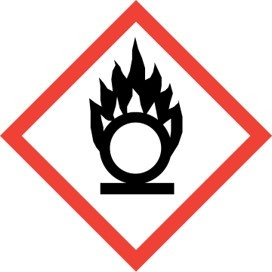
The following hazard waste symbol informs you that a chemical is

a)

an oxidizer and can release large amounts of heat when it comes into contact with other surfaces

b)

flammable and can catch fire if near a heat source

c)

harmful and can be dangerous in some way

d)

corrosive and could burn or destroy living tissue

5.
What is the hazard shown in this hazard sign?
a)
Fire
b)
Goku
c)
Flammable
d)
Inflammable
6.
What is the hazard shown in this hazard sign?
a)
Explosive
b)
Corrosive
c)
Irritant
d)
High level Irritant
7.
What is the hazard shown in this hazard sign?
a)
Pikachu
b)
Lightning
c)
Electrical
d)
Fault
8.

What does this symbol stand for?

a)

Flammable

b)

Oxidising

c)

Non-flammable

d)

Explosive

9.

Match the symbol to the correlating hazard


EXPLOSIVES

a)
b)
c)
d)
10.
a)
Poison/Toxic
b)
Bio Hazard
c)
Radioactive
d)
Corrosive
11.

What does this hazard symbol mean?

a)

cross

b)

harmful / irritant

c)

sharp

d)

chemical

12.

What does this symbol indicate?

a)

Corrosive substances

b)

Wash your hands.

c)

Wear appropriate gloves.

d)

Bacteria are present.

13.

Some chemicals cause skin rash as they are ..........

a)

Poisonous

b)

flammable

c)

Irritant

d)

oxidizing

14.
Select the true answer.
a)
Acids are red and bases are blue respectively because of the ionic and covalent bonds between them
b)
Alkalis are red and acids are blue
c)
Acids and alkalis are both colorless and odorless because they are covalent compounds
d)
Acid and alkali solutions turn red and blue respectively when the universal indicator is added
15.
Which statement about bases and alkalis is true?
a)
All bases are alkalis and all alkalis are bases
b)
All bases are not alkalis but all alkalis are bases
c)
All bases are acids and all acids are bases
d)
None of the above
16.
Which acid is the strongest?
a)
Hydrochloric Acid
b)
Ethanoic acid
17.
Which ion determines a base?
a)
H+
b)
OH-
c)
OH+
d)
CO32-
18.
What is the pH of an extremely strong acid?
a)
pH 0
b)
pH 7
c)
pH 13
d)
pH 2
19.
Which statements are properties of an acid?
1. Reacts with ammonium sulfate to form ammonia
2. Turns red litmus blue
a)
1 & 2
b)
1 only
c)
2 only
d)
Both of them are wrong
20.
An easy one:
What happens when the universal indicator is added to Hydrochloric acid?
a)
The solution turns red
b)
Nothing happens
21.

Choose all the properties of acids

a)

Corrosive

b)

React with metals

c)

Acids taste sour and tangy

d)

Acids are very soapy

22.

What is corrosive?

a)

Very safe

b)

A neutral substance

c)

A liquid

d)

A very irritant thing; Destroys everything which comes in it's way

23.

What colour does it turn when a litmus paper is dipped into an alkaline?

a)

Blue

b)

Red

c)

Pink

d)

Black

24.

What is the colour when litmus paper is dipped into a neutral?

a)

It doesn't change

b)

Purple

c)

Pink

d)

Blue

e)

Red

25.

What is an Universal Indicator?

a)

It indicates the universe

b)

It indicates the whole world

c)

It tells us how acidic or alkaline a substance is

d)

It tells us if a substance is corrosive

26.

Complete the following reaction:

Hydrochloric acid + magnesium hydroxide -->

a)

Magnesium chloride + water

b)

Magnesium + water

c)

Magnesium chloride + hydrogen

d)

Magnesium chloride + water + carbon dioxide

27.

Complete the word equation below:

Acid + alkali --> ............... + water

a)

water

b)

salt

c)

gold

d)

metal

28.

.............................. + sodium hydroxide --> sodium chloride + water

a)

Nitric acid

b)

Sulphuric acid

c)

Hydrochloric acid

d)

Ethanoic acid

29.
In a neutralisation reaction, what is the function of the indicator?
a)
To indicate that the mixture is neutral
b)
To indicate that hot water should be added
c)
To indicate that the flask should be shaken
d)
To indicate that a precipitate is formed
30.

What colour is Universal indicator when the solution is neutral?

a)

Red

b)

Green

c)

Blue

d)

Purple

31.

Lithium hydroxide + nitric acid ->

a)

Lithium nitrate + hydrogen

b)

Lithium nitride + salt

c)

Lithium nitrate + water

d)

Lithium nitrate + hydroxide

32.

What is neutralisation?

a)

This is a reaction between an acid and water to form salt and base.

b)

This is a reaction between an acid and base to form salt and water.

c)

This is a reaction between a base and salt to form water and acid.

d)

This is a reaction between salt and water to form acid and base

33.
Chemical properties of a substance include all of the following except..
a)
its boiling point 
b)
its toxicity 
c)
its flammability 
d)
its reactivity 
34.
A metal like copper is said to be ductile. This means it can be ... 
a)
corroded easily
b)
bent into wires 
c)
heat up and conduct heat
d)
bent into sheets 
35.
Which of the following is a chemical change rather than a physical change 
a)
boiling water at 100 C
b)
chopping up a piece of wood. 
c)
cooking a cake 
d)
ice carbon dioxide sublimating to gas 
36.
Some hydrochloric acid is added to marble chips in a test tube. The students observed bubbles and fizzing. The gas is ....
a)
Oxygen gas 
b)
Carbon dioxide 
c)
Hydrogen gas 
d)
nitrogen gas 
37.
Some hydrochloric acid is added to marble chips in a test tube. The marble chips is....
a)
Lead nitrate 
b)
Calcium carbonate  
c)
sodium carbonate 
d)
calcium oxide  
38.
In another reaction, the student places a piece of metal into a test tube and adds an acid again. Its fizzes ..
The gas produced is called...
a)
nitrogen 
b)
Oxygen gas
c)
sulphur dioxide 
d)
Hydrogen gas 
39.
In the above reaction, to test for the gas I could ...
a)
Bubble it through limewater and it will go milky 
b)
do the pop test and it will burn 
c)
Light a taper and it will burn brighter
d)
note the colour change to yellow 
40.
The process going from a gas to a liquid is called ...
a)
evaporation 
b)
melting 
c)
condensation 
d)
sublimation 
41.
The only way you can be certain that a chemical reaction has occured is by? 
a)
Light has been emitted 
b)
a colour change has occurred 
c)
bubbles appear 
d)
identifying one or more new chemical products 
42.
When some lead nitrate solution was added to Potassium Iodide in a test tube, the reaction produced a...
a)
Yellow solid precipitate 
b)
fizzing colourless gas 
c)
increase in temperature in the test tube 
d)
while cloudy precipitate 
43.
A Precipitate forms 
a)
when a gas is bubble through a liquid 
b)
a lighter taper causes a gas to burn 
c)
in a liquid or gas  after a reaction and causes cloudiness (caused by a solid forming) 
44.
I heat some copper carbonate in a test tube.
It goes black. This is due to the Copper carbonate reacting to form ...
a)
Copper Oxide
b)
carbon dioxide
c)
lead oxide 
d)
Copper 
45.
Finish of the following word equation 
Copper carbonate + hydrochloric acid = Carbon Dioxide + copper chloride + ______.
a)
water
b)
Hydrogen gas 
c)
copper 
d)
oxygen 
46.
The number of atoms of oxygen in 
Cu(NO3)2 is ...
a)
2
b)
5
c)
6
d)
zero 
47.
The correct chemical formula for calcium carbonate is ....
a)
CaCO3
b)
Ca2CO3
c)
Na2CO3
d)
CO2
48.
a copper penny turning greenish after a few years.
a)
Chemical Change
b)
Physical Change
49.
Which of the following IS a physical change?
a)
Getting a haircut
b)
Rusty metal
c)
sour milk
d)
A compound
50.
Which of the following IS a chemical change
a)
using chalk
b)
water freezing
c)
slicing cheese
d)
digestion
51.

According to the law of conservation of mass, matter cannot be created or (a)  

52.

True or False: In a complete chemical equation, there must be the same number of atoms of each element on the reactants and products side.

a)

True

b)

False

53.

Look at the chemical equation.


How many atoms of mercury (Hg) are in the reactants?

(a)  

54.

Look at the chemical equation.


How many atoms of oxygen (O) are in the reactants?

(a)  

55.

Look at the chemical equation.


How many atoms of mercury (Hg) are in the products?

(a)  

56.

Look at the chemical equation.


How many atoms of oxygen (O) are in the products?

(a)  

57.

Look at the chemical equation.


Is it written correctly to show the Law of Conservation of Mass?

a)

Yes

b)

No

58.

Look at the chemical equation.


How many atoms of nitrogen (N) are in the reactants?

(a)  

59.

Look at the chemical equation.


How many atoms of oxygen (O) are in the reactants?

(a)  

60.

Look at the chemical equation.


Is it written correctly to show the Law of Conservation of Mass?

a)

Yes

b)

No

61.

Look at the chemical equation.


How many atoms of carbon (C) are in the reactants?

(a)  

62.

Look at the chemical equation.


How many atoms of oxygen (O) are in the reactants?

(a)  

63.
What elements make up Copper sulphate? CuSO4
a)
copper, sulphate
b)
copper, sulphur
c)
copper, sulphur and oxygen
d)
copper and oxygen
64.
Magnesium and hydrochloric acid are mixed together in a beaker, hydrogen is produced as well as magnesium chloride.
Choose correct word equation
a)
magnesium chloride + hydrogen --> magnesium + hydrochloric acid
b)
magnesium + hydrochloric acid --> magnesium chloride + hydrogen
65.
Magnesium + Hydrochloric acid --> Magnesium chloride + hydrogen
Choose correct reactants
a)
Magnesium and hydrochloric acid
b)
Magnesium chloride and hydrogen
66.
Iron + Hydrochloric acid --> ?
a)
iron sulfate + water
b)
iron + hydrogen
c)
iron chloride + hydrogen
d)
iron chloride + water
67.
Salts that are made with carbonic acid are called ______________.
a)
chlorides
b)
sulfates
c)
nitrates
d)
carbonates
68.
acid + metal ----->
a)
salt + hydrogen
b)
salt + water + carbon dioxide
c)
salt + water
d)
salt + carbon dioxide
69.

Acid + Carbonate ----->

a)

salt + hydrogen

b)

salt + water + carbon dioxide

c)

salt + water

d)

salt + carbon dioxide

70.
Magnesium + sulphuric acid --> ?
a)
magnesium sulfate + water
b)
magnesium sulfate + hydrogen
c)
magnesium chloride + hydrogen
d)
magnesium chloride + water
71.
Which metal is the least reactive out of: copper, magnesium, zinc and iron?
a)
copper
b)
magnesium
c)
zinc
d)
iron
72.
Which equation correctly shows the displacement of copper by zinc?
a)
copper + zinc sulphate --> copper sulfate + zinc
b)
zinc sulphate + copper --> copper sulfate + zinc
c)
copper sulfate + zinc --> zinc sulfate + copper
73.
Which equation correctly shows the displacement of zinc by iron?
a)
copper + zinc sulphate --> copper sulfate + zinc
b)
zinc sulphate + copper --> copper sulfate + zinc
c)
copper sulfate + zinc --> zinc sulfate + copper
d)
Iron cannot displace zinc
74.
Salts produced by the reactions of hydrochloric acid are known as... 
a)
chlorines
b)
nitrates
c)
chlorides
d)
bromides
75.
acid + alkali ----->
a)
salt + hydrogen
b)
salt + water + carbon dioxide
c)
salt + water
d)
salt + carbon dioxide
76.
What reactants are needed to prepare (make) copper carbonate?
a)
copper and hydrochloric acid
b)
copper and sulfuric acid
c)
copper and nitric acid
d)
copper and carbonic acid
77.
What reactants are needed to prepare (make) magnesium nitrate?
a)
magnesium and hydrochloric acid
b)
magnesium and sulfuric acid
c)
magnesium and nitric acid
d)
magnesium and carbonic acid
78.
What reactants are needed to prepare (make) lead sulfate?
a)
lead and hydrochloric acid
b)
lead and sulfuric acid
c)
lead and nitric acid
d)
lead and carbonic acid
79.
Salts that are made with carbonic acid are called ______________.
a)
chlorides
b)
sulfates
c)
nitrates
d)
carbonates