Worksheets
SEMESTER 1 REVIEW Intro to Chem/Physics
Total questions: 101
Worksheet time: 3hrs 16mins
You are heating a substance in a test tube. Always point the open end of the tube
towards your body
toward your lab partner
towards another classmate
away from you and others

Approved eye protection devices (such as goggles) are worn in the laboratory
to avoid eye strain
to improve your vision
so that you look super cool
any time chemicals, heat or glassware are used
Which of the following IS considered safety equipment in our classroom?
Eyewash Station
Safety Shower
Fire Extinguisher
All of the Above.
When smelling a chemical or liquid, it is best to:
take a deep breath.
pour it on your clothes.
waft the fumes gently towards you.
taste it as well.
What is the correct disposal for broken glass?
sink, rinse with plenty of water
trash can
broken glass box
heavy duty hallway trash can
Which one of these is NOT TRUE with regards to using thermometers?
Using it as a stirring rod runs the risk of breaking.
Placing thermometer in middle of liquid will get best temperature.
Handle it with care, it’s made of glass.
Allow thermometer to rest on bottom when measuring temperature.
Which is correct to remember for lab safety?
Assume the lab and lab materials are dirty, therefore you will be extra safe.
It is safe to assume lab and lab materials are clean if the previous class did clean up.
Glassware that is cracked will never break.
When working with chemicals, you do NOT have to wear goggles if you have eye glasses on.
What is always the very last thing you should do when leaving the science lab?
clean up your work space
put away materials
wash your hands
wipe off all surfaces


Name this lab apparatus:
forceps
funnel
mortar and pestle
clay triangle

What is measured with a graduated cylinder?
Passage of time
Distance from one thing to another
Weight of an object
Volume of liquid

This device is called a __________________.
Ring stand
Graduated cylinder
Bunsen burner
Striker

To be read accurately, one must place a graduated cylinder on a flat surface and measure at the bottom of the _______________ curve.
Concave curve
Capillary
Meniscus
Bubble Curve

How much liquid is in this graduated cylinder?
(Click on the image to enlarge it.)
5.0 cm
6.0 cm
5.0 mL
6.5 mL

What is used to hold test tubes?
Test tube rack
Test tube holder
Test tube clamp
Drying rack
Which of these materials we used in our separation lab dissolved in liquid to form a solution?
Salt
Sand
Sugar
Koolaid
To separate a mixture of sand and salt water what separation method is used?
Filtering
Distillation
Boiling
Evaporation
To separate a mixture of salt and water what separation method is used?
Filtration
Distillation
Using a Bar Magnet
Evaporation
Which of the following would be used to boil away water?


What lab procedure is being shown here?
cutting glass tubing
bending glass tubing
lighting a burner
filtering into filter paper

One end of this piece of lab equipment is a stirring rod, but the black end is known as a .....
rubber tip
rubber spatula
rubber fireman
rubber policeman

What is the volume of Jade sample?
10.5 mL
15.0 cm3
20.0 mL
25.0 cm3
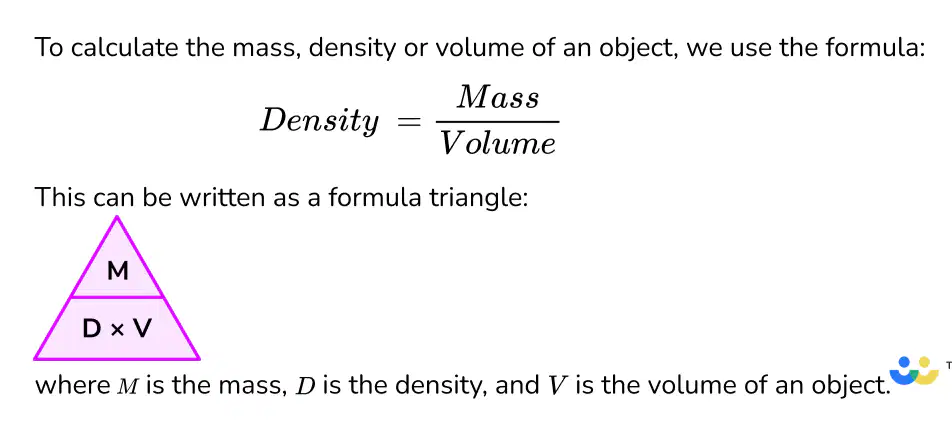
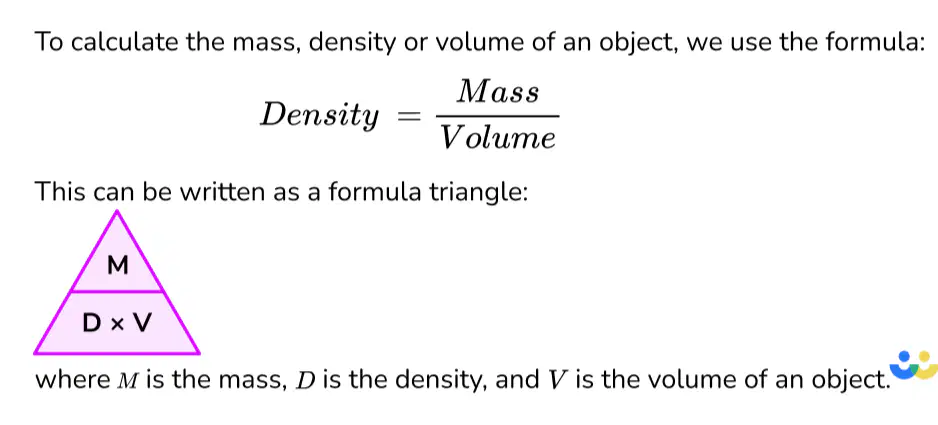
A sample of silver is put into 10 ml of water. If the water rises to 15 ml when the a large glass bead is added, what is the density of the glass bead if it has a mass of 20.0 g?
4 g/ml
20 g/cm3
3.2 g/ml
0.25 g/ml
What is the density of water?
10 g/mL
0.1 g/mL
1.0 g/mL
100 g/mL
When does an object float?
If it has a density of LESS than 1 g/mL.
If it has a density of MORE than 1 g/mL.
If it has a density of EXACTLY 1 g/mL.
None of the above are correct.

The diagram shows a rectangular block that has a mass of 120 g. The dimensions are shown.
What is the density of the block?
3 g/cm3
16 g/cm3
40 g/cm3
0.33 g/cm3
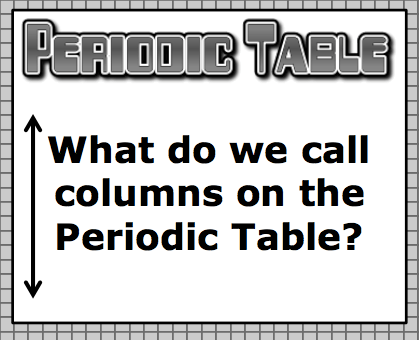
Look at a copy of the periodic table. What element is in the 4th period and 5th group?
Magnesium
vanadium
niobium
titanium
Group 18 elements are known as the _____ _____ and have full valence energy level meaning 8 electrons in outer level.
alkali metals.
alkaline Earth metal.
noble gases.
halogens.

What is the atomic number of Nickel?
~30
30
28
58.693
Subatomic particles with a negative charge
Electrons
Neutrons
Protons
Quarks

What is one way Neutrons are different from electrons?
they both are negative
neutrons have no charge, while electrons have a negative charge
Both are in the nucleus( center of atom)
Electrons are inside nucleus and neutrons are outside the nucleus.

The nucleus contains
electrons
all subatomic particles
protons
protons and neutrons

What is the atomic number of this atom?
2
4
6
8
How many electrons can go in the first energy level?
2
8
18
32
How many electrons can go in the second (2nd) energy level?
2
8
18
32
The innermost energy level has a maximum of how many electrons?
1
2
6
8
What is a valence electron?
Electrons in the first energy level
Electrons in the second energy level
Electrons in the outermost level
Total number of electrons

How many valence electrons?
2
4
6
8

How many valence electrons?
2
5
6
8
The cation Rb+ has
Had nothing happen to it
Gained 1 electron
Lost 1 electron
Become negative
Describe the anion S2-
Sulfur that lost 2 electrons
Sulfur that gained 2 electrons
Selenium that gained 2 electrons
Strontium that gained 2 electrons
The chemical formula for an ionic compound of potassium K+ and oxygen O-2 is
KO.
K2O.
K2O2.
KO2.
Al3+ O2-
Name this compound: LiBr
Lithide bromine
Bromine lithide
Lithium bromate
Lithium bromide
because opposite charges attract
If a magnesium atom has 12 protons (+) and 10 electrons (-), what is it's charge?
Mg6+
Mg2+
Mg2-
Mg10-

This could be the dot diagram of
Mg
C
S
N
How many dots would you put around carbon, a group 14 element?
4
6
8
18
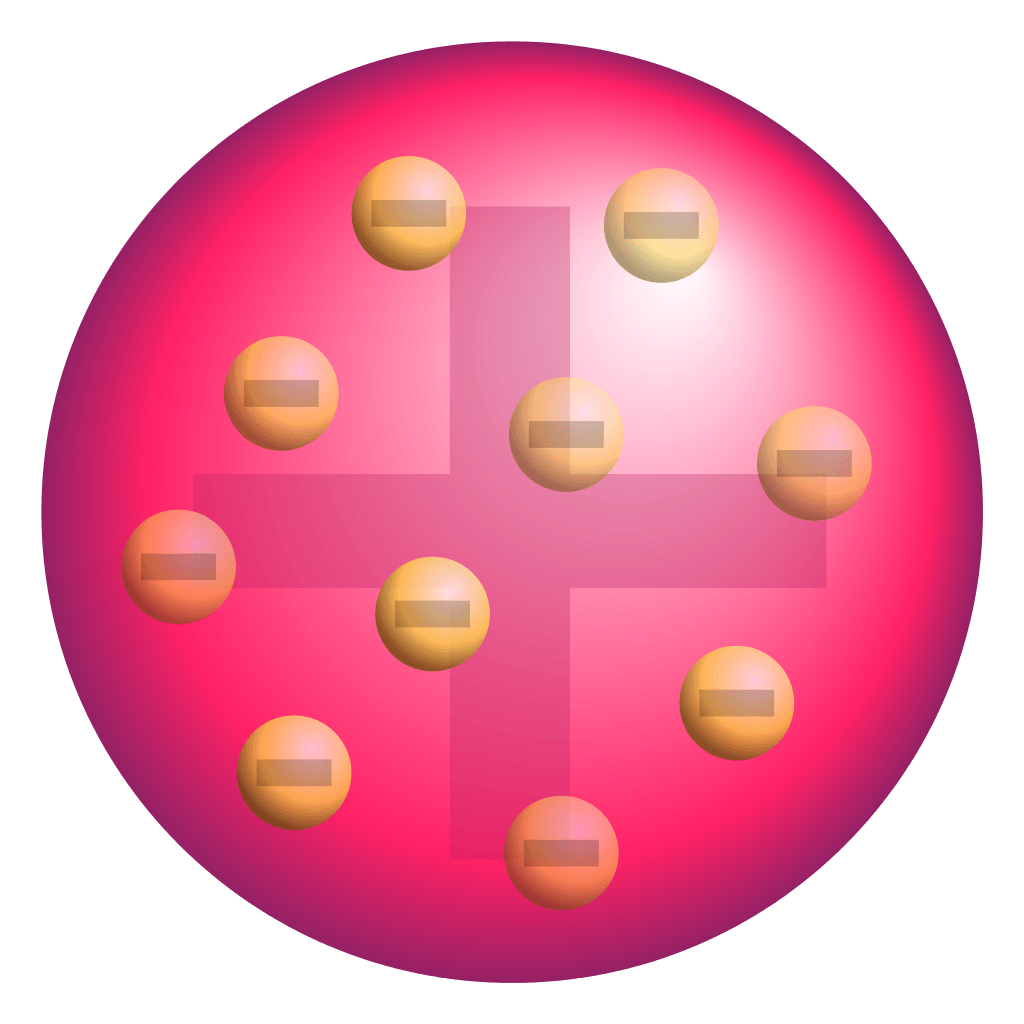
Who discovered that the atom had an small, dense, positively charged center?
Ernest Rutherford
J.J Thomson
Robert Millikan
John Dalton

What is Neils Bohr's contribution to the atomic theory?
Discovered the electron
Created a model of the atom with electrons moving around the nucleus in a fixed orbits
Discovered that the proton had a positive charge
Believed that atoms of a given element are identical


Isaiah needs 10 ml of liquid for a lab. The teacher has a container of the freshly prepared chemical for all the classes to use. But, when he goes to get the 10 ml, he accidentally gets too much liquid. Which of the following is CORRECT?
Don't waste it so pour the excess chemical back into the original container.
Sorry but the excess chemical will have to be discarded in the trash or poured down the sink.
Share the excess chemical with the next lab group.

What lab procedure is shown here?
lighting a burner
cutting and bending glass tubing
fire polishing the sharp ends
evaporating a liquid

The number of energy levels correspond to the row or period on the periodic table. What period is this element located in?
1
2
3
4
The elements in this family found in 1A are soft, silvery, and very reactive with water.
Alkaline Earth Metals
Alkali Metals
Transition Metals
Lanthanides
What group is the family found? These halogens are very reactive and almost have full outer number of 8 electrons.
1
2
16
17
These elements have properties of both metals and nonmetals.
Alkali
Halogens
Nonmetals
Metalloids

I was the Russian credited with arranging the first periodic table. Who am I?
Henry G.J. Mosely
Albert Einstein
Dmitri Mendeleev
Niels Bohr

I am a British scientist who came up with today's periodic table of elements that is based on ATOMIC NUMBER. Who am I?
Henry G.J Mosely
J.J Thomson
Albert Einstein
Dmitri Mendeleev
I am shiny. I am malleable. I am a good conductor. What am I?
Metal
Nonmetal
Metalloid

The elements to the left of the staircase are called
metals
nonmetals
metalloids
noble gases
An atom with 3 valence electrons "wants" a full shell, so it can either gain 5 or lose 3. Which is more likely to occur?
Gain 5
Lose 3
Nothing
How do covalent bonds form?
By donating and receiving valence electrons between atoms.
Scientists still aren't sure.
Opposite slight charges attract each atom in the compound.
Sharing valence electrons between atoms

What two types of atoms make a covalent bond?
2 Nonmetals
1 Metal and 1 Nonmetal
2 Metals
2 Noble Gases

Ionic Bonds
metal with nonmetal
nonmetal with nonmetal

This is the displayed formula for what covalent compound?
Water
Hydrogen peroxide
Hydrogen oxide
Ethanol

Chlorine is a diatomic element which means in nature, it is found in two's. (Cl2) Chlorine shares one pair of electrons to make sure each atom complete the octet rule. This creates a...
single bond
double bond
triple bond
Oxygen is a diatomic element which means in nature, it is found in two's. (O2) Oxygen shares two pairs of electrons to make sure each atom completes the octet rule. This creates a...
single bond
double bond
triple bond
Nitrogen is a diatomic element which means in nature, it is found in two's. (N2) Nitrogen shares three pairs of electrons to make sure each atom completes the octet rule. This creates a...
single bond
double bond
triple bond

How many pairs of valence electrons are being shared in a single water molecule?
0 pair - 0 valence electrons
1 pair - 2 valence electrons
2 pair - 4 valence electrons
3 pair - 6 valence electrons

What type of bond will this compound likely form H-Cl?
Ionic compound
Covalent compound
Metallic compound