
Font size
 Worksheets
Sound and Light Test Review
Total questions: 74
Worksheet time: 1hrs 8mins
Light and sound are both forms of energy.
True
False
Sound is made from vibrations that travel in waves.
True
False
The earth's main source of light is the sun.
True
False
A straw that seems to bend or break apart in a glass of water is an example of refraction.
True
False
Objects that do not allow light to pass through them are called __
vacuums
transparent
opaque
The frequency of vibrations affects the ____of a sound.
color
pitch
light
The higher the pitch, the _____ the wavelength and the ____ the frequency.
shorter, higher
shorter, lower
longer, higher
longer, lower


Sounds waves travel through
solids
liquids
gases
all of the above
You can hear sound in space.
True
False
What is the substance through which sound waves travel?
sound
waves
medium
solar cells
Standing outside and feeling the warmth is proof that light transfers__________.
energy
particles
Light travels as tiny _____________ of energy.
lights
particles
waves


This glass is____.
transparent
translucent
opaque

This glass is____.
transparent
translucent
opaque

Choose the picture showing how light refracts (bends).


Choose the picture showing how light is reflected (bounces off and changes direction).

Choose the picture showing how light is absorbed (taken in)


Choose the picture showing how light is transmitted (goes through)
A prism refracts light so you can see all the colors in light. Which of these is a prism?


Visible light is the part of the electromagnetic spectrum that we can see.
true
false

What color has the shortest wavelength?
yellow
blue
red
violet
What color has the longest wavelength?
yellow
blue
red
violet
An insulator is a material that does NOT let heat or electricity move through it easily. Which materials are insulators?


A conductor is a material that lets heat or electricity move through it easily. Which materials are conductors?


This technology uses sound waves to help us map the ocean floor and find objects in the water.
SONAR
echolocation
vacuum
ultrasound


Which diagram shows the wavelength of a wave?


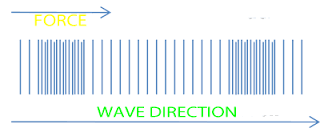
What type of wave is this?
Longitudinal
Transverse
Electromagnetic
x ray

Sound is a form of?
energy
pitch
volume
Which object does sound NOT travel through the fastest?
A chair
A table
A football
milk
Sound travels the FASTEST through _____________, SLOWER through ______________ and SLOWEST through _________________.
liquids, solids, gases
solids, gases, liquids
solids, liquids, gases
gases, liquids, solids

Tightly packed molecules describes a
Solid
Liquid
Gas

Molecules that take the shape of a container describes a
Solid
Liquid
Gas

Molecules that are loosely floating around at far distances describes a
Solid
Liquid
Gas
Some animals use this to navigate and hunt
frequency
ecolocation
vibration
A vibrating object causes this to move back and forth
air molecules
gases
solids
A sound wave produced by a lower-pitched instrument has a low ___
distance
echolocation
loudness
frequency
Sound is produced by something...
echolocation
vibrates
vocal chords

When light travels through air into a prism, it bends and separates into many colors.
In which other situation does light bend?
When light moves through air into water
When light hits a wall
When light passes through outer space
When light hits a mirror

A student holds a notecard behind a jar of water. Which of the following best explains why part of the note card appears different from the rest of the note card?
The jar reflects light hitting the surface.
The water absorbs light hitting the surface.
The jar scatters light passing through it.
The water bends light passing through it.

A shiny aluminum screen can be placed on the windshield of a parked car. This screen helps to keep the car cool because it—
reflects the sunlight
absorbs heat
causes evaporation
conducts electricity
Radiant energy is also known as ....
nuclear energy
mechanical energy
light energy
thermal energy


What tool is used to measure temperature?
a stove
a beaker
a thermometer
a glove
When thermal energy is applied to an ice cube, it _____.
freezes
stays the same
tastes better
melts
The sun provides ____________ and ____________ energy that can be harnessed and used for solar power.
chemical, sound
mechanical, light
sound, light
light, thermal


The diagram above shows the amount of light reflected from each block. Which block will increase in temperature most rapidly?
Block 1
Block 2
Block 3
Block 4

