wayground logo

Free Printable Worksheets

Font size

S
M
L
XL
Worksheets

Chemistry I Fall Semester Exam Review #1

Total questions: 101

Worksheet time: 2hrs 5mins

Name
Class
Date
1.

What key words, when present in a question about chemical reactions, might indicate a chemical change is occuring? Check all that apply.

a)

Bubbling

b)

Fizzing

c)

Dissolving

d)

Evaporating

2.

A student combines two clear, colorless solutions shown here. When combined, the temperature changed from 25°25\degree  to  23°23\degree  and a white substance rapidly formed and settled at the bottom of the container. What most likely happened to produce these results?

a)

One of the original compounds came out of solution

b)

The solutions reacted chemically

c)

Some of the water froze into ice crystals

d)

Rapid evaporation of water occured, leaving a solid

3.

Carbon dioxide (  CO2CO_2  ) forms when coal burns in the presence of oxygen. Which of these is the BEST evidence that a chemical reaction occurs when coal burns?

a)

The shape of the coal changes

b)

Oxygen is present

c)

A new substance is produced

d)

Coal is made up of more than one element

4.

What evidence can you use to infer that a chemical reaction has occurred here?

a)

A dark solid formed on the zinc metal

b)

The zinc metal remained silver-colored and shiny

c)

The CuSO4CuSO_4 solution turned blue when the zinc metal was added

d)

None of these

5.

The type of chemical bond that involves the transfer of electrons between a metal and a nonmetal.

a)

ionic bond

b)

covalent bond

c)

hydrogen bond

d)

metallic bond

6.

The type of bond that involves two or more nonmetals that share a pair of electrons

a)

ionic bond

b)

covalent bond

c)

hydrogen bond

d)

metallic bond

7.

An ion with a overall positive charge because it lost electrons is

a)

an anion

b)

a cation

c)

a lion

d)

an onion

8.

When atoms of a covalently bonded molecule don't share their electrons equally, it causes the molecule to become

a)

cranky

b)

bipolar

c)

cold

d)

polar

9.

A precipitate is a ___________ that forms when 2 liquids react together.

a)

solid

b)

liquid

c)

gas

d)

plasma

10.

In which mixture can you see all of the parts?

a)

homogeneous

b)

heterogeneous

11.

In which mixture can you not see all of the parts?

a)

homogeneous

b)

heterogeneous

12.
What is a mixture?
a)
elements chemically combined
b)
a combination of different things
c)
it is found on the Periodic Table 
d)
it is made of chemical
13.
Sand floating in water, but most of the sand is settled at the bottom this an example of which type of mixture?
a)
A solution
b)
A colloid
c)
A suspension
d)
A compound
14.

What is a mixture in which all the parts are EVENLY mixed?

a)

energy

b)

beaker

c)

solution

d)

salad

15.

Which of the following is a solution?

a)

geletin with blueberries

b)

granola

c)

juice

d)

salad

16.

Which of the following is a solution?

a)

lemonade

b)

trail mix

c)

legos

d)

iron filings and sand

17.

A salad is an example of a __________.

a)

homogenous mixture

b)

solution

c)

heterogeneous mixture

d)

homogenous solution

18.
What are the two types of Mixtures
a)
Elements and Subatomic Particles
b)
Protons and Electrons
c)
Atoms and Compounds
d)
Homogenous and Heterogeneous
19.
Chicken noodle soup is an example of a
a)
homogeneous mixture
b)
heterogeneous mixture
20.
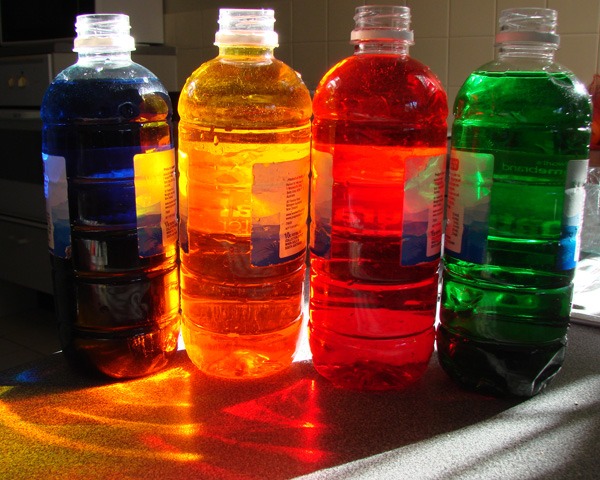
Coloured water is an example of a
a)
homogeneous mixture
b)
heterogeneous mixture
21.

What is known as the "universal solvent?"

a)

water

b)

acid

c)

sugar

d)

salt

22.

A combination of two or more substances.

a)

mixtures

b)

separate

c)

solid

d)

whisk

23.

Blue color

a)

Physical Property

b)

Chemical Property

24.

Density

a)

Physical Property

b)

Chemical Property

25.

Flammability

a)

Physical Property

b)

Chemical Property

26.

Solubility

a)

Physical Property

b)

Chemical Property

27.

Melting point

a)

Physical Property

b)

Chemical Property

28.

Reacts with water

a)

Physical Property

b)

Chemical Property

29.

Reacts with water

a)

Physical Property

b)

Chemical Property

30.

Boiling point

a)

Physical Property

b)

Chemical Property

31.

NaCl (salt) dissolves in water

a)

Physical Change

b)

Chemical Change

32.

Heat changes H2O to steam

a)

Physical Change

b)

Chemical Change

33.

Ice melts

a)

Physical Change

b)

Chemical Change

34.

Density

a)

Intensive Property

b)

Extensive Property

35.

Combustibility

a)

Intensive Property

b)

Extensive Property

36.

Melting point

a)

Intensive Property

b)

Extensive Property

37.

Reactivity with acid

a)

Intensive Property

b)

Extensive Property

38.

Color

a)

Intensive Property

b)

Extensive Property

39.

Volume

a)

Intensive Property

b)

Extensive Property

40.

Which set of properties, intensive or extensive, are based on the size of a sample?

a)

intensive

b)

extensive

41.

What is a compound?

a)

A substance that is made up of one type of atom and can't be reduced to simpler substances.

b)

A substance made of two or more different atoms chemically bonded to one another. They can only be destroyed by chemical processes.

c)

A material containing two or more elements or compounds that are in close contact and are mixed in any proportion. They can be separated by physical means.

42.

What is an element?

a)

A substance that is made up of one type of atom and can't be reduced to simpler substances.

b)

A substance made of two or more different atoms chemically bonded to one another. They can only be destroyed by chemical processes.

c)

A material containing two or more elements or compounds that are in close contact and are mixed in any proportion. They can be separated by physical means.

43.

What is a mixture?

a)

A substance that is made up of one type of atom and can't be reduced to simpler substances.

b)

A substance made of two or more different atoms chemically bonded to one another. They can only be destroyed by chemical processes.

c)

A material containing two or more elements or compounds that are in close contact and are mixed in any proportion. They can be separated by physical means.

44.
What two types of measurements make up DENSITY
a)
Mass and Volume
b)
Temperature and Mass
c)
Grams and Centimeters
d)
Volume and Weight
45.
Look at this image.  Which object has the LOWEST density in water? How
a)
The Ping Pong Ball because it floats to the top 
b)
The bolt because it has sunk to the bottom
c)
The soda cap because it is not just full of air like the Ping Pong ball
46.
What units can be used to express density?
a)
g/mL
b)
grams
c)
millimeters
d)
milliliters
47.
If an object has a density of .6 g/mL and you put it into water, will it sink or float?  
a)
sink
b)
float
48.
If an object has a density of 3.6 g/mL and you put it into water, will it sink or float?  
a)
sink
b)
float
49.
Frank has an eraser. It has a mass of 4g, and a volume of 2cm3. What is its density?
a)
8 g/cm3
b)
2 g/cm3
c)
1/2 g/cm3
d)
24 g/cm3
50.
Frank has a paper clip. It has a mass of 9g and a volume of 3cm3. What is its density?
a)
3 g/cm3
b)
1/3 g/cm3
c)
27 g/cm3
d)
39 g/cm3
51.
What units are used to measure mass?
a)
g
b)
cm3
c)
g/cm3
d)
cm3/g
52.
An object should float in a liquid if it is 
a)
Denser than the liquid 
b)
Less dense than the liquid
c)
Lighter than metal
d)
 Shaped like a ball 
53.
Archimedes used density to discover if the crown of gold was real because
a)
Substances have their own unique densities
b)
Substances can change densities depending on their size
c)
Substances can change densities depending on their mass
d)
Substances can change densities depending on their volume
54.
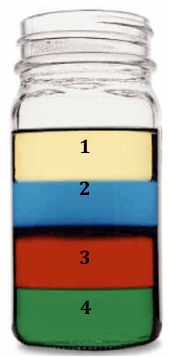
Put the liquids in order from most dense to least dense?
a)
4, 3, 2, 1
b)
1, 2, 3, 4
c)
3, 4, 2, 1, 
d)
4, 3, 1, 2
55.
What is the formula for density?
a)
density = mass x volume
b)
density = mass / volume
c)
density = mass + volume
d)
density = mass - volume
56.
Calculate the density of the cube. (Hint: calculate the volume of the cube using V= Bh)
a)
0.33 g/cm3
b)
0.4 g/cm3
c)
0.6 g/cm3
d)
0.5 g/cm3
57.
What is the volume of Object X?
a)
10.0 cm3
b)
15.0 cm3
c)
20.0 cm3
d)
25.0 cm3
58.

What is the volume of 150 grams of lead if it has a density of 11.3 g/cm3?

a)

13.3 g

b)

13.3 cm3

c)

.075 g

d)

1695 cm3

59.
Which box has a higher density?  
a)
Box A
b)
Box B
c)
cannot be determined
d)
they are the same
60.
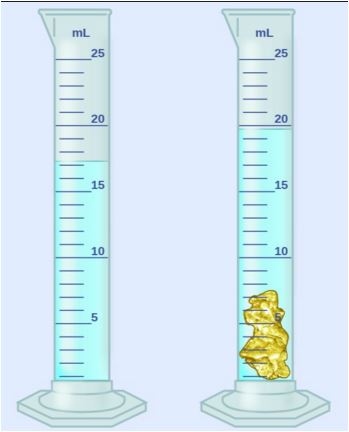
An irregularly shaped piece of gold was lowered into a graduated cylinder holding a volume of water equal to 17 ml. The height of the water rose to 20 ml. If the mass of the gold was 27 g, what was its density?
a)
9 g/mL
b)
10.5 g/mL
c)
6.5 g/mL
d)
8 g/mL
61.

Which has the greatest volume?

a)

One on left

b)

One on right

c)

Both the same

d)

Volume cannot be determined

62.
What is the atomic number?
a)
the number of protons
b)
the number of protons and neutrons
c)
the number of neutrons
d)
the number of protons and electrons
63.
What is the mass number defined as?
a)
the number of protons
b)
the number of protons and neutrons
c)
the number of neutrons
d)
the number of protons and electrons
64.
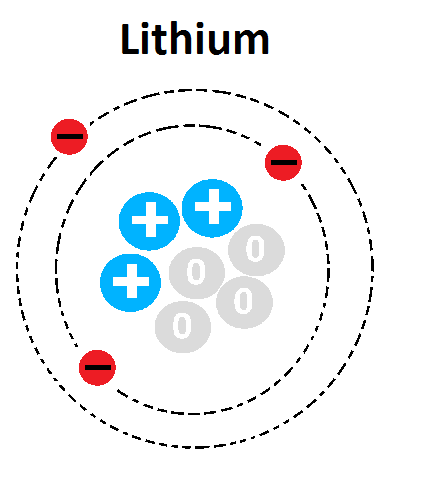
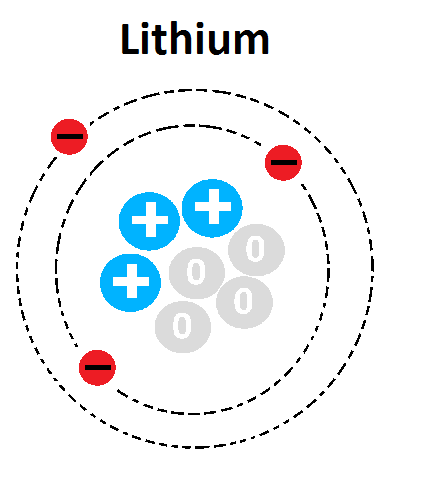
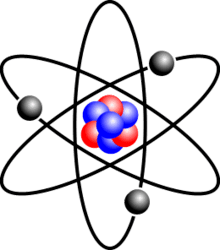
What is the atomic number of this atom?
a)
1
b)
3
c)
4
d)
7
65.

What is the mass number of this atom?

a)

1

b)

3

c)

4

d)

7

66.

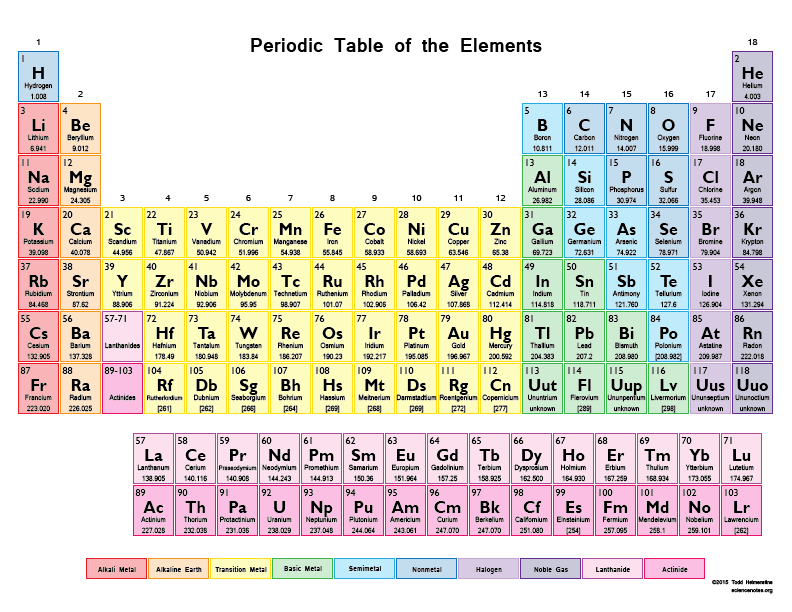
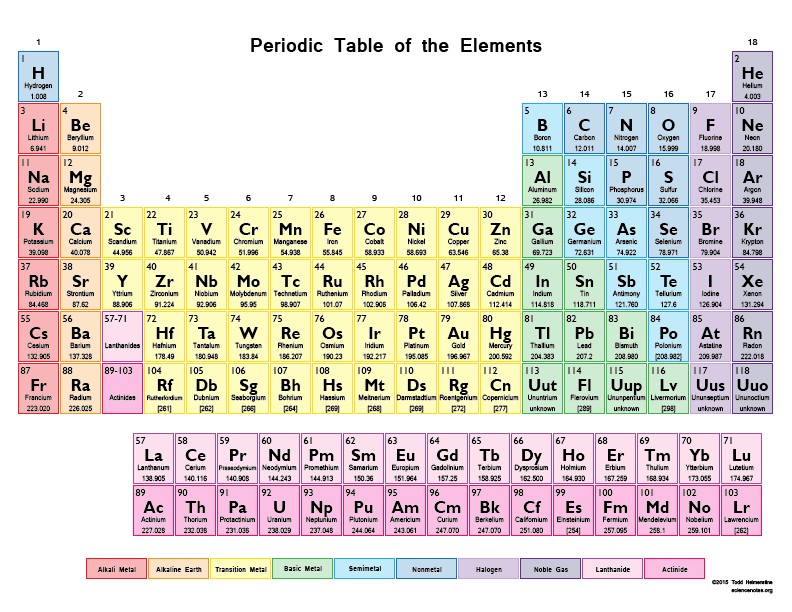
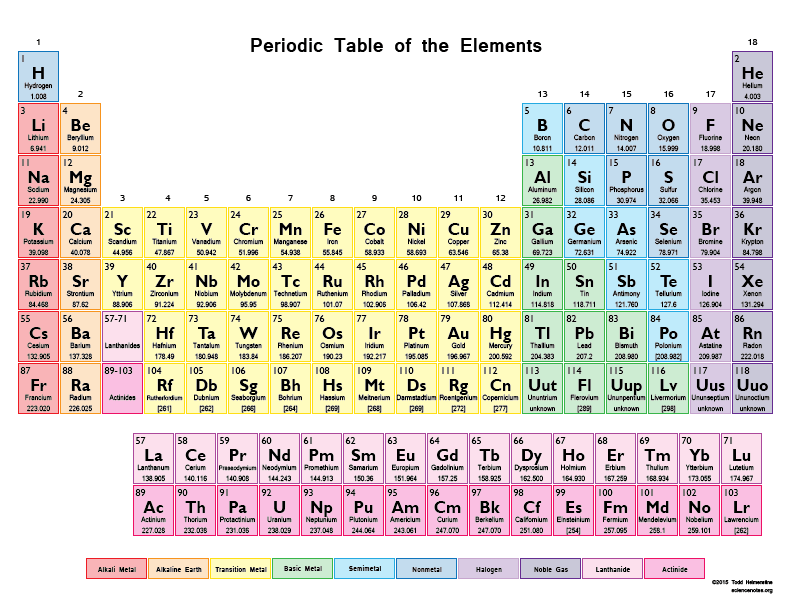
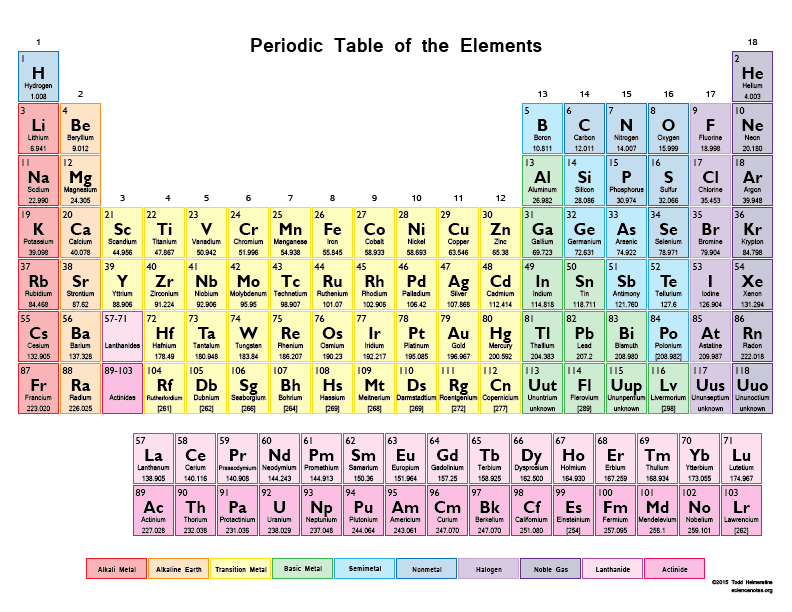
What is the atomic number of Barium, Ba? (enlarge the periodic table)

a)

20

b)

38

c)

56

d)

88

67.

How many protons are in a sodium atom, Na? (tap to enlarge the periodic table)

a)

Sodium has 1 proton.

b)

Sodium has 3 protons.

c)

Sodium has 11 protons

68.

Atoms of the same element which have a different number of neutrons are called _________________.

a)

ions

b)

isotopes

c)

quarks

d)

molecules

69.

Which subatomic particle has a negative charge in the atom?

a)

proton

b)

neutron

c)

electron

d)

quark

70.

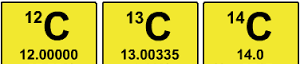
How many neutrons does C-14 contain? (tap to enlarge the image)

a)

6

b)

7

c)

14

d)

8

71.

How many neutrons does an atom of the isotope Neon-22 have? (tap to enlarge the image)

a)

12

b)

10

c)

22

d)

20

72.
What do these isotopes of carbon all have in common?
a)
neutrons & mass number
b)
atomic number and neutrons
c)
atomic number and electrons
d)
protons, atomic number, and mass number
73.
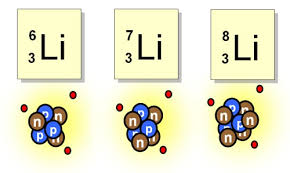
which atom has  4 neutrons?
a)
Li-6
b)
Li-7
c)
Li-8
d)
they have the same # of neutrons
74.
What quantities vary between isotopes of an element?
a)
protons, electrons, and atomic mass
b)
protons, electrons, and atomic number
c)
neutrons and electrons
d)
neutrons and atomic mass
75.
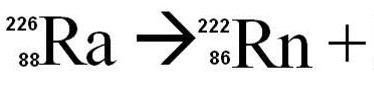
What particle completes this reaction?
a)
alpha particle
b)
beta particle
c)
gamma particle
d)
neutron
76.
Complete the nuclear equation and determine the type of decay that is occurring in this reaction. 
a)
alpha
b)
beta
c)
gamma
d)
none
77.
What is the missing isotope that will balance the following nuclear equation?
94Be  +  11H →  _____  +  42He
a)
105B
b)
105Ne
c)
63Li
d)
63C
78.

This is the correct equation for U-238 decay.

a)

true

b)

false

79.
Balance the following equation:
146C --> 0-1e + ________
a)
145B
b)
146C
c)
147N
d)
42He
80.
What is the symbol for an alpha particle?
a)
42He
b)
0-1e
c)
0+1 e
d)
10n
81.

What does the JJ Thomson model look like

a)

plum pudding

b)

Christmas cake

c)

brownie

d)

trifle

82.

Who's model is this

a)

JJ Thomson

b)

Newton

c)

Rutherford

d)

Elon Musk

83.

JJ Thomson's experiment that he used to discover electrons

a)

gold foil experiment

b)

cathode ray experiment

c)

neither of these is correct

84.

Person that discovered electrons using the cathode ray experiment. He created the plum pudding model

a)

Neils Bohr

b)

Ernest Rutherford

c)

JJ Thomson

d)

Dmitri Mendeleev

85.

Rutherford's experiment that he used to discover protons and the nucleus.

a)

gold foil experiment

b)

cathode ray experiment

c)

neither of these is correct

86.
What is Democritus known for?
a)
atomos
b)
combining and separating atoms
c)
saying the atom is empty space
d)
saying electrons orbit on specific paths
87.
What is Bohr known for?
a)
atomos
b)
combining and separating atoms
c)
saying the atom is empty space
d)
saying electrons orbit on specific paths
88.

Which Scientist came up with the NUCLEAR model?

a)

Dalton & Democritus

b)

Rutherford

c)

Thompson& Milliken

d)

Heisenberg & De Broglie

89.

Who discovered the Atomic Theory and when did they do it?

a)

Millikan in 1808

b)

Neils Bohr in 2021

c)

Democritus in 4th century BC

d)

John Dalton in 1808

90.

Who discovered the nucleus and when ?

a)

James Chadwick in 1897

b)

Democratis in 400 BC

c)

JJ Thompson in 1897

d)

Rutherford in 1911

91.

Discovered the electron using cathode ray tube

a)

JJ Thomson

b)

John Dalton

c)

Ernest Rutherford

d)

Robert Millikan

92.
What atom matches this electron configuration?
1s2s2p3s2
a)
Neon
b)
Magnesium
c)
Aluminum
d)
Potassium
93.
Which is the electron configuration for an oxygen atom?
a)
1s22s22p63s23p64s2
b)
1s22s22p4
c)
1s22s22p6
d)
1s22s22p63s23p6
94.
How many valence electrons does Chlorine have?
a)
5
b)
2
c)
7
d)
5
95.
There are 4 different types of subshells s,p,d,f
a)
true
b)
false
96.
The electron configuration of an atom is 1s22s22p6.  The number of electrons in the atom is 
a)
3
b)
6
c)
8
d)
10
97.
Which electron configuration belongs to Chlorine (Cl)?
a)
1s2s2p3s3p5
b)
1s2s2p3s3p6
c)
1s2s2p3s3p7
98.
Identify the Electron Configuration for Aluminum (Al)
a)
1s2s2p3s3p1
b)
1s2s2p3s3p3
c)
1s2s2p3s4p1
99.
How many valence electrons are represented here?
a)
7
b)
5
c)
2
d)
8
100.

What is this element?

1s22s22p63s23p64s23d104p6

a)

Argon

b)

Krypton

c)

Selenium

d)

Bromide

101.
How many valence electrons does Chlorine have?
a)
5
b)
2
c)
7
d)
5