wayground logo

Free Printable Worksheets

Font size

S
M
L
XL
Worksheets

Mr Hafekosts revision quiz

Total questions: 129

Worksheet time: 2hrs 28mins

Name
Class
Date
1.

Hot objects have energy in this energy store

a)

Thermal

b)

Elastic Potential

c)

Gravitational Potential

d)

Chemical

2.

A roller coaster at the top of a hill has energy in this energy store.

a)

Gravitational Potential

b)

Thermal

c)

Elastic Potential

d)

Chemical

3.

Food, fuels and batteries have energy in this energy store

a)

Chemical

b)

Thermal

c)

Gravitational Potential

d)

Elastic

4.

A stretched rubber band has energy in this energy store

a)

Magnetic

b)

Electrostatic

c)

Elastic

d)

Nuclear

5.

Two magnets close together have energy in this energy store.

a)

Chemical

b)

Elastic

c)

Magnetic

d)

Gravitational Potential

6.

Two negatively charged particles which are close together have energy in this energy store

a)

Electrostatic

b)

Magnetic

c)

Nuclear

d)

Elastic

7.

Energy stored in the nucleus of an atom

a)

Nuclear

b)

Magnetic

c)

Electrostatic

d)

Chemical

8.

Every moving object has energy in this energy store

a)

Kinetic

b)

Elastic

c)

Chemical

d)

Nuclear

9.

Energy which is transferred as a wave, for example light.

a)

Mechanically

b)

Electrically

c)

By Radiation

d)

By Heating

10.

Energy which is transferred by charges moving due to a potential difference (voltage)

a)

Mechanically

b)

Electrically

c)

By Radiation

d)

By Heating

11.

Energy which is transferred by a force moving an object through a distance

a)

Mechanically

b)

Electrically

c)

By Radiation

d)

By Heating

12.

Energy which is transferred due to temperature difference caused electrically or by a chemical reaction.

a)

Mechanically

b)

Electrically

c)

By Radiation

d)

By Heating

13.

Element, mixture, or compound?

a)

element

b)

mixture

c)

compound

14.

Element, mixture, or compound?

a)

element

b)

mixture

c)

compound

15.

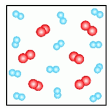
How many compounds are in this picture?

a)

1

b)

2

c)

3

d)

4

16.

What do you see in this picture?

a)

A pure element

b)

A pure compound

c)

A mixture of two elements

d)

A mixture of two compounds

e)

A mixture of an element and a compound

17.

What do you see in this picture?

a)

A pure element

b)

A pure compound

c)

A mixture of two elements

d)

A mixture of two compounds

e)

A mixture of an element and a compound

18.

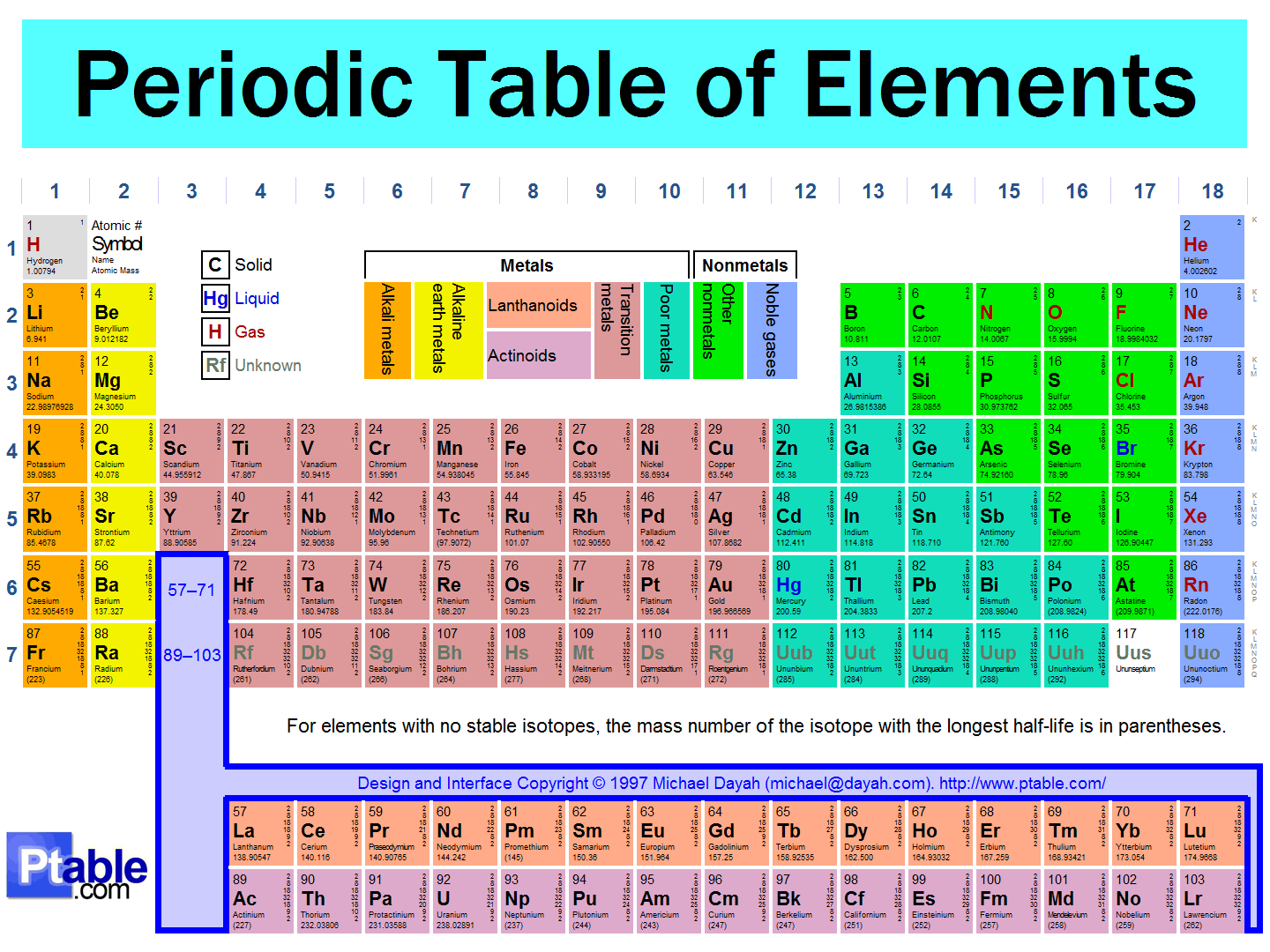
In the Periodic Table, metals are found on the...

a)

left side

b)

right side

c)

middle

19.

How many atoms in total are found in

CuSO4?

(Type only in numbers!)

(a)  

20.

How many different types of elements are found in

CuSO4?

(Type only in numbers!)

(a)  

21.

Which technique can be used to get sea salt from seawater?

a)

filtration

b)

evaporation

c)

distillation

d)

chromatography

22.

How many molecules are in this picture?

a)

1

b)

2

c)

3

d)

4

23.

How many elements are in this picture?

a)

1

b)

2

c)

3

d)

4

24.

Based on the chromatogram, the mixture contains...

(tick all that apply)

a)

dye 1

b)

dye 2

c)

dye 3

25.

Sugar is added to water. The water is the...

a)

solute

b)

solvent

c)

solution

d)

saturated

26.

Which of the following is NOT a solution?

a)
b)
c)
d)
27.

Which of these are made from atoms that are chemically bonded together?

(tick all that apply)

a)

elements

b)

mixtures

c)

compounds

d)

molecules

28.

Which of these does NOT increase the solubility of a solute?

a)

Increasing the temperature

b)

Stirring

c)

Adding more solvent

d)

Adding more solute

29.

K is the symbol for the element...

(a)  

30.

Name the compound formed from the following elements:

sulfur, iron

(a)  

31.

Name the compound formed from the following elements:

carbon, oxygen, copper

(a)  

32.

Name the equipment labelled 5.

(a)  

33.

When you drop an object, what are the main energy transfers involved?

a)

Gravitational potential to thermal

b)

Kinetic to gravitaional potential

c)

Gravitational potential to chemical

d)

Gravitational potential to kinetic

34.

When you burn a fuel, what are the main energy transfers involved?

a)

Chemical to elastic potential

b)

Thermal to chemical

c)

Chemical to thermal

d)

Electrostatic to thermal

35.

When you release a stretched spring, what are the main energy transfers involved?

a)

Elastic to kinetic

b)

Kinetic to elastic

c)

Elastic to thermal

d)

Elastic to chemical

36.

Energy is measured in what units?

a)

Hertz

b)

Watts

c)

Joules

d)

Newtons

37.

What is the correct equation to calculate energy transfered?

a)

Force x distance

b)

Distance x weight

c)

Force / distance

d)

Distance / force

38.

What will transfer energy more quickly?

a)

Insulators

b)

Conductors

39.

An example of an insulator would be:

a)

Plastic

b)

Metal

40.

Which of these are fossil fuels?

a)

Coal

b)

Oil

c)

Gas

d)

All of the above

41.

Wind, solar and waves are examples of:

a)

Renewable energy resources

b)

Non renewable energy resources

c)

Fossil fuels

d)

Finite energy resources

42.

What is power measured in?

a)

Joules

b)

Hertz

c)

Watts

d)

Newtons

43.

How many watts in a kilowatt?

a)

10

b)

100

c)

1000

d)

10000

44.

The energy in food is measured in:

a)

Kilowatts

b)

Joules

c)

Kilojoules

d)

Grams

45.

What equation is used to calculate the energy transferred in an electrical appliance?

a)

Power x time

b)

Power / time

c)

Force x distance

d)

Force / distance

46.

Energy can be transferred when a force makes something move, this is called:

a)

Electrically

b)

Heating

c)

Mechanically

d)

Light and sound

47.

Which of these is not a store of energy?

a)

chemical energy store

b)

thermal energy store

c)

kinetic energy store

d)

electrical energy store

48.
Where are the non-metallic elements found in the periodic table?
a)
In the middle
b)
In the top rows
c)
On the left-hand side
d)
On the right-hand side
49.
Which elements are found on the left to middle of The Periodic Table? 
a)
Metals
b)
Nonmetals
c)
Metalloids
d)
Candles
50.
I have an object that is dull, brittle, and an insulator, what is it?
a)
metalloid
b)
non-metal
c)
metal
d)
matter
51.
The elements argon, krypton, and xenon are all non-metals. What property would these elements have in common?
a)
Good conductor of thermal energy
b)
Poor conductor of electricity
c)
Shiny, lustrous surface
d)
Soft and malleable
52.
What physical properties are used to classify elements as metals, non-metals, or metalloids?
a)
Color, smell, physical state
b)
Reactivity, streak, hardness
c)
Ability to burn, mass, density
d)
Luster, conductivity, malleability
53.
How many atoms are there TOTAL in:
H2SO4
a)
6
b)
5
c)
7
d)
3
54.
At room temperature metals are ____________.
a)
plasma
b)
gases
c)
liquid
d)
solid
55.
Metals that can be used as wire are ____________.
a)
metallic
b)
shiny
c)
malleable
d)
ductile
56.
Element:Fe
a)
Gold
b)
Flourine
c)
Phosphorus
d)
Iron
57.
What is the symbol for Calcium
a)
Cl
b)
Ca
c)
Cm
d)
ca
58.
Element is a
a)
pure substance
b)
compound
c)
mixture
d)
molecule
59.
Which of the following represents an element?
a)
H2O
b)
H2
c)
NaCl
d)
CaCO3
60.
Which of the following is not a compound?
a)
HCl
b)
Cl
c)
NaCl
d)
CO2
61.
What is this element...Au
a)
Iron
b)
Titanium
c)
Gold
d)
Flourine
62.
Which of these is a property of metals?
a)
It's malleable
b)
It can't conduct electricity
c)
They are used in food
d)
It's very brittle
63.
Brittle
a)
Metal
b)
Nonmetal
64.
Good conductor of heat
a)
Metal
b)
Nonmetal
65.
Iron is a good conductor, malleable and magnetic. What type of element is Iron? 
a)
Metal
b)
Nonmetal
c)
Metalloid
d)
Pretty
66.
Which of the following is a property of a non-metal?
a)
Conducts electricity and heats well
b)
Can be hammered into thin sheets
c)
Is brittle and breaks easily
d)
Has a shiny, metallic luster
67.
Is water an element or a compound?
a)
Element
b)
Compound
68.
The properties of the elements that make up a compound are usually very similar to the compound itself.
a)
True
b)
False
69.
A compound consists of two or more elements bound together.
a)
True
b)
False
70.
All matter is made of .....
a)
energy 
b)
atoms 
c)
air
d)
chemistry
71.
The atomic number of an element tells the number of _____ in the nucleus of an atom of that element.
a)
protons
b)
neutrons
c)
electrons
d)
isotopes
72.
Most of the mass of an atom is found it its _____.
a)
electron cloud
b)
nucleus
c)
atomic number
d)
empty space
73.
An element is made up of only one kind of _____.
a)
isotope
b)
plastic
c)
atom
d)
metal
74.
Which subatomic particle has a negative charge in the atom?
a)
proton
b)
neutron
c)
electron
d)
quark
75.
Which is an electron?
a)
A
b)
B
c)
C
76.
Which is a proton?
a)
A
b)
B
c)
C
77.
Which is a neutron?
a)
A
b)
B
c)
C
78.
Is Iron (Fe) an element or a compound?
a)
Element
b)
Compound
79.
What does the H stand for?
a)
Hydrogen
b)
atomic number
c)
atomic mass
d)
atomic explosion
80.
What does the 1 stand for?
a)
Hydrogen
b)
atomic number
c)
atomic mass
d)
atomic explosion
81.
This diagram represents a _____.
a)
pure substance that is a compound
b)
mixture of elements
c)
pure substance that is an element
d)
mixture of compounds
82.
The horizontal row on the periodic table is called a
a)
group
b)
family
c)
period
d)
atomic number
83.
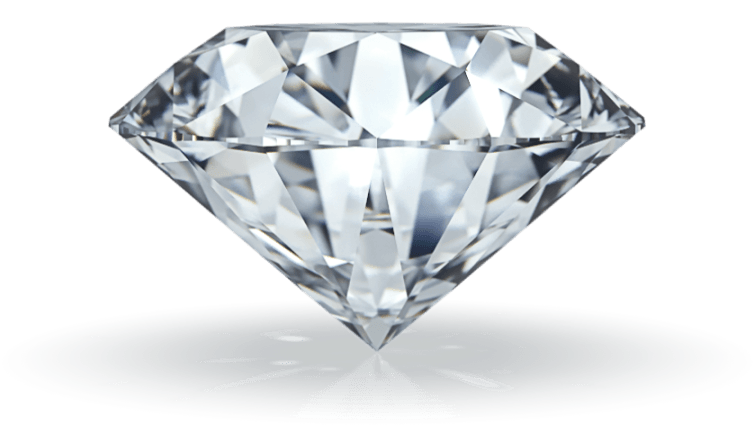
Diamonds are a pure form of what element?
a)
Carbon
b)
Oxygen
c)
Silicon
d)
Silver
84.
How did Mendeleev arrange the elements?
a)
alphabetical 
b)
density
c)
melting point
d)
atomic mass
85.
Classify the picture with the correct label.
a)
Element
b)
Compound
c)
Mixture of Elements
d)
Mixture of Compounds
86.
Classify the picture with the correct label.
a)
Element
b)
Compound
c)
Mixture of Elements and Compounds
d)
Mixture of Elements
87.
Classify the picture with the correct label.
a)
Element
b)
Compound
c)
Mixture of Elements & Compounds
d)
Mixture of Compounds
88.
Classify the picture with the correct label.
a)
Compounds
b)
Mixture of Elements
c)
Mixture of Compounds
d)
Mixture of Elements & Compounds
89.
Classify the picture with the correct label.
a)
Element
b)
Compound
c)
Mixture of Compounds
d)
Mixture of Elements
90.
Classify the picture with the correct label.
a)
Mixture of Elements
b)
Compound
c)
Mixture of Compounds
d)
Element
91.
Classify the picture with the correct label.
a)
Mixture of Compounds
b)
Mixture of Elements
c)
Compound
d)
Mixture of Elements & Compounds
92.
What is H2SO4 
 made up of?
a)
2 hydrogen, 1 sulfur, 4 oxygen
b)
1 hydrogen, 2 sulfur, 4 oxygen
c)
2 hydrogen & 4 sodium
d)
1 hydrogen & 6 sodium
93.
In general, metals are _____. 
a)
poor conductors of heat
b)
brittle
c)
poor conductors of electricity 
d)
good conductors of heat
94.
Shiny
a)
Metal
b)
Nonmetal
95.
Sulfur
a)
Metal
b)
Nonmetal
96.
a)
Element
b)
Compound
c)
Mixture of compound and element
d)
Mixture of elements
97.
a)
Element
b)
Compound
c)
Mixture of compound and element
d)
Mixture of two elements
98.
Which part of an atom is POSITIVELY charged?
a)
protons
b)
neutrons
c)
electrons
d)
atoms
99.
What part of an atom is NEGATIVELY charged?
a)
protons
b)
neutrons
c)
electrons
d)
atoms
100.
Which part of an atom has no charge?
a)
protons
b)
neutrons
c)
electrons
d)
atoms
101.
What is the term for combining 2 or more atoms together?
a)
atoms
b)
elements
c)
molecules
d)
compounds
102.
TRUE OR FALSE:
Every compound is a molecule but not every molecule is a compound.
a)
TRUE
b)
FALSE
103.
What is the picture displayed?
a)
atom
b)
element
c)
molecule
d)
compound
104.
Based off of the image, what type of matter is shown?
a)
gas
b)
solid
c)
liquid
105.
The Modern Periodic Table of Elements is arranged by
a)
atomic mass
b)
atomic number
c)
valence electrons
d)
number of isotopes
106.
What does the atomic mass tell you? 
a)
Basically,the number of electrons and protons
b)
The number of neutrons
c)
Basically, the number of protons and neutrons
d)
The number of protons.
107.
This diagram represents a _____.
a)
pure substance that is a compound
b)
mixture of elements
c)
pure substance that is an element
d)
mixture of compounds
108.
These are found on the Periodic Table.
a)
Compounds
b)
Elements
c)
Mixtures
109.

How many electrons does Barium (Ba) have?

a)

13

b)

2

c)

71

d)

56

110.

What is group name of the most reactive metals?

a)

Noble gases

b)

Halogens

c)

Alkali metals

d)

Alkaline earth metals

111.

The vertical (up and down) columns in the Periodic Table are called

a)

groups

b)

towers

c)

periods

d)

atomic numbers

112.

The horizontal (side to side) rows in the Periodic Table are called

a)

groups

b)

families

c)

periods

d)

atomic numbers

113.

what is the biggest group on the table

a)

metals

b)

nonmetals

c)

metaloids

d)

halogens

114.

what is the name of group number 1

a)

halogens

b)

noble gases

c)

alkali

d)

alkaline earth

115.

what is the big group of metals called found within the metals

a)

transition metals

b)

nonmetals

c)

noble gases

d)

halogens

116.

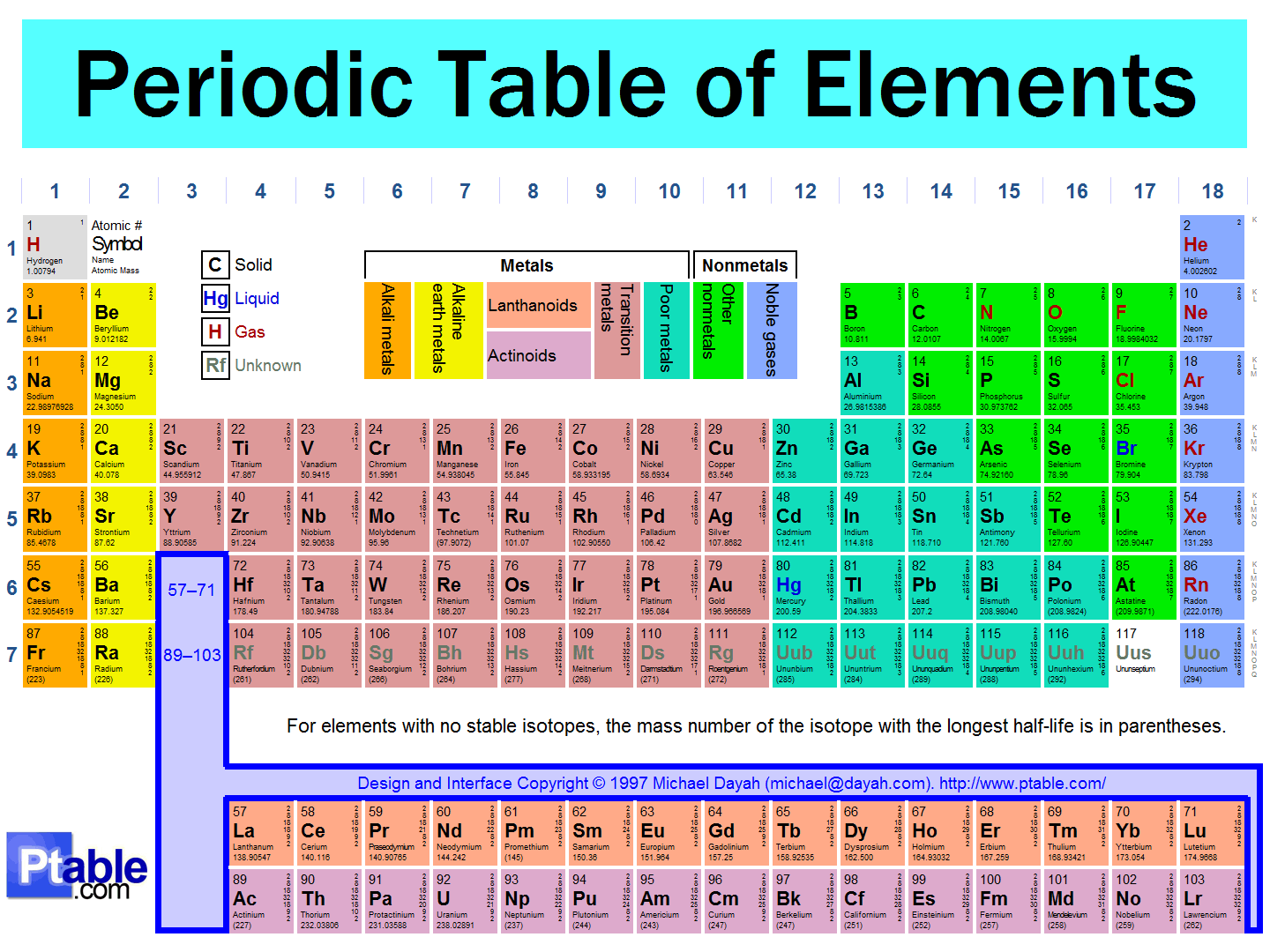
What is the name of the element? (Periodic table will be needed)

a)

sodium

b)

magnesium

c)

vanadium

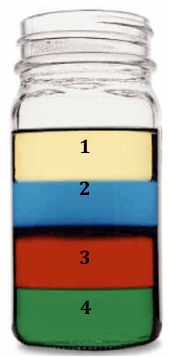
117.
Put the liquids in order from most dense to least dense?
a)
4, 3, 2, 1
b)
1, 2, 3, 4
c)
3, 4, 2, 1, 
d)
4, 3, 1, 2
118.
What am I? I have a fixed mass, a fixed volume, I cannot be squashed and I have a shape that changes to fit the bottom of my container?
a)
solid
b)
liquid
c)
gas
d)
plasma
119.

The melting point of gold is 1063 oC. What process happens to gold when liquid gold changes state to solid gold?

a)

Evaporation

b)

Melting

c)

Freezing

d)

Condensation

120.

For what reason do liquids flow so easily?

Because the particles.....

a)

are so tightly compacted to one another.

b)

can slide past one another.

c)

vibrate with one another.

d)

are so far apart from one another.

121.

Solids have...

a)

a fixed shape and a fixed volume

b)

a fixed shape but can change volume

c)

No fixed shape but a fixed volume

d)

no fixed shape or volume

122.

The piece of equipment used to measure the mass of a substance or object is a ______________.

a)

balance/scales

b)

measuring cylinder

c)

ruler

d)

thermometer

123.

Which state of matter can be compressed easily?

a)

solid

b)

liquid

c)

gas

d)

all of them

124.

Silver

Melting point 961oC boiling point 2210oC

What state of matter will it be at 959oC?

a)

Solid

b)

Liquid

c)

Gas

125.

Which TWO things will not increase the pressure of a gas?

a)

adding more particles

b)

cooling particles

c)

heating the particles up

d)

Making a stretchy container

126.

If a substance had a melting point of -12⁰C and a boiling point of 200⁰C what state would it be in at room temperature (around 20oC)?

a)

Solid

b)

Liquid

c)

Gas

127.

Why does the liquid inside a thermometer rise?


When the thermometer heats up, the liquid inside ...... because the particles move about ........

a)

expands, less quickly

b)

expands, more quickly

c)

contracts, less quickly

d)

contracts, more quickly

128.

When particles move from areas of high concentration to areas less concentrated, this has taken place.

a)

diffusion

b)

expansion

c)

contraction

d)

condensation

129.

At higher temperatures, the particles of a liquid

a)

diffuse more slowly

b)

diffuse more quickly

c)

spread out more

d)

continue to move at the same speed

e)

condense more