wayground logo

Free Printable Worksheets

NEW

Font size

S
M
L
XL
Worksheets

Rocks and The Rock Cycle

Total questions: 40

Worksheet time: 3hrs 20mins

Name
Class
Date
1.
The process by which igneous rocks are formed...
a)
heat and pressure
b)
melting and cooling
c)
compaction and cementation
2.
A metamorphic rock can become ______.
a)
igneous
b)
metamorphic
c)
sedimentary
d)
all of these
3.
The name rock is given when it is broken down into smaller pieces.
a)
texture
b)
weathering
c)
sediment
d)
erosion
4.
This rock was formed by lots of fossils that settled on top of each other over time. What type of rock is this?
a)
Sedimentary
b)
Igneous
c)
Metamorphic
5.
What does it mean for a rock to be extrusive
a)
Have layers
b)
Have Rounded Edges
c)
Form from Lava
d)
Form By Sediment
6.
The process by which sediment is moved from one place to another.   Can be caused by water, wind, ice, and gravity.
a)
Rock Cycle
b)
Uplift
c)
Deposition
d)
Erosion
7.
What are the 3 major types of rocks?
a)
Igneous, Metamorphic, Sedimentary
b)
Metamorphic, Igneous, Cementation
c)
Brown, Red, Gray
d)
Streak, Hardness, Breakage
8.
When sediments are pressed together tightly, this is called ____________.
a)
Compaction
b)
Cementation
c)
Weathering
d)
Erosion
9.
Which of the words below describe mud, sand, and tiny bits of rocks that cement together to form a type of rock?
a)
stalactites
b)
magmas
c)
metamorphs
d)
sediments
10.
The process in which dissolved minerals crystallize and glue sediment together.
a)
compaction
b)
deposition
c)
organic rock
d)
cementation
11.
This rock cooled on the outside of a volcano and contained air bubbles when it was forming. What type of rock is this?
a)
Sedimentary
b)
Igneous
c)
Metamorphic
12.
The three groups of rocks are classified by
a)
How they form
b)
Color
c)
Grain size
d)
Chemical Composition
13.

The name of a person that studies rocks and the earth.

a)

veterinarian

b)

geologist

c)

podiatrist

d)

teacher

14.
What is process in which water, wind, and heat break down rock?
a)
weathering
b)
exfoliation
c)
cementation
d)
composition
15.
This rock was formed by smaller pieces of rock that settled at the bottom of a lake millions of years ago. What type of rock is this?
a)
Sedimentary
b)
Igneous
c)
Metamorphic
16.

This is the continuous process of rock changing from one type to another.

a)

Igneous rocks

b)

Sedimentary rocks

c)

Metamorphic rocks

d)

Rock Cycle

17.

Limestone is a sedimentary rock. During the rock cycle, limestone is changed into marble, a metamorphic rock. The processes that act on limestone and change it into marble are

a)

weather and erosion

b)

heat and pressure

c)

compacting and cementing

d)

melting, cooling, and hardening

18.
A metamorphic rock in which the grains line up in parallel bands is a
a)
Clastic Rock
b)
Nonclastic Rock
c)
Nonfoliated Rock
d)
Foliated Rock
19.
This rock formed when lava cooled very quickly on Earth's surface. What specific type of rock is it?
a)
Extrusive Igneous Rock
b)
Intrusive Igneous Rock
c)
Non-Foliated Metamorphic Rock
d)
Biochemical Sedimentary Rock
20.
If heat and pressure inside the Earth cause a rock to melt, the material that formed would be
a)
Metamorphic
b)
Magma
c)
Sedimentary
d)
Igneous
21.
As lava cools and crystallizes, what type of rock will form?
a)
Sedimentary
b)
Metamorphic
c)
Extrusive Igneous
d)
Intrusive Igneous
22.

This is the only type of rock that can contains fossils.

a)

sedimentary rocks

b)

metamorphic rocks

c)

extrusive igneous rocks

d)

intrusive igneous rocks

23.
Which of the following is not a rock
a)
Pumice
b)
Lava
c)
Halite
d)
Sandstone
24.
What is deposition?
a)
Dropping off sediment
b)
Movement of sediment
c)
Breaking down of sediment 
25.
How does an intrusive igneous rock form?
a)
The deep ocean cools and hardens the rock.
b)
The rock cools and hardens deep below Earth's surface.
c)
The rock cools on land after a volcano erupts.
d)
The air cools the rock on land when lava flows down a volcano.
26.

Rocks and sediment change as they move through the rock cycle. Which change involves turning into melting?

a)

Lava to rock

b)

magma to lava

c)

rock to magma

d)

rock to sediment

27.

What must happen to a metamorphic rock before it becomes a sedimentary rock?

a)

It must be broken down into sediment

b)

It must be melted into magma

c)

Its minerals must dissolve in water

d)

It must be exposed to high temperature and pressure

28.

Coal is an example of...

a)

Igneous

b)

Sedimentary

c)

Metamorphic

29.

Clastic rocks, organic rocks, and chemical rocks are all examples of _____________

a)
sedimentary rocks
b)
igneous rocks
c)
metamorphic rocks
30.

Gneiss is an example of...

a)

Igneous

b)

Sedimentary

c)

Metamorphic

31.

Conglomerate is an example of...

a)

Igneous

b)

Sedimentary

c)

Metamorphic

32.

A rock deep within the Earth experiences extreme temperature and pressure. After a long period of time it becomes which rock?

a)

Magma

b)

Igneous

c)

Metamorphic

d)

Sedimentary

33.

Which statement best describes the formation of metamorphic rocks?

a)

Magma cools and crystallizes slowly beneath Earth’s surface.

b)

Liquid lava erupts from a volcano and cools quickly at Earth’s surface.

c)

Sand and gravel are deposited at the mouth of a river and, over time, form layers that solidify into rock.

d)

Ancient sandstone beaches become buried deep beneath Earth’s surface, where they are exposed to extreme heat and pressure.

34.

Which rock is an example of a clastic sedimentary rock?

a)

shale

b)

iron ore

c)

rock salt

d)

limestone

35.
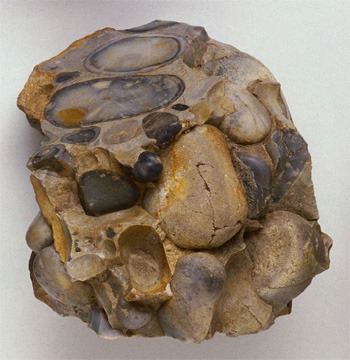
How would you classify the rock in the picture?
a)
Organic
b)
Clastic
c)
Intrusive
d)
Extrusive
36.

Which substance would most likely form sedimentary rock?

a)

cooled lava

b)

melted rock

c)

changed igneous rock

d)

small pebbles

37.

The grain size and the way grains fit together in a rock is called

a)

sediment

b)

texture

c)

igneous

d)

metamorphic

38.

Each rock type can follow only one pathway of the rock cycle.

a)

True

b)

False

39.
This rock started as lava that cooled and then was heated and put under pressure over time. What type of rock is this?
a)

Sedimentary

b)
Igneous
c)
Metamorphic
40.

The latin word ignis means...

a)

wind

b)

rain

c)

fire

d)

magma