wayground logo

Free Printable Worksheets

Font size

S
M
L
XL
Worksheets

8th grade math SMS Fall 2021 Semester Exam Review

Total questions: 152

Worksheet time: 13hrs 40mins

Name
Class
Date
1.

Evaluate the following expression (25)3\left(\frac{2}{5}\right)^3  

a)

 25\frac{2}{5}  

b)

 615\frac{6}{15}  

c)

 8125\frac{8}{125}  

d)

 625\frac{6}{25}  

2.

Evaluate the power (16)2\left(\frac{1}{6}\right)^2  

a)

 112\frac{1}{12}  

b)

 136\frac{1}{36}  

c)

 16\frac{1}{6}  

d)

 236\frac{2}{36}  

3.

Evaluate the power 45045^0  

a)

 4×54\times5  

b)

45

c)

0

d)

1

4.
Simplify to an equivalent expression BUT leave in exponent form.
                                   43⋅45
a)
48
b)
168
c)
415
d)
1615
5.
Simplify   (2m4)(5m2)
a)
10m6
b)
10m8
c)
7m6
d)
7m8
6.
8⁷ ⁄ 8²
a)
8⁵
b)
8⁹
c)
8¹⁴
d)
1⁵
7.
3³ ⋅ 3
a)
34
b)
33
c)
30
d)
1 ⁄ 34
8.
Simplify the expression.
x4 (x12)
a)
x3
b)
x48
c)
x16
d)
x8
9.
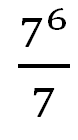
Simplify the expression.
a)
76
b)
7-5
c)
1/75
d)
75
10.
True or False: 
a)
True 
b)
False
11.
Simplify the expression.
a)
1
b)
g10
c)
g25
d)
g
12.
Simplify the expression.
a)
122
b)
130
c)
622
d)
630
13.
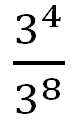
Evaluate the expression using the quotient rule.
a)
34
b)
1/34
c)
3-12
d)
332
14.
Evaluate using the quotient rule: 
a)
a8b13
b)
a2b7
c)
a15b30
15.
True or False?
a)
True
b)
False
16.

 y3=125y^3=125  
Find the value of y

a)

5

b)

15

c)

20

d)

25

17.

How do you solve the equation:  x2 = 100x^2\ =\ 100  

a)

Take  1002100^2  

b)

Take  100\sqrt{100}  

c)

Multiply 100 by 2 

18.
Solve x2 = 16
a)
4
b)
4, -4
c)
256
19.

 64 = a364\ =\ a^3  

a)

4

b)

4,-4

c)

-4

20.

 m3 = 512m^3\ =\ -512  

a)

8

b)

8, -8

c)

-8

21.

Solve  x3=343x^3=343  

a)

104

b)

6

c)

7

d)

no solution

22.

How many solutions do Squared Equations have?  Example:  m2=16m^2=16  

a)

1

b)

2

c)

3

23.
Solve x2 = 9
a)
3, -3
b)
3
c)
81
d)
-81
24.
Who has the greater rate of change?
a)
CJ has a greater rate of change with 13/2
b)
Holland has a greater rate of change with 6
c)
CJ has a greater rate of change with 2/13
d)
They have the same rate of change.
25.
Who has the greater rate of change?
a)
Smith has the greater rate of change with 5/4
b)
Harmon has the greater rate of change with 7/2
c)
Smith has the greater rate of change with 4/5
d)
They have the same rate of change.
26.
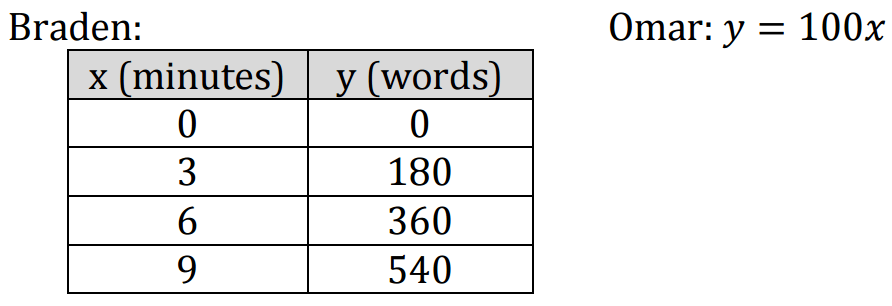
Who has the greater rate of change?
a)
Braden has the greater rate of change with 60/3
b)
Omar has the greater rate of change with 100
c)
Braden has the greatest rate of change with 60
d)
They both have the same rate of change
27.
Who has the greater rate of change?
a)
Tyler has the greater rate of change with 2/3
b)
Aubri has the greater rate of change with 3/2
c)
Tyler has the greater rate of change with 3/2
d)
They have the same rate of change.
28.

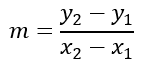
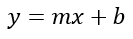
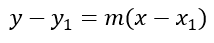
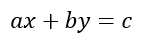
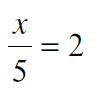
What is the slope formula?

a)
b)
c)
d)
29.

What is the slope of the line that passes through the points (4, 9) and (1, 6)?

a)

1

b)

-3

c)

3

d)

-1

30.

What is the slope of the line that passes through the points (-4, -1) and (-2, -5)?

a)

1/2

b)

-1/2

c)

2

d)

-2

31.

What is the slope of the line that passes through the points (5, 3) and (5, -9)

a)

0

b)

undefined

c)

-6/5

d)

6/5

32.

What is the slope of the line that passes through the points (14, -8) and (7, -6)?

a)

2/7

b)

-2/7

c)

-7/2

d)

7/2

33.

What is the slope of the line that passes through the points (4, -3) and (8, -3)?

a)

-3/2

b)

3/2

c)

0

d)

undefined

34.
Find the rate of change.
a)
-2 minutes per gallon
b)
-20 minutes per gallon
c)
-2 gallons per minute
d)
-20 gallons per minute
35.
Who has the greater rate of change?
a)
CJ has a greater rate of change with 13/2
b)
Holland has a greater rate of change with 6
c)
CJ has a greater rate of change with 2/13
d)
They have the same rate of change.
36.

Which panda is growing faster?

a)

Mochi

b)

Kappa

37.

What is the equation of 5x -y = 10 in slope intercept form?

a)

y = -5x +10

b)

y =5x-10

c)

y = -x+ 10

d)

y=x-10

38.

What is the equation of 6x- 3y = 12 in slope intercept form?

a)

y = -2x+2

b)

y = 2x +2

c)

y = 2x -2

d)

y = 2x + 2

39.
Find the equation of the line that passes through the points:
(-4, -2) and (-3, 5)
a)
y = 1/7 x + 26
b)
y = 7x + 26
c)
y = -7x + 26
d)
y = -7x - 26
40.
Find the equation of the line that passes through the points:

(3, 4) and (0, -5)
a)
y = 3x + 5
b)
y = -3x + 4
c)
y = -3x + 4
d)
y = 3x - 5
41.
Find the equation of the line that passes through the points:

(2, 2) and (3, 4)
a)
y = 2x + 2
b)
y = -2x - 2
c)
y = -2x + 2
d)
y = 2x - 2
42.

Find the equation of the line that passes through the points:


(-2, 4) and (1, 10)

a)

y = 2x - 1

b)

y = -2x + 1

c)

y = 2x + 8

d)

y = -2x

43.

Find the equation of the line that passes through the points:


(-2, 4) and (1, 10)

a)

y = 2x - 1

b)

y = -2x + 1

c)

y = 2x + 8

d)

y = -2x

44.
Write equation of the line containing (6,3) and (4,1)
a)
y = -1x + 5
b)
y = 1x - 3
c)
y = 1x + 5
d)
y = -1x + 3
45.
Write the equation of a line in slope intercept form.
( 2, 0 ) and ( 4, 4 )
a)
y = 2x - 4
b)
y = 1/2x + 2
46.
Write the equation
y = mx + b

m = -1
(-2, 4)
a)
x = -2
b)
y = 4x - 2
c)
b = 2
d)
y = -1x + 2
47.
Find the slope
a)
-2/3
b)
3/2
c)
-3/2
d)
2/3
48.
Which equation best represents the line on the graph?
a)
y= 1/2x
b)
y= -1/2x
c)
y = 2x
d)
y = -2x
49.
What is the y-intercept of the line graphed below?
a)
3
b)
4
c)
-3
d)
4/3
50.
Which equation matches the table?
a)
y = 3x + 9
b)
y = x + 9 
c)
y = x + 3
d)
y = 12x - 3
51.
What does "m" represent in y=mx+b?
a)
y-intercept
b)
slope
c)
macaroni
d)
nothing
52.
What is the y-intercept in the following equation:  y=-4x-5
a)
-4
b)
-4x
c)
5
d)
-5
53.
Find the slope of the line that passes through the points (2, 4) and (6, 12)
a)
1/2
b)
-1/2
c)
2
d)
-2
54.
Determine the type of solution you will have if you get
x=0.25
a)
one solution
b)
infinite solution=identity
c)
no solution
d)
I don't know.  I need to study.
55.
Determine the type of solution you will have if you get
-6=6
a)
one solution
b)
infinite solution=identity
c)
no solution
d)
I don't know.  I need to study.
56.

 5x+4=5x+45x+4=5x+4  

a)

one solution

b)

no solution

c)

infinite solutions

57.

 3(x+4)=3(x8)3\left(x+4\right)=3\left(x-8\right)  

a)

one solution

b)

no solution

c)

infinite solutions

58.

 42x=2x44-2x=2x-4  

a)

one solution

b)

no solution

c)

infinite solutions

59.

 x+9 = x9x+9\ =\ x-9  

a)

one solution

b)

no solution

c)

infinite solutions

60.

 2(x+1)=x3x2-2\left(x+1\right)=x-3x-2  

a)

one solution

b)

no solution

c)

infinite solutions

61.
How many solutions does the equation have
-2 ( -4x + 7 ) = -2 + 4x
a)
One Solution
b)
No Solution
c)
Infinite Solutions
62.

-4(3x + 2) = 3(-4x + 5)

a)

No Solution

b)

One Solution

c)

Infinite Solution

63.
How many solutions does the equation have
4 ( 8n - 1 ) = 19 + 32n
a)
One Solution
b)
No Solution
c)
Infinite Solutions
64.

 x=xx=x  

a)

one solution

b)

no solution

c)

infinite solutions

65.

 x+9 = x9x+9\ =\ x-9  

a)

one solution

b)

no solution

c)

infinite solutions

66.

 2x+1=x+82x+1=x+8  

a)

one solution

b)

no solution

c)

infinite solutions

67.

 8x+16=4(2x+4)8x+16=4\left(2x+4\right)  

a)

one solution

b)

no solution

c)

infinite solutions

68.

 5x8=3x+2x85x-8=3x+2x-8  

a)

one solution

b)

no solution

c)

infinite solutions

69.
What is the inverse operation of subtraction?
a)
Subtraction
b)
Multiplication
c)
Division
d)
Addition
70.
What is the inverse operation of multiplication?
a)
addition
b)
subtraction
c)
multuplication
d)
division
71.
Solve for x:
a)
x = 20
b)
x = 7
c)
x = 10
d)
x = 3
72.

If the coefficient of the variable is a fraction, dividing both sides by a fraction is the same as...

a)

dividing by a whole number

b)

subtracting the fraction

c)

using order of operations

d)

multiplying by the reciprocal

73.

Solve:

 13x=6\frac{1}{3}x=6  

a)

2

b)

18

c)

1/2

d)

60

74.

To solve the equation below, what should you multiply both sides by?

 45m=12\frac{4}{5}m=\frac{1}{2}  

a)

 54\frac{5}{4}  

b)

 45\frac{4}{5}  

c)

 12\frac{1}{2}  

d)

 21\frac{2}{1}  

75.

Solve:

 34b=24\frac{3}{4}b=24  

a)

32

b)

36

c)

24

d)

18

76.

Solve:

 20=15n20=\frac{1}{5}n  

a)

100

b)

50

c)

4

d)

2

77.

-3 (x + 4) + 15 = 6 - 4x

a)

x = 4

b)

x = 3

c)

x = -3

d)

x = -4

78.

2/3 (9 + x) = -5 (4 - x)

a)

x = 10

b)

x = 12

c)

x = 6

d)

x = 0

79.

4(x + 8) - 4 = 34 - 2x

a)

x = 1

b)

x = 2

c)

x = 3

d)

x = 4

80.

10 + 4x = 5(x - 6) + 33

a)

x = 14

b)

x = 7

c)

x = 21

d)

x = 0

81.

x - 9 = 8(2x + 3) -18

a)

x = -1

b)

x = 1

c)

x = 10

d)

x = -3

82.

-6(x - 1) - 7 = - 7x + 2

a)

x = 2

b)

x = 4

c)

x = 3

d)

x = -3

83.

-8 (8 - x) = 4/5 (x + 10)

a)

x = 9

b)

x = 10

c)

x = 8

d)

x = 7

84.

-(4 - x) = 3/4 (x - 6)

a)

x = -2

b)

x = 2

c)

x = 6

d)

x = -6

85.

3x - 24 = 2x ... Solve for x

a)

x = -4

b)

x = -24

c)

x = 4

d)

x = 24

86.

solve for x

a)

x = -25

b)

x = 25

c)

x = 5

d)

x = -5

87.

Solve for x

a)

x=4

b)

x=-4

c)

x=24

d)

x=-24

88.

Solve for x:

a)

x=1

b)

x=3

c)

x=15

d)

x=6

89.

Solve for x:

a)

x=1/2

b)

x=4

c)

x=1/4

d)

x=2

90.

Solve for x:

a)

x=0

b)

x=5/4

c)

x=1

d)

x=3/4

91.

 3x8<43x-8<4  

a)

 x<4x<4  

b)

 x>4x>4  

c)

 x<4x<-4  

d)

 x>4x>-4  

92.
-3 − 6(4x + 6) > -111
a)
x > 3
b)
x < 3
c)
x < -3
d)
x > -3
93.
-p − 4p > -10
a)
p > -2
b)
p > 2
c)
p < -2
d)
p < 2
94.
I can solve Inequalities.
4(5x + 2) ≤ 28
a)
x ≤ 1
b)
x ≥ 1
c)
x ≤ 8
d)
x ≥ 8
95.
solve 5( 6 + 3r) + 7 ≥ 127
a)
r ≤ 6
b)
r ≥ 6
c)
r ≤ -6
d)
r ≥ -6
96.

Is this function linear or nonlinear?

a)

linear

b)

nonlinear

97.
Is this function linear or nonlinear?
a)
linear
b)
nonlinear
98.

Is this function linear or nonlinear?

a)

Linear

b)

Nonlinear

99.

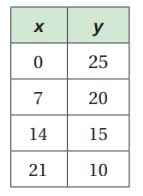
Is the function represented by this table linear or nonlinear?

a)

Linear

b)

Nonlinear

100.

Is the function 2x+3y=7 2x+3y=7\   linear or nonlinear?

a)

Linear

b)

Nonlinear

101.
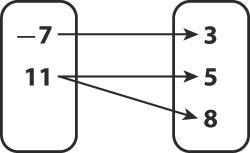
Does this mapping diagram represent a function?
a)
No, because an input value goes to multiple output values
b)
Yes, because each input goes to one and only one output
102.
a)
Function
b)
Not a Function
103.
Is this mapping a function or not a function? 
a)
Function
b)
Not a Function
104.
Is this table a function or not a function? 
a)
Function
b)
Not a Function
105.

Which set of values is a function?

a)

(1,5) (2,5) (1,-5) (2,-5)

b)

(3,10) (5,-3) (7,4) (3, 8)

c)

(6,1) (7, 2) (8, 2) (9, 1)

d)

(1, -2) (5, 8) (5, -7) (3, 4)

106.
Is this graph a function or not a function? 
a)
Function
b)
Not a Function
107.
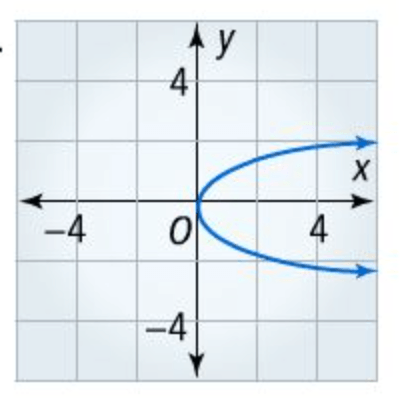
Is this graph a function or not a function? 
a)
Function
b)
Not a Function
108.
Is the relation a function? Why.
a)
Yes, because the x-value 11 has two y-values pair with it.
b)
Yes, because each x-value has only one y-value paired with it.
c)
No, because the x-value 11 has two y-values pair with it.
d)
No, because each x-value has only one y-value paired with it.
109.
Which set of values is a function?
a)
(9,5) (10,5) (9,-5) (10,-5)
b)
(3,4) (4,-3) (7,4) (3, 8)
c)
(6,-5) (7, -3) (8, -1) (9, 1)
d)
(2, -2) (5, 9) (5, -7) (1, 4)
110.
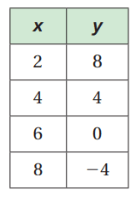
Is this table a function or not a function? 
a)
Function
b)
Not a Function 
111.

Which list of numbers is in order from least to greatest?

A. 5/8, 9/16, 5/12

B. 5/12, 9/16, 5/8

C. 9/16, 5/12, 5/8

D. 9/16, 5/8, 5/12

a)

A

b)

B

c)

C

d)

D

112.
Put in the symbol to make the statement true...
-17.5   _________ -√121
a)
>
b)
<
c)
=
113.
List the following numbers from least to greatest:
-64 , 3.5 , √27 , 6.666...
a)
-64 , 3.5 , √27 , 6.666...
b)
3.5 , √27 , 6.666..., -64
c)
3.5, -64, √27, 6.666...
d)
6.666, √27, -64, 3.5
114.
Which of these values is the GREATEST?
a)
63/7
b)
8.99
c)
450%
d)
-22
115.
Which of these values is the GREATEST?
a)
63/7
b)
8.99
c)
450%
d)
-22
116.

Which is an example of a rational number?

a)

.211232112421125. . . .

b)

π

c)

√25

d)

√12

117.

A decimal (like 3.474474447...) is which type of number?

a)

Rational

b)

Irrational

118.

A repeating decimal (like 4.7777...) is which type of number?

a)

Rational

b)

Irrational

119.

Determine whether  π\pi  is rational or irrational.

a)

Rational

b)

Irrational

120.

Which of the following numbers is rational?

a)

7\sqrt{7}

b)

23\frac{2}{3}

c)

3.1456289...

d)

π\pi

121.

Which of the following numbers is rational?

a)

7\sqrt{7}

b)

23\frac{2}{3}

c)

3.1456289...

d)

π\pi

122.

Which of the following numbers is not rational?

a)

3-3

b)

2.72.7

c)

4\sqrt{4}

d)

5\sqrt{5}

123.

Select ALL numbers that are irrational.

a)

10

b)

-21

c)

π\pi

d)

102\frac{10}{2}

e)

10\sqrt{10}

124.

Determine which of the following examples is irrational.

a)

A fraction whose denominator is larger than its numerator

b)

A decimal that never ends but repeats

c)

A perfect cube root

d)

A decimal that never ends and never repeats

125.
Divide:
(6.9 x 10⁷) / (2.3 x 10⁻³)
a)
3 x 10¹⁰
b)
3 x 10⁴
c)
3 x 10⁻⁴
d)
3 x 10-11
126.
Solve:
(2.1×10²​​× (3.0×10⁴)
a)
5.1 x 10²
b)
6.3 x 10⁶
c)
5.1 x 10⁶
d)
6.3 x 10⁸
127.
Solve:
(6 x 10⁶) / (2 x 10³)
a)
12 x 103
b)
3 x 10⁹
c)
1.2 x 10⁴
d)
3 x 10³
128.
Multiply:
(3.4 x 10⁵)(1.2 x 10⁻³)
a)
4.08 x 10³
b)
4.8 x 10²
c)
4.08 x 10²
d)
4.08 x 101
129.
Divide:
(6.9 x 10⁷) / (2.3 x 10⁻³)
a)
3 x 10¹⁰
b)
3 x 10⁴
c)
3 x 10⁵
d)
3 x 10¹¹
130.
Divide:
(6.9 x 10⁷) / (2.3 x 10⁻³)
a)
3 x 10¹⁰
b)
3 x 10⁴
c)
3 x 10⁵
d)
3 x 10¹¹
131.
What is scientific notation?
a)
A long way to write really short  numbers
b)
A short way to write really long numbers
c)
I don't know...
d)
None of the above
132.

Convert to Scientific Notation: .0002345

a)

2.345x1042.345x10^{-4}

b)

2.345 x 1042.345\ x\ 10^4

c)

2.345 x 1072.345\ x\ 10^{-7}

d)

2.345 x 1032.345\ x\ 10^3

133.

Convert to Scientific Notation: 64,800,000

a)

6.48 x 1076.48\ x\ 10^7

b)

6.48 x 1076.48\ x\ 10^{-7}

c)

6.48 x 1066.48\ x\ 10^6

d)

6.48 x 1066.48\ x\ 10^{-6}

134.

If a number is very large like, 65,000,000, then the exponent in Scientific Notation will be

a)

Positive

b)

Negative

c)

0

135.

The purpose of writing in Scientific Notation is

a)

To write very large or very small numbers in a shorter format

b)

Because of SCIENCE

c)

To write large numbers in a shorter format

d)

To write small numbers in a shorter format

136.

Which number is the coefficient?  3.5 x 1043.5\ x\ 10^4  

a)

3.5

b)

10

c)

4

137.

Which number is the exponent?  7.5 x 1057.5\ x\ 10^{-5}  

a)

-5

b)

5

c)

10

d)

7.5

138.
Which answer represents a reflection across the x-axis, using the algebraic rule (x,y) --> (x, -y)?
a)
d
b)
c
c)
b
d)
a
139.
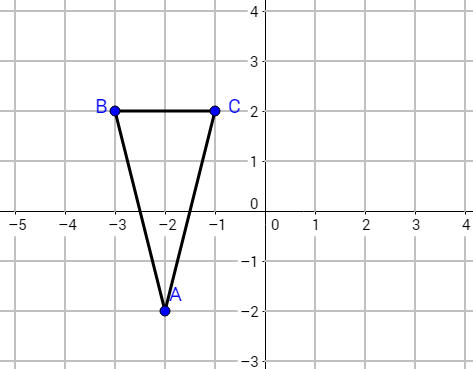
Triangle ABC is going to be translated. How is ABC being translated if the rule (x,y) --> (x+3, y-2) is used?
a)
3 up and 2 left
b)
3 right and 2 down
c)
3 left and 2 up
d)
3 right and 2 up 
140.
Identify the transformation from ABC to A'B'C'.
a)
90o clockwise rotation
b)
90o counter clockwise rotation
c)
Reflection across the y-axis
d)
Reflection across the x-axis
141.
a transformation that changes the size of a figure, but not the shape
a)
translation
b)
rotation
c)
reflection
d)
dilation
142.
Identify the transformation from ABCD to A'B'C'D'.
a)
Translation
b)
Reflection across the x-axis
c)
Reflection across the y-axis
d)
90o counter clockwise rotation
143.
When you translate
(x-2 , y + 6) the figure will move _____.
a)
2 units right and 6 units right
b)
2 units left and 6 units down
c)
2 units left and 6 units up
d)
2 units left 6 units right
144.
What does a translation do to an image?
a)
Turns it 90* clockwise
b)
Mirrors it
c)
Shrinks it
d)
Slides it
145.
Which rule would result in a reflection in the x-axis?
a)
(x, y) → (2x, 2y)
b)
x, y) → (x + 4, y + 4)
c)
(x, y) → (y, -x)
d)
(x, y) → (x, -y)
146.
When you translate,
(x - 4, y + 3) the figure will move _____.
a)
4 units left and 3 units right
b)
4 units left and 3 units up
c)
4 units down and 3 units up
d)
4 units down and 3 units down
147.
What type of transformation is quadrilateral PQRS?
a)
Translation 4 units right
b)
Rotation around the origin
c)
Reflection over the x-axis
d)
Reflection over the y-axis
148.
Choose the correct scale factor:
a)
2
b)
3
c)
1/3
d)
1/2
149.
Dilate the figure by a scale factor of 3 with the origin as the center of dilation. What are the coordinates of the image?
A(3,3) B(6,6) C(9,3)
a)
A'(9,9) B'(18,18) C'(27,9)
b)
A'(6,6) B'(9,9) C'(12,6)
c)
A'(0,0) B'(3,3) C'(6,0)
d)
A'(1,1) B'(2,2) C'(3,1)
150.
Dilate Point B by a scale factor of 1/2
a)
(1.5,-4)
b)
(-1.5,1)
c)
(-1,-1.5)
d)
(-2,-2)
151.
The point (8, 12) was dilated to become point (2, 3). What was the scale factor?
a)
½
b)
¼
c)
4
d)
2
152.

A dilation produces a congruent figure

a)

True

b)

False