wayground logo

Free Printable Worksheets

Font size

S
M
L
XL
Worksheets

Review Quizziz (Not SUPER) 6th grade fall semester

Total questions: 206

Worksheet time: 3hrs 29mins

Name
Class
Date
1.

Which statement best describes an element?

a)

pure, made of more than one type of atom

b)

when combined, a chemical reaction forms

c)

pure, made of only one type of atom

d)

can be broken down easily

2.
Which one can be found on the periodic table?
a)
Compound 
b)
Element
3.
Which one has more than one type of atom in it?
a)
Element
b)
Compound 
4.

Helium (He) is an example of an:

a)

Element

b)

Compound

c)

Solution

d)

Mixture

5.

When two or more different elements chemically combine, a __________________________ is formed.

a)

element

b)

compound

c)

mixture

d)

solution

6.

Examples are water (H2O) and carbon dioxide (CO2).

a)

elements

b)

compounds

7.
a)
Element
b)
Compound
8.
Which of the following represents an element?
a)
H2O
b)
H2
c)
NaCl
d)
CaCO3
9.
Which of the following is a compound?
a)
Co
b)
He
c)
CO
d)
H
10.
Which statement best describes an element?
a)
made from mixture 
b)
thousands in the world
c)
pure, made of only one thing
d)
can be separated 
11.
Which best describes a compound? 
a)
found on the periodic table 
b)
made from two or more elements
c)
a pure substance 
d)
only 100 in the world 
12.
Elements are represented by a...
a)
More than one capital letter
b)
Chemical symbol 
c)
Chemical formula 
d)
Oxygen 
13.
Compounds are represented by a...
a)
Capital Letter
b)
Chemical symbol 
c)
Chemical formula 
d)
Chlorine 
14.
A new compound has been discovered. Here is the chemical formula:
CHOFeNaNPb 

How many elements are in this compound?
a)
5
b)
6
c)
7
d)
10
15.
The chemical symbol O is used for what element?
a)
Cerium
b)
Cobalt 
c)
Oxygen
d)
Osmium
16.
The chemical symbol N is used for what element?
a)
Rubidium
b)
Gold
c)
Potassium
d)
Nitrogen
17.
Which one can be found on the periodic table?
a)
Compound 
b)
Element
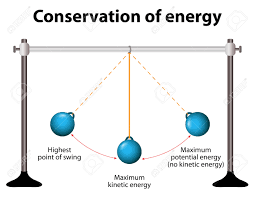
18.
Is salt NaCl a compound or a element?
a)
Element
b)
Compound
19.
Water is an example of:
a)
Element
b)
Compound
c)
Solution
20.
How many different elements are represented in the compound?
Fe3O4
a)
2
b)
3
c)
1
d)
4
21.
How many different elements are represented in the compound?
C13H9N
a)
2
b)
3
c)
1
d)
4
22.
How many different elements are represented in the compound?
CH4
a)
1
b)
2
c)
3
d)
4
23.
Which of the following is the chemical symbol for Hydrogen? 
a)
He
b)
H
c)
Hy
d)
Hn
24.
Which of the following is the chemical formula for Sodium?
a)
S
b)
So
c)
NA
d)
Na
25.
Which statement best describes an element?
a)
made from mixture 
b)
thousands in the world
c)
pure, made of only one thing
d)
can be separated 
26.
Elements are represented by a...
a)
More than one capital letter
b)
Chemical symbol 
c)
Chemical formula 
d)
Oxygen 
27.
Compounds are represented by a...
a)
Capital Letter
b)
Chemical symbol 
c)
Chemical formula 
d)
Chlorine 
28.
A new compound has been discovered. Here is the chemical formula:
CHOFeNaNPb 

How many elements are in this compound?
a)
5
b)
6
c)
7
d)
10
29.
The chemical symbol O is used for what element?
a)
Cerium
b)
Cobalt 
c)
Oxygen
d)
Osmium
30.
The chemical symbol N is used for what element?
a)
Rubidium
b)
Gold
c)
Potassium
d)
Nitrogen
31.
Which one can be found on the periodic table?
a)
Compound 
b)
Element
32.
Which one has more than one type of atom in it?
a)
Element
b)
Compound 
33.
Is salt NaCl a compound or a element?
a)
Element
b)
Compound
34.
Water is an example of:
a)
Element
b)
Compound
c)
Solution
35.
How many different elements are represented in the compound?
Fe3O4
a)
2
b)
3
c)
1
d)
4
36.
How many different elements are represented in the compound?
C13H9N
a)
2
b)
3
c)
1
d)
4
37.
How many different elements are represented in the compound?
CH4
a)
1
b)
2
c)
3
d)
4
38.
Which of the following is the chemical symbol for Hydrogen? 
a)
He
b)
H
c)
Hy
d)
Hn
39.
Which of the following is the chemical formula for Sodium?
a)
S
b)
So
c)
NA
d)
Na
40.
Which of the following is the chemical formula for Salt? 
a)
Na
b)
Cl
c)
ClNa
d)
NaCl 
41.
The two most common elements found in the oceans are.  Remember oceans are made up of water.
a)
Sodium and Nitrogen
b)
Oxygen and Aluminum
c)
Iron and Carbon
d)
Oxygen and Hydrogen
42.
The smallest part of an element is
a)
proton
b)
atom
c)
compound
d)
mixture
43.
What is the chemical symbol for the element Silicon
a)
S
b)
Si
c)
si
d)
Sl
44.
What is the chemical symbol for the element Gold
a)
G
b)
go
c)
AU
d)
Au
45.
Which of the following is a compound?
a)
Co
b)
He
c)
CO
d)
H
46.
Which best describes a compound? 
a)
found on the periodic table 
b)
made from two or more elements
c)
a pure substance 
d)
only 100 in the world 
47.

What type of change can be easily reversed?

a)

chemical change

b)

physical change

c)

both chemical and physical changes

d)

neither physical or chemical changes

48.

Which of the following is an example of a physical change?

a)

a bike rusting

b)

toast burning

c)

butter melting

d)

food spoiling

49.

Which of the following examples is a physical change but NOT a change of state of matter?

a)

logs burning

b)

water freezing into ice cubes

c)

candle wax melting

d)

paper being cut

50.

Which of the following is an example of a chemical change?

a)

a penny tarnishing

b)

a mirror being scratched

c)

hair being cut

d)

water being boiled

51.

What is the best way to separate a mixture of sugar, sand, and water?

a)

Freeze the mixture, causing the water to be destroyed, then sift the sugar from the sand.

b)

Filter the sand from the sugar and water, then heat the mixture, causing the water to evaporate.

c)

Filter the mixture, causing the sugar and sand to get caught but not the water.

d)

Stir the mixture, causing the water to move above the sugar and sand.

52.

A student is investigating changes with common classroom materials. Which of the following BEST describes the conclusion the student can make about the investigations?

a)

The paperclip shows evidence of a physical change by changing the shape of the object, whereas the pencil eraser and hole puncher show evidence of a physical change by changing the size of the object.

b)

All three investigations show evidence of a physical change due to a change in the color of the original substance.

c)

The paperclip and hole puncher shows evidence of a physical change by changing the chemical properties of the original object, whereas the pencil eraser shows evidence of a physical change by changing the size of the object.

d)

All three investigations show evidence of a physical change due to a change in state of matter.

53.

A 5th grade student places baking soda in a cup. The student then adds vinegar to the cup. The student collects the data below from the experiment. Based upon the results of the experiment, which statement BEST describes whether the change is a physical or chemical change.

a)

The data concludes that a physical change has occurred because it had an increased change in temperature, which resulted in the liquid to start bubbling.

b)

The data concludes that a physical change has occurred because the color of the liquid changed when you mixed two materials.

c)

The data concludes that a chemical change has occurred because there was formation of bubbles when the materials reacted to each other.

d)

The data concludes that a chemical change has occurred because mixing two substances together will always result in a reaction.

54.

Which of the following is a correct statement about the investigations?

a)

All of the situations are examples of physical changes because all of the investigations exhibit changes to the physical properties.

b)

None of the situations are examples of physical changes because they all involve a color change.

c)

Situation 2 is a physical change because rust forming is a natural process.

d)

Situations 1 and 3 are physical changes because no new substances are formed.

55.

Three students at Mountain Park Elementary were given an assignment by their science teacher to plan and carry out experiments where chemical changes would occur. The chart shows each student’s plan and the results he or she recorded. Which statement is true about the experiments?

a)

Student A was the only one to create an experiment where a color change occurred. This shows evidence of a chemical change.

b)

Student A, Student B, and Student C all created experiments where chemical changes occurred. Student A observed a color change, Student B saw bubbles, and Student C was able to dissolve salt.

c)

Student B and Student C created experiments were chemical changes occurred. Student A just dyed her water. Student B and Student C both changed their substances to prove that they had chemical changes. Student B created a gas while Student C got rid of the salt.

d)

Student B was the only one to create an experiment with evidence of a chemical change. She created a new substance, a gas.

56.

A teacher takes a tray of ice cubes out of the freezer. Each student takes an ice cube and holds it in their hands. They make the observations listed in the chart. The student claims that changing the temperature of the water causes a physical change that turns water into ice.

Which argument BEST supports the student’s claim?

a)

The ice cube is melting in the student’s hand since the hands are much warmer than the ice. Heat is being added to the ice, which causes the particles to move faster.

b)

The ice cube is freezing in the student’s hand since the hands are much warmer than the ice. Heat is being removed from the ice, which causes the particles to move slower.

c)

The ice cube is melting in the student’s hand since state is changing from a solid to a liquid. Heat is being removed from the ice, which causes the particles to move faster.

d)

The ice cube is melting in the student’s hand since state is changing from a liquid to a solid. Heat is being added to the ice, which causes the particles to move slower.

57.
What units are used to measure mass?
a)
g
b)
cm3
c)
g/cm3
d)
cm3/g
58.
Jack has a rock. The rock has a mass of 14g and a volume of 2cm3. What is the density of the rock?
a)
7 mL
b)
7 g/cm3
c)
28 g/cm3
d)
1/7 g/cm3
59.
If an object has a density of .6 g/mL and you put it into water, will it sink or float?  
a)
sink
b)
float
60.
If an object has a density of 3.6 g/mL and you put it into water, will it sink or float?  
a)
sink
b)
float
61.
What is the formula for density?
a)
density = mass x volume
b)
density = mass / volume
c)
density = mass + volume
d)
density = mass - volume
62.
Frank has an eraser. It has a mass of 4g, and a volume of 2cm3. What is its density?
a)
8 g/cm3
b)
2 g/cm3
c)
1/2 g/cm3
d)
24 g/cm3
63.
Calculate the density of the cube.
a)
2 g/cm3
b)
4 g/cm3
c)
6 g/cm3
d)
8 g/cm3
64.
True or False:  The density of a specific type of material never changes.  
a)
True
b)
False
65.
Helium balloons rise on earth because
a)
helium is less dense than air
b)
helium is more dense than air
c)
helium is cooler than air
d)
helium is warmer than air
66.
Look at this image.  Which object has the LOWEST density in water? How
a)
The Ping Pong Ball because it floats to the top 
b)
The bolt because it has sunk to the bottom
c)
The soda cap because it is not just full of air like the Ping Pong ball
67.
What two types of measurements make up DENSITY
a)
Mass and Volume
b)
Temperature and Mass
c)
Grams and Centimeters
d)
Volume and Weight
68.
Which of these is a property of metals?
a)
It's malleable
b)
It can't conduct electricity
c)
They are used in food
d)
It's very brittle
69.
Which of these grouping of elements could have the characteristic of brittle?
a)
Metal
b)
Nonmetal
70.
Which of the following is a good conductor of heat?
a)
Metal
b)
Nonmetal
c)
Metalloid
71.
Some characteristics of a metal are that it is malleable and ductile.
a)
TRUE
b)
FALSE
72.
If a material can easily be drawn into the shape of a wire, it is
a)
Ductile
b)
Magnetic
c)
Malleable
d)
Reactive
73.
Iron is a good conductor, malleable and magnetic. What type of element is Iron? 
a)
Metal
b)
Nonmetal
c)
Metalloid
d)
Pretty
74.
Which elements are found on the left to middle of The Periodic Table? 
a)
Metals
b)
Nonmetals
c)
Metalloids
d)
Candles
75.
Silicon is a semiconductor and has properties of both metals and nonmetals. What type of element is Silicon? 
a)
Metal
b)
Nonmetal
c)
Metalloid
d)
Pretty
76.
Which elements are found on the right side of The Periodic Table?
a)
Metals
b)
Nonmetals
c)
Metalloids
d)
Water
77.
All of these properties describe metals except...
a)
malleable
b)
conductors
c)
brittle 
d)
shiny
78.
Which element is a metalloid?
a)
Titanium
b)
Selenium
c)
Potassium
d)
Polonium
79.
Which of the following is a good conductor of heat?
a)
Metal
b)
Nonmetal
c)
Metalloid
80.
One property of a nonmetals is that it is a good conductor of electricity?
a)
true
b)
false
81.
All of the following would classify an element as a metal except?
a)
Dull
b)
Luster
c)
Malleable
d)
Hard
82.
Non-metals are good conductors of heat and electricity. 
a)
TRUE
b)
FALSE
83.
Metalloids are weak conductors of heat and electricity. 
a)
TRUE
b)
FALSE
84.
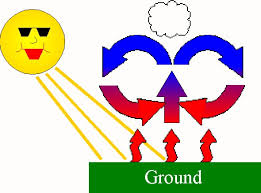
Near the ceiling of a room the air is warmer; the warm air rises because of
a)
conduction
b)
convection
c)
radiation
85.
A huge rock at the state park gets hot during the day. The rock was warmed from the Sun by
a)
conduction
b)
convection
c)
radiation
86.
The transfer of heat by currents through liquids of gases is called
a)
Perspiration
b)
Radiation
c)
Conduction
d)
Convection
87.
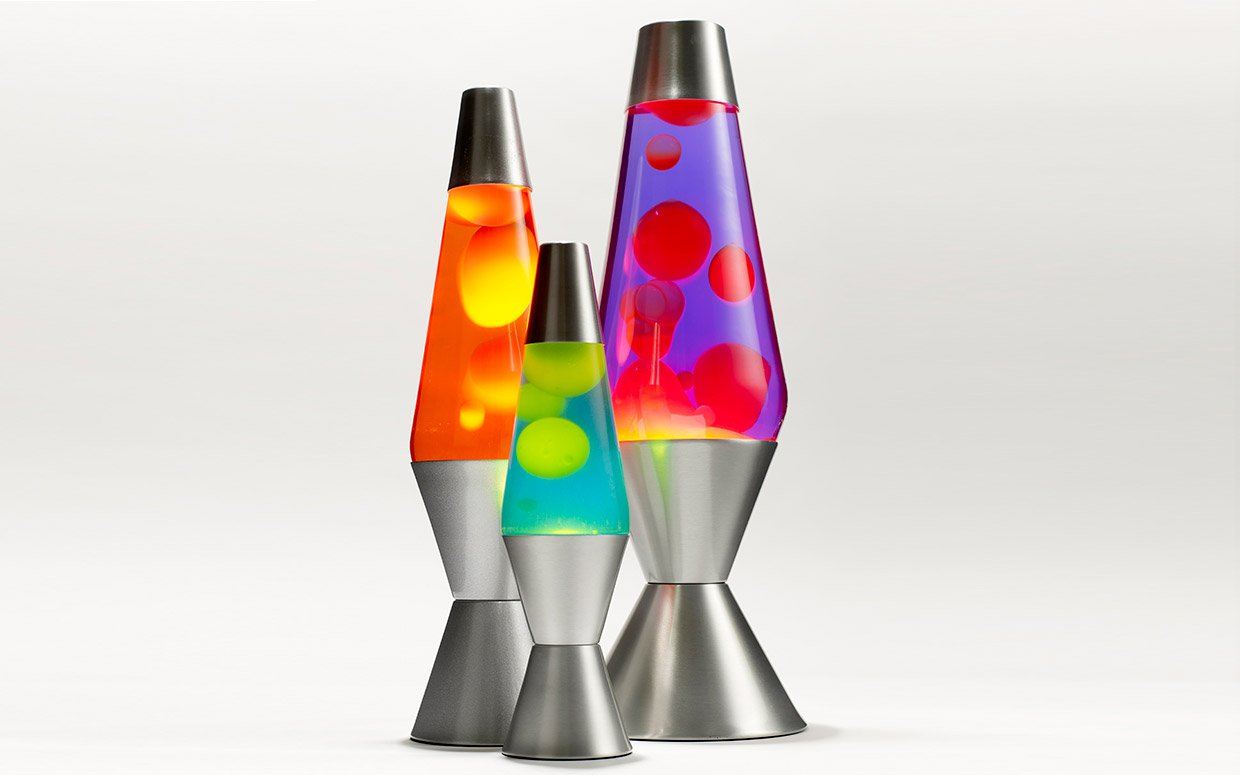
This is a lava lamp. When the light bulb heats the wax, the wax rises. When the wax cools, it falls. This cycle of rising/falling is an example of:
a)
Conduction.
b)
Convection.
c)
Radiation.
88.
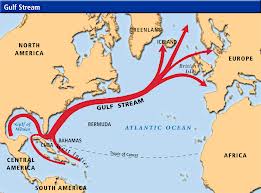
The Gulf Stream is a current that brings warm ocean water from the south to the north. What type of heat transfer is this?
a)
conduction
b)
convection
c)
radiation
d)
Insolation 
89.
What kind of heat transfer happens when the sun heats your body?
a)
Conduction
b)
Radiation
c)
Convection
d)
Density
90.
Warm air rises and the cool air sinks demonstrates this type of heat transfer. 
a)
conduction
b)
convection
c)
radiation
d)
Insolation 
91.
When you iron a shirt, the shirt gets warm.  This type of heat transfer is an example of
a)
condensation
b)
conduction
c)
convection
d)
radiation
92.
Warm air is __________ dense than cold air and rises creating convection currents.
a)
more
b)
less
93.
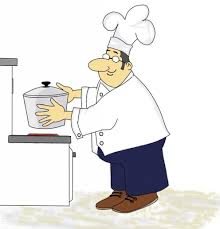
The man takes the hot pot off the stove with his bare hands and his hands get burned.  This is an example of 
a)
conduction
b)
convection
c)
radiation
94.
What is the definition of CONDUCTION?
a)
When heat is transferred from objects like rays of light or electromagnetically.
b)
a  hot liquid or air that  expands, becomes less dense, and rises or becomes more dense, and sinks.
c)
When heat transfers from objects that are touching.
d)
When heat transfers through the heater or AC in your house.
95.
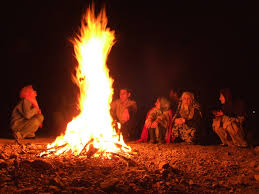
A group of friends gather around a fire to stay warm.  This is an example of
a)
conduction
b)
convection
c)
radiation
96.
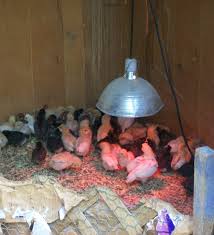
The baby chickens are kept warm from the heat lamps. This demonstrates what kind of heat transfer? 
a)
conduction
b)
convection
c)
radiation
97.
A metal spoon heated by hot soup.  This is an example of
a)
Conduction
b)
Transpiration
c)
Convection
d)
Radiation
98.
"Lava lamps" contain colored liquids. These liquids form globs that rise to the top due to
a)
conduction
b)
convection
c)
radiation
99.
You lay on a hot rock and keep warm from the rock by
a)
conduction
b)
convection
c)
radiation
100.
A crayon placed on a dark driveway in bright sunlight melted into a colorful puddle. What caused the crayon to melt?
a)
Solar radiation heated the driveway and then heat transferred to the crayon by conduction.
b)
Solar radiation heated the driveway and then heat transferred to the crayon by radiation.
c)
Solar convection heated the driveway and then heat transferred to the crayon by radiation.
d)
Solar convection heated the driveway and then heat transferred to the crayon by conduction.
101.
Which statement is true?
a)
The quicker a molecule moves, the colder it is.
b)
The slower a molecule moves, the warmer it is.
c)
The quicker a molecule moves, the warmer it is
d)
The movement of a molecule doesn't affect its temperature
102.
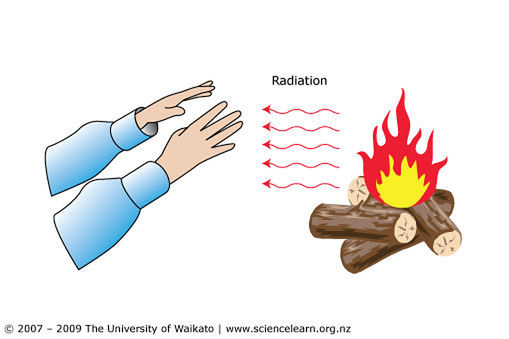
The picture shows heat transfer by
a)
Conduction
b)
Convection
c)
Radiation
103.
Cold air sinks.  True or false? 
a)
true
b)
false
104.
Some students observing a classroom device being used, noticed the below energy transformations. 
Electrical → Mechanical → Sound
Which device were the students most likely observing?
a)
A triple beam balance measuring an object’s mass.
b)
A pencil sharpener plugged into a wall outlet.
c)
A projector displaying a diagram on the screen.
d)
A working flashlight used to light up a dark corner.
105.
Which of these is an example of light energy being transformed into chemical energy?
a)
A glow stick lights up when broken.
b)
Water heated by the sun evaporates.
c)
A plant makes sugar in the sunlight.
d)
A battery causes a buzzer to vibrate.
106.
Which kind of energy change occurs when a candle is burning?
a)
Chemical to light.
b)
Light to electrical.
c)
Solar to heat.
d)
Chemical to electrical.
107.
Which type of energy transformation occurs when a flashlight shines?
a)
chemical → thermal → electrical
b)
chemical → electrical → light
c)
thermal → chemical → light
d)
chemical → electrical → chemical
108.
When water falls through a dam and turns a turbine connected to a generator, electricity is produced. This electricity is often used to light our homes and offices. Which of the following shows the energy transformations that occurs?
a)
electrical → light → mechanical
b)
chemical → mechanical → electrical
c)
mechanical → chemical → light
d)
mechanical → electrical → light
109.
A lamp that plugs into a wall socket draws energy which flows through a thin wire in the bulb causing it to glow. What energy transformations are taking place?
a)
chemical → light → electrical
b)
mechanical → sound → light
c)
thermal → solar → electrical
d)
electrical → thermal → light
110.
Which of the following best describes the energy transformations that occur when a flashlight that runs on batteries is turned on?
a)
chemical → light → electrical
b)
electrical → light → chemical
c)
light → electrical → chemical
d)
chemical → electrical → light
111.
Which of the following shows the correct order of the energy transformations that occur when green plants produce their food from the Sun’s energy?
a)
chemical → thermal
b)
light → chemical
c)
thermal → light
d)
chemical → electrical
112.
Which of the following shows the energy transformation that occurs when solar panels are used to heat a building?
a)
light → thermal
b)
chemical → electrical
c)
thermal → chemical
d)
light → mechanical
113.
The picture shows a light bulb attached to a hand generator. What energy transformation occurs as the handle of the generator is turned?
a)
thermal → solar → light
b)
solar → light → electrical
c)
mechanical → electrical → light
d)
electrical → mechanical → light
114.
Which device transforms electrical energy into mechanical energy?
a)
Flashlight
b)
Pencil Sharpener
c)
Lamp
d)
TV
115.
The picture shows a microwave oven. As a microwave oven is operated, electrical energy is transformed into all of the following types of energy EXCEPT —
a)
Solar
b)
Light
c)
Thermal
d)
Mechanical
116.
The diagram shows a circuit with the bulb glowing. How does the energy change as it moves from inside the battery, along the wires, and through the light bulb?
a)
electrical → light → chemical
b)
light → electrical → chemical
c)
chemical → electrical → light
d)
chemical → light → electrical
117.
Which of the following systems transforms chemical energy to light energy?
a)
Fan
b)
Lamp
c)
Compass
d)
Burning a candle
118.
The Theory of the Conservation of Energy states -
a)
Energy can be created, just not destroyed. It changes its form from one type to another.
b)
Energy can never be created nor destroyed. It can only change its form from one type to another.
c)
The total energy in our Universe changes, as different forms of energies can be transformed from each other under certain circumstances.
d)
Energy transformations do not passively occur in our lives, rather we actively make use of energies and transform energies.
119.

What type of energy is food energy stored in your muscles?

a)

mechanical

b)

nuclear

c)

thermal

d)

chemical

120.

The sun gives of large amounts of light and ___________ energies?

a)

nuclear

b)

mechanical

c)

chemical

d)

thermal

121.

Muscles operate to push the pedals on a bicycle causing the wheels to turn. What type of energy being represented?

a)

mechanical

b)

physical

c)

thermal

d)

chemical

122.

Any form of energy can be converted to any other form of energy.

a)

True

b)

False

123.

Which type of energy propels a baseball after it has been struck by a bat?

a)

chemical

b)

thermal

c)

mechanical

d)

nuclear

124.

Which type of potential energy is stored in a gasoline?

a)

nuclear

b)

mechanical

c)

chemical

d)

thermal

125.

Strong wind spinning a wind turbine can generate which type of energy?

a)

mechanical

b)

electrical

c)

thermal

d)

chemical

126.

What energy conversions take place when you vigorously rub your hands together?

a)

friction => heat

b)

chemical => thermal

c)

mechanical => thermal

d)

kinetic => chemical

127.

What is the correct energy chain from the sun to grass to cow?

a)

light and thermal => chemical => chemical

b)

light => heat => mechanical => chemical

c)

light => thermal => mechanical

d)

nuclear => chemical => potential

128.

Which of the following is the correct chain of energy that takes place when a flashlight is turned on?

a)

chemical => electrical => light

b)

mechanical => electrical => light

c)

nuclear => chemical => light

d)

thermal => chemical => mechanical

129.

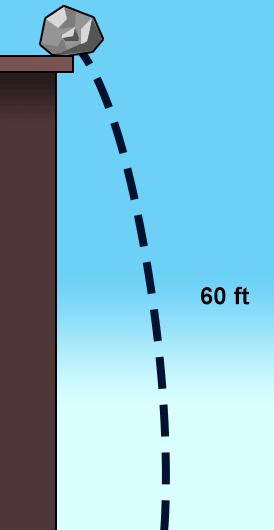
The rock in the picture is pushed over the edge and it begins to fall. Which type of energy conversion is taking place?

a)

mechanical to heat

b)

sound to mechanical

c)

potential to kinetic

d)

kinetic to potential

130.

A ball is projected into the air. Where is potential energy the greatest?

a)
b)
c)
d)
131.

How does the mass of a bowling ball that has been rolled down the lane affect the kinetic energy?

a)

The kinetic energy does not depend on the mass of the bowling ball.

b)

The kinetic energy is increasing proportional to the mass of the bowling ball.

c)

The kinetic energy is decreasing proportional to the mass of the bowling ball.

d)

The kinetic energy is increasing proportional to the square of the mass of the bowling ball.

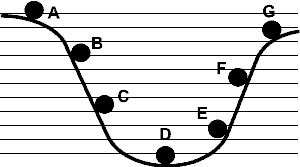
132.

Which point on the roller coaster's path represents the maximum potential energy?

a)
b)
c)
d)
133.

As a roller coaster goes downhill

a)

kinetic energy is converted into potential energy.

b)

potential energy is converted into kinetic energy.

c)

electrical energy is converted into potential energy.

d)

potential energy is converted into electrical energy.

134.

When gasoline is burned in a car engine, ________ energy is converted into _________ energy.

a)

heat, chemical

b)

chemical, potential

c)

mechanical, chemical

d)

chemical, mechanical

135.

Which diagram BEST represents a convection heating current?

a)
b)
c)
d)
136.

Within the alarm clock seen here, energy is transformed. It is time to get up! The alarm clock goes off. What are the energy transformations taking place in your alarm clock?

a)

electrical to magnetic to sound

b)

electrical to mechanical to sound

c)

electrical to mechanical to light

d)

chemical to electrical to mechanical

137.

Muscles convert chemical energy into

a)

light energy.

b)

nuclear energy.

c)

mechanical energy.

d)

electromagnetic energy.

138.

What form of energy does a compressed spring have?

a)

heat energy

b)

kinetic energy

c)

chemical energy

d)

potential energy

139.

Maria’s father started a fire in the fireplace. He crumpled some paper, lit a match, and soon the logs in the fireplace were burning. In this case, the stored chemical energy in the logs was changed into

a)

electrical energy.

b)

mechanical motion.

c)

heat and light energy.

d)

electrical and heat energy.

140.

Conduction occurs more easily between solids and liquids. This is because the particles in gases are

a)

farther apart and move faster.

b)

closer together and move faster.

c)

further apart and move more slowly.

d)

closer together and move more slowly.

141.

Energy is transferred in solids by conduction, which means that

a)

heat travels in both directions.

b)

heat travels from the cooler object to the hotter object.

c)

heat travels from the hotter object to the cooler object.

d)

heat does not travel between objects of different temperatures.

142.

Marina is using a metal spoon to stir her soup. Why does the spoon feel warm?

a)

Stirring creates heat energy in the spoon.

b)

Marina’s hand warms the spoon she is holding.

c)

Heat energy from the soup is transferred to the spoon.

d)

Heat energy from the spoon is transferred to the soup.

143.

The light bulb converts electrical energy into light and _________.

a)

chemical

b)

electromagnetic

c)

heat

d)

nuclear

144.

A drawn bow possesses mechanical energy in the form of _______________. After the arrow is released, the energy is transformed into _________________.

a)

potential energy; mechanical energy

b)

elastic potential energy; kinetic energy

c)

gravitational potential energy; kinetic energy

d)

elastic kinetic energy; mechanical kinetic energy

145.

How would you describe the relationship between the mass of a car and its kinetic energy?

a)

As the mass of a car increases, its kinetic energy increases.

b)

As the mass of a car increases, its kinetic energy decreases.

c)

As the mass of a car decreases, its kinetic energy increases.

d)

There is no clear relationship between mass and kinetic energy.

146.

In the figure, potential energy is being converted into kinetic energy from

a)

point A to point B

b)

point B to point C

c)

The only energy involved here is kinetic.

d)

Energy is not being converted.

147.

A pole vaulter runs forward, plants his pole, rises in the air and lands. What point represents his greatest amount of gravitational potential energy?

a)

when he initially lands

b)

as he runs forward to plant the pole

c)

just before he starts to fall to the ground

d)

after take-off as the pole expands and lifts the vaulter toward the bar

148.

Which image exclusively represents the principle of radiation?

a)

IV

b)

III

c)

II

d)

I

149.
The Law of Conservation of Energy states:
a)
Energy can created or destroyed but not transformed 
b)
Energy cannot be created or destroyed, it can only transformed
c)
Energy can't be created, destroyed or transformed
150.
According to the Law of Conservation of energy, the amount of energy before and after a reaction must be the same. Which statement below is true?
a)
The total amount of energy is conserved
b)
The total amount of energy is less after a reaction
c)
The total amount of energy is more after a reaction
151.
Which energy transformation below matches?
A book falling?
a)
chemical to sound and heat
b)
kinetic to sound and heat
c)
electrical to sound and heat
152.
Which energy transformation below matches?
Water moving over a dam to move a generator?
a)
kinetic to chemical
b)
kinetic to electrical
c)
solar to electrical
153.
Which energy transformation below matches?
Green plants?
a)
chemical to mechanical
b)
chemical to heat
c)
solar to chemical
154.
Which energy transformation below matches?
Animals eating food?
a)
electrical to potential
b)
chemical to kinetic
c)
potential to chemical
155.
Which energy transformation below matches?
Burning coal or carbon-based fuel at a powerplant?
a)
chemical to heat to electrical
b)
mechanical to chemical to sound
c)
electrical to chemical to heat
156.
Which energy transformation below matches?
An electrical circuit?
a)
chemical to heat, sound, light, mechanical
b)
solar to heat, sound, light, mechanical
c)
electrical to heat, sound, light, mechanical
157.
Potential or kinetic?
Stretched bow and arrow?
a)
kinetic
b)
potential
158.
Potential or kinetic?
Running?
a)
potential
b)
kinetic
159.
What kind of energy is in a moving skateboard?
a)
Potential
b)
Kinetic
160.
What kind of energy is in a rock at the edge of a cliff?
a)
Potential
b)
Kinetic
161.
What kind of energy is in a stretched rubber band?
a)
Potential
b)
Kinetic
162.
Energy can not be created or destroyed, only converted from one form to another.
a)
true
b)
false
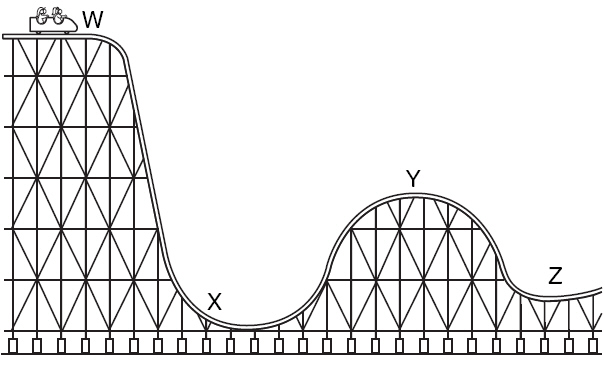
163.
At which point is potential energy greatest?
a)
W
b)
X
c)
Y
d)
Z
164.
At which point is kinetic energy greatest? 
a)
W
b)
X
c)
Y
d)
Z
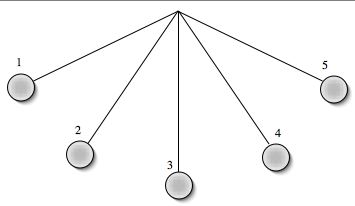
165.
When a pendulum swings, at which point is kinetic energy highest?
a)
1
b)
2
c)
3
d)
4
166.
When a pendulum swings, at which point is potential energy at its greatest?
a)
1
b)
2
c)
3
d)
4
167.
The faster an object moves, the ________ kinetic energy it has. 
a)
more
b)
less
c)
none of the above
d)
all of the above 
168.
__________ is stored energy. 
a)
Potential
b)
Kinetic
c)
None of the above 
d)
All of the above 
169.
Gravitational potential energy depends on the ________ and ________ of the object. 
a)
Height and mass
b)
Friction and movement
c)
Mass and Movement
d)
Height and Friction 
170.
Which point has the most potential energy?
a)
G
b)
f
c)
b
d)
a
171.
Energy due to motion is ____________ energy. 
a)
Potential 
b)
Energy
c)
Kinetic
d)
Friction
172.
Explain what happens to the potential energy of a rock as it falls off the side of a cliff.
a)
The kinetic energy decreases as the potential energy increases.
b)
The kinetic energy decreases as the potential energy decreases.
c)
The potential energy decreases as the kinetic energy increases.
d)
The potential energy decreases as the kinetic energy decreases. 
173.
When riding a roller coaster, you go up and down many hills. As you get to the top of a roller coaster, what energy change is taking place.
a)
Potential energy is changed into kinetic energy.
b)
Kinetic energy is changed into potential energy.
c)
Chemical energy is changed into heat energy.
d)
Heat energy is changed into chemical energy. 
174.
When riding a roller coaster, you go up and down many hills. When do you have the maximum (most) kinetic energy?
a)
At the top of each hill.
b)
As you go down each hill.
c)
At the bottom of each hill.
d)
As you go up each hill.
175.
At which point is potential energy greatest?
a)
W
b)
X
c)
Y
d)
Z
176.
__________ is stored energy. 
a)
Potential
b)
Kinetic
c)
None of the above 
d)
All of the above 
177.
The faster an object moves, the ________ kinetic energy it has. 
a)
more
b)
less
c)
none of the above
d)
same
178.
What kind of energy is in a moving skateboard?
a)
Potential
b)
Kinetic
c)
Both potential and kinetic energy
d)
none of the above
179.
What kind of energy is in a rock at the edge of a cliff?
a)
Potential
b)
Kinetic
c)
Both potential and kinetic energy
d)
none of the above
180.
Which is the best example that something has kinetic energy?
a)
a. a car parked on a steep hill 
b)
b. a tennis ball rolling across the court
c)
c. a picture hanging on the wall 
d)
d. a piece of coal before it's burned 
181.
Energy due to motion is ____________ energy. 
a)
Potential 
b)
Energy
c)
Kinetic
d)
Friction
182.
Gravitational potential energy depends on the ________ and ________ of the object. 
a)
Height and mass
b)
Friction and movement
c)
Mass and Movement
d)
Height and Friction 
183.
What kind of energy is in a person climbing a ladder?
a)
Potential
b)
Kinetic
c)
Both
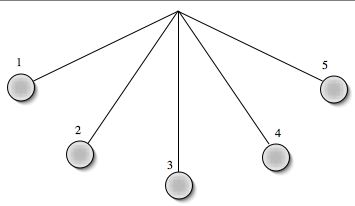
184.
When a pendulum swings, at which point is kinetic energy highest?
a)
1
b)
2
c)
3
d)
4
185.
When a pendulum swings, at which point is potential energy at its greatest?
a)
1
b)
2
c)
3
d)
4
186.
Energy can be _____________ or changed from one type to another.
a)
destroyed
b)
transferred
c)
created
d)
ignored
187.
Gravitational potential energy depends on the ________ and ________ of the object. 
a)
Height and mass
b)
Friction and movement
c)
Mass and Movement
d)
Height and Friction 
188.
Conservation of energy states that energy cannot be ________ or ________, but can be altered from one form to another.
a)
created, destroyed
b)
gravity, force
c)
heat, created
189.
What are the two factors that affect kinetic energy?
a)
time and energy
b)
power and mass
c)
mass and speed
d)
time and work
190.
What is the unit of measurement for kinetic energy
a)
Newton
b)
Joule
c)
Watt
d)
Kilogram
191.
Which of the following is an exmaple of a change of kinetic energy into gravitational potential energy?
a)
a person parachuting out of a plane
b)
a car racing around an oval track
c)
a person skiing down a hill
d)
a person walking up a hill
192.
What would have the greatest kinetic energy?
a)
A car driving down a hill.
b)
A person running down a hill. 
c)
A ball rolling down a hill. 
d)
leaves rolling down a hill 
193.
Which is an example of potential energy?
a)
a roller coaster speeding down a hill
b)
the pulled back string on an archers's bow
c)
releasing the strings on a guitar
d)
an electric current lighting a light bulb
194.
Choose the BEST answer that is an example of an energy transformation from potential energy to kinetic energy.
a)
a ball rolling down a ramp
b)
a picture hanging on the wall
c)
a swing swaying back and forth
d)
a coat hanging on a hook
195.

Boiling Water

a)

Conduction

b)

Convection

c)

Radiation

196.

Curling Iron

a)

Conduction

b)

Convection

c)

Radiation

197.

Weather Patterns

a)

Conduction

b)

Convection

c)

Radiation

198.

Sun Bathing

a)

Conduction

b)

Convection

c)

Radiation

199.

Mantle

a)

Conduction

b)

Convection

c)

Radiation

200.

Feet on Hot Sand

a)

Conduction

b)

Convection

c)

Radiation

201.

Lava Lamp

a)

Conduction

b)

Convection

c)

Radiation

202.

Hot Air in a Toaster

a)

Conduction

b)

Convection

c)

Radiation

203.

Microwaving Food

a)

Conduction

b)

Convection

c)

Radiation

204.

Heat Lamps

a)

Conduction

b)

Convection

c)

Radiation

205.

Cold Pack on Person

a)

Heat is transferred from the cold pack to the person.

b)

Heat is transferred from the person to the cold pack

c)

The cold pack is getting warmer. The person is getting colder.

d)

The cold pack is getting colder. The person is getting warmer.

206.

Hand Warmer in a Hand

a)

Heat is being transferred from the hand warmer to the hand.

b)

Heat is being transferred from the hand to the hand warmer.

c)

The hand is getting warmer. The hand warmer is getting cooler.

d)

The hand warmer is getting warmer. The hand is getting cooler.