
 Worksheets
Y7 PHYSICS REVISION
Total questions: 208
Worksheet time: 4hrs 48mins

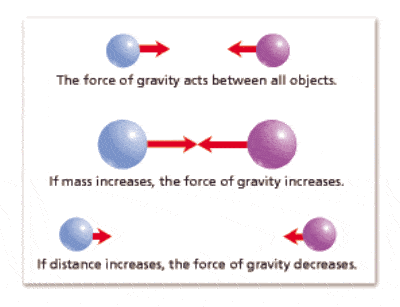

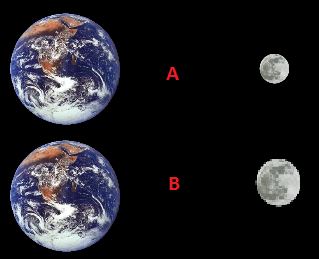
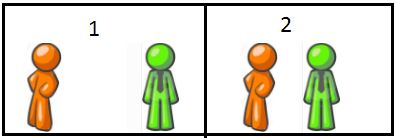


Scientists were able to observe how the solar system is formed
True
False
Which of these explain how a natural phenomenon works or happens?
Theory
Law
A possible explanation to a problem that has not yet been tested
data
hypothesis
theory
fact
What do we call the path that a body follows as it travels around another body in space?
que
journey
flight
orbit
Any object with mass experiences gravity.
True
False
Why do astronauts bounce so high on the moon?
The moon has more gravity.
The moon has less gravity.
The moon has no gravity.
Which of these is the name given to a cloud of dust and gas in space
moon
star
sun
nebula
A nebula is a
cloud of ice.
cloud of just gas.
cloud of just dust.
cloud of dust and gas.
Every planet orbits the sun in a different plane.
True
False
All the planets in the solar system orbit the sun in
different directions
opposite directions
the same direction
random directions
The sun and all the planets spin on their axis in the same direction except:
Venus and Jupitar
Uranus and Mars
Venus and Uranus
Uranus and Mercury
If the ball of dust and gas gets hot enough it turns into a
planet
star
moon
nebula
Name the force that can pull particles of dust and gas together in space.
Friction
Kinetic
Gravitational
Magnetic
Scientists use computers to create ________ . They are made for things that are difficult to observe.
models
predictions
books
riddles
The opposite of agree or support of a hypothesis.
Contradict
different
wrong
the object that orbits the Earth and not the Sun.
moon
mercury
sun
planet
the largest mass in the Solar System...............................
Jupiter
earth
moon
sun
The Sun’s gravity gets weaker as the distance from the Sun increases
True
False
the direction in which the force of gravity from the Sun pulls on a planet is.......................
towards the center of the earth
towards the center of the sun
towards the center of the planet
The word used to describe a space that has no particles in it is.....................
air
vacuum
universe
A force caused by a moving object having to push against the particles in the air.
water resistance
air resistance
gravity
contact force
Air resistance acts in the..................direction to movement.
same
opposite
parallel
The faster an object moves, the ....................... the air resistance on the object.
equal
smaller
greater
In space, there is a vacuum and no air resistance
True
False
Which of these forces acts on the Earth as it orbits the Sun?
gravity only
air resistance only
gravity and air resistance
gravity, air resistance and friction

The moon’s gravity is weaker than Earth’s because If you went to the moon, you would
SHRINK and become shorter
WEIGH LESS than you do on Earth
FLOAT OFF into space
Not be able to JUMP
Air resistance pushes against falling
objects and __________________.
Speeds them up
Keeps them afloat
Slows them down
Spins them

Air resistance is a force caused by...
Water pushing against moving objects
Air pushing against moving objects
Gravity pushing against moving objects
Normal force pushing against moving objects


What type of tide would this arrangement of earth-moon-sun create?


When fuel burns, it gives us____ and ____ energy
Choose all that apply
Electrical
Heat
Light
Electromagnetic
Which one of them is not a fossil fuel?
Coal
Water
Gas
Oil
Coal is formed from ______
Plants
Bacteria
Virus
Plankton
Coal is formed due to plants that grew in swamps about ______ years ago
265 million
270 million
275 million
None of three
Bacteria could not decompose the plants, buried in swamps, due to the lack of ______
Hydrogen
Carbon Dioxide
Oxygen
None of three
Natural gas is formed due to
Plants
Bacteria
Plankton
None of three
Oil, obtained from earth, is formed from _____
Plants
Bacteria
Plankton
None of three
Releasing a catapult contains which type of energy transformation?
Strain to chemical energy
Strain to Kinetic Energy
Electrical to chemical energy
None of three
Burning gas in bunsen burner represents which type of energy transformation?
Chemical to Light Energy
Chemical to Heat energy
Chemical to Heat and Light Energy
None of three
Taking a a photograph represents which type of energy transformation?
Light energy to chemical energy
Light energy to electromagnetic energy
Light energy to heat energy
None of three
A car accelerated by engine represents which type of energy transformation?
Chemical to light energy
Chemical to Kinetic Energy of car
Chemical to Electromagnetic energy
None of three

What type of energy transformation is there when a person plays the guitar
Chemical to Sound
Sound to chemical
Kinetic energy to Sound
None of three

What kind of energy transformation is this?
Chemical to Light Energy
Kinetic to Strain Energy
Chemical to Electromagnetic energy
None of three

What kind of energy transformation is this?
Kinetic to Electrical Energy
Kinetic to Electromagnetic Energy
Electrical to Kinetic Energy
None of three
The unit of energy is ____
Kilogram
Grams
Joules
None of three
How many Joules are there in 5KJ
520
500
5000
5200
If you raise an object of weight 10N by 1 meter, the energy used is
10×1=10JoulesHow many joules would be used to raise 2 meters?
10 Joules
20 Joules
5 Joules
None of three
If you raise an object of weight 10N by 1 meter, the energy used is
10×1=10 Joules
Joe weighs 400N and climbs the stairs to his apartment. The height of stairs is 8 meters.
How much energy does he use climbing the stairs?
50Joules
408Joules
3200Joules
None of three
A slingshot that has been pulled back, but has not been let go.
Kinetic
Potential
A bobsled is moving at its greatest speed around the final turn.
Kinetic
Potential
A girl is swinging and she is at her highest point of the swing.
Kinetic
Potential
A grasshopper reaches the highest point in its jump from one plant to another.
Kinetic
Potential
A cliff diver is just about to jump off an 18 m high cliff.
Kinetic
Potential
A sky diver is traveling at his fastest speed (terminal velocity) when falling.
Kinetic
Potential
A basketball sits on the rim before falling into the hoop.
Kinetic
Potential
A satellite that is orbiting the earth at nearly 20,000 miles/hour.
Kinetic
Potential
An arrow is released from a bow and travels towards the target.
Kinetic
Potential
A baseball has reached its highest point after being hit towards the top of the stadium.
Kinetic
Potential
Energy in motion is ____________ energy.
Potential
Energy
Kinetic
Friction
____________ is the ability to do work or cause change.
Energy
Force
Friction
Motion
The faster an object moves, the ________ kinetic energy it has.
more
less
__________ energy is stored energy.
Potential
Kinetic
Force
Gravity
Gravitational potential energy depends on the ________ and ________ of the object.
Position (height) and mass
Friction and movement
Mass and Movement
Height and Friction
When you stretch a rubber band, you are storing __________ energy.
kinetic
potential

At which point is potential energy greatest?
W
X
Y
Z

What energy does a rock at the edge of a cliff have?
Potential
Kinetic
What are the two factors that affect kinetic energy?
time and energy
power and mass
mass and speed
time and work

What position has the least amount of potential energy?
W
X
Y
Z
In order to INCREASE the potential energy of an object, you need to:
put the object lower to the ground
raise the object higher

What is this part (red line) called?
wavelength
trough
crest
amplitude

What is this part (red line) called?
wavelength
trough
crest
amplitude

What is this part (red line) called?
wavelength
trough
crest
amplitude

What is this part (red line) called?
wavelength
trough
crest
amplitude

What is this part (red line) called?
crest
trough
amplitude
wavelength

What is this part (red line) called?
amplitude
trough
crest
wavelength

Which one has a higher pitch?
Cello
Violin
Which one has a lower pitch?
Cello
Violin
Which one is louder?
Cello
Violin
They have the same loudness

Which sound wave has low pitch?
a
b
c
d
Which sound wave has high pitch?
a
b
c
d
Which sound wave is loud?
a
b
c
d
Which sound wave is soft?
a
b
c
d
Which of these used the application of reflection of sound in medical field?


Why is the school library covered with carpet?
to help absorb water
to help absorb sounds to keep it quiet
because it looks good
A sound reflection, in which sound bounces off of an object, is called an ___.
sound wave
echo
refraction
_______________________ is a system that uses sound waves to determine locations of objects in the water
ultrasonic scan
sonar
periscope
When Mr. Albbert yells his name in a cave, the sound reflects off the walls of the cave and travels back to his ears. What is this called?
refraction
echo
excretion

Sound can be reflected better on ........... surface
hard
smooth
soft

Sara and Maria made a telephone using two cups and a string. It was a very long string. Maria went upstairs in her house and Sara stayed downstairs. Maria spoke softly into the can. "I can hear you!" Sara said back. How can this happen?
Sound waves travel through a vacuum.
Sound waves travel through solids like the string.
Sound waves travel from high to low.
Maria talked so loudly that Sara could hear her without the phone.

Tick the correct applications of sound reflection in daily life


Which of these animals uses ultrasound?


Fishermen use a depth finder to send ultrasonic waves into the water to find fish. Which property of sound involved ?
reflection of sound
refraction of light
sound can be absorbed
Ultrasound is a sound that humans cannot hear but can be heard by animals such as whales.
False.
True

Why do sound echo in an empty gym?
Sound has nowhere to go
There are hard surfaces so sound reflects
Sound travels in waves

hair, cotton, carpet, flag, pillow

brick, concrete, glass, tile, wood
Tick ALL areas where echoes can be heard.
Cave
Field
Tunnel
A closed hall
Which of these used sonar technology?
Submarine
Solar panel
car
___________ and _________ make use of ultrasound waves to estimate the distance while flying and hunting for prey.
(2 answers)
bats
dogs
birds
dolphins
What are echoes?
Sounds that are _______ from a hard surface.
absorbed
reflected
propagate
Tick ALL areas where echoes can be heard.
Cave
Field
Tunnel
A closed hall
__________ is a sound reflection technology applied in ships at sea using the reflection of sound waves to determine the depth of the sea.
Reflection
Echo
Solar
Sonar
___________ and _________ make use of ultrasound waves to estimate the distance while flying and hunting for prey.
(2 answers)
bats
dogs
birds
dolphins
What is the name given to a sound wave with a frequency which is higher than the audible limit of hearing in humans?
(a)
The frequency of sound that can be detected by humans is within the range of _________
67 Hz to 45 000 Hz
16 Hz to 12 000 Hz
20 Hz to 20 000 Hz
2 000 Hz to 110 000 Hz
Tick the devices to overcome human limitations of hearing
(2 answers)
Microscopes
Stethoscopes
A megaphone
Periscope

What is the purpose of transmitting the sound wave?
Giving a warning signal
Detecting the distance
Delivering information
Determine the rock size
SONAR is a technique or device that used for :
I. detecting objects under water
II. detect cracks in metal structures
III. measure depth of the sea
IV. investigate the abdomen and heart conditions
I and II
II and III
I and III
I and IV
Ultrasound is a kind of sound wave with its frequency of more than ......
50 kHz
40 kHz
30 kHz
20 kHz
What is the thinnest layer of the Earth?
Mantle
Core
Crust
The thickest layer of the Earth is
The crust
The mantle
The core
The inner core is:
Solid
Liquid
Gaseous


Which color would be the innercore?
yellow
orange
red
the earth on the outside

Which color would be the outercore?
Outside on the earth
red
orange
yellow

Which color would be the mantel?
Outside on the earth
red
orange
yellow

What color would be the earth's crust?
Outside on the earth.
red
orange
yellow
What part of the earth makes up less than 1% of the earth?
The crust
The mantel
The outer core
The inner core
Which part of the earth, makes up 67% of the earth?
The crust
The mantel
The outer core
The inner core
Which is the outermost, rigid layer of the earth, made of the crust and the rigid upper part of the mantle.
Lithosphere
Asthenosphere
Mesosphere
Outer core
Inner core
Which is the soft layer of the mantel on which the tectonic plates move?
Lithosphere
Asthenosphere
Mesosphere
Outer core
Inner Core
Which is the strong lower part of the mantel?
Lithosphere
Asthenosphere
Mesosphere
Outer Core
Inner core
The earth's mantel is made up of which two parts?
Lithosphere
Asthenosphere
Mesosphere
Outer core
Inner core
Which part of the earth's core is liquid?
Outer core
Inner core
Which part of the earth's core is solid and dense?
Outer core
Inner core
A tectonic plate is a block of......
Lithosphere
Asthenosphere
Mesosphere
Convergent boundary
Where two tectonic plates collide
Where two tectonic plates separate
Where two tectonic plates slide past each other
Divergent boundary
Where two tectonic plates collide
Where two tectonic plates separate
Where two tectonic plates slide past each other
Transform Boundary
Where two tectonic plates collide
Where two tectonic plates separate
Where two tectonic plates slide past each other
Subduction is when
a yellow submarine
old ocean crust gets pushed up by continental crust
old ocean crust gets pushed down by continental crust.
a yellow submarine

What type of boundary?
convergent
divergent
transform

What type of boundary is this?
convergent
divergent
transform

What type of boundary is this?
convergent
divergent
transform
The partial or total blocking of one object in space by another is called a(n)
Umbra
Penumbra
Eclipse
Shadow

Is this alignment for a solar or lunar eclipse?
Solar
Lunar

Identify the umbra and the penumbra
2 is the umbra and 1 is the penumbra
1 is the umbra and 2 is the penumbra

Is this alignment for a solar or a lunar eclipse?
Solar
Lunar

Identify the umbra and the penumbra
2 is the umbra and 1 is the penumbra
1 is the umbra and 2 is the penumbra
You are less likely to see a total solar eclipse than a lunar eclipse because
The Moon's shadow covers all of Earth during a solar eclipse.
The Moon's umbra only covers a small area on Earth's surface.
Only people on the daytime side of Earth can see a solar eclipse.
A total solar eclipse is visible from
all over the Earth.
only within the moon's penumbra.
only within the moon's umbra.
only the dark side of the Earth.
During a total lunar eclipse the moon is in Earth's
penumbra
orbit
corona
umbra
If each month has a full moon, why is there not also an eclipse each month?
There is an eclipse each month
The moon's orbit is tilted
Seasons on Earth change atmospheric viewing conditions
As the moon gets closer to Earth its gravity changes its orbit
Which moon phase do lunar eclipses occur?
Full Moon
Waxing Gibbous
New Moon
First Quarter
Both solar and lunar eclipses have which of the following types?
Total
Annular
Partial
Total and Partial
When can a solar eclipse occur?
Anytime
During a new moon
During a full moon
Waning gibbous
When the moon does not completely cover the sun it is known as a
Partial lunar eclipse
Partial solar eclipse
Total solar eclipse
Penumbral lunar eclipse

Which type of eclipse is this?
Partial lunar eclipse
Partial solar eclipse
Penumbral solar eclipse
Total lunar eclipse

Which type of eclipse is this?
Partial solar eclipse
Partial lunar eclipse
Total solar eclipse
Total lunar eclipse

When the second bulb is added, they get
brighter
dimmer
broken
cold
What is the measuring device shown?
bulb
cell
ammeter
voltmeter
What can you say about the current in the series circuit?
it splits across the components
it changes constantly
it is different in different places
it is the same everywhere
Which component provides the energy for the charges?
cell
bulb
switch
ammeter
If the ammeter says the current is 5A, what is the current flowing through one bulb?
2.5A
10A
5A
0
If one bulb was broken, what would happen?
current would no longer flow, so everything would be off
the ammeter would measure a current from the other bulb
the switch would keep the current flowing
the cell would burn out and catch fire
What is the name of the device which measures current?
(a)
Current is measured in
Volts
Watts
Seconds
Amps
If the switch was opened, what would happen?
the ammeter would measure a current flowing
current would no longer flow, so everything would be off
the bulbs would stay on because they're connected to the cell
the bulbs would burn out and catch fire
Name the charged particle, which is part of an atom, that flows in a circuit
proton
electron
neutron
elepton
What causes a decrease in current?
Adding another bulb
increasing resistance
decreasing voltage from the supply
decreasing the resistance
If the current flowing through the cell is 2A, what is the ammeter reading?
5A
1A
6A
2A
What is an insulator?
a material that slows the transfer of heat
a material that is fluffy
a material that transfers heat easily
a material that is temperature controlled
What is the BEST example of a conductor of thermal energy?
A wool oven mitt
A plastic mug
A metal pan
A wooden block
What is a conductor?
a material that slows the transfer of heat
a material that is fluffy
a material that is temperature controlled
a material that transfers heat easily
What is NOT an example of an insulator in the kitchen?
An oven mitt
Pots and pans
A wooden spoon
A plastic measuring cup
The handle of a frying pan is often coated in rubber because rubber provides...
Heat insulation
Heat conduction
A low melting point
A nonstick surface
Conductors are materials that...
Stop heat from passing through
Stop cold from passing through
Allow heat to pass through
Allow cold to pass through
A conductor allows energy to easily pass by.
True
False
True or False: An insulator is a type of material that allows heat to escape from an object quickly.
True
False
An insulator is an object which (a)
Wooden spoons are used while stirring hot liquids because?
Wood is a conductor
Wood is an insulator
Wood is the cheapest material to use
Wood does not affect the environment

