
 Worksheets
Final Exam Review (Part 2)
Total questions: 52
Worksheet time: 1hrs 15mins
Another piece of evidence in the theory of Continental Drift is __________ evidence of a giant fern named Glossopteris.
geologic
fit/shape
glacial
fossil/climate
Because Glossopteris seeds cannot travel across the ocean and grow in warm, swampy climates, these fossils are evidence of ...
Pangea existing
Continental Drift
changing climates
all of the above
Earth's plates meet at ____________.
plate tectonics
plate boundaries
continental drift
oceans
Breaks in the crust called __________ form where plates meet.
mountains
rift valleys
faults
trenches
Plates slide past each other at _________________ boundaries.
divergent
convergent
transform
universal
A __________ forms where plates diverge on land.
rift valley
mid-ocean ridge
mountain
trench
________________ currents drive Earth's plate movement.
ocean
atmosphere
wind
convection
Plates slide apart along _____________ boundaries.
convergent
divergent
transform
universal
Which feature forms at convergent boundaries?
trench
rift valley
mountain range
mid-ocean ridge
The Nebular Theory is:
A theory on how the Milky Way galaxy was formed
A theory on how the universe was formed
A theory on how the solar system will be destroyed
A theory on how the solar system was formed
A nebula collapses down into a disk known called:
A compact disk
An irregular cloud
An Prostellar disk
An circular disk
What forms in the very center of the Protostellar disk?
A protosun
A planet
A protoplanet
A planetesimal
Most scientists believe the Big Bang Theory explains which of the following questions?
How our planets and moons formed
How our universe began
How the sun turns hydrogen into helium
How fast light travels through space
Which statement is true?
The galaxies are moving toward us.
The galaxies are moving away from us.
The universe remains static or unchanged in motion.
None of the above
Light emitted from a star or galaxy can be separated into a band of colors, called a ________.
Red Shift
Wave Length
Spectrum
Microwave
Cosmic Microwave Background Radiation is a form of _________.
Matter
Energy
Visible Light
Water
Which elements are most
abundant in the visible
universe?
Hydrogen and Carbon
Carbon and Helium
Hydrogen and Oxygen
Hydrogen and Helium
As galaxies move away from our galaxy
a shift on the electromagnetic spectrum
(EMS) is noticed. This phenomena is
called _____________.
redshift
blueshift
unshift
blackshift
How does Cosmic Microwave Background Radiation support the Big Band Theory?
Microwaves are found everywhere in the universe.
Microwaves occurred at the time of the Big Bang
Microwaves are useful in our everyday lives
Only A & B
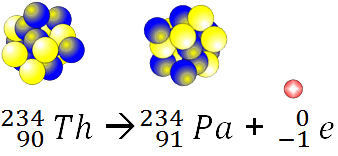
85209At = ___ + 24He
614C = ___ + -10e




Define nuclear fusion.
Nuclear fusion – combining lighter atoms to make heavier ones – is what makes it possible.
Nuclear fusion – splitting lighter atoms to make heavier ones – is what makes it possible.
Nuclear fusion – combining heavier atoms to make lighter ones – is what makes it possible.
Nuclear fusion – splitting heavier atoms to make lighter ones – is what makes it possible.
When hydrogen is "fused" together on the Sun, what new element is created?
Helium
Carbon Dioxide
Oxygen
Light

The H-R diagram classifies stars based on what factors?
Temperature and luminosity
Number of planets
What constellation they're in
Temperature and fusion

Our sun is what kind of star?
Blue giant
Red giant
Main sequence
White dwarf

Compared to a red giant star, a blue supergiant is...
Hotter and brighter
Hotter and not as bright
Colder and brighter
Colder and not as bright

Our sun is yellow. A star colder than our sun would be...
Red
Yellow
White
Blue

A collection of gas and dust where new stars are born is known as a...
Planetary Nebula
Black Hole
Supernova
Stellar Nebula
The remnants of a Red Giant star after shedding its outer layers are the _______________ and ________________.
Planetary Nebula and a White Dwarf
Neutron Star and a Pulsar
Neutron Star and a Black Hole
Stellar Nebula and a Main sequence star

