wayground logo

Free Printable Worksheets

Font size

S
M
L
XL
Worksheets

Newton's Laws

Total questions: 56

Worksheet time: 56mins

Name
Class
Date
1.
According to Newton’s first law of motion, a moving object that is not acted on by an unbalanced force will
a)
remain in motion.
b)
eventually come to a stop.
c)
change its momentum.
d)
accelerate.
2.
Which law explains when a magician pulls a tablecloth out from under dishes and glasses on a table without disturbing them.
a)

First Law

b)

Second Law

c)

Third Law

3.
A person steps out of the boat and onto the dock.  As the person moves forward onto the dock, the boat moves backward.  Which statement best describes the backward motion of the boat as the person steps forward?
a)
For every action there is an equal and opposite reaction.
b)
Every mass exerts a force on every other mass.
c)
An object at rest tends to stay at rest.
d)
Friction opposes the motion of an object.
4.
A person in car  slides to the right when going through a very sharp left turn on the highway. 
a)
1st Law
b)
2nd Law
c)
3rd Law
5.
What is the definition of "weight"?
a)
the force in which gravity pulls on an object
b)
the time it takes to get on a ride 
c)
the amount of matter in an object
d)
the size of an object
6.
An object will not have any inertia if it is __________?
a)
Accelerating
b)
Moving in a circle
c)
In space
d)
… Nonsense! All objects have inertia
7.

 267.5 N unbalanced force applied to push a stuffed chair across the room, causing an acceleration of 4.2 m/s/s. What is the mass of the chair?

a)
26.75 kg
b)
63.69 kg 
c)
263.3 kg 
d)
1123.5 kg
8.
Which of these best describes why your weight (on Earth) would change on another planet?
a)
weight doesn’t change, no matter where you are
b)
different planets have different gravitational pulls
c)
In general, the smaller the planet, the greater weight
d)
dehydration effects on different planets change weight
9.
An empty truck and a fully loaded truck are next to each other at a traffic light. When the light turns green, the lighter truck increases speed more quickly. Which of these best explains this situations
a)
Newton's first law
b)
Newton's second law
c)
Newton's third law
d)
Conservation of momentum
10.

Sally is pushing a sled with her brother sitting in it. Sally's best friend decides to hop onto the sled as well. What happens to the applied force according to Newton's Second Law if Sally wants to move at the same pace?

a)

It increases

b)

It decreases

c)

The stays the same

d)

Insufficient information to answer

11.

What is Jon's weight if he has a mass of 65kg (on earth)?

a)

65N

b)

650N

c)

6.5N

d)

6.5kN

12.
A picture is hanging on a wall and does not move.
a)
Newton's 1st Law
b)
Newton's 2nd Law
c)
Newton's 3rd Law
d)
None of them
13.
Pushing a child on a swing is easier than pushing an adult on the same swing, because the adult has more inertia.
a)
Newton's 1st Law
b)
Newton's 2nd Law
c)
Newton's 3rd Law
d)
None of them
14.
Acceleration is produced when a force acts on a mass. The greater the mass (of the object being accelerated) the greater the amount of force needed (to accelerate the object).
a)
Newton's 1st Law
b)
Newton's 2nd Law
c)
Newton's 3rd Law
d)
None of them
15.
A rocket is sent into space.  When the power dies out, the rocket will just keep floating and moving in space forever (unless an unbalanced force, such as a meteor, runs into it).
a)
Newton's 1st Law
b)
Newton's 2nd Law
c)
Newton's 3rd Law
d)
None of them
16.

Newton's 3rd Law states that for ever action there is an equal and opposite ________.

a)

reaction

b)

satisfaction

c)

fraction

d)

transaction

17.

If a 10 kilogram object accelerates suddenly at 15 m/s2, how much force was applied to the object?

a)

150 Newtons

b)

15 Newtons

c)

150 kilograms

d)

100 kilograms

18.
A 20 kg bike accelerates at 10 m/s2.  what was the force?
a)
25 Newtons
b)
20 Newtons
c)
200 Newtons
d)
10 Newtons
19.
Unit of mass
a)
m/s 2
b)
m/s
c)
newtons
d)
kg
20.

Unit for acceleration?

a)

m/s2

b)

kg

c)

newtons

d)

a

21.

A push or a pull on an object

a)

Force

b)

Gravity

c)

Inertia

d)

Friction

22.

The tendency of an object to maintain a constant velocity

a)

Inertia

b)

Force

c)

Weight

d)

Tension

23.

A force exerted by a surface perpendicular to the surface.

a)

Normal

b)

Friction

c)

Gravity

d)

Tension

24.

A swimmer pushes backward on the water in order to move forward. This is an example of Newton's ________ Law.

a)

1st

b)

2nd

c)

3rd

25.

When a driver slams on the brakes, passengers fly forward. This is an example of Newton's ________ Law.

a)

1st

b)

2nd

c)

3rd

26.

Which force does NOT belong in a Free-Body diagram for a steel beam being lifted by a cable?

a)

Normal Force

b)

Tension

c)

Gravity

27.
If you double the mass of an object with the same force apply on it, the acceleration will
a)
double
b)
cut in half
c)
the same
d)
zero
28.
What kind(s) of objects have inertia?
a)
all objects with mass
b)
only objects at rest
c)
only objects in motion
d)
only objects whose motion is being changed
29.
Which one needs a greater net force to move, a kilogram of feathers or a kilogram of iron? 
a)
feathers 
b)
iron
c)
same
d)
depends on their friction
30.
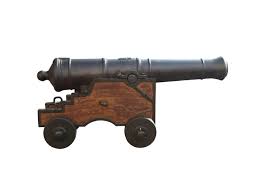
After a cannonball is fired into frictionless space, the amount of force needed to keep it going equals
a)
twice the force with which it was fired
b)
the same amount of force with which it was fired
c)
1/2 the force with which it was fired
d)
zero, since no force is required to keep it moving. 
31.
A book weighs 4 N. When held at rest in your hands, the net force on the book is
 
a)
0 N.
b)
 0.4 N.
c)
 4 N.
d)
 39 N.
32.
A 20 kg bike accelerates at 10 m/s2.  what was the net force
a)
25 Newtons
b)
20 Newtons
c)
200 Newtons
d)
10 Newtons
33.
When a cannon fires a cannonball we observe Newton's third law. Which force is the reaction force?
a)
The cannon moving forward
b)
The cannonball moving forward
c)
The cannon moving backward
d)
The cannonball moving backward
34.
Which one of Newton’s Laws of Motion best explains why the dishes do not move when the table cloth is removed?
a)
Newton's 1st Law
b)
Newton's 2nd Law 
c)
Newton's 3rd Law 
d)
Newton's Law of Biology
35.
What is the difference between mass and weight?
a)
mass is how much matter is in an object, and weight is the gravitational pull on that object
b)
mass and weight are the same
c)
weight affects how much mass is in an object
d)
weight is determined by how many atoms make up an object
36.
What is the net force?
a)
5000 N right
b)
4000 N right
c)
40 N left
d)
4000 N left
37.
What is happening at C?
a)
Stationary
b)
Accelerating
c)
Fast steady speed; moving away from the starting position
d)
Slower steady speed; moving away from the starting position
38.
What is happening at D?
a)
Stationary
b)
Accelerating
c)
Fast steady speed; moving away from the starting position
d)
Slower steady speed; moving away from the starting position
39.
Which of the following shows the direction of the friction force?
a)
A
b)
B
c)
C
d)
D
40.

When there is an INCREASE in MASS of an object you will have a DECREASE in ______________.

a)

friction

b)

acceleration

c)

force

d)

gravity

41.

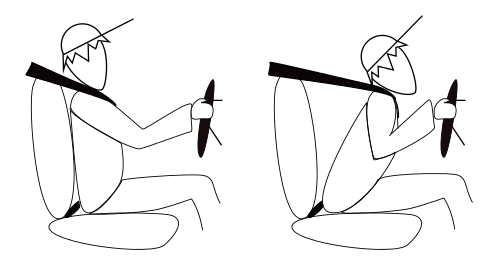
Which law is this picture an example of?

a)

Law of Inertia

b)

Law of Force and Acceleration

c)

Law of Action / Reaction

42.

When an object is travelling through the air there are two forces action on it:

a)

speed and resistance

b)

air resistance and force

c)

friction and air resisitance

d)

Air resistance and gravity

43.
When you paddle BACKWARDS on a canoe, the canoe goes FORWARD.
a)
Newton's 1st Law
b)
Newton's 2nd Law
c)
Newton's 3rd Law
44.
Pushing a child on a swing is easier than pushing an adult on the same swing, because the adult has more inertia.
a)
Newton's 1st Law
b)
Newton's 2nd Law
c)
Newton's 3rd Law
45.
This person bought coffee and put it on the seat next to them. If they stopped quickly and the coffee spilled which law would that represent?
a)
Newton's 1st Law
b)
Newton's 2nd Law
c)
Newton's 3rd Law
46.
When you step on a Lego. You push on the Lego and the Lego pushes back on you.
a)
Newton's 1st Law
b)
Newton's 2nd Law
c)
Newton's 3rd Law
47.
Which force produces a change in motion?
a)
unbalanced force
b)
balanced force
c)
gravitational force
d)
frictional force
48.
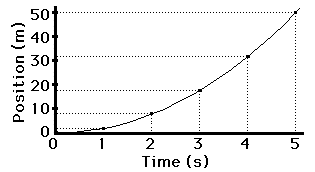
The picture of the position vs. time graph shows an object that is...
a)
accelerating/speeding up
b)
moving at a constant speed 
c)
not moving 
d)
accelerating/slowing down. 
49.
What is the standard unit force is measured in?
a)
Newtons
b)
pounds
c)
grams
d)
meters
50.
What is the formula for force?
a)
F=M/A
b)
F=MA
c)
F=AX
d)
what is force?
51.
What Newtons law does this picture represent
a)
Newtons 2nd law 
b)
Law of gravity 
c)
Newtons 1st law
d)
Newtons 5th law
52.
When something has speed in a certain direction it is called ___________.
a)
motion
b)
position
c)
velocity
d)
speed
53.
Acceleration of an object happens when things ________
a)
slow down
b)
go faster
c)
change direction (turn)
d)
All of the above
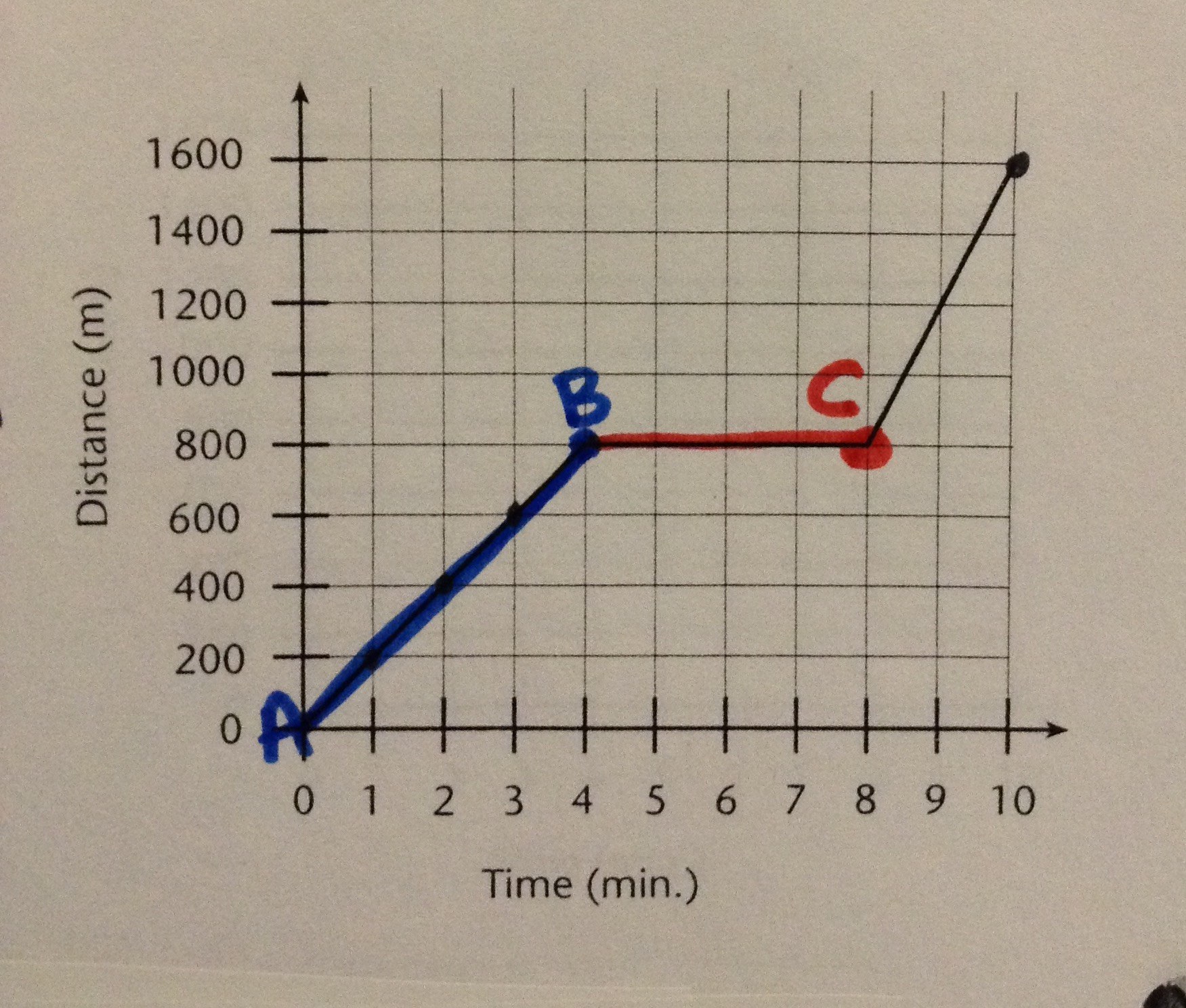
54.
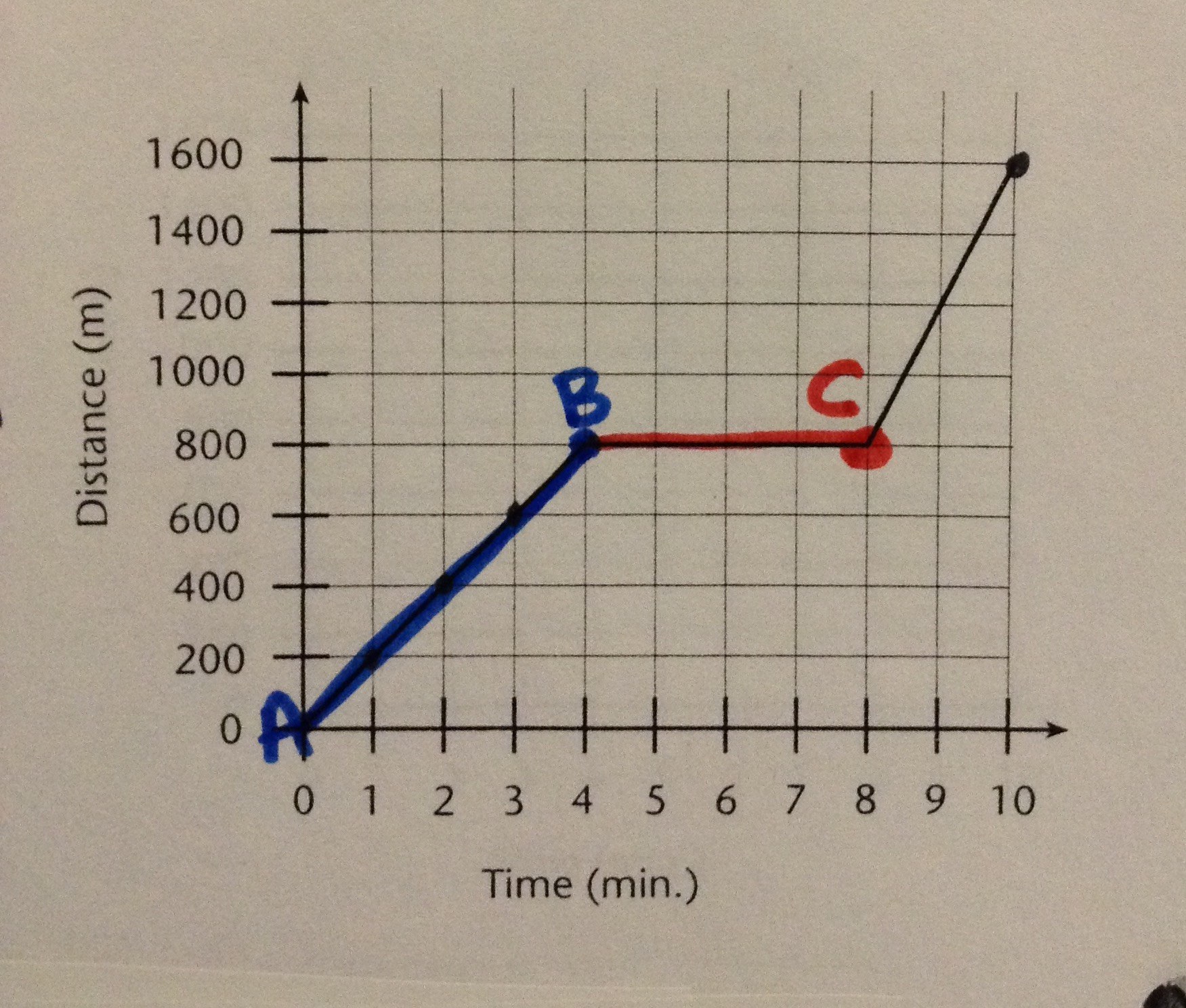
LT4: The graph shows Ashley riding her bike to Maria's house. 
What was occurring from point B to point C?
a)
She was increasing her speed.
b)
She stopped for 4 minutes
c)
She was decreasing in speed
55.
LT4: The graph shows Ashley riding her bike to Maria's house. 
What is occurring from point A to point B?
a)
they are traveling at a constant speed
b)
they are decreasing in speed
c)
they stopped to take a break
56.
The graph represents
a)
no motion
b)
Constant velocity
c)
Acceleration
d)
negative acceleration