
Font size
 Worksheets
Mayer Consumer Final Review
Total questions: 42
Worksheet time: 20mins

What role does insurance play in financial planning?
It guarantees that income and assets are protected
It helps build and maintain one's credit score
It helps cover day-to-day expenses
It grows in value and appreciates over time

The out of pocket cost to the insured when a loss occurs is called...
Premium
Deductible

A stone hits your windshield. Which type of coverage would likely cover this expense?
Collision
Liability
Comprehensive
None

Your health insurance copay is
Amount paid out of pocket before your insurance coverage
Paid by the insurer
Applied on an annual basis
A fixed amount of money you pay each time you use your plan

True or False: Insurance is based on the concept of shared risk, or risk pooling.
True
False
This is made monthly (or on a set schedule) and is a payment the consumer makes in exchange for having coverage.
Deductible
Copay
Coinsurance
Premium
The Illinois state minimums of 25,000/50,000/20,000 mean:
You must have at least $20,000 in liability bodily injury for one person, $50,000 for multiple people injured, and $20,000 for liability property damage
You must have at least $20,000 in comprehensive, $50,000 for collision, and $20,000 for liability property damage
You must have at least $20,000 in liability bodily injury for one person, $50,000 for multiple people injured, and $20,000 for uninsured/underinsured coverage
Which health insurance plan would be best if your number one priority was to receive the best medical care regardless of cost?
PPO: Platinum
HMO: Platinum
PPO: Bronze
HMO: Gold
What is a benefit to renting a place over buying
Renting allows you the freedom to personalize your space
Renting is less responsibility & makes it easier to relocate
Renting allows you to build equity in the place
Renting makes you responsible for any unplanned expenses
When the government is primarily responsible for the needs of its citizens it is called a
Traditional Economy
Command Economy
Market Economy
Product Economy
The United States can be best described as a
Command Economy
Market Economy
Traditional Economy
Mixed Economy
When consumers are responsible for making their own decisions and making sure their own needs are met it can be best described as a
Command Economy
Market Economy
Traditional Economy
Elephant Economy
On Friday night your family is going to see a movie at 8 pm and your friends are going out to eat at 8 pm as well. You want to do both but obviously can't. You choose going out to eat because you prefer it slightly. Seeing the movie with your family is called your
Opportunity cost
Specialization
Factors of Production
Fixed cost
The problem of scarcity is due to
Resources being unlimited and wants being limited
Resources being limited and wants being limited
Resources being limited and wants being unlimited
Resources being unlimited and wants being unlimited

Which of the following is a progressive tax?
A
B
C
Q
Which of the following is a regressive tax?
A
B
C
Q
Which of the following is a proportional tax?
A
B
C
Q
A _____ is when a company has more product than they have demand for the product.
Shortage
Surplus

How can you make money on stocks? (multiple answers)
A capital gain
Interest
Dividends
Holding the stock at least 3 years

Why is compound interest more beneficial than simple interest? (multiple answers)
Your money grows faster when it is compounded
You earn interest on your interest
Fees for compound interest are greater than simple interest
Compound interest is hard to calculate, so fewer use it

A diversified portfolio is desirable because
It limits investment choice
It's a good predictor on rate of return
It increases risk and return
It decreases risk

A key difference between saving and investing is
Saving is for everyone, investing is for the wealthy
Your money is insured when investing, it is not in savings
Investing has a guaranteed return, savings does not
Saving is for emergencies & goals, investing is for long-term wealth
You bought 10 shares of stock in StreamingVideoCo for $40 per share. Three months later you sold the ten shares of stock for $100 per share. What was your profit or loss on StreamingVideoCo stock? Assume that StreamingVideoCo didn't pay a dividend during that period.
Loss of $300
Gain of $600
Loss of $150
Gain of $1000
Sarah wants to go to spend a month in Asia traveling next summer but doesn't have the money to do so. She is thinking of investing the $1200 she currently has saved in stock in her favorite retail store in hopes of earning more money for the vacation. Why shouldn't she do that?
investing in one company's stock is quite risky.
investing your whole savings in the stock market is a poor financial decision.
one year probably isn't enough time for one stock to turn $1200 into a month's vacation.
all of the above.
Which of the following investment types are the least risky?
savings account
treasury bonds
real estate
stocks
________________________ are a mix of stocks and bonds.
Money markets
Securities
Mutual funds
none of the above
It is just as easy and profitable to begin saving for retirement after you've bought a house as when you begin your first job.
True
False
The difference between APY and APR is:
APY is money you have to pay on a loan, while APR is money you earn in interest on an account.
APY is money you earn in interest on an account, while APR is money you have to pay on a loan.
APY is annual, APR is per month
APY is per month, APR is annual
Generally, what is the relationship between investment risk and age?
As you get older and closer to retirement, your investment risk should increase.
As you get older and closer to retirement, risk will not matter as much.
As you get older and closer to retirement, your investment risk should decrease.
As an investor, what is the risk involved when investing in companies on the stock exchange?
Investors can lose their existing shares if the value of the stock does not increase within 90 days of purchase
Once they purchase a share, investors cannot sell them at a higher price
Investors are only at risk if the purchase a share when the stock price has fallen
The price of stocks can decrease; for example, when the company receives bad press
What is a certificate of deposit (CD)?
A savings account from the government
A type of savings account where you agree to not withdraw your money for a certain period of time in exchange for a higher interest rate/APY
A grouping of multiple stocks
A type of savings account where you can withdraw at any time
What is a bond?
An investment that acts like a loan from a government or company where they pay you interest yearly in exchange for you letting them borrow your money.
An investment that acts like a loan to you so that you get more money up front and have to pay a company interest.
An investment that acts like a loan to you so that you get more money up front and have to pay the government interest.
Which of the following is an advantage of a mutual fund as opposed to investing in single stocks?
There is higher reward potential
You will not lose any of your money
You get guaranteed results
If one stock within the mutual fund group goes all the way to 0, there will only be a small decrease in the overall fund.
Which of the following represents the 50/20/30 Rule for budgeting?
20% Needs, 50% Wants, 30% Savings
50% Savings, 30% Needs, 20% Wants
30% Wants, 50% Savings, 20% Needs
50% Needs, 30% Wants, 20% Savings
The total amount of money you receive in a paycheck before anything is taken out is called what?
Net Pay/Income
Savings
Income Taxes
Gross Pay/Income
What is the key difference between Net Pay and Gross Pay?
Net pay is the total amount of money you get BEFORE taxes are deducted.
Gross pay is the total amount of money you get AFTER taxes are deducted.
Net pay is the total amount of money you get AFTER taxes are deducted.
Gross pay is the total amount of money you get BEFORE retirement, healthcare, and dental care have been deducted.
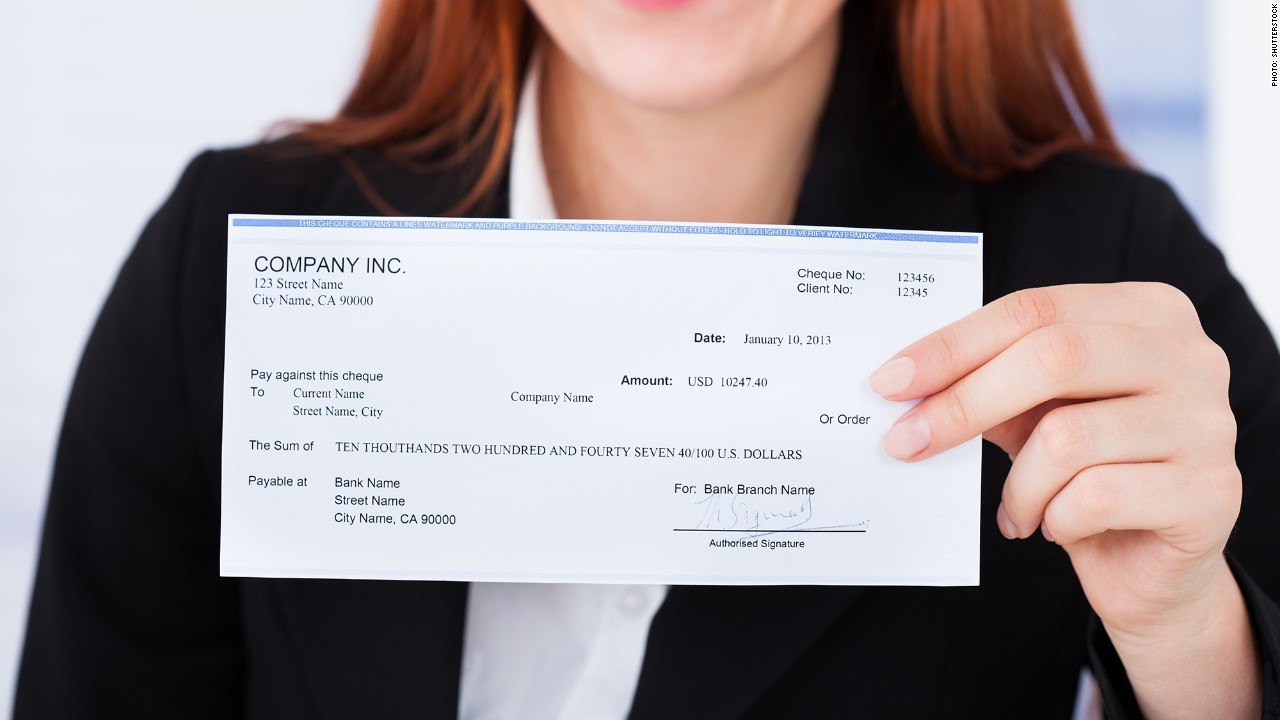
Jason filed his tax return and owes money. If he doesn't want to pay a fee, when should he pay this amount by?
April 15th
October 15th
December 31st
January 1st of the next year
Federal Contribution Insurance Act (FICA) are withheld from your paycheck and sent to the government. These are used for (Two answers are to be selected)
Social Security
State
Medicare
Sale
You are starting your first job and you are asked to complete some paperwork on your first day. Which form will determine how much money is withheld from your paycheck for federal and state income taxes?
W-2
1099
W-4
I-9
What tax form am I/ I am received in January. There is one of me for every employer that you worked for in the previous year. I have information on how much you earned and how much you paid in taxes for the previous calendar year.
1040
I-9
W-4
W-2

