Worksheets
Ch 1-5 Trimester Review
Total questions: 82
Worksheet time: 3570secs
Which variable gets measured?
Dependent
Independent
Both
Neither
A florist wants to see if Product X will extend the life of cut flowers so that they last longer. Which is the DEPENDENT Variable? (What is being measured)
Product X
Life of the flowers
Orchids were studied to determine if the change in temperature affected the how many flowers were produced. What is the independent variable? (What is being changed?)
Amount of flowers produced
Change in temperature
Type of flower
Type of soil

What is qualitative data?
Data using numbers.
Data using words.

What is the first step in the scientific method?
draw conclusions
ask a question
make a hypothesis
test the experiment
Which happens last?
make a hypothesis
ask a question/make an observation
make a plan
draw conclusions
To make observations you use your _______.
senses
feet
smile
experience
Performing a test or experiment allows you to test your ___________.
draw conclusions
hypothesis
senses
battery
Which of these contains steps in the right order?
Ask a question, state your hypothesis, observe, experiment, analyze & collect data, make a conclusion
State your hypothesis, ask a question, research, experiment, analyze & collect data, make a conclusion
Ask a question, research/observe, form a hypothesis, experiment, analyze & collect data, make a conclusion
State your hypothesis, ask a question, observe, make a conclusion, experiment, analyze & collect data
What part of the scientific method is this an example of?
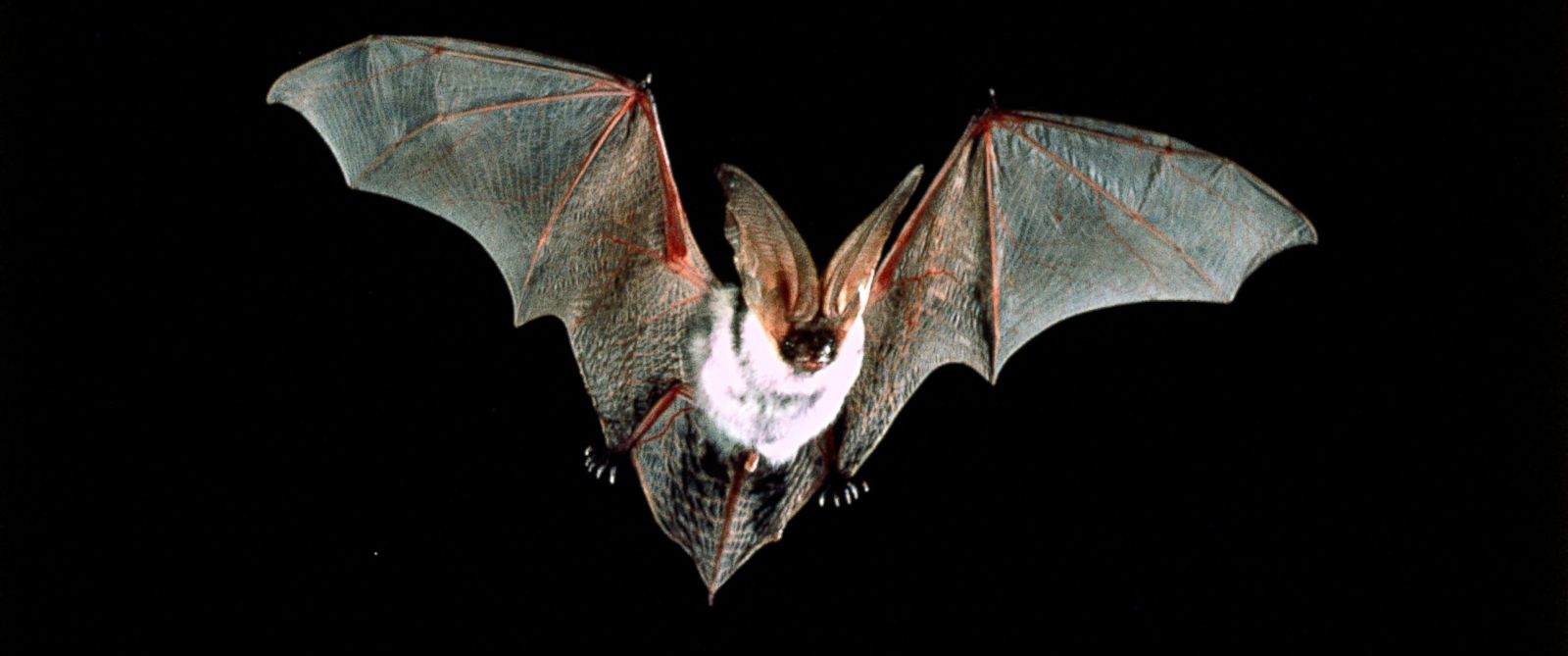
Jose saw bats catching insects after dark. He asked, “How do bats find insects in the dark?”
state the problem/ask a question
perform an experiment
form a hypothesis
draw conclusions

Albert wrote this statement: "Plants exposed to green light grew the tallest. My conclusion was incorrect." What part of the scientific method is this?
form a hypothesis
perform an experiment
draw conclusion
state the problem
Nina and her mother both have cell phones. Nina thinks her cell phone is lighter than her mother's. If Nina wants to compare the masses of the cell phones, what is the best tool for her to use?
graduated cylinder
beaker
thermometer
triple beam balance
Mass measures the amount of _________ in a substance or object
matter
vapour
space
gravity
What does volume measure?
the amount of space something takes up
the amount of weight of something
the amount of mass of something
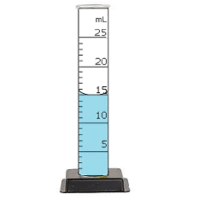
What is this?
measuring tube
test tube
graduated cylinder
pipette
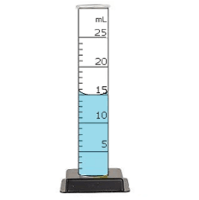
What is the volume of the water?
10mL
15mL
20mL
25mL

303.4 g
370.4 g
373.0 g
373.4 g
Select the best representation of a heterogeneous mixture.


A substance is...
matter with the same composition
something that makes up something else
physically combined components
only pure elements

Identify the following substance
Element
Compound
Mixture
Diatomic Molecule

What kind of mixture is shown in the picture?
Homogeneous
Heterogeneous

Milk and mayo are examples of
solution
suspension
colloid
Sugar water or salt water is a
solution
suspension
colloid
Fruit Loops, pizza, and Skittles are examples of ____________________ mixtures.
heterogeneous
homogeneous
pure

A snow globe is an example of a/an
solution
suspension
colloid
alloy

The transition from a solid directly to a gas is known as
melting.
sublimation.
condensation.
vaporization.
Which of the following is an example of condensation?
Liquid water being cooled until it forms ice
Iodine crystals changing to a purple vapor
A mud puddle shrinking in the sunlight
Moisture forming on the outside of a cold soda can
Boiling and evaporation are two examples of _______________, where a liquid changes to a gas.
vaporization
condensation
sublimation
deposition

Rust on an iron bar is an example of chemical change.
True
False
These have a FIXED volume, but NOT a fixed shape, taking the shape of their container.
Solid
Liquid
Gas
When you heat a sample of a solid, the particles that make up the solid
get bigger
lose mass
move faster
slow down


The smallest particles of matter are called
neutrons
atoms
electrons
protons
What does the atomic number represent?
how many atoms are in a group.
how much an atom weighs.
the number of protons in the nucleus of the atom.
Which particles are contained in the nucleus of an atom?
neutrons and electrons
protons and neutons
protons, neutron, and electrons
What is the area surrounding the nucleus that contains negatively charged particles called?
electron cloud
center
outer region
Which subatomic particles are much smaller than the others and have a negative charge?
protons
neutrons
electrons
Each protons has a _______________ electrical charge
Positive
Negative
Neutral
Shocking
Each electron has a _________________ electrical charge
Positive
Negative
Neutral
Shocking
Each neutron has an electrically_________________charge
Positive
Negative
Neutral
Shocking
An element is determined by the number of ___________________ (also known as its atomic number).
Neutrons
Electrons
Protons
Wontons


How many electrons can fit on the 1st energy level (orbital) for any Bohr Model?
2
6
8
10
What is a valence electron?
Electrons in the first energy shell
Electrons in the second energy shell
Electrons in the outer shell
Total number of electrons

How many valence electrons?
2
3
4
5

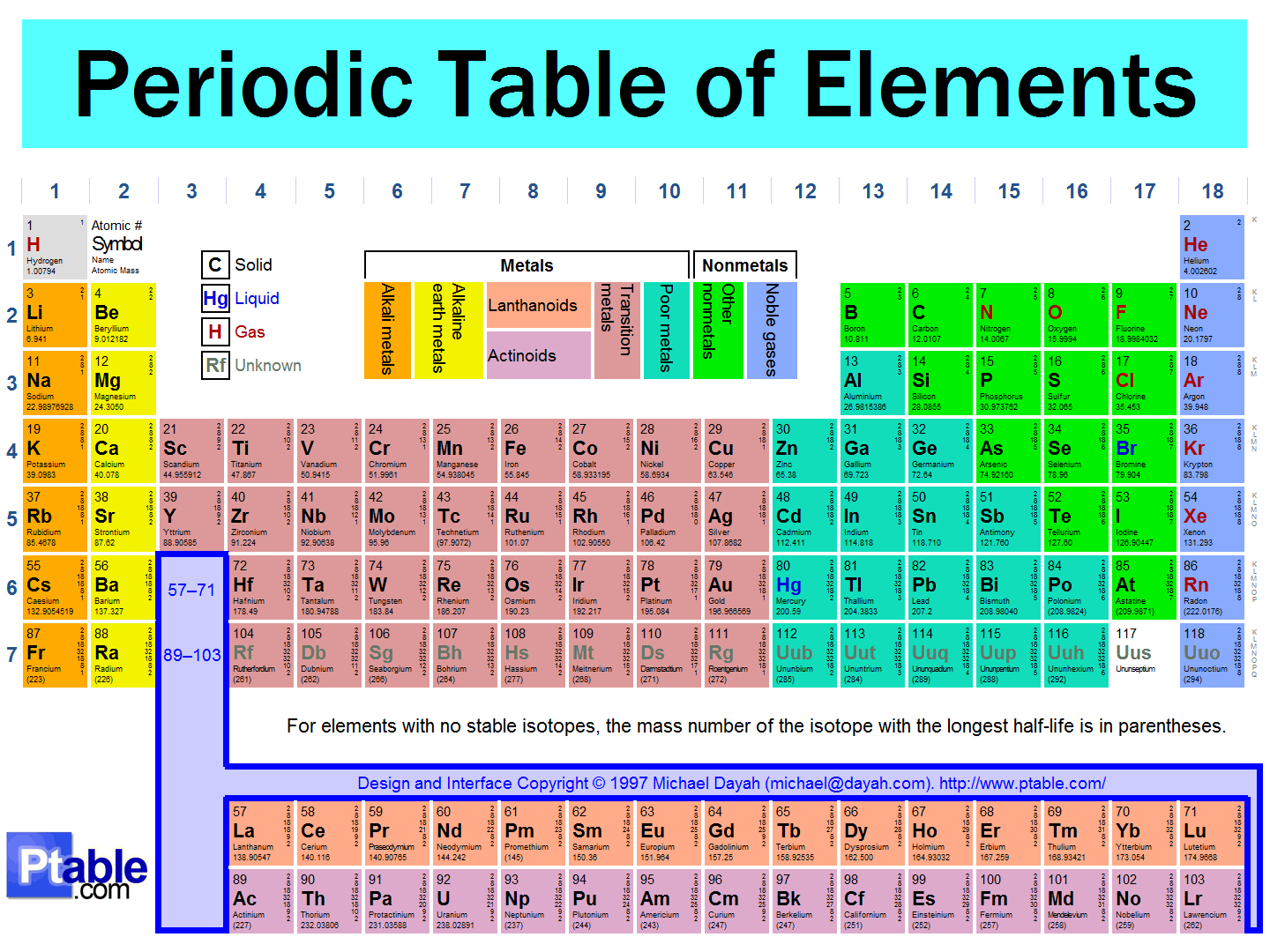
Elements in Group number 17 are known as
Alkai Metals
Alkaline Metals
Halogens
Noble Gases
Which group includes non-reactive gasses that have a full outer electron shell?
Alkai Metals
Alkaline Metals
Halogens
Noble Gases

Which group includes soft, highly reactive metals with one electron in their outer shell?
Alkai metals (group 1)
Alkaline metals (group 2)
Halogens (group 17)
Noble gasses (group 18)