wayground logo

Free Printable Worksheets

Font size

S
M
L
XL
Worksheets

2021 Fall Semester Final-World History

Total questions: 116

Worksheet time: 2hrs 0mins

Name
Class
Date
1.
Cuneiform, Hieroglyphics, Pictographs.
a)
Religion
b)
Government
c)
Writing
d)
Trade
2.
So many gods to pray to!
a)
animism
b)
monotheism
c)
polytheism
d)
altruism
3.
Farming in ancient Mesopotamia resulted in an abundance of food, which
a)
often rotted, causing illness.
b)
enabled civilization to emerge.
c)
caused overpopulation.
d)
produced inflation.
4.
Hammurabi is remembered for
a)
his agricultural innovations.
b)
his law code, a collection of laws for Mesopotamia society.
c)
restructuring Mesopotamia religion.
d)
overthrowing the Akkadian Empire.
5.
A theocracy is a government in which
a)
leaders rule by divine authority.
b)
the military ruled the people.
c)
only women could rule.
d)
a council of elders makes all the laws.
6.
Why did towns and villages establish along the banks of the Nile?
a)
Its banks provided natural protection from invaders.
b)
Unlike other rivers, its course was always reliable.
c)
Its water helped people grow crops and trees.
d)
Unlike other rivers, its sweet water was not polluted.
7.
What did the Sumerians invent that made daily life easier and more productive?
a)
writing, mummification, pyramids
b)
wagon wheel, use of the arch in construction, number system, charted constellations.
c)
irrigation system, the plow, and chariot
8.
The cities, Harappa and Mohenjo Daro were a part of ______ civilization in India. They created an advanced drainage system and sewage pipes.
a)
Indus River Valley
b)
Ancient China
c)
Mesopotamia
d)
Egypt
9.
How does the idea of Filial Piety and Confucianism go together?
a)
Let nature take it's course.
b)
Follow the will of Heaven
c)
System of strict laws
d)
a system in which every family member has his or her place; duty and humanity
10.
What allows for the opportunity of job specialization?
a)
surplus of goods 
b)
entertainment 
c)
more civilizations 
d)
government 
11.
The Great Wall protected which ancient civilization from invasion?  
a)
Indus 
b)
Chinese 
c)
Mesopotamia 
d)
Egypt 
12.
Most early religious traditions can be categorized as -
a)
Monotheistic
b)
Polytheistic
c)
Atheistic
d)
Agnostic
13.
Name the River Valley Civilization shaded in yellow on the map
a)
Egypt
b)
Mesopotamia/
Sumer
c)
India
d)
China
14.
Name the River Valley Civilization shaded in pink on the map
a)
Egypt
b)
Mesopotamia/
Sumer
c)
India
d)
China
15.
Which ancient river civilization created the first writing system?
a)
Indus River Valley
b)
Nile River Valley
c)
Tigris & Euphrates River Valley
d)
Yellow River Valley
16.
What river(s) is(are) nearby the Ancient Chinese civilization?
a)
Nile River
b)
Indus River
c)
Yangtze and Yellow Rivers
d)
Tigris and Euphrate Eivers
17.
What river valley would have been here?
a)
China
b)
Mesopotamia
c)
Indus
d)
Egypt
18.
What river goes with Egypt?
a)
Nile
b)
Euphrates
c)
Egypt
d)
Indus
19.
Base your answer to the following question on the map and on your knowledge of social studies. 
a)
Rivers served as the primary trade routes for the entire region
b)
The economy of the region was influenced by extensive trade connections
20.
Belief that bodies of water, animals, trees, and other natural objects have spirits.
a)
Islamic belief
b)
animism
c)
spiritual belief
21.
What were the greatest Egyptian architectural achievements?
a)
Temples
b)
Pyramids
c)
Hieroglyphics
d)
Mummification
22.
What was a result of the development of an irrigation system in Mesopotamia?
a)
Food surplus
b)
Worse flooding
c)
Drought
d)
Sargon's Empire
23.
Which type of democracy existed in ancient Athens?
a)
Representative
b)
Parliamentary
c)
Direct
d)
Elective
24.
What substance deposited by the Nile River made the land of ancient Egypt fertile?
a)
Silt
b)
Dirt
c)
Sand
d)
Reeds
25.
Which ruler created the first code of written law?
a)
Hammurabi
b)
Draco
c)
Solon
d)
Sargon
26.
Which major religion teaches conformity (following) a caste system?
a)
Islam
b)
Hinduism
c)
Judaism
d)
Buddhism
27.
What is the Hindu belief in Karma?
a)
that one's actions determine one's fate
b)
that people should worship only one god
c)
that a child should always obey their parents
d)
that a woman should always wear a head scarf when she goes out of the house
28.
Which of the following happened when man began to farm?
a)
There were communities where people could do jobs other than farming jobs 
b)
They had more meat in their diet
c)
They were constantly attacked by wild animals
d)
They had to move from place to place following crops
29.
What change marked the beginning of the Neolithic Revolution? 
a)
beginning of hunting and gathering
b)
man learned to write
c)
man began farming
d)
man built towns and cities
30.
How did the Neolithic Revolution alter the social patterns of humans?
a)
It led to people becoming nomadic
b)
It led to the development of major religions
c)
It led to the creation of settled communities
d)
It led to greater social equality between male and female
31.
What were the two major cities of classical Greece?
a)
Athens and Sparta
b)
Thebes and Corinth
c)
Athens and Thebes
d)
Sparta and Corinth
32.
Led by Augustus Caesar, the Pax Romana was a period of: 
a)
peace, unity, & accomplishments that started during Hannibal's reign.
b)
peace, unity, & accomplishments that lasted nearly 200 years.
c)
distrust & conflict between emperors & the Senate.
d)
conquests & fights for control of the empire.
33.
What important change did the emperor Constantine make in the Edict of Milan (A.D. 313)? 
a)
He brought back the republic to help end violence.
b)
He made Christianity the official religion of the Empire.
c)
He divided the Empire into two parts: eastern and western.
d)
He moved the capital of the Empire to Vienna. 
34.
Which of the following are causes of the fall of Rome?
a)
Equal treatment under the law.
b)
Too many stable rulers.
c)
Many invading groups conquering Roman territory.
d)
Army became too confident.
35.
Use the bullets below:
-limited citizenship
-used with small number of people
-citizens decide the laws, pick the leaders, and debate
-voting is done by a majority of hands or broken pieces of pottery
What type of government is represented above?
a)
monarchy
b)
theocracy
c)
direct democracy
d)
representative democracy (republic)
36.
Alexander's conquests spread Hellenistic culture and ideas.  What is the meaning of Hellenistic?
a)
The name the Greeks gave their culture. 
b)
The name of the blending of Greek culture with other cultures.
c)
The name the Greeks gave to the king of their gods.
d)
The name for the great war between Athens and Sparta.
37.
Which two geographical features made Greece isolated?
a)
deserts and mountains
b)
rivers and volcanos
c)
mountains and rivers
d)
mountains and seas
38.

Nile, Indus & Mesopotamia were centers of civilizations because

a)

had rich iron & coal deposits

b)

were isolated from other cultures

c)

had fertile soil, fresh waters & warm climates

d)

were easy to defend from invasion

39.

The Code of Hammurabi was important because

a)

it treated citizens and slaves equally

b)

ended all physical punishment

c)

established written laws

d)

rejected the principle of filial piety

40.

Which society was the first to practice direct democracy?

a)

city-state of Athens

b)

empire of Alexander the Great

c)

city-state of Sparta

d)

Persian Empire

41.

The rugged, mountainous geography of ancient Greece led to

a)

absolute monarchies

b)

extensive trade

c)

separate, independent city-states

d)

belief in one god

42.

Egypt being called the "Gift of the Nile" because

a)

it provided a physical blockade from other countries

b)

it was a gift from the pharaohs

c)

it was a gift from God

d)

the river provided irrigation and rich soil for farming

43.

The ancient Roman's biggest contribution was

a)

inventing the printing press

b)

development of republican form of government

c)

learning to farm instead of hunting

d)

developed the first telescope

44.

What does Mesopotamia mean?

a)

the land of plenty

b)

the land between rivers

c)

the middle of the earth

d)

the land of smart people

45.
Your good or bad actions in this life is called your ___________________, you should always try to have the good kind.
a)
Karma
b)
Dharma
c)
Reincarnation
d)
Vedas
46.

The Roman Empire needed to move their soldiers and messengers quickly in order to maintain control and order. What did they build to help them in this effort?

a)

Aqueducts

b)

Amphitheatres

c)

Roads

d)

Forts

47.

What does the suffix "polis" mean?

a)

farmland

b)

mountaintop

c)

church

d)

city

48.

What is the doctrine, or belief system of Judaism?

a)

The Vedas

b)

The Upanishads

c)

The Ten Commandments

d)

The Qu'ran

49.

What religion is polytheistic, with literally hundreds of Gods? The top three are Brahma, Vishnu, and Shiva.

a)

Buddhism

b)

Hinduism

c)

Islam

d)

Christianity

50.

Who were the two sides in the Peloponnesian Wars?

a)

Athens and Rome

b)

Sparta and Carthage

c)

Athens and Sparta

d)

Macedonia and Troy

51.

Who were the two sides in the Persian Wars?

a)

Greece and Persia

b)

Rome and Persia

c)

Carthage and Persia

d)

Athens and Egypt

52.

A monarch that believed in the Divine Right of Kings believed that they were put in their throne by?

a)

The common man

b)

The rich and powerful

c)

The church

d)

God

53.

Why was writing such an important innovation in early civilizations?

a)

It allowed for people to communicate with each other over large distances

b)

It allowed for people to be able to record laws, records, histories

c)

Both answers are correct

54.

Which of the following are the sacred texts of Christians?

a)

Qu'ran

b)

Bible

c)

Vedas

d)

Torah

55.

What locations does the map illustrate.

a)

classical civilizations

b)

early trade routes.

c)

river valley civilizations

d)

ancient burial sites

56.

The use of irrigation displays man's ability to ...

a)

increase warfare

b)

gender equality.

c)

monotheism

d)

adapt and modify the environment

57.
Which popular Roman attraction is pictured?
a)
Colosseum
b)
Pantheon
c)
Circus Maxiums
d)
Forum
58.
Rome is located in which country?
a)
Greece
b)
Italy
c)
Egypt
d)
France
59.
How did the Romans carry water from hills and valleys into cities?
a)
by combining a set of layers
b)
by combining a set of arches
c)
by building aqueducts
d)
by building a bridge
60.
According to a traditional legend, who founded the city of Rome?
a)
Helen of Troy
b)
Romulus and Remus
c)
Aristotle and Plato
d)
Julius Caesar
61.
The wealthy ruling class of Rome was called
a)
Ciceros
b)
Plebeians
c)
Visogoths
d)
Patricians
62.
The social class made up of craftsmen, merchants, and poor farmers
a)
Ciceros
b)
Patricians
c)
Visogoths
d)
Plebeians
63.
The Pax Romana was
a)
A program to give land to the poor
b)
A period of Civil Unrest, riots, & wars
c)
Period of peace and prosperity
d)
The leader of the senate
64.
What Roman architectural contribution allowed the construction of higher, more stable structures such as the aqueducts and the Colosseum?
a)
columns
b)
arches
c)
lintels
d)
marble
65.
What material did the Romans invent that helped their structures last?
a)
volcanic rock
b)
asphalt
c)
cement
d)
lime
66.
Use the map to answer. Christianity began near Jerusalem, then spread as far west as ____.
a)
Britain
b)
Gaul
c)
Egypt
d)
Spain
67.

A group of nations or people ruled over by an emperor, empress or other powerful ruler or government.

a)

Confederation

b)

Empire

c)

Kingdom

d)

Country

68.

The male sovereign or supreme ruler of an empire or land

a)

Emperor

b)

Consul

c)

Tribune

d)

Magistrate

69.

An elected official who led the Roman Republic

a)

Consul

b)

Caesar

c)

Representative

d)

Senator

70.

100-44 B.C. Roman general who became the republic's dictator in 45 B.C.

a)

Julius Caesar

b)

Nero

c)

Caligula

d)

Constantine

71.

A council whose members were the heads of wealthy, landowning families.

a)

Representatives

b)

Consul

c)

Gladiator

d)

Senate

72.

A form of government in which citizens choose their leaders by voting

a)

Democracy

b)

Monarchy

c)

Republic

d)

Dictatorship

73.
Which describes the reason for the growth of the Roman Empire?
a)
Rome's army conquered other lands
b)
Rome's rulers were very kind
c)
Rome used christianity to force others to join
d)
Rome's roads made joining the empire easy
74.
What was a problem caused by the increasing size of the Roman Empire?
a)
the empire ran out of water
b)
the empire became too large to manage and protect
c)
the empire could not make enough weapons
d)
the empire could not make enough buildings
75.
What religion was adopted by the Roman Empire after being persecuted for many years?
a)
Islam
b)
Buddhism
c)
Christianity
d)
Hunnism
76.
Which technology allowed soldiers, merchants and traders to travel more quickly through the empire?
a)
paved roads
b)
aqueducts
c)
arches
d)
plumbing
77.
What body of water was in the center of the Roman Empire?
a)
Pacific Ocean
b)
Mediterranean Sea
c)
Caspian Sea
d)
Atlantic Ocean
78.
Who was the first emperor of the Roman Empire?
a)
Julius Caesar
b)
Augustus
c)
Justinian
d)
Attila
79.

The Romans got many of their ideas and customs (including religion) from Greece.

a)

True

b)

False

80.

After the harsh rule of a tyrant king, the early Romans formed which type of government?

a)

Direct Democracy

b)

Monarchy

c)

Republic

d)

Aristocracy

81.

Like the Greeks, Romans were ___________ , meaning they worshiped many gods.

a)

Monotheistic

b)

Polytheistic

c)

Aethiests

d)

Agnostics

82.

Which one of the following statements shows how Rome greatly influenced the United States?

a)

We use their architecture styles like domes and arches

b)

We use their way of government by having three branches

c)

The Latin language has influenced many words in our language

d)

We go to court with lawyers and are innocent until proven guilty

83.

Use the maps to finish this sentence: At its peak, the Roman Empire included _________________.

a)

areas of Europe, Africa, and Asia

b)

parts of India and South Asia

c)

most of Africa and Europe

d)

all of Europe and Great Britain

84.

What does this diagram illustrate?

a)

events that led to corruption in ancient Rome

b)

effects of the collapse of the Roman Empire

c)

patterns that develop when a government collects taxes

d)

causes of the fall of the Roman Empire

85.

Name of Roman Contribution pictured?

a)

Pantheon

b)

Parthenon

c)

Colosseum

d)

Forum

86.

Jupiter, Juno, Apollo, Diana, Minerva, Venus


What do they all have in common?

a)

Roman gods/goddesses

b)

Greek gods/goddesses

c)

Christian god/goddesses

d)

Hebrew god/goddesses

87.

Zeus, Hera, Apollo, Artemis, Athena, Aphrodite


What do they all have in common?

a)

Greek gods/goddesses

b)

Roman gods/goddesses

c)

Christian gods/goddeses

d)

Muslim gods/goddesses

88.

Which continent is A?

a)

Africa

b)

Asia

c)

Europe

d)

Antarctica

89.

Which continent is B?

a)

Africa

b)

Asia

c)

Europe

d)

Antarctica

90.

Which continent is C?

a)

Africa

b)

Asia

c)

Europe

d)

Antarctica

91.

In ancient India the people were separated into different social classes. These classes were called:

a)

Aryans

b)

Brahmins

c)

Hittites

d)

Castes

92.

The clash between Rome and the Jews all began with the teachings of whom?

a)

moses

b)

Jesus

c)

Soloman

d)

Noah

93.

In India's Caste System, what did caste membership determine?

a)

a person's position in society

b)

what kind of job a person could have

c)

whom a person could marry

d)

All of the above

94.
What Chinese school of thought teaches respect to elders and the law as the best way to maintain a peaceful society?
a)
Taoism
b)
Christianity
c)
Confucianism
d)
Buddhism
95.
The Confucian idea that children have to respect, obey, and care for their parents is called...
a)
Confucianism
b)
Daoism
c)
Mandate of Heaven
d)
filial piety
96.

The United States Government is based on representative and direct democracy established by what two ancient civilizations?

a)

Mesopotamia and Egypt

b)

Egypt and Greece

c)

Greece and Rome

d)

Rome and China

97.
Which statement best describes hunters and gatherers?
a)
They followed animal herds and gathered fruits, berries, etc along the way.
b)
The tools they made from metal helped them to survive.
c)
They domesticated animals to help with daily activities. 
d)
They developed ways to bring water to their crops. 
98.
Which continent were the earliest humans originally from?
a)
Africa
b)
Australia
c)
North America
d)
South America
99.
The ruler of all the Greek gods was... 
a)
Poseidon.
b)
Ares.  
c)
Zeus.
d)
Athena.  
100.
What does the word "Democracy" mean?
a)
"rule by the government"
b)
"rule by the many"
c)
"rule by the wealthy"
d)
"rule by the people"
101.
The games held every four years at a festival to honor Zeus were called
a)
Goodwill Games
b)
Marathons
c)
Olympics
d)
Triathlons 
102.
A city-state which favored democracy and a well-rounded education. 
(Also, the largest city-state by a wide margin)
a)
Sparta
b)
Athens
c)
Delphi
d)
Corinth
103.
A person elected to rule the Roman Republic for a short period in time of emergency
a)
emperor
b)
king
c)
counsul
d)
dictator
104.
The Phoenicians contributed greatly to written communication by introducing the first use of:
a)
Money
b)
Papyrus 
c)
Pictographs
d)
Alphabet
105.
The process of mummification was connected to the Egyptian belief in?
a)
Spirts
b)
Magic 
c)
Afterlife
d)
Multiple gods
106.
The Paleolithic Age is
a)
New Stone Age
b)
not proven to have existed
c)
usually known as the Primitive Age
d)
the period in which humans used simple stone tools
107.
Which of the following was part of the agricultural revolution?
a)
widespread use of bronze
b)
domestication of animals
c)
the beginning of agricultural rituals
d)
significant artistic activity
108.
Ziggurats and cuneiform are linked to which ancient civilization?
a)
Sumerians
b)
Indians
c)
Egyptians
d)
Hebrews
109.
Which is true of the following statement? "Egypt is the gift of the Nile." by Herodutus, Greek Historian. 
a)
The Nile supports civilization in Egypt.
b)
Egypt as a land is the gift of Thoth
c)
Egypt has rewarded the world with the Nile
110.
At the time, the Persian Empire was - 
a)
very small
b)
the largest empire in the world
c)
declining
d)
nonexistent
111.
Who was the Athenian leader during the Golden Age who extended democracy and rebuilt the city after the Persian Wars?
a)
Alexander the Great
b)
Zues
c)
Xerxes 
d)
Pericles
112.
What type of government is ruled by a small group?
a)
Democracy
b)
Oligarchy
c)
Tyranny
d)
Monarchy
113.
What government is ruled by a small group of nobles?
a)
Aristocracy
b)
Tyranny
c)
Monarchy
d)
Democracy
114.
A line of rulers from one family
a)
theocracy
b)
pharaoh
c)
dynasty
d)
shadoof
115.
India & China both had eldest males in charge of society, what is that called?
a)
Theocracy
b)
Patriarchy
c)
Monarchy
d)
Geriotracy
116.
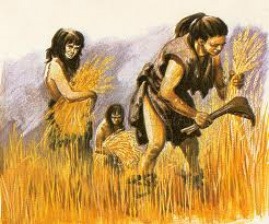
Nomadic groups whose food supply depends on hunting animals and collecting plant foods?
a)
Hunter-Gatherers
b)
Culture
c)
Hominids
d)
Artifacts