
 Worksheets
Electric Circuits
Total questions: 62
Worksheet time: 42mins


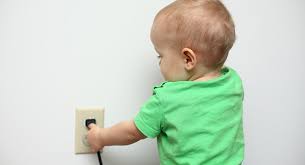


The picture is an example of .....
Series Circuit
Parallel Circuit
Alternating Circuit
Active Circuit

The picture is an example of .....
Series Cicuit
Parallel Circuit
Alternating Circuit
Direct Circuit

Why electrical wiring usually are covered with a layer of plastic?
To make it more attractive.
To help electricity flow along the wire
To make it safe by keeping electricity in
To add more energy to the circuit.

Why is electrical wiring usually made from copper?
Because copper is shiny
Because copper conducts electricity
Because copper is not magnetic
Because copper insulates electricity
A material that does NOT let electricity pass through it is called ...
An electrical conductor
An electrical insulator
An electrical source
An electric appliance

What are the necessary components of a circuit?
Energy source, light bulb, wires
Energy source, switch, light bulb, wires
Light bulb, wires, switch
Switch, energy source, light bulb, insulator

If the circuit is CLOSED, the switch is _______.
ON
OFF

If the electric circuit is OPEN, the switch is ____.
ON
OFF

Replace the paper clip with a plastic spoon. What happens?
The bulb does not light
The bulb gets dimmer
The wires get hot
There is no change
In this circuit, the paperclip will act like a wire because it is
an insulator
a conductor
a resistor
a switch


What change would need to be made to allow both the bell and the bulb to function?
add another wire to the positive terminal of the battery
add a switch between the bell and the bulb
add another wire to the negative terminal of the battery
no changes are needed

What would the result be if wires 2 & 6 were removed?
All of the bulbs would light because wire 3 can replace wire 2.
All of the bulbs would light because the battery has a full charge
None of the bulbs would light because wire 6 is necessary
None of the bulbs would light because there is no switch

In a series circuit __________________ .
there are multiple pathways for the charges to go through
there is only one pathway for the charges to go through
there is no pathway for the charges to go through
there is only one device on the circuit

In a parallel circuit __________________ .
there are multiple pathways for the charges to go through
there is only one pathway for the charges to go through
there is no pathway for the charges to go through
there is only one device on the circuit

If light bulb A burns out, what will happen?
light bulb B will still work but C will not
none of the light bulbs will work
light bulb C will still work but B will not
light bulbs B and C will continue to work
If light bulb C burns out, what will happen?
light bulb B will still work but A will not
none of the light bulbs will work
light bulb A will still work but B will not
light bulbs A and B will continue to work

If light bulb A burns out, what will happen?
none of the lights will work
light bulbs B and C will continue to work
light bulb B will work, but C will not
light bulb C will work, but B will not
If light bulb C burns out, what will happen?
none of the lights will work
light bulbs A and B will continue to work
light bulb B will work, but A will not
light bulb A will work, but B will not

Why isn't this a functioning electrical circuit when the switch is closed?
there is no conductive path (wires that complete the path back to the battery)
there is no electrical resistance (devices to do work)
there is no electrical potential (power source)
the motor is on the wrong side

Why isn't this a functioning electrical circuit when the switch is closed?
there is no conductive path (wires that complete the path back to the battery)
there is no electrical resistance (devices to do work)
there is no electrical potential (power source)
the motor is on the wrong side

Why isn't this a functioning electrical circuit when the switch is closed?
there is no conductive path (wires that complete the path back to the battery)
there is no electrical resistance (devices to do work)
there is no electrical potential (power source)
the motor is on the wrong side

What needs to be done to this circuit so that the lamp lights up?
Close the switch
Add an energy source and close the switch
Add another lamp
Add another lamp and a switch

1. Which switch or switches must be closed to make the lamps light?
Only switch 1
Only switch 1
Switches 1 and 2
Switches 1 , 2 and 3

If lamp 1 is unscrewed from its holder, what will happen to lamp 2?
It will get brighter
It will stay the same brightness
It will go out
Nothing will happen
Why is a bulb brighter when it is powered by two batteries rather than one?
Because the flow of electricity in the circuit is less
Because the flow of electricity in the circuit is the same
Because the flow of electricity in the circuit is greater
Because the flow of electricity will go backward

Which statement is true about the light bulb?
The light bulb is on because it is part of a closed circuit.
The light bulb is on because it is part of an open circuit.
The light bulb is off because it needs another wire to complete a closed path for electrons.
The light bulb is on because it needs another wire to complete a closed path for electrons

Which statement is true about the buzzer?
The buzzer is on because it is connected correctly to the battery.
The buzzer is on because it is connected to the light bulb.
The buzzer is off because it is not connected to a switch.
The buzzer is off because it part of an open circuit.

Which bulbs are on even if the switch is open.
Only the red bulb is on.
Only the blue, green and purple bulbs are on.
All of the bulbs are on.
Only the blue bulb is on.

Which color bulb will turn on when the switch is closed?
Purple
Blue
Red
Green

Which bulbs are off because the switch is open?
Only LED 1
All of them are off.
LED 2 and 3
LED 2, 3, and 4

Which LED bulbs are on even though the switch is open?
LED 2, 3 and 4
Only LED 1
They are all on.
LED 2

The bulbs are off. Which procedure will turn the bulbs on?
Disconnect wire 4
Close the switch.
Replace the batteries.
Remove one bulb.

Which switch needs to be closed so that only the yellow bulb lights up?
Switch 1
Switch 2
Switch 3
All of the switches.

Which switch needs to be closed so that only the green bulb lights up?
Switch 1
Switch 2
Switch 3
Switch 4

All of these statements are true about this circuit EXCEPT -
This is a closed circuit so the light bulb is on.
This is an open circuit so the light bulb is off.
The battery is the source of energy.
The wires are the path for electron flow.

Which statement is true about this circuit?
It is an open circuit because there needs to be a wire connected to both + and - parts of the battery.
It is a closed circuit because the wire is in a circle.
It is an open circuit so the light bulb is ON.
It is a closed circuit because there is a source, path and bulb.
Which circuit is closed so the light bulb is on?


Which circuit is open so the light bulb is off?


A student builds a circuit made up of a battery, two light bulbs, and a switch. What will the student most likely observe in this circuit?
Light bulb 1 and light bulb 2 will both be on
Light bulb 1 will be off, but light bulb 2 will be on
Light bulb 1 and light bulb 2 will both be off
Light bulb 1 will be on, but light bulb 2 will be off


Why is a battery important in an electrical circuit?
As a source of energy.
As a path for electricity to flow through.
As a connector to connect all parts of a circuit.

