
 Worksheets
AP Unit 4 Review
Total questions: 171
Worksheet time: 29hrs 30mins
Which of the following is an intramolecular force?
hydrogen bonding
polar covalent bonding
London dispersion forces
dipole-dipole interaction
On a potential energy graph, what is graphed on the x-axis?
internuclear distance
potential energy
IMF distances
Coulombic forces
What is the relationship between potential energy and bond energy?
low PE, high bond energy
low PE, low bond energy
high PE, high bond energy
there is no relation

Based on the lattice energy for the decomposition of NaF, how would the lattice energy for MgO compare?
greater than because the ions in MgO have a greater charge
less than because Mg is a smaller ion than Na
equal to because the difference in ion sizes is similar between both compounds
less than because the molar mass of MgO is less than the molar mass of NaF

The graph shows the amount of potential energy between two hydrogen atoms as the distance between them changes. At which point in the graph would a molecule of H2 be the most stable?
A
B
C
D
What is the correct Lewis Dot Structure for ammonia NH3


Which is the correct molecular structure for carbon dioxide?


Type of bond between Br & Br
Ionic
Polar Covalent
Nonpolar Covalent
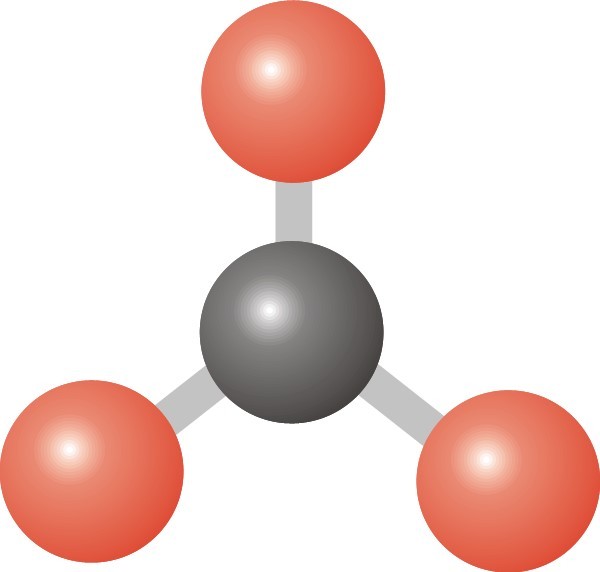


What is the bond order between S and O?
1
1.5
2
3

What is the the shape of this molecule according to VSEPR theory?
Linear
Tetrahedral
Trigonal Planar
Trigonal pyramidal
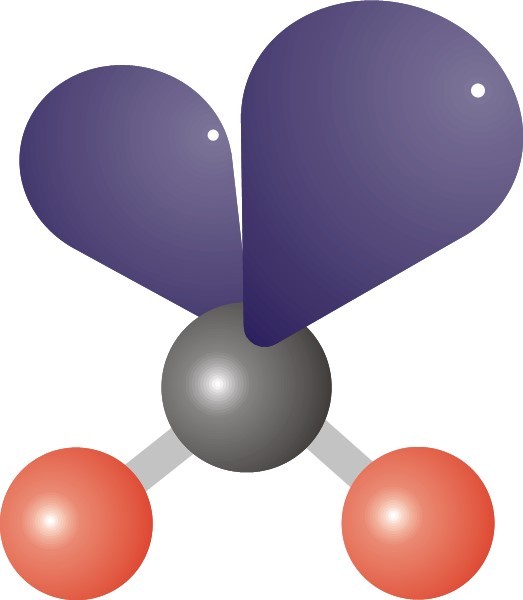
What could this be?
CO2
NH3
H2S
CH4

This carbon atom went through ....
sp hybridization
sp2 hybridization
sp3 hybridization
dsp3 hybridization
Which of the following images represents a Trigonal Planar molecular geometry?


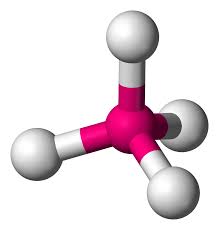
What is the hybridization of this molecule shown above
sp
sp2
sp3
sp4

What is the bond angle for the CH4 molecule?
120°
180°
109.5°
90°

Two carbon atoms form a linear shaped ethene, C2H4, molecule when bonded with four other hydrogen atoms. Prior to bonding, the carbon atom
does not hybridize
undergoes sp hybridization
undergoes sp2 hybridization
undergoes sp3 hybridization


Compounds that are composed of the same number and type of atoms but have them arranged in different ways are ___________.
isomers
isotopes
polymers
alkanes

In a stereoisomer, ________ means "on the same side" and ______ means "across from."
cis; trans
cis; L
D; L
trans; cis

Given the formula representing a compound:
Which formula represents an isomer of this compound?


Which of the following is a valid Lewis structure for hydrogen cyanide, HCN?


Which of the following forces are found between two NONPOLAR molecules?
London dispersion force
Dipole-dipole
Hydrogen bond
What intermolecular force is present between two molecules of HCl?
Dipole-Dipole
London
Hydrogen bonds
Ionic
What type of intermolecular force is present between two molecules of HF?
Dipole-Dipole
London
Hydrogen bonds
ionic
Rank these in order of strength (from strongest to weakest):
London forces
hydrogen bond
dipole-dipole attraction
dipole-dipole>hydrogen bond>London
London>dipole-dipole>hydrogen bond
hydrogen bond>dipole-dipole>London
London>hydrogen bond>dipole-dipole

A diatomic molecule like O2 is always_______ because electrons are shared ________.

Is the following molecule polar or nonpolar?
polar
nonpolar
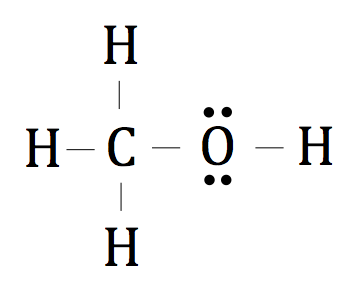
Is the following molecule polar or nonpolar?
polar
nonpolar

Is the following molecule polar or nonpolar?
polar
nonpolar

Is the following molecule polar or nonpolar?
polar
nonpolar

Which model represents a LOWER Vapor Pressure?
A
B
Which model represents STRONGER Intermolecular Forces?
A
B

Intermolecular forces for: NH3
Dispersion Force
Dipole dipole
Hydrogen bonding
The amount of heat needed to change 1 gram of a substance from the solid phase to the liquid phase is ___
Heat of Vaporization
Boiling point
Heat Energy
Heat of fusion
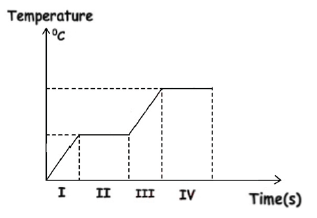
Consider the following temperature-time graph when a solid is heated. which part of the graph involves heat of vaporization?
Part I
Part II
Part III
Part IV
A substance has a melting point of 25 oC and a boiling point of 235 oC. What state is it at 5oC?
Solid
Liquid
Gas

Which type of IMF is responsible for the attraction pictured above?
Dipole-Dipole Interaction
Ion-Dipole Interaction
Hydrogen Bonds
Covalent Bond
Ionic Bond
Viscosity is
the resistance to flow
the resistance to spread out
the ability to make sheets of metal
the ability to make wire
A weak IMF will result in a
high melting point
high viscosity
high surface tension
low surface tension
When a covalent solid such as dry ice changes phase, what bonds are broken?
covalent bonds between the atoms
intramolecular forces in the molecule
intermolecular forces between the molecules
bonds both within and between the molecules
Vapor pressure increases with increasing ______.
temperature
pressure
molecular weight
size of the container
As the IMF strength increases, ____ decreases.
boiling point
melting point
surface tension
vapor pressure
viscosity
As the temperature of a liquid increases, the viscosity _____.
increases
decreases
is unaffected
Sugar is added to tea to make sweet tea. In chemical terms the sugar is the ___________ and the tea (mostly water) is the _____.
endothermic, exothermic.
chemical, dissolution.
reactant, product.
solute, solvent.

The seam between atoms in a crystalline solid is called a ___
division line
fracture point
discontinuity boundary
cleavage plane
metals + nonmetals
Which term means "can be hammered or shaped?"
network covalent
network covalent
This type of network covalent solid is soft and can conduct electricity because it is 2D and has free electrons.
This type of solid forms a regular repeating
three-dimensional structure called a crystal lattice. What type of solid is this?
amorphous
crystalline
glass
diamond
In amorphous solids, the atoms or molecules are held together in a completely random formation.
true
false
One major difference between crystalline and amorphous solids is that
crystalline solids have a precise melting point.
amorphous solids have a lattice structure.
amorphous solids always behave consistently and uniformly.
crystalline solids break unpredictably and can produce curved fragments.
A sample of a hard, solid binary compound at room temperature did not conduct electricity as a pure solid but became highly conductive when dissolved in water. Which of the following types of interactions is most likely found between the particles in the substance?
Ionic bonds
Metallic bonds
Covalent bonds
Hydrogen bonds
A certain crystalline substance that has a low melting point does not conduct electricity in solution or when melted. This substance is likely to be
a network covalent solid
a metallic solid
an ionic solid
a molecular solid
A student is given a sample of a pure, white crystalline substance. Which of the following would be most useful in providing data to determine if the substance is an ionic compound?
Examining the crystals of the substance under a microscope
Determining the density of the substance
Testing the electrical conductivity of the crystals
Testing the electrical conductivity of an aqueous solution of the substance

Which of the following most likely describes the solid represented in the diagram above?
It is soft and is a poor thermal and electrical conductor.
It has a low melting point and is a poor thermal and electrical conductor as a solid.
It is a brittle, water-soluble electrolyte that is a poor thermal and electrical conductor as a solid.
It is malleable and is an excellent thermal and electrical conductor as a solid.

Three substances were studied in the laboratory, and the data in the table above were collected. Based on the data, which of the following shows the type of bonding in each substance?
Substance X: Network covalent; Substance Y: Ionic; Substance Z: Metallic
Substance X: Ionic; Substance Y: Molecular; Substance Z: Network covalent
Substance X: Molecular; Substance Y: Network covalent; Substance Z: Metallic
Substance X: Network covalent; Substance Y: Metallic; Substance Z: Ionic
Which type of solid has very strong covalent bonds between neighboring atoms?
Ionic Crystal
Covalent Molecular Crystal
Metallic Crystal
Network Covalent Crystal
Very hard, very high melting point, nonconductors of electricity in solution
Ionic
Metallic
Network Covalent
Covalent Molecular
Identify the property that gives metallic solids the ability to conduct electricity well, but not network covalent solids.
Electrons in metallic solids are strongly bound in place
Electrons in network covalent solids are freely moving around
Network covalent solids are not bound to other atoms
Metallic solids have a sea of electrons that are not bound and can move about the solid freely.
Metallic solids are composed of metal cations held together by a delocalized "sea" of valence electrons.
True
False
Which of the following are examples (3) of covalent network solids?
diamond
silicon dioxide
water
graphite
carbon tetrachloride
Standard temperature and pressure (STP) mean
A temperature of 0°C and a pressure of 1 atmosphere (atm).
A temperature of 100°C and a pressure of 1 atmosphere (atm).
A temperature of 0°K and a pressure of 1 atmosphere (atm).
What does R stand for
Ideal gas constant
Real gas constant
Temperature constant
Ideal gas law

Three gases, Ar, N2 and H2 are mixed in a 500 L container. Ar has a pressure of 255 torr, N2 has a pressure of 228 torr, and H2 has pressure of 752 torr. What is the total pressure in the container?
483 torr
270 torr
1235 torr
A 250 mL sample of oxygen is collected over water at 25° C and 760.0 torr pressure. What is the pressure of the gas alone? (Vapor pressure of water at 25° C = 23.8 torr)
783.8 torr
205.38 torr
1250 torr
736.2 torr
Total number of the mole fractions for all component in the solution is equal to
According the KMT, the particles are in
different states
organized patterns
constant motion
various containers
What does increasing the temperature of a solid lead to?
increased mass of particles
decreased space between particles
decreased velocity of particles
increased velocity of particles
How do the particles in a gas behave?
Neatly organized without any movement.
Move around trapped in a small volume and with the same surrounding particles.
Move fast enough to break attractions and pushing other particles out of the way.
Move freely in a straight line until they collide with another particle.
If the particles are moving fast enough to complete break the attraction pulling it back towards other particles, what process is occuring?
sublimation
melting
freezing
evaporation
When particles in a gas collide, they change
direction and velocity
velocity and temperature
direction and volume
volume and temperature


If He atoms (mass 4), Ne atoms (10), Ar atoms (40) and Kr atoms (84) at the same temperature, what is true about their average kinetic energy?
He has the highest kinetic energy
Kr has the highest kinetic energy
Ar has the highest kinetic energy
They all have the same kinetic energy
At a given temperature , all gases have the same
Volume
Mass
Average Kinetic Energy
Velocity
According to the kinetic molecular theory, which statement describes the particles in a sample of an ideal gas?
The particles have attractive forces between them.
The particles are considered to have negligible volume.
The particles are constantly moving in circular paths.
The particles collide, decreasing the total energy of the system.
Which phrase describes the motion and attractive forces of ideal gas particles?
random curved-line motion and no attractive forces
random straight-line motion and strong attractive forces
random straight-line motion and no attractive forces
random curved-line motion and strong attractive forces
A real gas behaves most like an ideal gas at
average potential energy of its particles
ionization energy of its particles
low pressure and high temperature
activation energy of its particles
The concept of an ideal gas is used to explain
the behavior of a gas sample
why some gases are monatomic
why some gases are diatomic
the mass of a gas sample
Which graph best represents the pressure-volume relationship for an ideal gas at constant temperature?


Which graph shows the relationship between pressure and Kelvin temperature for an ideal gas at constant volume?


As the temperature of a gas increases with the volume remaining constant, the pressure of the gas
decreases
increases
remains the same
The variable that determines average kinetic energy is the _____.
Temperature
Volume of the container
Mass of the particles

Which of the following is true based on the distribution, assuming all gases are at the same temperature?
Helium has the highest average kinetic energy
Ne has a greater average velocity than Xe
warmer gases have less variability in terms of speed
larger particles move faster than smaller particles on average

The diagram shows the Maxwell−Boltzmann distribution of kinetic energy in a gas at two different temperatures.
Which letter represents the most probable energy of the molecules at the higher temperature? (which axis is kinetic energy or speed graphed on)
A
B
C
D

This question is about the Maxwell–Boltzmann distribution of molecular energies in a sample of a gas shown in the figure below.
What does the area under the curve represent?
The total energy of the particles.
The total number of particles.
The number of particles that can react with each other.
The total number of particles that have activation energy.

For objects that have the same kinetic energy, bigger masses move ___
more slowly
faster
at the same rate
sideways

When gases are allowed to move freely, they tend to move from regions of ___
low concentration to regions of high concentration
high concentration to regions of low concentration
low temperature to regions of high concentration
high concentration to regions of low temperature
The partial pressures of CH4, N2, and O2 in a sample of gas were found to be 143 mmHg, 469 mmHg, and 563 mmHg, respectively. Calculate the mole fraction of oxygen.
20.1
0.399
0.479
0.741


2Ca(s) + O2(g) --> 2CaO(s), calcium is __________
Defined as the loss of electrons.
oxidation
reduction
redox
OIL RIG
Cl2 + 2e- --> 2Cl - is an example of:
a chemical reaction
redox
oxidation
reduction
Substance that oxidizes another substance by accepting its electrons.
reducing agent
oxidation number
combustion
oxidizing agent
What is a half-reaction of this equation, Na + Cl --> NaCl ?
Cl + e- --> Cl-
Cl - e- --> Cl-
Na --> Na + e-
Na° + Cl°--> Na+1Cl-1


HCO3-
HCl
H2CO3
Cl-
Could C2H3O2- act as a base when placed in water?
Yes, because it can accept a H+
Yes, because it can donate a H+
No, because it cannot donate a H+
No, because it cannot accept a H+
What type of reaction is this?
AgNO3(aq) + NaCl(aq) --> AgCl(s) + NaNO3(aq)
Synthesis
Single Displacement
Precipitation
Acid/Base
What type of reaction is this?
HCl(aq) + NaOH(aq) --> NaCl(aq) + H2O(l)
Combustion
Acid/Base
Precipitation
Decomposition
How do you know a REDOX rxn has taken place?
You will see a red glow
You will be happy
Oxidation #'s will change for at least 2 elements
A gas will be produced
Which of the following is an example of a weak acid/strong base reactions?
NaOH + HCl
NH3 + HC2H3O2
HCl + NH3
HC2H3O2 + NaOH
Which of the following represents the net ionic equation for the precipitation reaction between sodium carbonate and magnesium sulfate?
Na2CO3 + MgSO4 --> MgCO3 + Na2SO4
2Na+ + CO3-2 + Mg+2 + SO4-2 --> Mg+2 + CO3-2 + 2Na+ + SO4-2
2Na+ + SO4-2 --> Na2SO4
CO3-2 + Mg+2 --> MgCO3
Which of the following represent a Brønsted-Lowry conjugate acid-base pair?
HF and H2O
NaOH and H2O
HF and NaOH
HF and F-
Given the following: NH3(aq) + HCl(aq) ⇄ NH4+(aq) + Cl-(aq)
The Brønsted-Lowry acids in the reaction represented above are
NH3(aq) and NH4+(aq)
HCl(aq) and NH4+(aq)
HCl(aq) and Cl-(aq)
NH3(aq) and HCl(aq)
Which of the following represents oxidation?
C → CH4
Fe3+ → Fe2+
Cl2 → 2Cl-
Zn → ZnO
What is the purpose of an "indicator"?
changes color if a chemical reaction occurs
changes color if a physical change occurs
changes color in the presence of an acid or base
changes color when a salt dissolves in water

The table shows the pH of several solutions. Which solution has the greatest concentration (amount) of H+ ions?
vinegar
milk
water
bleach
You have a solution that is a base. You want to lower the pH so you should ___.
add a salt
add an acid
add more base
wait until it evaporates
Molarity is a measure of the ___.
moles of solute dissolved in a solvent.
moles of solvent dissolved in a solute.
Liters of solute dissolved in a solvent.
Liters of solvent dissolved in a solute.


4.4 mL
3.50 mL
3.60 mL
3.6 mL
Why do we perform a titration?
To determine the concentration of an unknown solution
To see if a reaction will occur between an acid and base
To find the mass of an unknown acid
To find the molar mass of an unknown solution
To calculate the viscosity of the solution
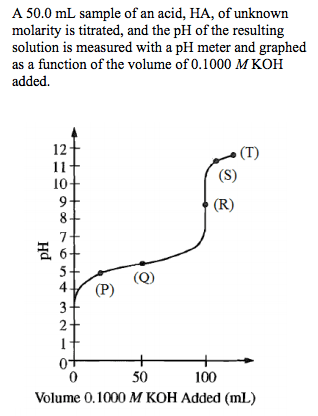
Which point on the titration curve corresponds to the point at which the moles of the added strong base are equal to the moles of the weak acid initially present?
Q
R
S
T
A titration works by using a ___________________________ reaction.
Single Replacement
Neutralization
Combustion
Synthesis
In a titration, the solution changes color at the
end point
equivalence point
A titration can be used to determine the _______________ of a solution
molarity
density
boiling point
reactivity
A 10.00 mL sample of H2SO4 was neutralized by 13.5 mL of 1.00 M KOH by the following reaction: H2SO4 + 2KOH → K2SO4 + 2H2O
What is the molarity of H2SO4?
0.675 M
0.910 M
1.05 M
1.20 M
Which of the following is a strong acid?
HF
KOH
HClO4
HClO
Which of the following is paired incorrectly?
H2SO4 - strong acid
HNO3 - weak acid
Ba(OH)2 - strong base
HCl - strong acid
NH3 - weak base
The following reactions are examples of:
Pb2+ + 2I- --> PbI2
2Ce4+ + 2I- --> I2 + 2Ce3+
HOAc + NH3 --> NH4+ + OAc-
acid-base reactions
precipitation, acid-base, and redox reactions, respectively
redox, acid-base, and precipitation reactions, respectively
precipitation, redox, and acid-base reactions, respectively
The following reactions are examples of:
2K(s) + Br2(l) --> 2KBr(s)
AgNO3(aq) + NaCl(aq) --> AgCl(s) + NaNO3(aq)
HCl(aq) + KOH(aq) --> H2O(l) + KCl(aq)
precipitation reactions
redox, precipitation, and acid-base reactions, respectively
precipitation (two) and acid-base reactions, respectively
redox reactions
ALL of the following reactions can be classified as:
2Al(s) + 3Br2(l) --> 2AlBr3(s)
2Ag2O(s) --> 4Ag(s) + O2(g)
CH4(l) + 2O2(g) --> CO2(g) + 2H2O(g)
oxidation-reduction reactions
combustion reactions
precipitation reactions
oxidation-reduction reactions AND combustion reactions

