
Font size
 Worksheets
Chemistry Midterm Review 1
Total questions: 56
Worksheet time: 2hrs 52mins
How many significant digits are there in 8.20 x 10⁴?
1
2
3
4
Change from standard form to scientific notation: 0.34
3.40 x 101
34 x 10-2
3.4 x 101
3.4 X 10⁻¹
Which of the following is an example of chemical change?
Filling up a balloon with hot air.
Taking a glass of water and freezing it by placing it in the freezer.
A plant collecting sunlight and turning it into food.
Your dog ripping up your homework.
Food breaking down in stomach acid
physical change
chemical change
mechanical digestion
change of form
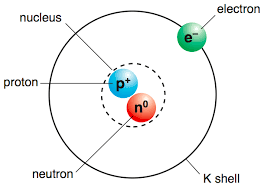

What is the center of an atom called?
The headquarters
The centrometer
The hypothesis
The nucleus
In the modern periodic table elements are arranged by:
atomic mass
atomic number
valence electrons
number of isotopes
A vertical column is called a ________ on the Periodic Table
Group
Orbital
Proton
Neutron
The number of neutrons in an atom can be found by
adding the number of neutrons and protons together.
adding the atomic mass and the atomic number.
subtratcting the atomic number from the atomic mass.
subtracting the atomic mass from the atomic number.

Rows in the Periodic Table are called
Periods
Groups/Families
Cousins
Metals

The elements that touch the zigzag line on the Periodic Table are called
metals
nonmetals
metalloids
gasses
What do atoms of the same periodic group have in common?
They have the same atomic number.
They have the same chemical symbols.
The have similar chemical properties.
They have the same atomic mass.
The smallest particle of an element that has the same chemical properties of the element is
a molecule of that element.
an atom of that element.
a proton of that element.
the nucleus of the element.

Protons have a ____________ charge, neutrons have a ____________ charge, and electrons have a ____________ charge.
positive; negative, neutral
positive, neutral, negative
neutral, negative, positive
negative, neutral, positive
Which elements have 1 valence electron?
period 1
group 1
group 4
periods on the periodic table tell you
the number of valence electrons
the number of protons
the number of energy levels
the total number of subatomic particles in the element
groups on the periodic table tell you
the number of energy levels (rings)
the number of protons
the elements identity
the number of valence electrons

What family is highlighted in the picture?
Alkali Metals
Alkaline Earth Metals
Halogens
Noble Gases

What family is dark purple in the picture?
Boron Group
Halogens
Transition Metals
Noble Gases

What family is highlighted in the picture?
Boron Group
Halogens
Transition Metals
Noble Gases
What group of metals is the MOST reactive?
Transition Metals
Metalloids
Alkaline Earth Metals
Alkali Metals
What group of nonmetals is the MOST reactive?
Noble Gases
Nitrogen Group
Halogens
Lanthanides

What type of elements are blue in the picture?
Nonmetals
Metals
Metalloids

What family is highlighted in the picture?
Alkali Metals
Alkaline Earth Metals
Halogens
Noble Gases

Malleable (property of metal) means that a substance can be shaped, bent, or formed without breaking easily
False
True
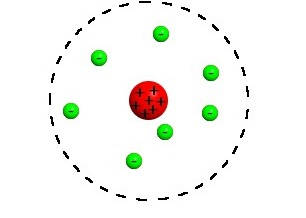
This model was the first to show a nucleus, consisting of protons and neutron. Electrons surround the nucleus but are not shown in distinct energy levels.
The "Rutherford Model" of the atom
The "Plum Pudding Model" of the atom
The "Quantum Mechanical Model" of the atom
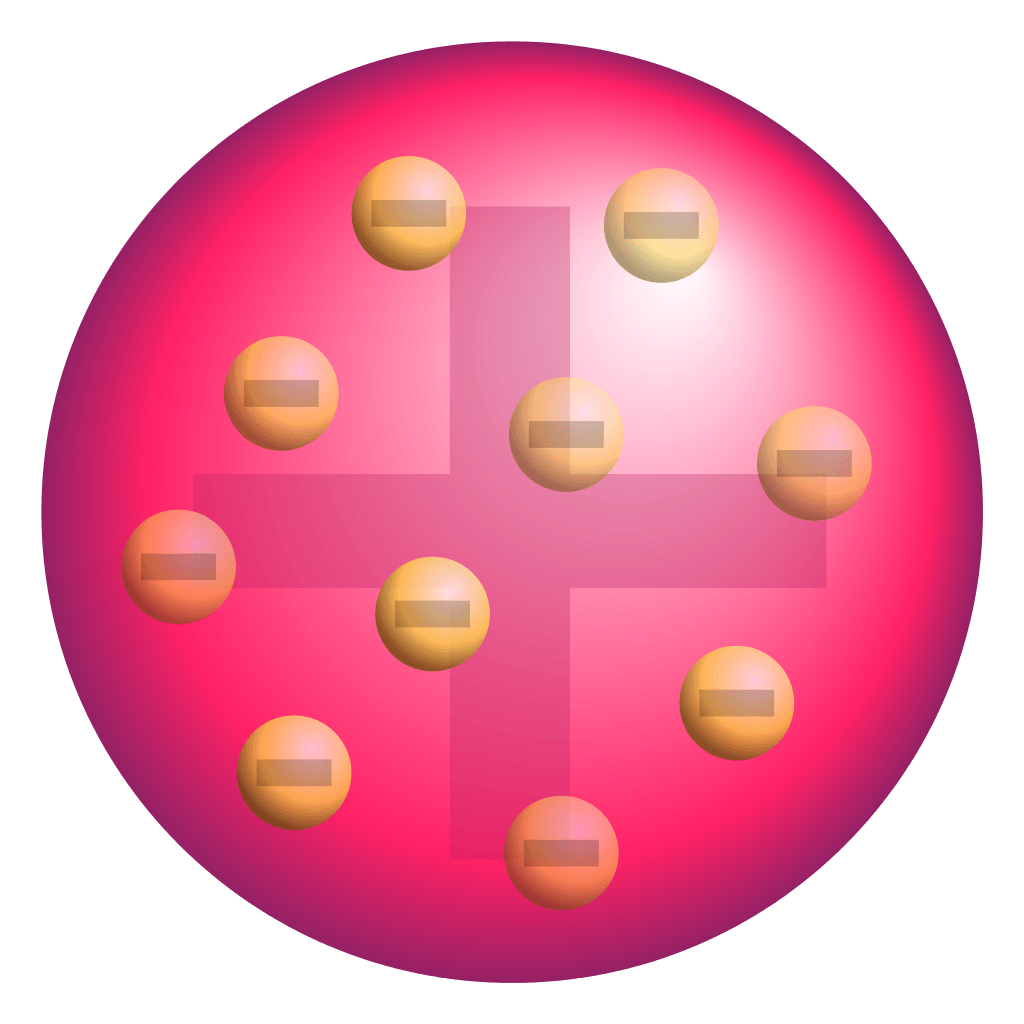
This model was developed after J.J. Thompson discovered electrons, a particle smaller than an atom. It shows electrons floating freely in a positive region.
The "Plum Pudding Model" of the atom
The "Rutherford Model" of the atom
Democritus's model of the atom
The "Quantum Mechanical Model" of the atom

Which scientist proposed the "plum pudding model" of the atom?
J. J. Thomson
Joseph Proust
Ernest Rutherford
Antoine Lavoisier
John Dalton
Who was the first to propose that matter consist of indivisible particle of matter called atoms?
John Dalton
Aristotle
Democritus
Plato

In the atomic model nicknamed the "plum pudding" model, what do the plums represent?
the nucleus
the atom
the electrons
the positive material
The cathode-ray tube was used to discover the ____ by ____.
electron by Thomson
electron by Dalton
proton by Thomson
proton by Dalton
electron by Rutherford

What were J. J. Thomson's major contributions to the atomic theory? (Select all that apply)
Discovered the electron
Discovered the nucleus
Studied cathode ray tubes
Proposed a model of the atom with electrons moving around the nucleus
Proposed the "plum pudding" model of the atom
Who proposed that electrons are only found in specific, discrete circular orbits around the nucleus?
Albert Einstein
Erwin Schrodinger
Ernest Rutherford
Niels Bohr
Which statement is true about compounds?
a pure substance where two or more elements are chemically combined
a homogenous mixture of 2 or more elements
a pure substance containing only one type of atom
a heterogeneous mixture of 2 or more elements chemically combined

Another name for a homogenous mixture is?
colloid
suspension
solution
compound
Ba
Compound
Element
Mixture
KCl2
Compound
Element
Mixture
What type of mixture is salsa
compound
heterogeneous
homogeneous

