
 Worksheets
PreCalc Final Review (F21)
Total questions: 107
Worksheet time: 7hrs 24mins
Factor Completely:
2n3 + 7n2 - 2n - 7
cannot be factored
(n - 1)2(2n + 7)
(n2 - 1)(2n + 7)
(n + 1)(n - 1)(2n + 7)
2x3 + 5x2 - 8x - 20
Factor Completely:
k4 - 10k2 - 39
(k2 - 13)(k2 + 3)
(k - 13)(k + 3)
(k2 + 15)(k2 - 3)
(k + 13)(k - 3)
Factor Completely:
256x4 - 81
(16x2 + 9)(16x2 - 9)
(16x2 + 9)(4x + 3)(4x - 3)
(4x2 + 9)(4x2 - 9)
(16x2 + 9)(2x + 6)(2x -6)


Which of the following is NOT TRUE about inverse functions?
Inverse functions are reflections of each other over the line y = x.
You find the inverse by switching x and y in the equation.
The domain of a function always becomes the domain of its inverse.
The domain of a function always becomes the range of its inverse.

Which function matches the graph?
y=x21
y=x31
y=x32

Which function matches the graph?
y=x21
y=x31
y=x32

Which function matches the graph?
y=x−21
y=x−2
y=x−3

Which function matches the graph?
y=x−21
y=x−2
y=x−3
Find the graph of f(x)=x31


This graph shown is increasing on the interval
(−∞, 0)
(0, ∞)
(−∞, ∞)

This graph shown is increasing on the interval
(−∞, 0)
(0, ∞)
(−∞, ∞)
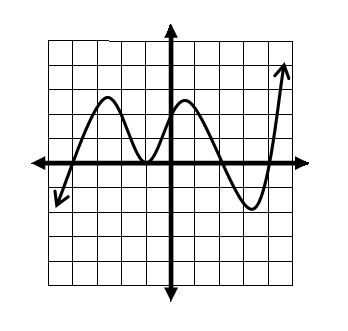
Which of the following could be the factored form for the equation representing the graph shown?
f(x)=(x+3)(x-2)(x-5)
f(x)=(x-5)2(x-2)(x+3)
f(x)=(x-3)(x+2)(x+5)2
none of these

Which of the following could be the function for the graphed polynomial?
f(x)=x2(x−3)3(x+1)
f(x)=x2(x−3)(x+1)
f(x)=x(x−3)(x+1)
f(x)=−x2(x−3)(x+1)
Find the reference angle for an angle measuring -300⁰
60⁰
-60⁰
30⁰
45⁰
Find a coterminal angle to 200 degrees.
-520
-200
160
-380
What is the sin(120)?
-1/2
1/2
-root(3)/2
root(3)/2
What is the cos(585)?
1/2
root(2)/2
-root(2)/2
-root(3)/2
What quadrant is 7π/3?
I
II
III
IV
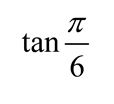
1+tan2x=
csc2x
cot2x
sin2x
sec2x
1+cot2x =
csc2x
sec2x
cos2x
tan2x
Simplify
cotθtanθ
sin²θ/cos²θ
1
0
cos²θ/sin²θ
Simplify
secθcotθsinθ
-1
sin θ
csc θ
1
Simplify
cot2θ(1+tan2θ)
csc²θ
sec²θ
cscθ
1
Simplify (secθ−1)(secθ+1)
2secθ
cot²θ
tan²θ
sec²θ + 1
Simplify
csc x(cosx+sinx)
csc x
tan x + 1
cot x
cot x + 1
Simplify (cscx+1)(cscx−1)
csc2x+1
tan2x
cot2x
2cscx
1−sin2x =
sin2x
cos2x
sec2x
csc2x
cos70ocos40o−sin70osin40o is equivalent to
cos30o
cos70o
cos110o
sin70o
If sinA=53,sinB=32, and ∠A and ∠B are acute angles, what is the value of cos(A−B)?
−32
1545−6
545+2
1545+6
sin96ocos24o+cos96osin24o is equivalent to
sin120o
sin72o
cos120o
cos72o
How many radians is 250 degrees?
4π/3
25π/18
5π/6
50π/9

What is the equation of the graph?
y = -2 cos (x) - 3
y = 3 cos (x) - 2
y = -7 cos (x) - 3
y = -3 cos (x) - 4


The hour hand of the large clock on the wall in Union Station measures 24 inches in length.
At noon, the tip of the hour hand is 30 inches from the ceiling. At 3 PM, the tip is 54 inches from the ceiling, and at 6 PM, 78 inches. At 9 PM, it is again 54 inches from the ceiling, and so forth.
Let y equal the distance from the tip of the hour hand to the ceiling and x be the number of hours after noon.
Find the equation that models the motion of the hour hand.
y=30cos(6πx)+54
y=30sin(6πx)+54
y=24sin(6πx)+54
Find sin(-240°)
(√3)/2)
(-1/2)
(√2/2)
(1/2)


(3x3 - 2x + 1) / (x2 + 4x + 2)

What type(s) of asymptotes does this function have? (Check all that apply.)
Vertical
Horizontal
Oblique


Where does the hole occur?


-7
0
1
DNE


x→3−limf(x)=
0
6
6
DNE

Select all statements that are TRUE.


find thex→4lim3−x
DNE
43
1
−1

what is the limit of the function
0
10/11
DNE
25/26
If f(x)=2x and g(x)=2x2−1 find f(g(3))
34
71
35
142
If f(x)=x1 and g(x)=3x+2 find (f∘g)(2)
41
81
27
8
If f(x)=x1 and g(x)=3x+2 find (g∘f)(x)
3x1+2
3x+2
x3+2
3x+21
Which functions are even? Check all of the boxes that apply.
f(x)=x4−x2
f(x)=x2−3x+2
f(x)=(x−2)
f(x)=∣x∣
Check all of the functions that are odd.
f(x)=x3−x2
f(x)=x5−3x3+2x
f(x)=4x+9
f(x)=x1
f(x) = x3 + 4x
f(x) = 3x4 - 2x2 + 5
f(x) = 8x3 - 7x + 2
log (2 * 3) = ?
log 2 + log 3
log 2 * log 3
log 2 - log 3
log 5
Expand log(x²/y³). Choose the best answer.
log x²+log y³
2 log x - 3 log y
log x + log y
2log x² +3 logy³
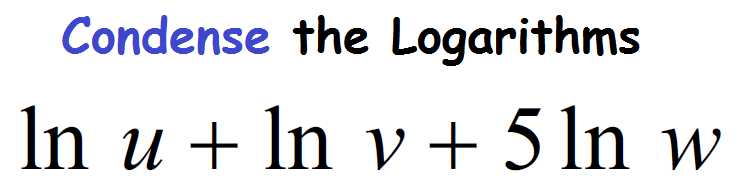
ln(4xy)
ln4+lnx+lny
4lnxy
4lnx+lny
4ln(x+y)
ln(z42x2y)
ln2+2lnx+lny+4lnz
ln2+2lnx+lny-4lnz
2ln(2xy)-4lnz
2ln2x+lny-4lnz
2=log9x
8x+1= 3
Rewrite the exponential as a log.
23x+1 = 12
log(2)= 3x+1
log2(12)= 3x+1
log(6)=3x+1
log12(2)= 3x+1
Solve for x.
log52+log5x=log520
x = (a)
Find the point based on the parametric equations. t = 3
x = 1 - 2t
y =4t + 1
(-5, 13)
(13, -5)
(5, 13)
(13, 5)
Write the rectangular equation for the following parametric equations.
x = 4cosθ
y = 3sinθ
9x2+16y2=1
9y2+16x2=1
cos2θ+sin2θ=1
9x2−16y2=1
x=1+3cost
y=-2+3sint


Find the angle between v and w
21.8 degrees
111.8 degrees
68.2 degrees
A cannonball is fired at a 45.0° angle and an initial velocity of 625 f/s. Assume no air resistance. Find the horizontal coordinate of the cannonball after 2 seconds.
1250 f/s
883.9 f/s
441.9 f/s
328.3 f/s
An NFL punter at the 20 yard line kicks a football downfield with an initial velocity of 75 ft/sec at an angle of 660. The ball leaves his foot at a height of 3 feet.
Model the scenario using parametric equations.
x = (20cos(660))t; y=-16t2 + (20sin(660)t + 75
x = (20cos(660))t; y=-16t2 + (20sin(660)t + 3
x = (75cos(660))t; y=-16t2 + (75sin(660)t + 20
x = (75cos(660))t; y=-16t2 + (75sin(660)t + 3
Any vector with initial point (x1, y1) and terminal point (x2, y2) can be written in component form as:


Find the direction angle for the vector initial point (-3, 4) and terminal point (-10, 4). Hint: you can use the formula or sketch a graph
0 degrees
90 degrees
180 degrees
270 degrees
A vector has initial point (4, -3) and terminal point (-3, -1). Find the direction angle to the nearest tenth.
(a)

