
 Worksheets
Science Review
Total questions: 50
Worksheet time: 56mins
There are lots of objects in our solar system, but only eight ofthem are planets. What do all planets have in common?
They are all made of Rock or ice.
They all have rings or moons as satellites.
They are nearly round and orbit the Sun.
They all rotate on an axis and orbit the Earth.
Which answer describes how the inner planets are similar to each other?
They are all the same size.
They all have solid surfaces.
They all have at least one moon.
They all have a thick atmosphere.
Which of the inner planets listed below is closest to the Sun?
Earth
Earth
Mars
Mercury
Venus
Tom and his friends were talking about what it would be like if they could go live on Mars someday. Mandy said it would be much colder there than on Earth and it would hardly ever get above freezing even in the summer. Jose said there would be time periods on Mars like there are on Earth. What else might they experience if they ever want to live on Mars?
A year on Mars would last almost as long as two years on Earth.
Water would run in the canals on Mars on the warmest of days.
Water would run in the canals on Mars on the warmest of days.
They could breathe the air since Mars and Earth have similar atmospheres.
When comets come close to the Sun they develop a tail that glows so we can see it from Earth. Asteroids do not develop tails like this. In what other way are asteroids differ from comets?
Asteroids orbit planets while comets orbit the Sun.
Asteroids are rocky while comets are balls of ice and dust.
Asteroids orbit outside of the Solar System while comets do not.
Asteroids are smooth and round while comets are lumpy shapes.
Marc notices that when he looks at the stars at night, some appear to be brighter than others. Which three factors affect how bright a star appears to an observer on Earth?
The star’s color, size, and distance from Earth.
The star’s energy, size, and temperature.
The star’s size, temperature, and distance from Earth.
The star’s movement, distance from Earth, and gravity.
Which of the following is true of the Sun?
The Sun is closest star to Earth.
The Sun is the largest star in the Milky Way.
The Sun is the largest planet in our Solar System.
The Sun is an example of a galaxy that gives off light energy.
Which of the following consists of gas, dust, and many stars?
The Earth’s atmosphere
A Galaxy
A Solar System
The Sun
Brandon has learned that many stars are actually larger than the Sun. If this is true, why do these stars appear like points of light in the sky?
These stars are hotter than the Sun.
These stars have less mass than the Sun.
These stars are farther away from Earth than the Sun is.
These stars are made of different chemicals than the Sun.
Latoya is studying the stars and she learns that Barnard’s star is the third closest star to Earth, although it cannot be seen without a telescope. She also knows that the brightest star in the night sky, Sirius, is much farther away but can be seen by the naked eye? Which of the following explains why Sirius can be seen without a telescope?
Barnard’s star is much larger and hotter than Sirius.
Sirius is much larger and hotter than Barnard’s star.
All stars are the same size, so Sirius must be hotter than Barnard’s star.
All stars are the same temperature, so Sirius must be larger than Barnard’s star.
Day and night is a repeating pattern on Earth. Which motion causes the pattern of day and night on Earth?
The moon orbits around Earth
The moon rotates on its axis
The Earth rotates on its axis
the Earth orbits aroundthe sun
A rubber band is made of rubber and is often used to hold things together. Which property of rubber band will stay the same when the rubber band is stretched?
Mass
width
length
shape
Some interactions involve more than one from of energy. Which forms of energy are produced when a hammer hits a nail?
electrical and mechanical
sound and heat
light and sound
chemcial and mechanical
The water cycle includes the process of condensation, precipitation and evaporation. Which of the following describes what happens to the state of matter of water when water goes from evaporation to condensation?
liquid to gas
liquid to solid
solid to liquid
gas to liquid
Many different organisms have similar organs and structures. Which of the following is most similar to the skin of a human?
gills of a tadpole
teeth of a grizzly bear
Scales of a grouper fish
feathers of an eagle
Electricity is the flow of electrical charges through a conductor. Which of these substances conducts electricity the BEST?
Plastic
Copper
Wood
String
Minerals can be indentified by their properties. Which of the following is a list of properties used to identify minerals?
luster, streak, color, hardness
streak, hardness, luster, temperature
color, luster, moisture, streak
state of matter, color, streak, luster
Interactions between substances can produce chemical or physical change. Which of the following describes a chemical change?
shaking a soda can and opening the can
stirring iced tea so that sugar will dissolve
painting a picture on the sidewalk
toasting a pop tarter in a toaster oven
A gropher frog, found in Florida, has many adaptations that help it survive. Which of these adaptations helps it survive change in its environment?
ability to burrow
ability to see color
ability to detect heat
ability to eat
Astronomers have found many solar systems. Which of the following would most likely be found in a solar system?
galaxy, star, planet
moon, universe, planet
start, planet, moon
planet, moon, galaxy
The liver is an organ in the human body. Which of the following is NOT a function of the liver?
helping with digestion
making proteins
makin insulin
filtering blood
What causes the moon's phases
Where you are standing on Earth
the amount of sunlight reflected onto the moon from the sun
The tilt of Earth
how fast the moon is moving
The path of an object in space around another object is a(n)
orbit.
axis.
rotation.
revolution.
It takes about _____ for the earth to complete one rotation.
28 days
24 hours
365 hours
365 days

Which moon phase is shown?
New Moon
First Quarter
Waning Gibbous
Waning Crescent

Which moon phase is shown?
First Quarter
Third or Last Quarter
Full Moon
Waning Crescent

What structure does an American Toad use to protect itself?
Poisonous skin
Hardshell
Webbed feet
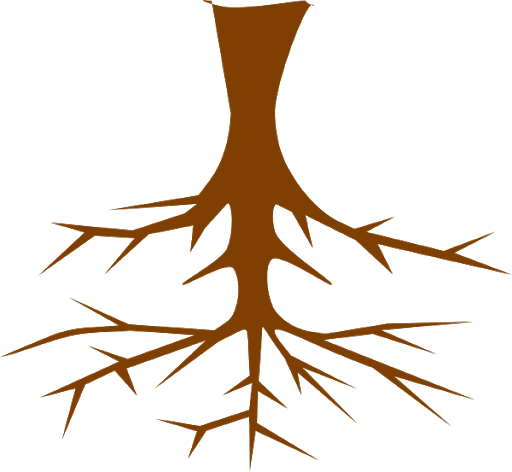
The part of the plant that absorbs water is _________.
Roots
Flowers
Stem
Leaves
What do the leaves of a plant do?
They make the food for the plant.
They take in the water from the ground.
They transport water to the other parts of the plants
They support the plant upright.
Which part of plant uses sunlight to make food?




Which type of force is being used by the dog?
push
pull
gravity
friction
What is the force that causes objects to fall to Earth?
Friction
Gravity
Magnetism
Pressure
When two objects rub together, what force do they produce
Gravity
Magnetism
Friction
Heat
A softball is tossed outside a window. Which two forces will act on the ball's motion as the ball flies and then hits the ground?
gravity and friction
friction and heat
magnetism and gravity
A horse was pulling an empty buggy, but then 5 people hopped on. What does the horse driver need to know about forces and motion to keep everyone safe while driving?
The buggy has more mass now, so he will need more room to turn.
The buggy has less mass now, so there is nothing to worry about.
The buggy has more mass now, so he needs more time to brake.
Some students wanted to find out if a tennis ball and a baseball dropped from the same height hit the ground at the same time. This investigation tests the effect of which of the following?
wind
friction
gravity
magnetism
Students are investigating motion with a rubber band car. They want to know how the number of winds of the rubber band affects how the car moves. They will record the number of winds of the rubber band. What other data will they need to collect?
The distance the car travels when released
The length of the rubber band during each trial
The amount of time it takes to wind the propeller
The width of the surface on which the car moves
Which two factors determine the climate in a particular region?
temperature and latitude
precipitation and humidity
temperature and precipitation
humidity and air pressure
Which zone has the the coldest place on earth?
Tropical
Temperate
Polar
Which zone gets the most rainfall?
Polar
Tropical
Temperate

