wayground logo

Free Printable Worksheets

NEW

Font size

S
M
L
XL
Worksheets

Chapter 2 Exam Practice

Total questions: 54

Worksheet time: 40mins

Name
Class
Date
1.
The bond that joins amino acids are called:
a)
Peptide Bonds
b)
Ester Bonds
c)
Glycosidic Linkages
d)
Phosphodiester Bonds
2.
Amino acids all have the same general structure except for the:
a)
Amino Group
b)
Carboxyl Group
c)
'R' Group
d)
Carbonyl Group
3.

The repeating units of protein are

a)

Amino acids

b)

Glucose

c)

Fatty acid

d)

Peptides

4.

During the formation of the peptide bond which of the following takes place?

a)

Hydroxyl group is lost from its carboxyl group of one amino acid and a hydrogen atom is lost from its amino group of another amino acid

b)

Hydrogen atom is lost from its carboxyl group of one amino acid and a hydroxyl group is lost from its amino group of another amino acid

c)

Hydroxyl group is lost from its carboxyl group of one amino acid and a hydroxyl group is lost from its amino group of another amino acid

d)

Hydrogen atom is lost from its carboxyl group of one amino acid and a hydrogen atom is lost from its amino group of another amino acid

5.

Which of the following is not a way that ions can form?

a)

gaining electrons

b)

gaining protons

c)

losing electrons

d)

All of the above are ways that ions can form.

6.
What word describes when water is attracted to other substances?
a)
cohesion
b)
adhesion
c)
capillary action
d)
surface tension
7.
Attractions between the negative Oxygen atom of one water molecule and the positive Hydrogen atom of another water molecule are called
a)
Covalent bonds
b)
Ionic bonds
c)
Polar bonds
d)
Hydrogen bonds
8.
Which end of the water molecule has a slightly positive charge?
a)
the oxygen end
b)
the hydrogen end
c)
both ends are slightly positive
d)
neither end is positive
9.
Which of the following is LEAST likely to dissolve in water?
a)
nonpolar fats and oils
b)
polar sugar molecules
c)
salt made of a positive sodium ion and a negative chloride ion
d)
all of the substances will dissolve easily in water
10.
A(n) ______ is a substance with a pH less than 7
a)
Acid
b)
Alkaline
c)
Base
d)
Buffer
11.

A base is a substance

a)

That releases OH- ions when dissolved in water

b)

That releases H+ ions when dissolved in water

c)

Does not release any ions when dissolved in water

d)

None of the above

12.

The picture below shows the relative concentrations of H+ and OH- in a solution. Is the solution an acid or a base?

a)

acid

b)

base

13.

An acid

a)

is a substance that releases H+ ions when dissolved in water

b)

is a substance that does not release any ions when dissolved in water

c)

is a substance that releases OH- when dissolved in water

d)

releases an equal amount of OH- and H+ ions when dissolved in water

14.

Water has a neutral because

a)

it has more H+ ions than OH-

b)

it has more OH- ions than H+

c)

it does not produce any ions

d)

it has an equal amount of H+ and OH- in solution

15.
What atoms make up all carbohydrates?
a)
Carbon, Sulfur, Hydrogen
b)
Carbon, Oxygen, Phosphorus
c)
Carbon, Oxygen, Nitrogen
d)
Carbon, Oxygen, Hydrogen
16.
How do the number of H atoms compare to the number of O atoms in a carbohydrate?
a)
There are TWICE as many H
b)
They are the same amount
c)
There are THREE times as many H
d)
There are TWICE as many O
17.
What type of carbohydrate is this?
a)
polysaccharide
b)
disaccharide
c)
monosaccharide
d)
it isn't a carbohydrate
18.
What molecule is this
a)
sucrose
b)
protein
c)
glucose
d)
cellulose
19.
The molecule of amylose that you see in the 
a)
disaccharide
b)
polypeptide
c)
polysaccharide
d)
monosaccharide
20.
Important to the structural integrity of plant cells, this is the single most popular polysaccharide in the world.
a)
Starch
b)
Glycogen
c)
Cellulose
d)
Chitin
21.

A substance that is formed as the result of a chemical reaction is a __________________

a)

Product

b)

Reactant

c)

Starters

d)

Enders

22.
Enzymes are considered to be 
a)
Lipids
b)
Carbohydrate
c)
Protein
d)
Nucleic Acid
23.
What is the purpose  of an enzyme?
a)
give permission for the reaction
b)
raise activation energy
c)
speed up reactions
d)
control how many reactions occur
24.
What happens when enzymes are heated to a high temperature?
a)
The enzymes die.
b)
The shapes of the enzyme are altered or denatured
c)
The enzymes' amino acid sequence changes.
d)
The enzymes remain the same
25.
What are the enzymes called when they are at low temperature? 
a)
denatured
b)
Killed
c)
inactive
d)
normal
26.
What happens to an enzyme when it is denatured?
a)
Activation energy is lowered.
b)
It becomes stronger.
c)
It loses its shape.
d)
Activation energy is raised.
27.
Every enzyme has a optimal temperature and pH. True or False?
a)
True 
b)
False
28.

When looking at the enzyme substrate model, the substrate turns into what at the end of the chemical reaction?

a)

Nothing

b)

It does not change

c)

Products

d)

Pieces

29.

What is the monomer for protein?

a)

Polymer

b)

Nucleic Acids

c)

Amino Acids

d)

Fatty Acids

30.
Which major macromolecule is being represented in this image? 
a)
carbohydrate
b)
lipid
c)
protein
d)
nucleic acid
31.
The element _______is found in all of the organic compounds.
a)
Iron
b)
Nitrogen
c)
Carbon
d)
Oxygen
32.
Waxes, oils and fats are examples of
a)
Carbohydrates
b)
Lipids
c)
Proteins
d)
Nucleic Acids
33.
Carbohydrates are made of... 
a)
C H O
b)
C H O N
c)
C H O N P
d)
C H O N S
34.
Lipids are made of... 
a)
C H O
b)
C H O N
c)
C H O N P
d)
C H O N S
35.
Proteins are made of... 
a)
C H O
b)
C H O N
c)
C H O N P
d)
C H O N S
36.
Which macromolecule stores energy, insulates us, and makes up the cell membrane?
a)
lipids
b)
proteins
c)
carbohydrates
d)
nucleic acids
37.
What does the nucleus consist of?
a)
Protons + Electrons
b)
Neutrons + Electrons
c)
Atoms
d)
Protons + Neutrons
38.
Which of the following tasks listed below is most associated with enzymes?
a)
catalyze chemical reactions                  
b)
store genetic information       
c)
store chemical energy in the cell   
d)
dissolve nutrients and minerals 
39.
Enzymes are capable of increasing the rate of a chemical reaction within a living cell.  Enzymes accomplish this through which of the following means?
a)
reducing the number of products   
b)
reducing the activation energy
c)
increasing the temperature of the cell
d)
increasing the concentration of reactants 
40.
Cells can produce over one thousand different enzymes at a time.  Enzymes are critical to the metabolism of these cells, but why are so many different enzymes needed?
a)
Cells are completely unable to control what enzymes
they produce
b)
The variety of enzymes prevents their actions from being inhibited. 
c)
The active site of an enzyme can only bind to a specific substrate.
d)
The products of a reaction are always converted into new enzymes.
41.

An example of a nucleic acid is

a)

amino acid

b)

DNA

c)

sugar

d)

wax

42.

What is the function of nucleic acids?

a)

store energy (long-term)

b)

store energy (short-term)

c)

build skin, hair, nails, muscles

d)

store genetic information

43.

Which of the following is not a way that ions can form?

a)

gaining electrons

b)

gaining protons

c)

losing electrons

d)

All of the above are ways that ions can form.

44.
What is an ion?
a)
A Charged Atom
b)
A Large Atom
c)
A Small Atom
d)
A Cute Atom
45.

What is an ion?

a)

An atom with extra neutrons

b)

A charged particle

c)

An atom that has equal protons and electrons

d)

A particle with a different atomic mass

46.

Which of these statements about a negative ion is true?

a)

It has an equal number of protons and electrons.

b)

It has more protons that electrons

c)

It has more electrons than protons

47.
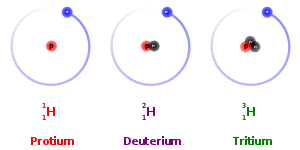
What is an isotope? 
a)
A charged atom
b)
An atom with different amounts of neutrons
c)
An atom with different amounts of protons
d)
A neutral atom
48.
Different isotopes have...
a)
different masses
b)
different atomic numbers
c)
different electrons
d)
different protons
49.
How many neutrons does a Carbon 13 atom have?
a)
6
b)
5
c)
7
d)
8
50.

What is the center of an atom containing protons and neutrons?

a)

nucleus

b)

neutron

c)

proton

d)

electron cloud

51.
Complete the missing label on the diagram.
a)
Neutron
b)
Centre
c)
Nucleus
d)
Sub atomic particle
52.

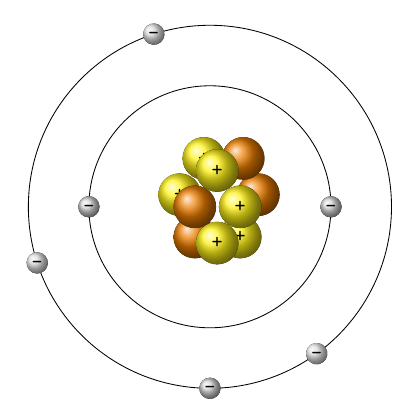
How many electrons does this atom have?

a)

2

b)

4

c)

6

d)

10

53.
Buffer is defined as
a)
ability to resist pH change
b)
ability to prevent pH from decreasing
c)
ability to resist a pH increase
d)
ability to resist pH change when small amount of acid added
54.

What might happen if buffers did not exist within the human body?

a)

Our blood and other bodily fluids might become too acidic or basic.

b)

Our stomach acid would not be able to break down food.

c)

We would not be able to process glucose within our cells.

d)

We would not be able to inhale oxygen into our lungs.