
NEW
Font size
S
M
L
XL
 Worksheets
📚EA7: HW31 (1.16)
Total questions: 50
Worksheet time: 26mins
Name
Class
Date
1.
Osmosis is the movement of _____ across a membrane.
a)
food
b)
energy
c)
oxygen
d)
water
2.
During osmosis
a)
water moves from high to low concentration
b)
large or oddly shaped molecules move across a cell membrane
c)
water moves when energy is used
d)
proteins are built
3.
When both inside and outside of a cell have the same amount of water it is said that the cell has reached a state of
a)
Osmosis
b)
Diffusion
c)
Equilibrium
4.
Passive transport requires no
a)
concentration gradients
b)
osmosis
c)
motion
d)
energy
5.
True/ False: Diffusion is passive.
a)
True
b)
False
6.
In diffusion, particles move down a _______ ________
a)
Concentrate gradient
b)
Conceited gradient
c)
Concentration gradient
d)
Concentrated orange juice
7.
If there is more oxygen in the blood than in an organ, which direction would the oxygen move?
a)
Out of the blood
b)
Into the blood
8.
An increase in temperature does what to diffusion?
a)
Speeds it up
b)
Slows it down
c)
Has no effect
d)
I wish i knew. Really I do.
9.
What does selectively-permeable mean?
a)
The cell controls what passes in and out of the cell
b)
Nothing gets through
c)
The cell lets only large substances through
10.
In a solution, salt is considered the _______.
a)
solvent
b)
solute
c)
solution
11.

The cell below is in a _________ solution.
a)
Hypotonic
b)
Hypertonic
c)
Isotonic
12.

The cell below is in a _____________ solution.
a)
Hypertonic
b)
Hypotonic
c)
Isotonic
13.

I am the outer most layer of an animal cell. What am I?
a)
cell wall
b)
nucleus
c)
cell membrane
d)
cell skin
14.

I make proteins for the cell. What am I?
a)
ribosome
b)
mitochondria
c)
chloroplast
d)
lysosome
15.
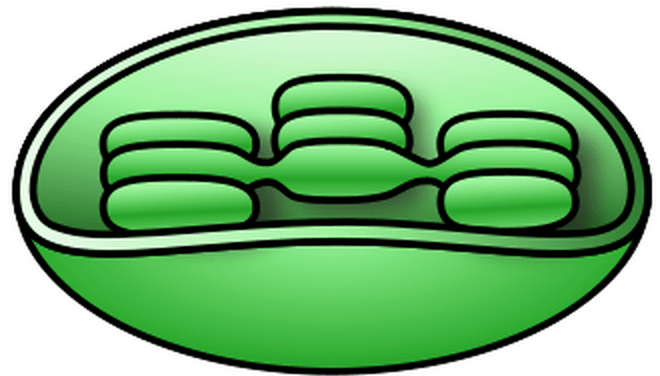
I am only found in a plant cell. What am I?
a)
cell wall
b)
mitochondria
c)
cytoplasm
d)
chloroplast
16.
In what organelle is the genetic material found inside?
a)
Endoplasmic Reticulum
b)
Golgi Complex
c)
Nucleolus
d)
Nucleus
17.
What organelle is called the "powerhouse" of a cell?
a)
Endoplasmic Reticulum
b)
Nucleus
c)
Mitochondria
d)
Nucleolus
18.

Using this image, what organelle is C?
a)
Cell Wall
b)
Mitochondria
c)
Large Cell Vacuole
d)
Chloroplast
19.
What is the function of the mitochondria?
a)
Structure that manufactures ribosomes
b)
Structures that converts nutrients to energy
c)
Stack of membranes that packages chemicals
d)
Structure that contains DNA and directs the cell
20.
What is the function of the vacuole?
a)
Sac that stores water, nutrients, and waste products
b)
Sac filled with digestive chemicals
c)
Jelly-like substance within the plasma membrane
d)
stack of membranes that packages chemicals
21.
What is the function of nucleus?
a)
Structure that organizes motion of chromosomes.
b)
Structure that contains DNA and directs the cell
c)
Membrane that surrounds and protects the cell
d)
Stack of membranes that packages chemicals
22.
Where does photosynthesis occur?
a)
mitochondria
b)
stomata
c)
xylem
d)
chloroplast
23.

I store water in both plant and animal cells. What am I?
a)
cytoplasm
b)
ribosomes
c)
vacuole
d)
lysosomes
24.

I make proteins for the cell. What am I?
a)
ribosome
b)
mitochondria
c)
chloroplast
d)
lysosome
25.
What can only be found in plant cells?
a)
Cell membrane
b)
Vacuole
c)
Chloroplast
d)
Mitochondrion
26.

What cell part is NOT found in all cells?
a)
Cell Wall
b)
Cell Membrane
c)
Cytoplasm
d)
Genetic Material
27.
This organelle takes food and turns it into ENERGY for plant and animal cells.
a)
Chloroplast
b)
Mitochondria
c)
Lysosome
d)
Ribosome
28.
The site of photosynthesis
a)
ribosome
b)
mitochondria
c)
chloroplast
d)
nucleus
29.

Which part of the cell is often called "the brain of the cell"?
a)
nuclear membrane
b)
endoplasmic reticulum
c)
nucleus
d)
mitochondria
30.
Where are proteins made?
a)
Golgi body
b)
Mitoichondria
c)
Chromosomes
d)
Ribosomes
31.
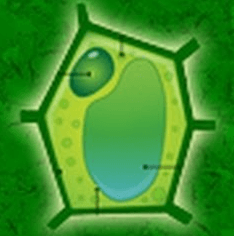
A rigid layer that lies outside the cell's membrane is...
a)
Cytoskeleton
b)
Cilia
c)
Cell Wall
d)
Flagella
32.
What organelle is called the "powerhouse" of a cell?
a)
Endoplasmic Reticulum
b)
Nucleus
c)
Mitochondria
d)
Nucleolus
33.
Main producer of ATP in all eukaryotes
a)
chloroplast
b)
mitochondria
c)
lysosome
d)
smooth er
34.

You might think of me as the trash collector, but recycler is maybe more accurate. What am I?
a)
cytoplasm
b)
lysosome
c)
vacuole
d)
ribosome
35.
"Storage tanks" Can hold food, water or waste for the cell
a)
Ribosomes
b)
Vacuole
c)
Chloroplast
d)
Nucleolus
36.
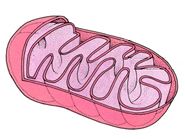
What is the name of the structure shown in the diagram where cellular respiration takes place?
a)
Chloroplast
b)
Mitochondrion
c)
Nucleus
d)
Vacuole
37.

Directs all cell activities through the DNA located there.
a)
Lysosomes
b)
Nucleus
c)
ribosomes
d)
Mitochondria
38.

What is the name of the genetic material that is inside the nucleus?
a)
ER
b)
ATP
c)
YOLO
d)
DNA
39.
What organelle surrounds and supports plant cells?
a)
Cell Membrane
b)
Cell Wall
c)
Nucleus
d)
Golgi Complex
40.
What organelle is considered to be the “gatekeeper” for plant and animal cells?
a)
Cell Wall
b)
Cytoplasm
c)
Nucleous
d)
Cell Membrane
41.
What is the gel-like substance inside of cells called?
a)
photoplasm
b)
photosynthesis
c)
cytoskeleton
d)
cytoplasm
42.
What organelle helps with cell digestion?
a)
Lysosomes
b)
Ribosomes
c)
Golgi Complex
d)
ER
43.

Using this image, what organelle is D?
a)
Endoplasmic Reticulum
b)
Flagella
c)
Rough ER
d)
Smooth ER
44.
Sac within the cytoplasm that is full of fluid; plants have one large; stores food, water, etc.
a)
vacuole
b)
cell wall
c)
lysosome
d)
ribosome
45.

What does this structure do?
a)
supports the cell
b)
cell's control center
c)
converts energy to food
d)
makes proteins
46.

What is this a picture of?
a)
ribosome
b)
nucleus
c)
cell wall
d)
mitochondrion
47.
Which type of cell that HAS a nucleus?
a)
Prokaryote
b)
Eukaryote
48.
Which type of cell DOES NOT have a nucleus?
a)
Prokaryote
b)
Eukaryote
49.
What is the order of the units from greatest to least?
a)
Kilo, Hecto, Deka, M/L/G, Deci, Centi, Milli
b)
Kilo, Deka, Centi, Milli, Deci, M/L/G, Centi
c)
Milli, Centi, Deci, M/L/G, Deka, Hecto, Kilo
d)
I smell smoke. I think my brain is melting.
50.
To convert a smaller unit to a larger unit you...
a)
multiply
b)
add
c)
divide
d)
subtract
Reset

