
Font size
 Worksheets
Ch 22 First Emperor Of China
Total questions: 52
Worksheet time: 26mins
What was the Emperor of Qin's most ambitious project?
Terracotta Warriors
Great Wall of China
Hieroglyphics
Great Pyramids
Who began the Qin Dynasty?
Prince Zheng
Confucius
Lao
Kublai Khan
Who did Emperor Qin exile because they were plotting against him?
His sister
His father
His mother
His daughter
What did the Emperor of Qin agree to burn?
Buddhist books
Confucian books
All books
Taoism books
Legalism books
The Emperor of Qin wanted to unify China by creating a system of _____.
laws
walls
dynasties
mandates of heaven
imperialism
What was the most amazing treasure found inside the tomb of the Emperor of Qin?
Marco Polo
Great Wall of China
Confucian books
Terracotta Warriors
Why were Confucian scholars opposed to Emperor of Qin?
Terracotta army cost too much
Great Wall of China not done
His harsh laws
Too many Confucian values in his laws
What is the correct definition of IMMORTAL?
To make the same
Able to live forever
living away from one's
native country
a power or law believed to be granted by a god
system of government based on landowners and tenants
What is the correct definition of EXILE?
To make the same
Able to live forever
living away from one's
native country
a power or law believed to be granted by a god
system of government based on landowners and tenants
What is the correct definition of STANDARDIZE?
To make the same
Able to live forever
living away from one's
native country
a power or law believed to be granted by a god
system of government based on landowners and tenants
How much money is one terracotta warrior worth?
$50 billion
$50 million
$4.5 million
$4.5 billion
How much money is the entire terracotta army worth?
$50 billion
$50 million
$4.5 million
$4.5 billion
Which Chinese philosophy influenced Emperor Qin's rule?
Confucianism
Daoism
Taoism
Legalism
After the death of the Emperor of Qin, who led the rebellion?
His mom
Confucius
Liu Bang
Liu Han
Who was opposed to Emperor Qin?
His mom
Confucius
Liu Bang
Liu Han
Confucian scholars
Ch. 22 The First Emperor of (a)
What happened after the Qin emperor’s death?
tight military control
B. rebellions and civil war
C. peaceful easing of policies
D. worship of the emperor as a god
Emperor Qin's son became the new emperor
Qin Shi Huangdi, the first emperor of China, began life as
A. an invader from Central Asia.
B. a prince of one Chinese state.
C. a member of the Zhou dynasty.
D. a farmer in the North China Plain.
Which of the following is true of the Emperor of Qin?
A. He burned all Confucian books.,
B. He punished the rich and poor equally.,
C. He exiled his own mother
D. all of the above,
What was the purpose of building the Great Wall?
A. to keep invaders out
B. to provide employment
to reward followers with land
D. to punish critics of the emperor
How old was Prince Zheng when he became king?
10
11
12
13
14
What two words would describe the Emperor of Qin?
A. strong and cruel,
B. weak and lonely
C. compassionate and kind
D. understanding and nice

What is this a picture of?
Mandate of Heaven
Civil servant
Zhou
Yin and Yang
Dao

Who is this philosopher of Ancient China?
Laozi
Confucius
Zhou
Hanfeizi
What book was a collection of Confucius thoughts and teachings?
The Analects
The Way
The Daoist's
The Buddha
What is the real color of jade?
red
blue
black
hazel
green
Match the following

standardize
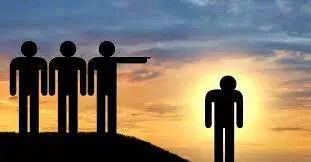
exile

immortal
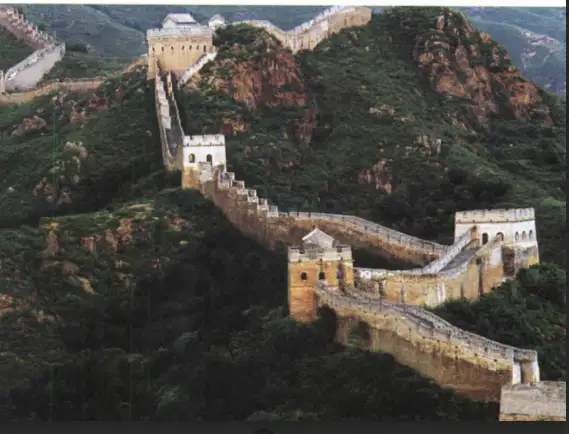
Great Wall of China
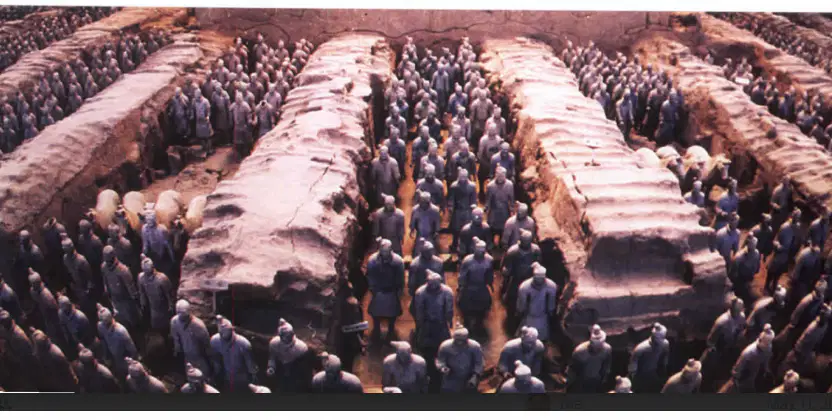
Terracotta army
Chinese emperors used the (a) to justify their rule.
They claimed that the (b) gave them the mandate, and thus the gods gave them power to (c) . The gods could also take away the mandate from (d) rulers. The gods could send (e) as a sign that the dynasty lost its mandate.
The Dynastic Cycle starts with a (a) that brings peace and provides infrastructure. However, as time goes on, the dynasty becomes (b) and the people are very unhappy. When this happens the people assume that (c) are a sign from the gods that the dynasty has lost the mandate. The people will then rebel against what is now an (d) and replace it with a new dyansty. Then the entire (e) starts over again.
Why did many people sent to work on the Great Wall not return home?
They decided to live near the wall.
They died under harsh conditions.
They ran away to other countries.
Leaders must be good and wise for their subjects to be good and wise
Strong ruler and harsh laws are needed for social order
The Mandate of heaven will provide the answers for the emperor
To prevent grave robbers
To guard the entrance to Shi Huangdi's main room
To protect Shi Huangdi in the afterlife

In what year was the Terracotta Army discovered?
1847
1984
1947
1974

Who discovered the terracotta army?
Soldiers that conquered the land
Farmers digging a well
Chinese family that inherited the land
It has been known and protected since the ancient times

The primary purpose of the Great Wall of China was to _________________________.
act as a tourist attraction
protect the Chinese empire from the Mongolians and other invaders.
act as an offering to the ancient Chinese Gods
separate China from the rest of the world
What was the emperor most afraid of?
dying
losing power
being poor
being immortal
What did Emperor Qin Shihuangdi do to Confucian scholars that spoke out against him?
sent them out of China
Fired them from their jobs
killed them
killed their puppies
To a large extent, the Great Wall was built by:
forced labor
skilled stonemasons
close friends of the emperor
Why did the Emperor of Qin order all Confucian books brought to the capital?
so he could destroy them
so he could learn from them
so he could have them translated
Match the following

Mandate of Heaven

feudalism

civil servant

civil servant exams
Match the following

Confucianism

Daoism

Legalism

Confucius

Yin and Yang
Who is this philosopher of Ancient China?
Laozi
Confucius
Zhou
Hanfeizi
Match the following

logograph

ancestor worship

clan

human sacrifice

economy

What is the color of Asia?
(a)

Where is India located?
(a)

Which of the following countries does NOT border China?
Japan
Mongolia
Russia
North Korea
Where is Europe?
(a)
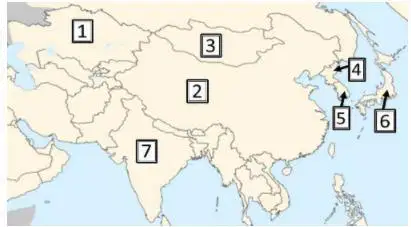
Where is Mongolia?
1
2
3
7
5
Match the following

Millet

tributary

maize

mutton

oasis

