
 Worksheets
Respiratory System & Diffusion
Total questions: 26
Worksheet time: 15mins
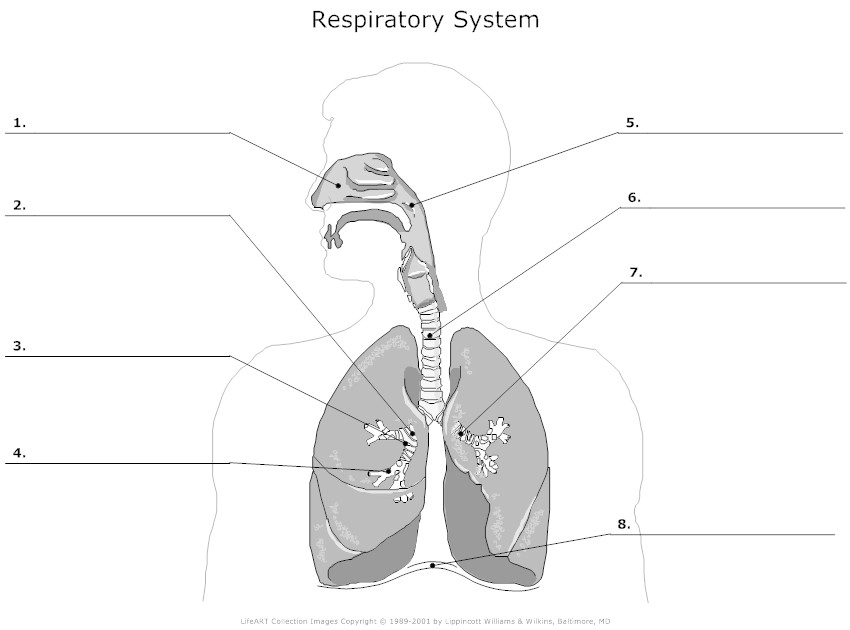
1. larynx
2. nasal cavity
3. pharynx
4. trachea
Which of the following is the correct order that air would flow during inhalation.
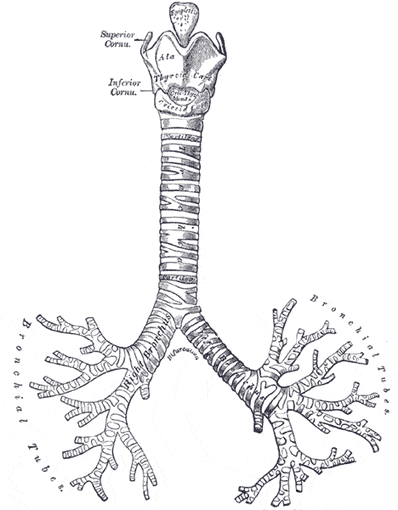
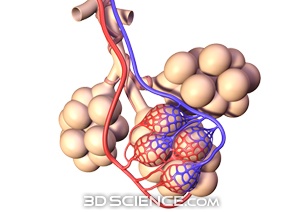

When you breathe, your lungs take in ___ and remove ___.
air/oxygen
oxygen/carbon dioxide
carbon dioxide/waste
waste/air

What keeps your bronchi and bronchiole tubes open?
cartilage rings
ligament squares
ciliated cells
muscle
A capillary is a form of...
Gas exchange
Respiration
Blood vessel
Alveoli
Gaseous exchange happens because of...
Osmosis
Respiration
Diffusion
Semi-permeable membranes
What is the main function of the respiratory system?
to provide oxygen and remove carbon dioxide from the body
to bring oxygen to the body
to break down food and absorb nutrients
to remove oxygen from the body and deliver carbon dioxide
I. High surface area
II. Thin walls
III. Dry surfaces
During gas exchange what enters from alveoli to the capillaries?
CO2
CO
O2
nitrogen
Which is not a job of the respiratory system?
taking in oxygen
Creating spoken words
moisten air
transport glucose
What does the digestive system do?
brings in oxygen
gets rid of carbon dioxide
absorbs glucose from food
none of the above
Where would you find cilia?
nasal cavity and alveoli
bronchioles and mouth
trachea and nasal cavity
all of the above

What is labeled at E?
bronchi
trachea
pharynx
none of the above
Oxygen and carbon dioxide travel through the walls of the alveoli. They move from an area where the concentration of gas is (a) to an area where the concentration is lower.
The concentration of oxygen in the alveoli is (a) than in the capillaries surrounding it.
The concentration of oxygen in the capillaries is (a) than in the alveoli they surround.
(a) is the protein in red blood cells that attaches to oxygen molecules
What gas is the most abundant in our atmosphere?
Oxygen
Carbon dioxide
Nitrogen
Methane
My job is to warm and moisten incoming air. My walls are covered in cilia and mucus to help trap intruders before they reach the lungs. Who am I?
Bronchi
Pharynx
Nasal Cavity
Trachea
The concentration of carbon dioxide is _______ in capillaries coming to the alveoli and ________ in the alveoli.
Higher, lower
Lower, higher
Which type of blood cells transport oxygen around the body?
White blood cells
Blue blood cells
Red blood cells
Platelets

