
 Worksheets
07 Ionic Bonding
Total questions: 50
Worksheet time: 46mins
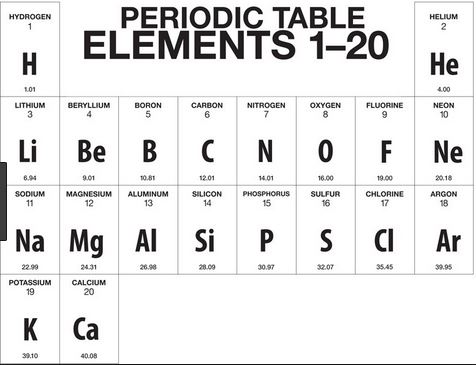
How many valence electrons does Helium Have?
1 Valence electron
2 Valence electron
3 Valence electron
4 Valence electron
5 Valence electron
How many valence electrons does Nitrogen Have?
1 Valence electron
2 Valence electron
3 Valence electron
4 Valence electron
5 Valence electron
How many valence electrons does Magnesium Have?
1 Valence electron
2 Valence electron
3 Valence electron
4 Valence electron
5 Valence electron
How many valence electrons does Aluminum Have?
1 Valence electron
2 Valence electron
3 Valence electron
4 Valence electron
5 Valence electron
How many valence electrons does Silicon Have?
1 Valence electron
2 Valence electron
3 Valence electron
4 Valence electron
5 Valence electron
How many valence electrons does Lithium Have?
1 Valence electron
2 Valence electron
3 Valence electron
4 Valence electron
5 Valence electron
How many valence electrons does Neon Have?
4 Valence electron
5 Valence electron
6 Valence electron
7 Valence electron
8 Valence electron
The Lewis Dot structure for aluminum would have ______ electrons.
13
3
8
27
Valence electrons are those that are
closest to the nucleus.
freely floating between atoms.
in the outermost energy level of the atom.
unable to become involved in chemical bonding.
Which of the following is not a way that ions can form?
gaining electrons
gaining protons
losing electrons
All of the above are ways that ions can form.
Oxygen has six valence electrons. When forming an ion, oxygen will
lose six electrons and have a charge of +6.
lose six electrons and have a charge of -6.
gain two electrons and have a charge is +2.
gain two electrons and have a charge of -2.
Look at the periodic table. What should be the charge on the ion formed by calcium?
+1
+2
-1
-2
Atoms that have gained electrons form
cations.
anions.
negions.
positrons.
Most elements are most stable when their outermost energy levels contain ________ electrons.
2
6
8
18
Look at the Periodic table. Which of the following elements would you expect to form an ion that has the same charge as the oxide ion?
calcium
boron
sulfur
chlorine
Which of the following elements is an exception to the octet rule?
helium
oxygen
chlorine
magnesium
Which of the following tend to gain electrons when forming ions?
metalloids
metals
nonmetals
cations
Anions have
gained electrons.
lost electrons.
gained protons.
lost protons.
Al3+ O2-
Name the following ionic compound: MgSO4
magnesium (II) sulfide
magnesium sulfide
magnesium sulfate
magnesium (II) sulfate
Name the following ionic compound: LiNO3
lithium nitrate
lithium III nitrate
lithium nitride
lithium nitrogen oxide
Name the following compound: FeCl3
iron chloride
iron III chloride
iron II chloride
iron III chlorate
The formula for Magnesium phosphide is:
Mg3(PO4)2
MgP
MgPO4
Mg3P2
What is the name of Ca(NO3)2
calcium nitrite
calcium II nitrate
calcium nitrate
calcium nitride
Name the following ionic compound: Cr(NO3)3
chromium III nitride
chromium II nitride
chromium II nitrate
chromium III nitrate
What is the correct chemical name for Cu2O ?
Copper oxide
Copper oxalate
Copper (II) oxide
Copper (I) oxide
Ionic compounds conduct electricity when dissolved in water. Which statement below best explains the property?
Ions are free to move.
Electrons are free to move.
Bonds are strong.
There are weak intermolecular forces of attraction.

Ionic compounds form giant ionic lattices. What forces hold the giant ionic lattices together?
strong frictional forces between the surfaces of the atoms
strong magnetic forces of attraction between the poles of ions
strong electrostatic forces of attraction between oppositely charged ions
Why do ionic compounds have high melting and boiling points?
Their ions are free to move.
Their ions are held in fixed positions.
They have many strong bonds.
They have many weak bonds.

True or false? Ionic compounds conduct electricity when they are in their solid state.
true
false
Why do ionic compounds conduct electricity when they are molten or dissolved?
Their ions are free to move.
Their ions are held in fixed positions.
Their electrons are free to move
Their electrons are held in a fixed state
What is a crystal?
A pure material that can’t be changed.
Material with a regular,repeating arrangement of atoms.
A foggy like material.

Which crystal structure does the picture show?
BBC (British Broadcasting Company)
BCC (Body Center Cubic)
SC (Simple Cubic)
FCC (Face-Centered Cubic)

