
 Worksheets
Water
Total questions: 201
Worksheet time: 4hrs 4mins
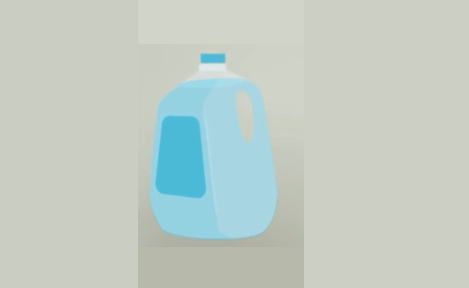
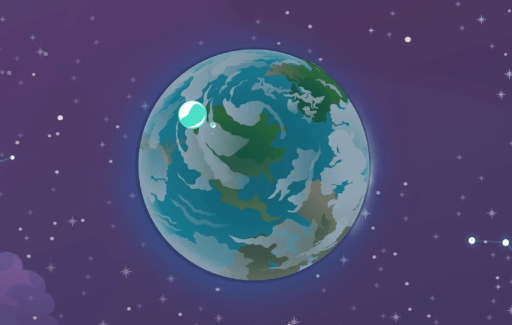


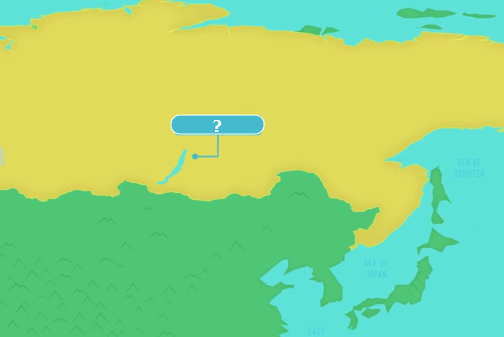


Water pollution and waste plays a big factor in water shortage.
True
False




The processes in which water vapor (a gas) in the air turns into liquid water
Condensation
Evaporation
Precipitation
Transpiration
The pattern of water moving between Earth and the atmosphere.
Carbon Cycle
The Groundwater Cycle
The Water Cycle
The Carbon Cycle

Why was there lead levels so high in Flint, MI?
The lake had high levels of lead.
The water was not purified correctly
There was no lead in the water
The lead from the pipes was getting in the water

Which part of the image of rocks will hold more water?
Right
Left
Center
This is the flow of underground water when it reaches the surface.
Groundwater
Spring
Geyser
Well

What is the process happening at #3
Evaporation
Precipitation
Condensation
Transpiration

What process is happening at #2
Evaporation
Condensation
Precipitation
Transpiration
What are examples of fresh water (there may be more than 1 correct answer)
Water in the atmosphere
Glaciers
Ocean water
Lake
True or False: The more pores in the ground, the less ground water is stored there.
True
False

This is when water evaporates through pores of a plant
Transpiration
Evaporation
Condensation
Hydrologic cycle

What percent of the Earth is Fresh Water?
97%
45%
22%
3%
When rocks and soil become saturated, the ground water rises. This is called:
Spring
Geyser
Cave
Water Table
What are health concerns associated with drinking water with lead? (there is more than 1 correct answer)
Rots your teeth
Behavior problems
Create bigger muscles
Slows growth
Which are examples of precipitation? (more than 1 correct answer)
rain
snow
wells
geysers
What types of soil can hold a LOT of water? (select all that apply)
Soil with few pores
Soil with lots of pores
Loosely packed soil
Tightly packed soil
The processes in which water vapor (a gas) in the air turns into liquid water
Condensation
Evaporation
Precipitation
Transpiration
The pattern of water moving between Earth and the atmosphere.
Carbon Cycle
The Groundwater Cycle
The Water Cycle
The Carbon Cycle
Why was there lead levels so high in Flint, MI?
The lake had high levels of lead.
The water was not purified correctly
There was no lead in the water
The lead from the pipes was getting in the water
Which part of the image of rocks will hold more water?
Right
Left
Center
What were the specific water quality test performed on our creeks
Pollution, dilution, and erosion
Dissolved Oxygen, pH, and temperature
Turbidity, pollution, pH
Photosynthesis, cellular respiration and limiting factors
What does Dissolved Oxygen mean?
How much acid is in the water
How cold the water is
DO
How much oxygen is in the water
Factors that affect dissolved oxygen include
temperature and stream flow.
lack of fish and amphibians.
the amount of carbon dioxide.
Non of the above.
What are some processes that cause diffusion (the spreading of matter through natural movements) of oxygen into the water?
Frogs and fish
Flowing of water and photosynthesis.
pH and temperature
All of the above


Water’s ability to be attraction to other water molecules.
adhesion
capillary action
cohesion
surface tension

What percentage of the earth is water?
50%
60%
71%
80%
A scientist studies a sample of swamp water. She finds that there are many dead plants and fish in the water. ________ in the water could be the main cause of this.
oxygen
litter and pollution
mud and silt
pebbles and sand
what is the main cause of water pollution?
invasive species
animals
plants and insects
human impact and decision making


What usually uses more water in the home?
Washing machine
taking a shower
brushing your teth
drinking water
Approximately how many gallons of water does it take to grow sugar cane?
20- 25 gallons
2-4 gallons
180-200 gallons
What percentage of the earth's water is salt water?
3%
25%
71%
96.5%
Based on our articles and class information, predict what will happen to the percentage of water frozen in glaciers and ice Caps over the next 20 years?
It will increase from 68.7%
It will stay the same at 68.7%
It will decrease from 68.7%
1/3 of household watering is for outdoors. What are good irrigation practices for lawns or gardens?
Avoid watering in the heat of the day so it doesn't evaporate.
Don't water on windy or rainy days
Do not water lawns between 10 AM -4 PM
All of the above


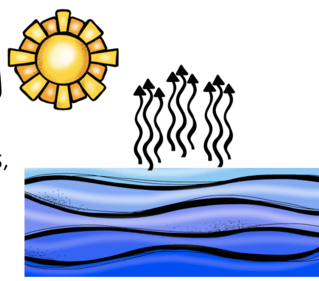
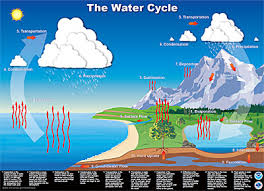
What is water quality?
It describes the condition of the water
It is the continuous movement of water on, above, and below the surface of the Earth
It is the property of containing salt
It is the total amount of suspended solids.
What is salinity?
The property of containing salt
The amount of suspended solids
Describes the condition of the water
Describes how acidic or basic water is
What is dissolved oxygen?
The property of containing salt
The amount of suspended solids
The measure of the amount of oxygen that is dissolved
Describes how acidic or basic water is
Where are nitrates and phosphates found?
Fertilizer
Manure
Detergent
All of the above
Why are too many nutrients (like nitrates and phosphates) bad for our waters?
Nutrients decrease the pH of the water, causing it to become increasingly acidic
Nutrients change the salinity of the water
Wetlands filter out runoff that may contain nutrients
Nutrients in the water cause too much algae growth, which decrease the level of oxygen in the water

Which glass contains water with high turbidity?
Glass 1
Glass 2

Which glass has the highest salinity?
The left one
The middle one
The right one
Which statement best describes freshwater?
Freshwater is water only found in the atmosphere.
Freshwater is water found in the oceans.
Freshwater is water found only underground.
Freshwater is water found in lakes, rivers and streams.
What percentage of the Earth is covered with water?
71%
30%
50%
90%
Where is most freshwater on Earth located?
Most of Earth's freshwater is found in lakes, rivers and streams.
Most of Earth's freshwater is found in snow, ice caps and glaciers.
Most of Earth's freshwater is found in the oceans and seas.
Most of Earth's freshwater is found in groundwater.
What percentage of ALL WATER on Earth is saltwater?
20%
3%
97%
84%
What percentage of freshwater is available for us to use?
1%
2%
3%
10%
What percentage of freshwater is located in glaciers and ice caps?
1%
2%
4%
20%
Which one shows the correct amount of water on Earth from LARGEST to SMALLEST?
Glaciers, groundwater, oceans
Oceans, groundwater, glaciers
Oceans, glaciers, groundwater
Which statement is true?
About 70% of Earth’s surface is covered in water
About 30% of Earth’s surface is covered in water
Freshwater makes up about 90% of Earth’s surface
Only 3% of Earth’s water is freshwater. About 60% is not available for us to use. Why is this?
It is groundwater
It is frozen in glaciers
It is polluted water
What does a hydrothermal vent add to the oceans?
Freshwater
Minerals (Salts)
Sea Creatures
What percentage of the Earth’s sea water is salt?
1.5%
3.5%
25%
50%
What is one way that salt is added to the ocean?
By rivers carrying sediment to the ocean
By earthquakes
By rainfall
By the change of the seasons
What substance on Earth can be in the form of a solid, liquid and a gas?
Lava
Oil
Energy
Water
How is salt removed from the oceans?
By rivers adding sediment
By earthquakes
By sea creatures making shells
By hydrothermal vents

Water pollution occurs when:
Harmful substances enter a water supply
Industries dispose of waste safely and correctly.

We can prevent water pollution by:
Reduce the use of plastic.
Properly dispose of chemicals.
Clean up after your animals.
All of the above
There is nothing we can do to stop water pollution.
True
False
What are the main sources of water pollution?
Agriculture (farming) and industry
Snails in water
Who does water pollution impact?
Shrek and his swamp
Animals only
Only us people
Everything on the planet
Which of the following is not a natural cause of water pollution?
Volcanoes
Animal waste
Oil spills
Silt from storms and floods
What can happen to fish when there is not enough oxygen in the water?
They can suffocate
They can't float
Nothing. Fish don't need oxygen.
TRUE or FALSE: Although water pollution is bad, it doesn't actually cause anything to die.
TRUE
FALSE
3 things water pollution causes:
Death of animals
Habitat destroyed
Humans sick
Lung damage




Which example is a form of precipitation?
Dew
Fog
Frost
Hail
How is transpiration important to the water cycle?
It is the evaporation of water from the leaves of plants back into the atmosphere allowing the cycle to continue.
It results in the deposition of water vapor directly as ice, so water changes states causing the cycle to move to the next phase.
It allows plants to absorb water through their roots which is then precipitated back into the atmosphere.
It permits the diffusion of water from the surface to water tables deep underground which restores groundwater supplies.
In which area would the rate of evaporation be the lowest?
Over the ocean
Over the mountains
Over the rainforest
Over the desert

Water forms on the outside of iced tea on a hot day. What process causes the water to form?
Condensation
Evaporation
Precipitation
Transpiration
On Earth, what process generates most of the water vapor?
Condensation
Evaporation
Precipitation
Transpiration


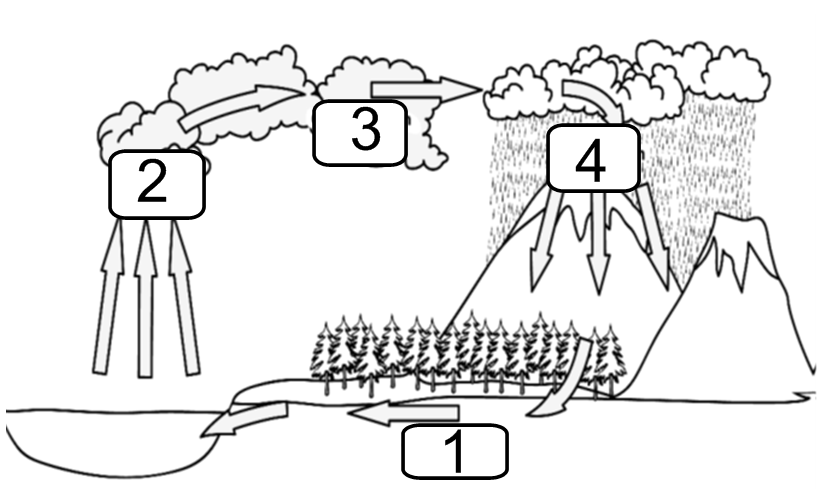
In the diagram, transpiration is represented by which numbered area?
1
2
3
4
Fresh water is
the process of water turning into gas
water vapor that turns into water
water that contains little or no dissolved salts
clouds that form close to the ground
Where can MOST of the Freshwater be found?
glaciers
rivers
lakes
rain
aquifers
Which word BEST describes SALINITY? (a synonym)
water
fresh
ocean
salt
What is Earth's major water storage, home to 97.5% of all water on Earth?
rivers
glaciers
ocean
lakes

An underground water supply is...
erosion
river
water shed
aquifer
Pollution traced to a single point
water shed
permeable
point source pollution
non-point source pollution
Allowing liquids to pass through, such as water through the ground
permeable
pollution
impermeable
yup, you know it
The Portion of water that flows across the surface that does not soak into the ground and runs into water bodies
what
fertilizer
erosion
runoff
Liquids cannot pass through
permeable
nope
erosion
Impermeable
Small particles that is made up rocks, soil
river basin
impermeable
water
sediment
The gradual downward flow of water that soaks into surface
river
erosion
infiltration
water uptake
Pollution that cannot be traced to a single point because comes from many sources
estuary
water shed
non point source pollution
point source pollution
The water found in cracks and pores in sand, gravel and rocks below the surface
sediment
ground water
ocean water
surface water
The wearing away of the earth’s surface by water, wind or ice
river basin
pollution
ocean waves
erosion
A chemical sprayed to kill insects or bugs.
aquifer
fetilizer
herbicide
pesticide
Taking care of natural resources like water, or soil...
infiltration
point source pollution
conservation
erosion
Planting trees, grass, or any plant to create a "natural fence" to protect water from pollutants
fertilizer
drought
vegetative buffer
infiltration
The land that water flows across or under on its way to a stream, river, or lake is called...
conservation
land form
runoff
watershed
? is the portion of land drained by a river and its tributaries.
River Basin
Aquifer
Erosion
Watershed


The diagram shows the distribution of water on the Earth. Which source is the most abundant supply of liquid surface water that is not salty?
groundwater
oceans
lakes
rivers

The graphic shows that only 3% of the Earth's water is fresh water. The graphic also shows that of this 3%, almost all of it is contained in two reservoirs. What are the two reservoirs that contain almost all of Earth's fresh water?
glaciers and groundwater
streams and estuaries
marshes and swamps
lakes and rivers

The diagram shows the distribution of water on the Earth. Based on the diagram, which is true?
Most of Earth's water is fresh water.
Most of Earth's fresh water is contained in glaciers and ground water.
Most of Earth's water is contained in glaciers.
Most of Earth's fresh water is contained in the oceans.
Water underground is stored in ____________.
aquifers
reservoirs
wells
depositories
Water moves through Earth's layers until it reaches a ______ layer.
saturated
water table
impermeable layer
permeable
Approximately _____ percent of Earth's water is freshwater.
97
1
3
10
Approximately what percent of Earth's water is salt water?
3
70
79
97
What percent of Earth's freshwater is available for humans to use?
3
less than 1
97
10


As a part of the water cycle, water from Earth's surface enters the clouds and finally falls back to the ground in the form of rain. What is the correct sequence of processes water undergoes?
Evaporation, Condensation, Precipitation
Precipitation, Condensation, Evaporation
Condensation, Evaporation, Precipitation
Evaporation, Precipitation, Condensation
What would happen if the Sun is removed from the water cycle?
The water cycle would not include precipitation but would continue with groundwater flow.
The water cycle would no longer occur because the Sun provides the energy for evaporation and transpiration.
The water cycle would no longer occur because the Sun provides energy for the formation of clouds.
The water cycle would not include evaporation and transpiration but would continue with condensation.

What is another name or synonym for the water cycle?
Geologic cycle
Hydrologic cycle
Geosphere
Carbon cycle

What is the energy source that drives the water cycle?
The moon T
The heat from our home in the winter all around the world
The sun
he heat generated solely from the core of the earth

The movement caused within a fluid by the tendency of hotter and therefore less dense material to rise, and colder, denser material to sink under the influence of gravity, which consequently results in transfer of heat. ____________________
Evaporation
Convection
Precipitation
Transpiration
How does cellular respiration contribute to the process of evaporation?
When organisms perform cellular respiration, they exhale water vapor, which contributes to evaporation.
When organisms perform cellular respiration, they inhale water vapor, which contributes to evaporation.
When organisms perform cellular respiration, they exhale carbon dioxide, which contributes to evaporation.
When organisms perform cellular respiration, they inhale oxygen, which contributes to evaporation.

Precipitation might contribute to the addition of pollutants to rivers, lakes, and oceans because...
it carries pollutants from the atmosphere into bodies of water
it collects any pollutants that are in or on the ground in the water supply
Runoff might contribute to the addition of pollutants to rivers, lakes, and oceans because...
it carries pollutants from the atmosphere into bodies of water
it collects any pollutants that are in or on the ground in the water supply
Which of the processes associated with the water cycle might be responsible for helping to clean or filter the water? (Select TWO answers)
Infiltration (also called percolation)
Transpiration
Precipitation
Runoff

Which processes of the water cycle gain energy? Select all that apply.
condensation
sublimation
evaporation
deposition

