wayground logo

Free Printable Worksheets

NEW

Font size

S
M
L
XL
Worksheets

Atoms & The Periodic Table Study Guide

Total questions: 70

Worksheet time: 53mins

Name
Class
Date
1.

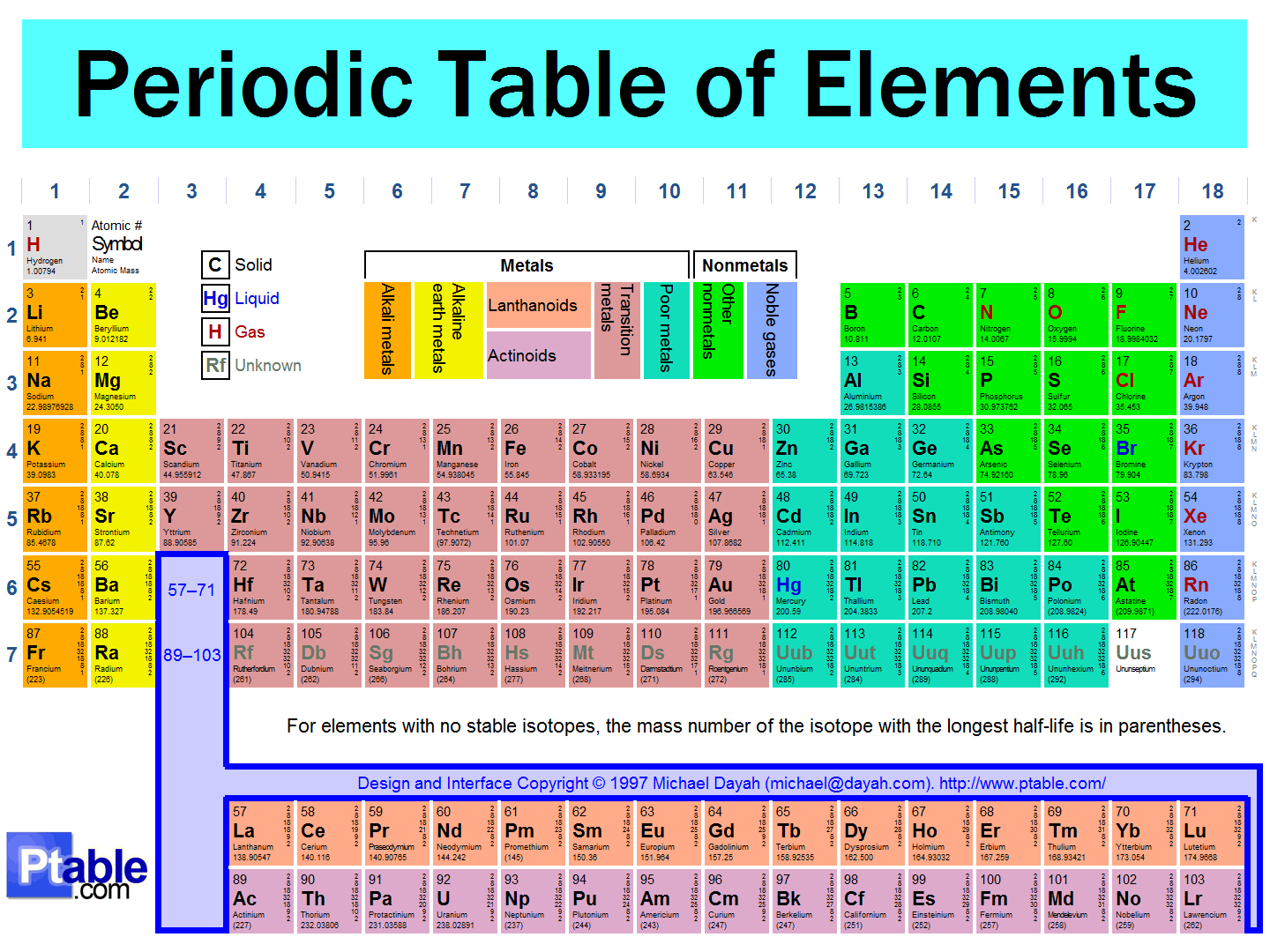
How many protons are in Beryllium?

a)

4

b)

9

c)

5

d)

2

2.
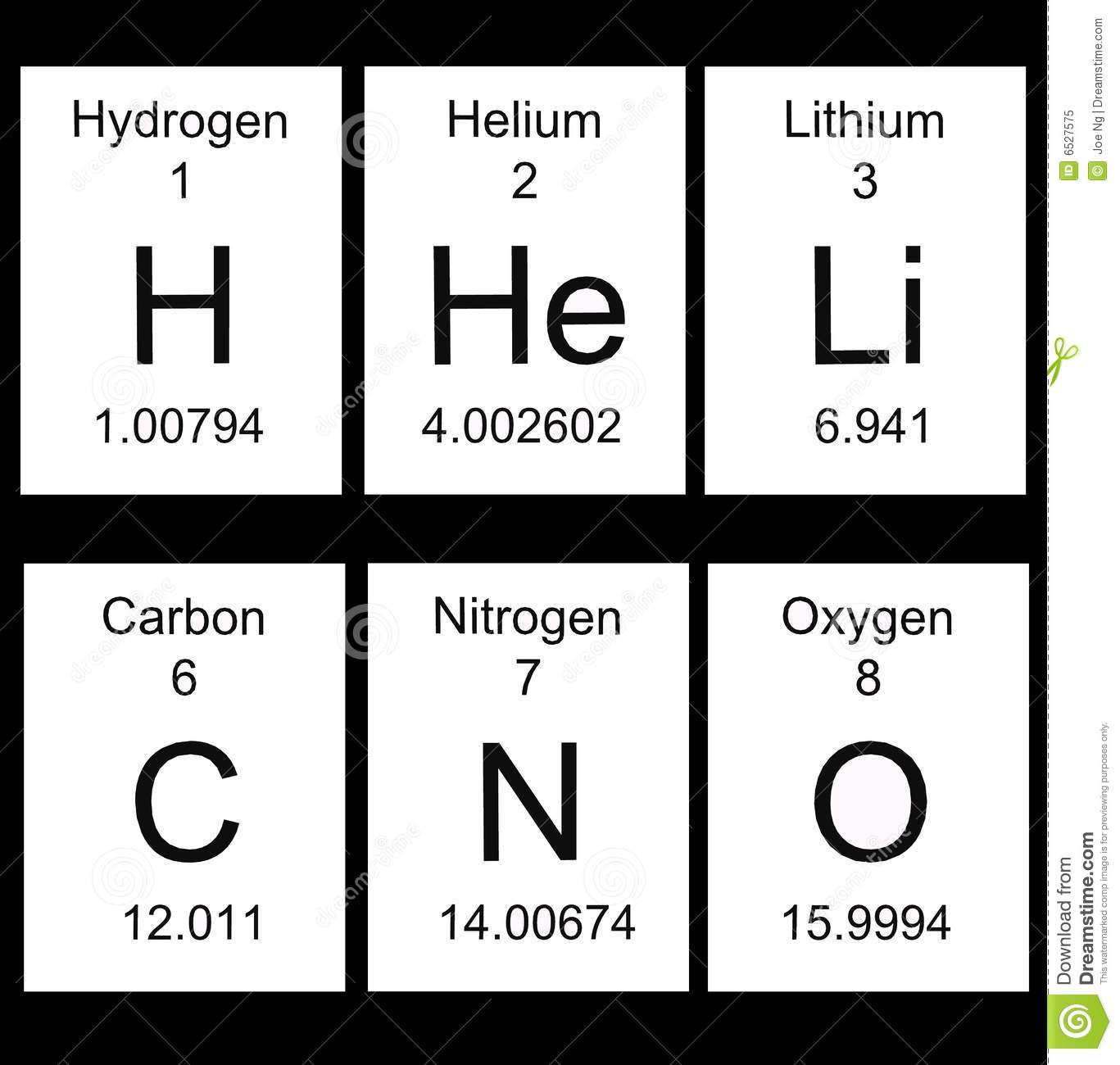
What does the 1.00794 stand for?
a)
Hydrogen
b)
atomic number
c)
atomic mass
d)
atomic explosion
3.
What is the chemical symbol for Lithium?
a)
H
b)
He
c)
Li
d)
N
4.

How many neutrons does Chlorine (Cl) with an atomic number of 17 and an atomic mass of 35.

a)

17

b)

18

c)

19

5.
Which two subatomic particles are found in the NUCLEUS of at atom?
a)
protons & nuetrons
b)
protons & electrons
c)
neutrons & electrons
d)
electrons & protons
6.
What gives an atom mass?
a)
Protons & electrons in the nucleus
b)
electrons in the cloud
c)
protons & neutrons in the nucleus
d)
Protons & electrons in the cloud
7.
How many protons does this element have?
a)
40
b)
21
c)
20
d)
41
8.

The periodic table is organized into columns called _______ and rows called ______.

a)

groups and periods

b)

periods and groups

c)

categories and periods

d)

categories and groups

9.
What does an atom's period tell us?
a)
Number of protons
b)
Number of electrons
c)
Number of valence electrons
d)
Number of shells
10.
What is the atomic mass of "F"
a)
9
b)
18
c)
17
d)
19
11.
The part of the atom that determines the identity of the atom is the ____________.
a)
proton
b)
nucleus
c)
electron
d)
neutron
12.
Which subatomic particle has a negative charge?
a)
Proton
b)
Neutron
c)
Electron
d)
Quark
13.
What element is this?
a)
Helium
b)
Hydrogen
c)
Argon
d)
Silver
14.
What element is this model showing?
a)
Lithium
b)
Boron
c)
Carbon
d)
Neon
15.
What does an atom's group tell us?
a)
Number of protons
b)
Number of electrons
c)
Number of valence electrons
d)
Number of shells
16.

Which of the following element in period 3 would be classified as a metal?

a)

Boron (B)

b)

Sodium (Na)

c)

Argon (Ar)

d)

Silicon (Si)

17.
a)
Metals
b)
Nonmetals
c)
Metalloids
18.
This class of elements are sometimes called "semiconductors."
a)
Metals
b)
Nonmetals
c)
Metalloids
d)
Groups
19.
Elements in a ..................have similar chemical properties.  
a)
period
b)
group
c)
row
20.

Which of the following is the correct symbol for sodium?

a)

S

b)

Na

c)

So

d)

N

21.

In which of the following states is Chlorine found at room temperature?

a)

solid

b)

liquid

c)

gas

d)

plasma

22.

Which term describes Neon?

a)

metal

b)

metalloid

c)

transition metal

d)

nonmetal

23.

Which of the following elements is an example of an element that conducts electricity?

a)

Aluminum

b)

Helium

c)

Boron

d)

Neon

24.

Which element would you expect to be located in group 2 of the periodic table?

a)

Lithium

b)

Carbon

c)

Sulfur

d)

Beryllium

25.

Which particle does not have a charge?

a)

neutron

b)

proton

c)

electron

d)

megatron

26.

Which of the following subatomic particles is negatively charged?

a)

neutron

b)

proton

c)

electron

d)

megatron

27.

Which particle has a positive charge?

a)

neutron

b)

electron

c)

proton

d)

megatron

28.

Which of the following best describes the three general groups of elements?

a)

solids, liquids, gas

b)

metals, nonmetals, gases

c)

metals, metalloids, nonmetals

d)

metals, metalloids, synthetics

29.
Which is an electron?
a)
A
b)
B
c)
C
30.
The blue atoms are called 
a)
metals
b)
nonmetals
c)
metalloids
d)
noble gases
31.
Elements which are shiny, conduct electricity and heat are called
a)
metal
b)
nonmetal
c)
metalloid
d)
nonexistent
32.
The atoms along the staircase are called 
a)
metals
b)
nonmetals
c)
metalloids
d)
noble gases
33.
Which is a halogen?
a)
Helium
b)
Chlorine
c)
Oxygen
d)
Neptune
34.
Which is an alkali metal?
a)
Magnesium
b)
Iron
c)
Sodium
d)
Europium
35.
In the modern periodic table elements are arranged by:
a)
atomic mass
b)
atomic number
c)
valence electrons
d)
number of isotopes
36.

Which element is a metalloid?

a)

H

b)

Re

c)

Ne

d)

B

37.
Which of the following has a full valence shell?
a)
Oxygen
b)
Neon
c)
Barium
d)
Carbon
38.
How many protons are in this element?
a)
79
b)
196
c)
117
d)
Cannot be determined
39.
How many electrons does potassium K contain? (click to see image)
a)
19
b)
39
c)
20
d)
40
40.
What is the smallest unit of matter called
a)
elements
b)
atoms
c)
compounds
d)
cells
41.
What is the atomic mass of Copper?
a)
63
b)
29
c)
34
d)
92
42.
How many electrons does a Copper atom have?
a)
63
b)
29
c)
92
d)
34
43.
What element is represented in this Bohr Model? 
a)
Carbon
b)
Hydrogen
c)
Aluminum
d)
Lithium
44.
What's a valence electron?
a)
electrons in the second energy level
b)
electrons in the outermost energy level
c)
the atomic number
d)
electrons in the first level
45.
How many electrons do atoms need to be stable?
a)
1
b)
2
c)
6
d)
8
46.
Which scientist developed the atomic theory?
a)
JJ Thomson
b)
Ernest Rutherford
c)
John Dalton
d)
James Chadwick
47.
He developed the planetary model of the atom.
a)
Rutherford
b)
Bohr
c)
Chadwick
d)
Dalton
48.
Who believed that all matter is made up of small particles called atoms?
a)
Dalton
b)
Rutherford
c)
Bohr
d)
Chadwick
49.
What did Thomson discover?
a)
electron
b)
proton
c)
neutron
d)
electron cloud
50.
Which scientist developed the Electron Cloud?
a)
Bohr
b)

Schrodinger & Heisenberg

c)
Rutherford
d)
Dalton
51.
This scientist believed that electrons orbit the nucleus.
a)
Dalton
b)
Bohr
c)
Rutherford
d)
Chadwick
52.
John Dalton stated:
a)
elements are made of atoms
b)
atoms of a given element are identical
c)
atoms cannot be subdivided, created, nor destroyed
d)
all of the above
53.
The scientist responsible for "discovering" the nucleus is:
a)
Bohr
b)
Rutherford
c)
Schroedinger
d)
Einstein
54.
What scientist is best known for his "Plum Pudding" model of the atom?
a)
J.J. Thomson
b)
Ernest Rutherford
c)
John Dalton
d)
Democritus
55.
Who's model is this? 
a)
Millikan
b)
Rutherford
c)
Thomson
d)
Bohr
56.

Who proposed this model of atoms?

a)

Dalton

b)

Bohr

c)

Rutherford

d)

Thomson

57.

Determined that electron paths cannot be predicted and exist inside the Electron Cloud.

a)

Schrödinger & Heisenberg

b)

Ernest Rutherford

c)

John Dalton

d)

Democritus

58.
The central region of an atom where its neutrons and protons are is its 
a)
Nucleus 
b)
Electron Cloud
c)
Core 
d)
Center 
59.
Niels Bohr suggested that electrons.......
a)
are found in specific orbits
b)
electrons are scattered throughout the atom
c)
electrons move according to their energy level
d)
electrons are positive
60.

Which is the correct sequence of the scientists who made major changes in the model of the atom?

1-JJ Thomson

2-Schrödinger & Heisenberg

3-John Dalton

4-Niels Bohr

5-Ernest Rutherford

a)

2, 1, 4, 3, 5

b)

3, 1, 5, 4, 2

c)

5, 3, 2, 1, 4

d)

4, 3, 2, 1, 5

61.

a unique number for each element that equals the number of protons in an atom of that element

a)

element name

b)

element symbol

c)

atomic number

d)

atomic mass

62.

What are the vertical columns on the periodic called?

a)

groups

b)

periods

c)

nonmetals

d)

metals

e)

metalloids

63.

What are the horizontal rows on the periodic table called?

a)

periods

b)

groups

c)

metals

d)

nonmetals

e)

metalloids

64.

What is the name of group number 1?

a)

halogens

b)

noble gases

c)

alkali metals

d)

alkaline earth metals

65.

What is the name of group number 2?

a)

transition metals

b)

halogens

c)

metaloids

d)

alkaline earth metals

66.

how many rows are on the table

a)

4

b)

5

c)

6

d)

7

67.

how many groups/families are on the table

a)

15

b)

16

c)

17

d)

18

68.

How do you find the number of neutrons in an atom?

a)

Atomic Number

b)

Atomic Mass

c)

Atomic Mass - Atomic Number

d)

Atomic Number + Atomic Mass

69.
A class of elements characterized by physical properties that include shininess, malleability, ductility, and conductivity.
a)
nonmetals
b)
metalloids
c)
metals
d)
gases
70.

All the elements that are yellow and to the right of the stair step ladder are called...

a)

metals

b)

nonmetals

c)

metalloids

d)

noble gases