
 Worksheets
Physical Science 1st Semester Final
Total questions: 70
Worksheet time: 2hrs 25mins
What is energy?
moving energy
stored energy
renewable energy
The ability to do work.
What is potential energy?
moving energy
stored energy
renewable energy
non renewable energy
What is kinetic energy?
moving energy
potential energy
stored energy
renewable energy
units of force are
newtons
grams
joules
meters
units for work are
newtons
joules
meters
seconds

if you push a cart with a force of 60 N for 2 m... how much work have you done
120 J
30 J
120 N
30 N

At which point of the roller coaster is potential energy the greatest?
W
X
Y
Z

Identify the type of energy
Thermal energy
Sound energy
Mechanical energy
Electrical energy

Identify the type of energy
Electrical Energy
Mechanical energy
Sound energy
Thermal energy

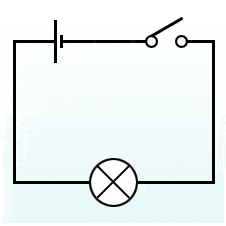
What is this?
Light bulb
Battery
Switch
Wire

The _______________ is transformed into electrical energy inside the battery.
Chemical energy
Sound energy
Kinetic energy
Sun energy

At what point does the biker have the greatest Kinetic Energy?
Point A
Point B
Point C
Point D
At what point does Potential Energy transform into Kinetic Energy?
Point A
Point B
Point C
Point D

Which Apple has the greatest Gravitational Potential Energy?
Apple A
Apple B
Apple C
Apple D
Potential energy depends on ______ and _______.
height, mass
weight, mass
speed, mass
height, speed
Kinetic energy depends on_________ and _________.
speed and mass
speed and height
height and mass
energy and height
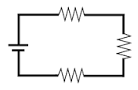
is the opposition to the flow of charges in a material.
Resistance
Voltage
Time
Current
What would happen if in a circuit, the resistance increases but the voltage stays the same?
The current would decrease
The current would increase
The voltage would decrease
The voltage would increase
What would happen if in a circuit the voltage is increase?
The time would increase
The current would increase
The current would decrease
The current would stay the same

If lamp 2 is unscrewed from its holder, what will happen to lamp1?
It will stay lit
It will go out
It will get dimmer
It will dissapear
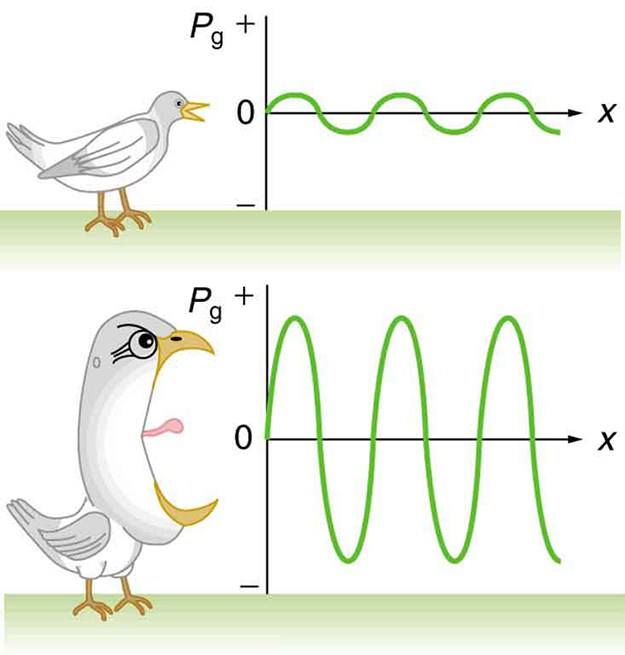
Bats use ________ to locate mosquitoes in the air.
solar
ecology
echolocation
refraction
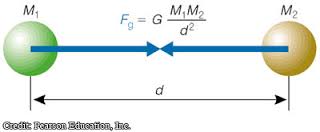

Which one of Newton's laws are displayed
2nd law
1st law
3rd law
An object in motion will stay in motion and an object at rest will stay at rest unless acted upon by an outside force. Which law does this describe
2nd law
1st law
3rd law
What force slows objects down and keeps them from moving?
Acceleration
Gravity
Friction
Net Force

Which one of Newton's Laws is the picture showing?

An object that is in free fall seems to be __________________.
weightless
not moving
air resistance
Acceleration due to gravity is:
.98 m/s^2
98 m/s^2
9.8 m/s^2
980 m/s
The maximum speed an object will reach when falling through a substance.
air resistance
gravity
terminal velocity
acceleration

A 50 kg skater pushed by a friend accelerates 5 m/s2. How much force did the friend apply?
250 N
10 N
250 kg


1st
Law of Motion
2nd
Law of Motion
3rd
Law of Motion
___ refers to how fast an object is moving.
Speed
Velocity
Acceleration
Motion
___ refers to the rate at which an object changes position.
Speed
Velocity
Acceleration
Motion
Which two factors does speed depend on?
distance and direction
direction and time
distance and time
distance, time and direction
What two factors does velocity depend on?
speed and direction
distance and time
speed and time
distance and direction
Which is an example of velocity?
A car driving 55 miles per hour south.
A bicyclist traveling 10 meters per hour.
A roller coaster is traveling 10 meters per second.
A rocket blasting off at 2,500 meters per second.
Ben makes five paper helicopters with different wing lengths. He drops them the same way from a height of two meters for five trials each. He records the amount of time it takes for each helicopter to fall to the ground.
What is the independent variable?
Dropping the same way
Wing Length
Amount of time it takes the helicopter to hit the floor
Dropping from the same height
Cindy wanted to find out how the amount of sunlight affects the growth of plants. She placed two tomato plants in 10 inch pots with potting soil and watered them ¼ cup each day. One plant was placed under a cardboard box and one was placed in the sunlight. She measured the growth of the plant each week for three weeks.
What is the dependent variable?
Using the same type of plant
Each plant was placed in a 10 inch pot
The growth of the plant
One plant is in the sunlight and the other is under a box
The factors that stay the same throughout the experiment.
Constant
Dependent Variable
Independent Variable
The SI unit for measuring length is the __________.
meter
kilogram
liter
Newton
second
The SI unit for mass is the ___________.
meter
kilogram
liter
second
Newton
The SI unit for volume is the __________.
meter
kilogram
liter
second
Newton
Convert 43 m to cm.
4,300 cm
0.43 cm
43,000 cm
0.0043 cm
Convert 2.2 kg to mg.
2,200,000 mg
0.0000022 mg
2,200 mg
0.0022 mg

