
 Worksheets
Final Exam S1 Review 2024-2025
Total questions: 70
Worksheet time: 35mins
What is inertia?
How much something weighs
How fast something is
How much an object resists changes to its motion
How much energy an object has
Approximately how fast will an object fall in 5 seconds?
5 m
25 m
50 m/s
125 m
1st
Law of Motion
2nd
Law of Motion
3rd
Law of Motion
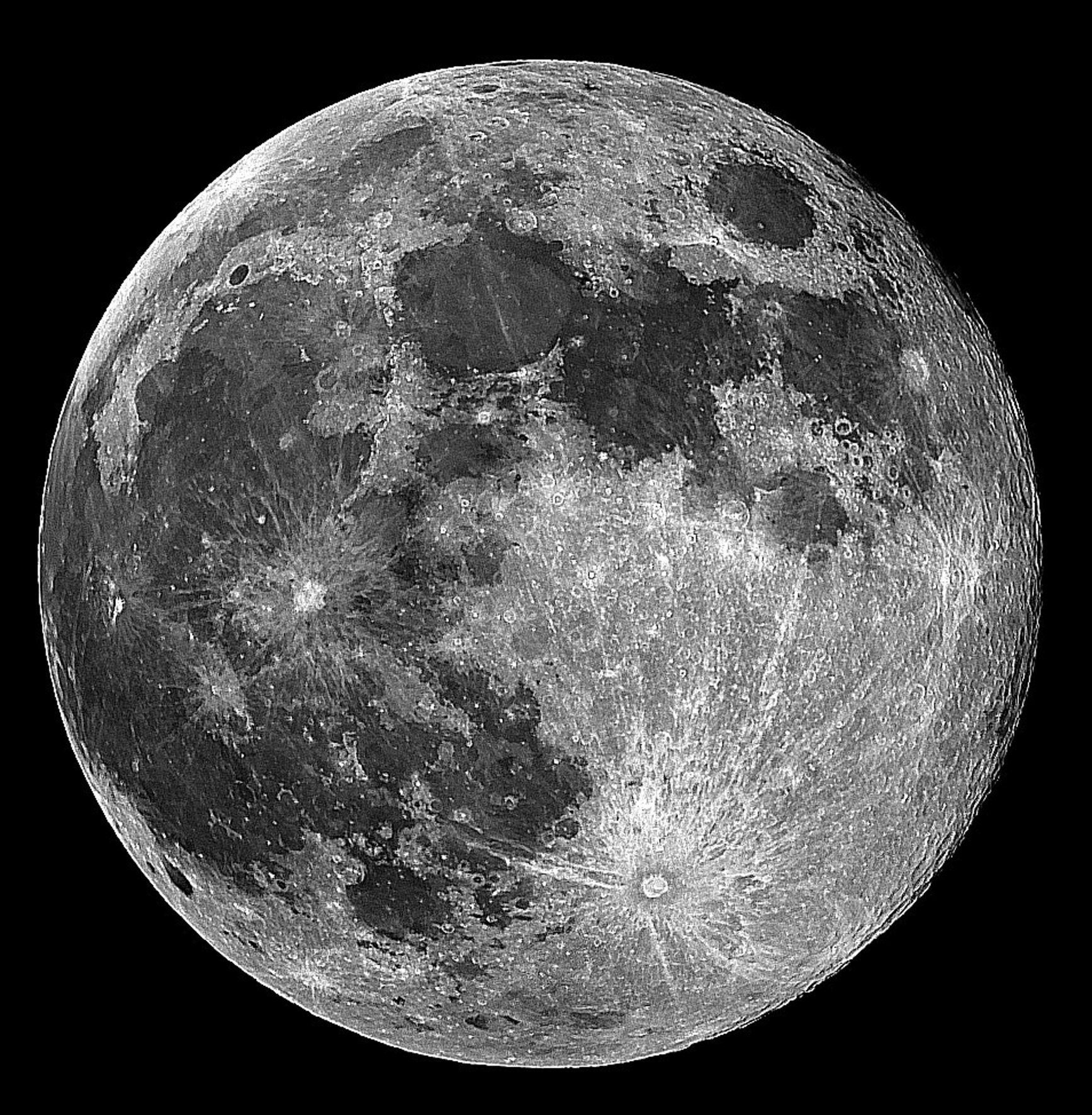
less air
less sunlight
more gravitational pull
less gravitational pull
stays the same
decreases
increases
doubles
A 20 kg bike accelerates at 10 m/s2. what was the force
25 Newtons
20 Newtons
200 Newtons
10 Newtons
decreases
stays the same
also increases
stops
The momentum of an object depends upon the object's ___________&_____________.
size and shape
mass and inertia
mass and veloctiy
mass and energy
25 m/s
375 m/s
25 kg m/s
375 kg m/s


Collision in which objects stick together or change shape
inelastic collision
elastic collision
both types
neither types
equal to
less than
more than
It depends on the type of collision


80 J
3.2 J
160 J
40 J
joule
watt
volt
newton
2 Joules
.5 Joules
50 Joules
20 Newtons
Energy can created or destroyed but not transformed
Energy cannot be created or destroyed, it can only transformed
Energy can't be created, destroyed or transformed

200 Joules
1500 Joules
950 Joules
What is the unit of Power?
Watts
Kilograms
Joules
Newtons
Using 1000 J of work, a small object is lifted from the ground floor to the third floor of a tall building in 20.0 seconds. What power was required in this task?
20000 W
1/50 W
50 W
2000 W
If you push a coffee mug 1.4 m using a force of 5 N, the work done on the mug is?
7 J
6 J
8 J
9 J
An object in free fall has a ____ acceleration.
constant
increasing
decreasing
zero
Friction
Mass
Inertia
Gravity

remain in motion.
eventually come to a stop.
change its momentum.
accelerate.

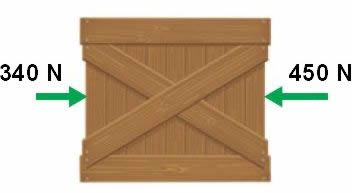
the object remains at rest
the object begins moving in an unpredictable direction
the object begins moving in the direction of the net force
the object begins moving opposite to the direction of net force
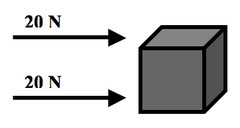
40 N left
0 N Balalnced
400 N right
40 N right
What is Newton's First Law all about?
Balanced forces
Unbalanced forces
Changing forces
Resultant forces
Contact Force
Balanced Force
Unbalanced Force
Net Force
As the acceleration of an object increases, what happened to the force on the object?
force increases
force decreases
force remain the same
mass increases
What is the weight of a 25 kg mass on Earth?
25 N
250 N
2.5 N
50 N
What is the speed at a particular point in time called?
average speed
unbalanced speed
balanced speed
instantaneous speed
What is the speed called when the total distance is divided by the total time?
average speed
unbalanced speed
balanced speed
instantaneous speed
What is it called when the only force acting on a falling object is gravity?
free fall
average speed
terminal velocity
friction
If there is no air, which falling object will hit the ground first, a feather or a bowling ball?
feather
bowling ball
both hit at the same time
they won't fall if there is no air
According to Newton's Second Law of Motion, the acceleration is always in what direction compared to the net force?
opposite direction
same direction
perpendicular direction
random direction
What is the acceleration due to gravity on Earth?
3.2 m/s2
27 m/s2
1.6 m/s2
9.8 m/s2
If a cannon pushes a cannonball with 500 N of force, how much force is on the cannon?
1000 N
500 N
0 N
250 N
If the action force is a bat hitting a ball, what is the reaction force?
the ball hitting the bat
the bat bending slightly
the batter pushing the bat
the ball pushing through the air
If a hockey stick hits a puck and the puck goes into the net, what is the action force?
the puck hitting the net
the stick hitting the puck
the puck falling down to the ice
the net hitting the puck
If a person is falling to Earth and the action force is the Earth pulling the person, what is the reaction force?
person pulling up on Earth but with less force
person pulling up on Earth with the same force
air slowing the person down as they fall
terminal velocity
A school bus runs into a fly on its way to school. How does the force on the fly compare to the force on the bus?
greater force on the fly
less force on the fly
same force on both the fly and on the bus
less force on the bus
A school bus runs into a fly on its way to school. How does the acceleration of the fly compare to the acceleration of the bus?
greater acceleration for the fly
less acceleration for the fly
same acceleration for both the fly and the bus
greater acceleration for the bus
Which example has the most momentum?
large truck driving on the highway
bowling ball rolling towards the pins
bird flying across a yard
an aircraft carrier docked in a port.
A boy kicks a football with a force of 20 N, the time the force acts for is 0.3 s. Calculate the impulse on the ball.
1 N⋅s
6 N⋅s
33.3 N⋅s
Which factor does momentum depend more on, mass or velocity?
mass
velocity
both the same amount
too difficult to tell
Which factor does kinetic energy depend more on, mass or velocity?
mass
velocity
both the same amount
too difficult to tell
If you lift an object three times higher, how much more work did you do?
twice as much
three times as much
same amount of work as before
between two and three times as much
If you pull on a crate with 268 N of force and the crate does not move, how much work are you doing on the crate?
268 J
134 J
0 J
536 J
What is the unit of measure for velocity?
Newtons
m/s
kilogram
seconds
What is the unit of measure for force?
Newtons
m/s
kilogram
seconds
What is the unit of measure for time?
Newtons
m/s
kilogram
seconds
What is the unit of measure for power?
watt
m/s2
kg m/s
joules
What is the unit of measure for momentum?
watt
m/s2
kg m/s
joules
What is the unit of measure for acceleration?
watt
m/s2
kg m/s
joules
What is the unit of measure for energy?
watt
m/s2
kg m/s
joules
What is the unit of measure for mass?
Newtons
m/s
kilogram
seconds

