
 Worksheets
Reaction kinetics
Total questions: 17
Worksheet time: 20mins
In a chemical reaction, how quickly or slowly reactants turn
into products is called the
Catalyst
Reaction Rate
Concentration
Temperature
The collisions which bring about a chemical reaction are called:
Consistent collisions
Normal collisions
Effective collisions
Increasing the ____ causes the particles (atoms
or molecules) of the reactants to move more quickly so that
they collide with each other more frequently and with more
energy.
Catalyst
Surface Area
Temperature
Concentration
Catalyst helps to
increase the amount of product obtained
to lower the activation energy
provide an alternative reaction route with lower Ea
decrease the frequency of collision
Which of the following is a unit of rate of reaction?
s-1
Ms-1
M
M-1s-1
What is the overall order of reaction?

What is k?
reaction rate
equilibrium constant
rate constant
another reactant
Given the chemical equation, Haber Prosess
N2(g) + 3H2 (g) --> 2NH3 (g)
Based on this reaction, first order for concentration N2 and zero order for concentration H2.
Write rate law:
Rate = K [N2] [H2]
Rate = K [N2]
Rate = K [H2]0
Rate = K [N2]1 [H2]3
The half-life of a reactant, t1/2, is the amount of time needed for a reactant concentration ......
to increase by three times original concentration.
increase by half of original concentration.
decrease by ten times original concentration.
decrease by half of original concentration.
What the Activation energy?
The maximum energy a reaction can release
The minimum amount of energy that reacting particles must have when colliding to form products
The energy added by a catalyst
The energy possessed by the products
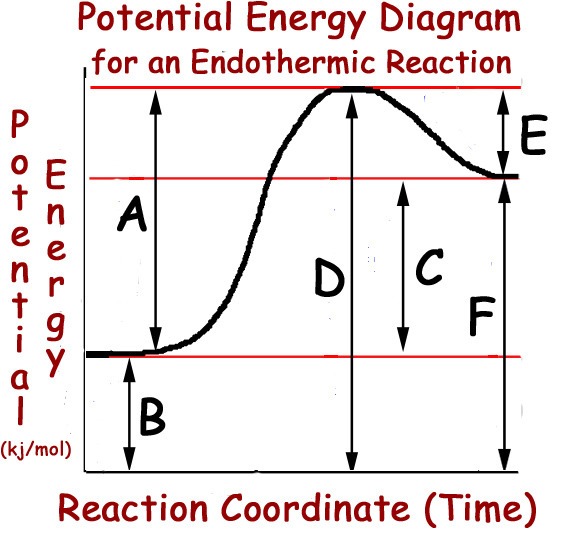
A reaction has the rate law: Rate = k [A]. What will happen to the rate of reaction if the concentration of A is doubled?
increases by double
No changes
increases by triple
increases by a factor of 4

