wayground logo

Free Printable Worksheets

Font size

S
M
L
XL
Worksheets

Semester 1 Exam P

Total questions: 87

Worksheet time: 2hrs 32mins

Name
Class
Date
1.

The Lewis Dot structure for aluminum would have ______ electrons.

a)

13

b)

3

c)

8

d)

27

2.

Valence electrons are those that are

a)

closest to the nucleus.

b)

freely floating between atoms.

c)

in the outermost energy level of the atom.

d)

unable to become involved in chemical bonding.

3.

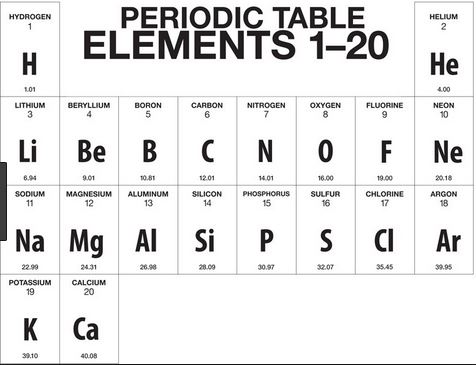
Look at the periodic table. What should be the charge on the ion formed by calcium?

a)

+1

b)

+2

c)

-1

d)

-2

4.

Most elements are most stable when their outermost energy levels contain ________ electrons.

a)

2

b)

6

c)

8

d)

18

5.

Metal atoms are most likely to form...

a)

positively charged cations.

b)

negatively charged anions.

c)

neutral molecules.

d)

bations.

6.

What is the name of an ionic compound formed from Calcium and Oxygen?

a)

Calcium Oxide

b)

Calcium Monoxide

c)

Monocalcium Monoxide.

d)

Calcium Dioxide

7.
The element with the lowest electronegativity in Period 3 is - 
a)
Na
b)
Cl
c)
Ar
d)
Mg
8.
Metals are good conductors of heat and electricity.
a)
true
b)
false
9.
Ionization energy is...
a)
the energy required to add an electron to a specific atom
b)
how much energy it takes to remove an electron from an atom
c)
the energy required to shield the outer electrons from the nucleus
d)
a measure of the ability of an atom to attract electrons
10.
Electronegativity is...
a)
how good an atom is at attracting electrons
b)
the ability of an atom to lose electrons
c)
the energy required to remove an electron from a specific atom
d)
how easy it is to make friends. 
11.
As you move across the periodic table atoms tend to get smaller because, ______________.
a)
the atoms have more mass.
b)
the atoms have less mass
c)
the atoms have more protons.
d)
the atoms have less electrons.
12.
Which atom has the largest atomic radius?
a)
potassium
b)
rubidium 
c)
francium
d)
cesium
13.
Which scientist developed the atomic theory
a)
Aristotle
b)
Dalton
c)
Democritus
14.
The smallest unit of a pure substance that has the properties of that substance
a)
element
b)
atom
c)
neutron
d)
compound
15.
Atoms are made up of three basic parts, which are -
a)
Protons, neutrons, electrons
b)
neutrinos, protons, neutrons
c)
quarks, protons, electrons
d)
electrons, neutrons, and quarks
16.
The nucleus is made up of -
a)
neutrons and electrons
b)
protons and neutrons
c)
protons and electrons
d)
electrons and quarks
17.
Protons have this charge -
a)
positive
b)
negative
c)
neutral
d)
no charge
18.
Electrons have this charge - 
a)
positive
b)
negative
c)
neutral
d)
no charge
19.
Neutrons have this charge -
a)
positive
b)
negative
c)
neutral
d)
They don't exist
20.
What scientist is best known for his "Plum Pudding" model of the atom?
a)
J.J. Tomson
b)
Ernest Rutherford
c)
John Dalton
d)
Democritus
21.
An atom's overall charge is ________.
a)
positive 
b)
depends
c)
neutral 
d)
negative 
22.
"Everything is composed of atoms" was stated by:
a)
Democritis
b)
Dalton
c)
Moseley
d)
Einstein
23.
The word "atom" comes from a Greek word that means
a)
Invisible
b)
Indivisible
c)
Undivided
24.

Which equipment heats objects with an open flame?

a)

hot plate

b)

thermometer

c)

bunsen burner

d)

beaker

25.
Identify the equipment shown here:
a)
measuring cylinder
b)
conical flask
c)
beaker
d)
volumetric flask
26.
Name this item
a)
Pipette
b)
Stirring rod 
c)
Test tube
d)
Test tube holder
27.
Name this lab apparatus:
a)
wash bottle
b)
striker
c)
well plate
d)
safety glasses or safety goggles
28.
If you spill or break something during an experiment, what is the FIRST thing you should do?
a)
Tell the teacher.
b)
Clean it up. 
c)
Cover it with a paper towel.
d)
Leave it for someone else.
29.

What is 4cm in mm?

a)

0.4

b)

4

c)

400

d)

40

30.

What is 3 litres in ml?

a)

30

b)

300

c)

3000

d)

0.3

31.
The abbreviation for gram is...
a)
G
b)
gg
c)
g
32.
What is the volume?
a)
 50.0 mL
b)
53.0 mL
c)
54.0 mL
33.
What is the volume of the fish?
a)
18.0 cm3
b)
6.0 cm
c)
38.0 cm3
34.

Carbon

a)

CA

b)

C

c)

Ca

d)

Cn

35.

Sulfur

a)

Sf

b)

Su

c)

Sr

d)

S

36.

Neon

a)

N

b)

No

c)

Ne

d)

Nn

37.

Calcium

a)

Cl

b)

Ca

c)

C

d)

Cm

38.

Helium

a)

He

b)

Hl

c)

HE

d)

Hm

39.

Potassium

a)

P

b)

K

c)

Pt

d)

k

40.

Cations

a)

Gain electrons, has an overall positive charge

b)

Lose electrons, has an overall positive charge

c)

Lose electrons, has an overall negative charge

d)

Gain electrons, has an overall negative charge

41.

A Beryllium atom that has lost 2 electrons would look like

a)

Be2+

b)

B2-

c)

B2+

d)

Be2-

42.

How many valence electrons does Hydrogen Have?

a)

1 Valence electron

b)

2 Valence electron

c)

3 Valence electron

d)

4 Valence electron

e)

5 Valence electron

43.
How many electrons should Lithium have around its Lewis dot model?
a)
1
b)
2
c)
3
d)
4
44.
How many electrons should Beryllium have around its Lewis dot model?
a)
1
b)
2
c)
3
d)
4
45.
What electron configuration matches an oxygen atom?
a)
1s22s22p63s2, 3p64s23d104p5
b)
1s22s22p4
c)
1s22s22p6
d)
1s22s22p63s23p64s23d1
46.
What is a valence electron?
a)
an electron that is found in the outermost shell of an atom. 
b)
an electron found in the innermost shell of an atom.
c)
an electron found in the middle shell.
47.
This is a correct dot diagram for oxygen (O)
a)
true
b)
false
48.

Which way do groups run?

a)

left to right

b)

right to left

c)

vertically

d)

horizontally

49.

Information gathered using your 5 senses is called an

a)

Observation

b)

Inference

50.
What is an observation for this picture?
a)
The man is scared
b)
The man is going to get eaten
c)
There is a man in a kayak
d)
The man is paddling fast
51.

When you explain or interpret the things you observe, you are ____________.

a)

infering

b)

predicting

c)

observing

d)

claiming

52.

Does this image show results that are accurate and/or precise?

a)

Accurate, but not precise

b)

Precise, but not accurate

c)

Both precise and accurate

d)

Neither precise nor accurate

53.

Does this image show results that are accurate and/or precise?

a)

Accurate, but not precise

b)

Precise, but not accurate

c)

Both precise and accurate

d)

Neither precise nor accurate

54.

What group are the Halogens?

a)

6.9

b)

7

c)

8

d)

3

55.
The metals of Group 1 are commonly called the 
a)
Transition metals
b)
Alkaline earth metals
c)
Lanthanides
d)
Alkali Metals
56.
Comes first in a chemical compound
a)
Metal
b)
Nonmetal
57.

The Periodic Table is organized into _________ and __________.

a)

Atoms, things

b)

Groups, Periods

c)

Groups, metals

d)

Nonmetals, Periods

58.

This group does NOT react with anything ever, they are already happy.

a)

Metals

b)

Transition Metals

c)

Noble Gases

d)

Halogens

59.

Elements that are in the same group have ______________.

a)

properties that are similar to each other and behave the same.

b)

nothing in common at all.

c)

the same number of protons.

d)

very different properties.

60.
What is the atomic number?
a)
the number of protons
b)
the number of protons and neutrons
c)
the number of neutrons
d)
the number of protons and electrons
61.
The atomic number of Hydrogen is
a)
1
b)
2
c)
3
d)
4
62.
What is the formula for density?
a)
density = mass x volume
b)
density = mass / volume
c)
density = mass + volume
d)
density = mass - volume
63.
What is the volume of Object X?
a)
10.0 cm3
b)
15.0 cm3
c)
20.0 cm3
d)
25.0 cm3
64.

What is the volume of 150 grams of lead if it has a density of 11.3 g/cm3?

a)

13.3 g

b)

13.3 cm3

c)

.075 g

d)

1695 cm3

65.
Which box has a higher density?  
a)
Box A
b)
Box B
c)
cannot be determined
d)
they are the same
66.

The mass of a Chromebook is approximately 0.00185 metric ton. How is this number written in scientific notation?

a)

185 × 10⁻⁵

b)

1.85 × 10⁻³

c)

18.5 × 10⁻⁴

d)

0.185 × 10⁻²

67.

If a number written in scientific notation has a negative exponent, the number in standard notation will be ____________

a)

Large

b)

Tiny

68.

What does the number 3 represent in 4NH3?

a)

Subscript

b)

Superscript

c)

Coefficient

69.

What does the number 4 represent in 4NH3?

a)

Subscript

b)

Superscript

c)

Coefficient

70.

How many Nitrogen (N) atoms are in 4NH3?

a)

4

b)

1

c)

3

d)

12

71.
How many neutrons does the isotope of lithium have?
a)
8
b)
3
c)
4
d)
5
72.
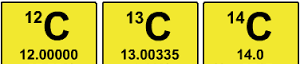
How many neutrons in C-14?
a)
6
b)
7
c)
14
d)
8
73.
What do these isotopes of carbon all have in common?
a)
neutrons & mass number
b)
atomic number and neutrons
c)
atomic number and electrons
d)
protons, atomic number, and mass number
74.
An atom is electrically neutral when
a)
protons and neutrons are the same
b)
protons and electrons are the same
c)
neutrons and electrons are the same
d)
neutrons balance the protons and electrons
75.
What atom matches this electron configuration?
1s22s22p63s23p64s23d10
a)
Zinc
b)
Copper
c)
Nickel
d)
Germanium
76.
Electrons occupy orbitals of lowest energy first is part of what electron configuration rule?
a)
Hund’s Rule
b)
Aufbau Principle
c)
Pauli Exclusion Principle
77.

What does Pauli exclusion principle state ?

a)

states that each electron occupies the lowest energy orbital available

b)

states that -no two electrons in the same orbital can have the same spin

c)

states that single electrons electrons with the same spin must occupy each-energy orbital before additional electrons with opposite spins can occupy the same orbitals

78.

As frequency increases, what happens to the energy of the light?

a)

The energy decreases

b)

It goes down

c)

The energy increases

d)

The light fades

79.

Which one has a higher frequency?

a)

Orange

b)

Blue light

80.
Robert wanted to know if the type of phone you used gave you better or worse service. What is the dependent variable. 
a)
Location of phone call
b)
Type of phone
c)
How good or bad the service was
81.
Robert wanted to know if the type of phone you used gave you better or worse service. What is the independent variable. 
a)
Location of phone call
b)
Type of phone
c)
How good the service was
82.

Name the following: MgO

a)

Magnesium Oxide

b)

Monomagnesium monoxide

c)

Magnesium monoxide

d)

Magnesium (II) oxide

83.

Name the following: NaOH

a)

Sodium monohydroxide

b)

Sodium hydroxide

c)

Sodium (I) hydroxide

d)

Sodium oxide

84.

Name the following: CF4

a)

Carbon fluoride

b)

Monocarbon tetrafluoride

c)

Carbon tetrafluoride

d)

Carbon fluorate

85.

Name the following: NH3

a)

Nitrogen hydrogen

b)

Nitrogen trihydrogen

c)

Mononitrogen trihydride

d)

Nitrogen trihydride

86.

How are you feeling about the exam?

a)

I feel great!

b)

A bit nervous, but this is helping

c)

I still have a bunch of question

d)

I don't feel ready at all

87.

What are you most worried about for the exam?

(a)