
 Worksheets
AP Biology Semester 1 Review
Total questions: 63
Worksheet time: 57mins
What is the correct terminology for the null hypothesis?
There is no significance between the observed and expected values.
There is significance between the estimated and expected values
There is significance between the observed and calculated values
There is no significance between the observed values and the alternative hypothesis.
The process/reaction used to link compounds/monomers together. Releases water.
Enzymatic
Hydrolysis
Tetratonic
Dehydration Synthesis

Paramecia are unicellular protists that have contractile vacuoles to remove excess intracellular water. In an experimental investigation, paramecia were placed in salt solutions of increasing osmolarity. The rate at which the contractile vacuole contracted to pump out excess water was determined and plotted against osmolarity of the solutions, as shown in the graph. Which of the following is the correct explanation for the data?
At higher osmolarity, lower rates of contraction are required because more salt diffuses into the paramecia.
The contractile vacuole is less efficient in solutions of high osmolarity because of the reduced amount of ATP produced from cellular respiration.
The contraction rate increases as the osmolarity decreases because the amount of water entering the paramecia by osmosis increases.
In an isosmotic salt solution, there is no diffusion of water into or out of the paramecia, so the contraction rate is zero.
The partial negative charge at one end of a water molecule is attracted to a partial positive charge of another water molecule. What is this type of attraction called?
a polar covalent bond
an ionic bond
a hydration shell
a hydrogen bond


Which of the following statements regarding lipids is most accurate?
Saturated fats tend to be solid at room temperature
Lipids are synthesized by ribosomes
Saturated fats tend to be liquid at room temperature due to hydrogen bonds.
Unsaturated fats do not have double bonds.
Cholesterol, a hydrophobic molecules, is responsible for altering the fluidity of the membrane. Which type of biomolecule does it represent?
Nucleic Acid
Oligosaccharide
Lipid
Enzyme
In mammals, an increase in the concentration of sodium in the blood triggers the release of antidiuretic hormone (ADH) from the pituitary gland. As the concentration of sodium in the blood returns to previous levels, the release of ADH from the pituitary gland is reduced. Based on the information presented, which of the following describes the most likely role of ADH in maintaining blood osmolarity?
ADH promotes an increase in the movement of sodium into the bloodstream
ADH promotes an increase in the movement of water into the bloodstream
ADH promotes an increase in the excretion of water from the body.
ADH promotes an increase in the secretion of additional ADH from the pituitary gland.

Which of the following best describes how the amount of DNA in the cell changes during M phase?
The amount of DNA doubles as the DNA is replicated
The amount of DNA slightly increases as a result of new organelle synthesis.
The amount of DNA does not change while the cell grows.
The amount of DNA is halved as the cell divides into two daughter cells
Proteins are characterised by primary, secondary and tertiary structures. Which of the descriptions correctly describes these structures?
The primary structure describes the folded chain of amino acids that form an alpha helix or beta pleated sheet. The secondary structure defines the bonds that create these chains while tertiary structure shows their location.
The primary structure describes a chain of amino acids that can be folded into an alpha helix forming the secondary structure. The tertiary structure is formed when the chains coil up forming a beta pleated sheet.
The primary structure describes a chain of amino acids that can be folded into an alpha helix or beta pleated sheet, the secondary structure. These folded chains can further coil up and create three-dimensional structures known as tertiary structure.
The primary structure describes a chain of amino acids that can be folded into an alpha helix or beta pleated sheet forming the secondary structure. These folded chains can join together forming multiple units, the tertiary structure.

The model shown in the figure represents the role of two hormones, calcitonin and parathyroid hormone (PTH), in maintaining normal blood calcium levels in humans. If a dietary change results in an increase in blood calcium concentration above normal levels, which of the following is the most likely effect on calcium homeostasis?
Calcitonin levels will decline, thus stimulating the release of PTH.
Calcitonin levels will rise, thus promoting the deposit of calcium into bones.
PTH levels will decline, thus stimulating the loss of calcium from bones.
PTH levels will increase, thus preventing the release of calcitonin.
The mitotic spindle (microtubules) plays a role in which process?
cytokinesis
condensation of chromatin into chromosomes
dissolving the nuclear membrane
separation of sister chromatids
Cells from cancerous tumors usually have an unusual number of chromosomes, and unusual looking chromosomes. What could explain this?
cancer cells are in G0
cancer cells are arrested in the S phase
cell cycle check points are not in place
transformation introduces new chromosomes to cells

What is being depicted in the image?
Amplification of the signal molecule
Enzymatic proteins inhibiting process of the signal transduction pathway
Kinase groups adding dimer groups to other enzymes
Diffusion of molecules within the cell due to the signaling molecule

what is the correct order of the phases of mitosis?
A, C, B, F ,E, D
E, F, C, D, B, A
A, B, C,D, E, F
A, F, C, E, B, D

Based on your knowledge of the polarity of water molecules, which answer correctly states the charge of the 2 unknown ions
yellow and green are both cations (positive charge)
yellow has a negative charge while green has a positive charge
yellow has a positive charge while green has a negative charge
yellow and green are both anions (negative charge)

The following questions refer to an experiment in which a dialysis-tubing bag is filled with a mixture of 3% starch and 3% glucose and placed in a beaker of distilled water, as shown below. After 3 hours, glucose can be detected in the water outside the dialysis-tubing bag, but starch cannot.
From the initial conditions and results described, which of the following is a logical conclusion?
The initial concentration of glucose in the bag is higher than the initial concentration of starch in the bag.
The pores of the bag are larger than the glucose molecules but smaller than the starch molecules.
The bag is not selectively permeable.
A net movement of water into the beaker has occurred.

Which molecule is being moved only by active transport
O2
Na+
Glucose
K+
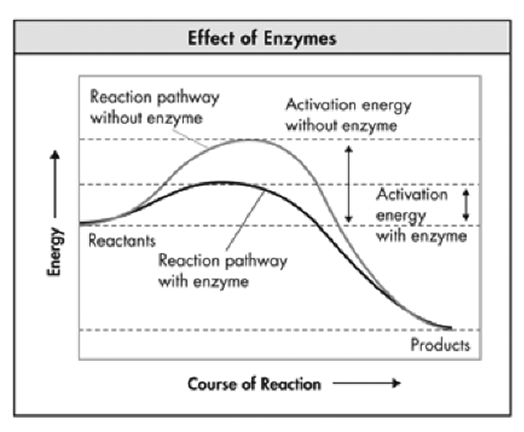

If too much of the enzyme shown in the diagram where present what might occur?
The signal may be over amplified in the post synaptic cell.
The receptor protein may be altered
The signal may not be strong enough in the post synaptic cell.
Ligand production will increase

Which of the following are electron carriers for the electron transport chain in cellular respiration?
NADPH
FADH2
NADH
NADH & FADH2

The absorption data under normal light conditions for a given organism is shown in the diagram. Which is the most likely to happen if we placed the organism under a green light?
The amount of Chlorophyll b would increase
The amount of Carotenoids would increase
The amount of Phycocyanin would increase
The amount of Phycoerythrin would increase

A student placed 20 tobacco seeds of the same species on moist paper towels in each of two petri dishes. Dish A was wrapped completely in an opaque cover to exclude all light. Dish B was not wrapped. The dishes were placed equidistant from a light source set to a cycle of 14 hours of light and 10 hours of dark. All other conditions were the same for both dishes. The dishes were examined after 7 days, and the opaque cover was permanently removed from dish A. Both dishes were returned to the light and examined again at 14 days. The following data were obtained.
The most probably cause for the difference in mean stem length between plants in dish A and plants in dish B is which of the following?
Shortening of cells in the stem in response to the lack of light
Elongation of seedlings in response to the lack of light
Enhancement of stem elongation by light
Genetic differences between the seeds

An experiment to measure the rate of respiration in crickets and mice at 10oC and 25oC was performed using a respirometer, an apparatus that measures changes in gas volume. Respiration was measured in mL of O2 consumed per gram of organism over several five-minute trials, and the following data were obtained.
According to the data, the crickets at 25oC have greater oxygen consumption per gram of tissue than do the crickets at 10oC. This trend in oxygen consumption is the opposite of that in the mice. The difference in trends in oxygen consumption among crickets and mice is due to their
relative size
mode of nutrition
mode of internal temperature regulation
mode of ATP production

This pedigree chart is for a family, some of whose members exhibit the recessive trait, woolly hair. Affected individuals are indicated by an open square or circle. What is the likelihood that the progeny of D-3 and D-4 will have wooly hair?
0%
25%
50%
75%
100%

The pedigree of a family with a history of a particular genetic disease is shown below. Squares represent males and circles represent females. Shaded symbols represent those who have the disease.
If Individual 2 were to marry a woman with no family history of the disease, which of the following would most likely be true of their children?
All of the children would have the disease.
None of the children would have the disease
Only the sons would have the disease
All of the sons would be carriers of the disease
Suppose that in sheep, a dominant allele (B) produce black hair and a recessive allele (b) produce white hair. If you saw a black sheep, you would be able to identify
its phenotype for hair color
its genotype for hair color
the genotype of only one of its parents
the phenotype of both of its parents
A liver cell in a horse has 64 chromosomes. What is true about a muscle cell and an egg cell from this horse?
Mitosis produces a haploid muscle with 64 chromsomes and meiosis a diploid egg cell with 32 chromsomes
Mitosis produces a diploid muscle cell with 64 chromsomes and meiosis a haploid egg cell with 32 chromosomes
Mitosis produces a haploid muscle cell with 32 chromsomes and mitosis a diploid egg cell with 64 chromosomes
Mitosis produces a diploid muscle cell with 32 chromsomes and meiosis a haploid egg cell with 64 chromosomes
Which correctly states a key difference between mitosis and meiosis
Mitosis produces two identical diploid daughter cells after one round of division. Meiosis produces four haploid daughter cells after two rounds of division.
Meiosis produces two identical diploid daughter cells after one round of division. Mitosis produces four haploid daughter cells after two rounds of division.
Mitosis produces four identical diploid daughter cells after one round of division. Meiosis produces two haploid daughter cells after two rounds of division.
None of the above

What process does this show?
independent assortment
polyploidy
chromosome map
crossing over

Which genes will have the greatest chance of being separated during crossing over?
B and C
A and B
C and D
D and A
Suppose the cross-over percentages for three gene pairs are: A to B = 9.5%, B to C = 14.5%, and A to C = 5%. Which of the following sequences could represent the order of these genes on a chromosome?
CAB
ABC
CBA
ACB

observed: 10 circles expected: 12
observed 20 squares expected : 18
observed 30 triangles expected: 30
Chi square + 5.96
Would you accept or reject?

A researcher crossed a male Drosophila melanogaster having a grey body and long wings with a female D. melanogaster having a black body and apterous wings. The following distribution of traits was observed in the offspring.
What conclusion is supported by the data?
The alleles for gray body and long wings are dominant.
The alleles for gray body and long wings are recessive.
Genes for the two traits are located on two different chromosomes, and independent assortment occurred.
Genes for the two traits are located close together on the same chromosome, and crossing over occurred between the two gene loci.
Butterflies of the genus Colias live in the Rocky Mountains, where they experience a wide range of temperatures. Different variants of a particular glycolytic enzyme in the flight muscles are optimally active at different temperatures. Within the same population, some individual butterflies fly most effectively at 29°C , while others fly most effectively at 40°C. Still others can be equally active at both temperatures.
Which of the following claims is most consistent with the observed butterfly behavior?
Butterflies that express two variants of the enzyme are active over a greater range of temperature
Butterflies that are active over a wide range of temperatures produce greater amounts of the enzyme.
Temperature has little effect on the activity of butterflies.
Butterflies that are active at warmer temperatures produce more offspring

A male fruit fly (Drosophila melanogaster) with red eyes and long wings was mated with a female with purple eyes and vestigial wings. All of the offspring in the F1 generation had red eyes and long wings. These F1 flies were test crossed with purple-eyed, vestigial-winged flies. Their offspring, the F2 generation, appeared as indicated below.
If in the F1 and F2 generations the same characteristics appeared in both males and females, it would be safe to assume that these traits for eye color and wing length are...
are sex-linked
are sex-influenced characteristics
are autosomal characteristics
follow the Mendelian rule of independent assortment

A male fruit fly (Drosophila melanogaster) with red eyes and long wings was mated with a female with purple eyes and vestigial wings. All of the offspring in the F1 generation had red eyes and long wings. These F1 flies were test crossed with purple-eyed, vestigial-winged flies. Their offspring, the F2 generation, appeared as indicated below.
Based on the F1 generation, what was the phenotype of the male fruit fly?
RRLL
RrLl
rrll
RRll
If 2n = 48 for a particular cell, then the chromosome number in each cell after meiosis would be
96
48
24
12

The pedigree of a family with a history of a particular genetic disease is shown below. Squares represent males and circles represent females. Shaded symbols represent those who have the disease
If Individual 6 marries a woman with the disease, what is the probability that their first child will have the disease?
0
25%
50%
75%
Simple cuboidal epithelial cells line the ducts of certain human exocrine glands. Various materials are transported into or out of the cells by diffusion. (The formula for the surface area of a cube is 6 x S2, and the formula for the volume of a cube is S3, where S = the length of a side of the cube.)
Which of the following cube-shaped cells would be most efficient in removing waste by diffusion?


Which of the following statements most directly supports the claim that different species of organisms use different metabolic strategies to meet their energy requirements for growth, reproduction, and homeostasis?
During cold periods pond-dwelling animals can increase the number of unsaturated fatty acids in their cell membranes while some plants make antifreeze proteins to prevent ice crystal formation in tissues.
Bacteria lack introns while many eukaryotic genes contain many of these intervening sequences.
Carnivores have more teeth that are specialized for ripping food while herbivores have more teeth that are specialized for grinding food.
Plants generally use starch molecules for storage while animals use glycogen and fats for storage.
The endocrine system incorporates feedback mechanisms that maintain homeostasis. Which of the following demonstrates negative feedback by the endocrine system?
During labor, the fetus exerts pressure on the uterine wall, inducing the production of oxytocin, which stimulates uterine wall contraction. The contractions cause the fetus to further push on the wall, increasing the production of oxytocin.
After a meal, blood glucose levels become elevated, stimulating beta cells of the pancreas to release insulin into the blood. Excess glucose is then converted to glycogen in the liver, reducing blood glucose levels.
At high elevation, atmospheric oxygen is more scarce. In response to signals that oxygen is low, the brain decreases an individual's rate of respiration to compensate for the difference.
A transcription factor binds to the regulatory region of a gene, blocking the binding of another transcription factor required for expression.

Testosterone oxido-reductase is a liver enzyme that regulates testosterone levels in alligators. One study compared testosterone oxido-reductase activity between male and female alligators from Lake Woodruff, a relatively pristine environment, and from Lake Apopka, an area that has suffered severe contamination. The graph depicts the findings of that study.
The data in the graph best supports which of the following claims?
Environmental contamination elevates total testosterone oxido-reductase activity in females.
Environmental contamination reduces total testosterone oxido-reductase activity in females.
Environmental contamination elevates total testosterone oxido-reductase activity in males.
Environmental contamination reduces total testosterone oxido-reductase activity in males.
A human kidney filters about 200 liters of blood each day. Approximately two liters of liquid and nutrient waste are excreted as urine. The remaining fluid and dissolved substances are reabsorbed and continue to circulate throughout the body. Antidiuretic hormone (ADH) is secreted in response to reduced plasma volume. ADH targets the collecting ducts in the kidney, stimulating the insertion of aquaporins into their plasma membranes and an increased reabsorption of water.
If ADH secretion is inhibited, which of the following would initially result?
The number of aquaporins would increase in response to the inhibition of ADH.
The person would decrease oral water intake to compensate for the inhibition of ADH.
Blood filtration would increase to compensate for the lack of aquaporins.
The person would produce greater amounts of dilute urine.

The tiny blue-eyed Mary flower is often one of the first flowers seen in the spring in some regions of the United States. The flower is normally blue, but sometimes a white or pink flower variation is found.
The following data were obtained after several crosses.
Which of the following statements best explains the data?
The appearance of blue in the F1 generation of the pink and white cross demonstrates that flower color is not an inherited trait but is determined by the environment.
Flower color depends on stages of flower development, and young flowers are white, advancing to pink and then blue.
Since the F1 and F2 phenotypes of the pink and white cross do not fit the expected genotypic and phenotypic ratios, blue-eyed Mary must reproduce by vegetative propagation.
Flower color is an inherited trait, and the F1 and F2 phenotypes of the flowers arising from the pink and white cross can best be explained by another gene product that influences the phenotypic expression.

Both myoglobin and hemoglobin are proteins that bind reversibly with molecular oxygen. The graph shows the oxygen-binding saturation of each protein at different concentrations of oxygen.
Which of the following statements is correct?
At 10 mm Hg partial pressure, hemoglobin binds oxygen but myoglobin does not.
At 20 mm Hg partial pressure, myoglobin and hemoglobin bind oxygen in equal amounts.
At 40 mm Hg partial pressure, myoglobin has a greater affinity for oxygen than hemoglobin has.
At 80 mm Hg partial pressure, myoglobin binds twice as much oxygen as hemoglobin does.

Both myoglobin and hemoglobin are proteins that bind reversibly with molecular oxygen. The graph shows the oxygen-binding saturation of each protein at different concentrations of oxygen.
Strenuous exercise lowers the blood pH, causing the curves for both hemoglobin and myoglobin to shift to the right. This shift results in
an unloading of O2 at higher partial pressures
an increase in the number of O2-binding sites
the capture of more O2 by hemoglobin
the capture of more O2 by myoglobin
The chemical reaction for photosynthesis is
6 CO2 + 12 H2O + light energy --> C6H12O6 + 6 O2 + 6 H2O
If the input water is labeled with a radioactive isotope of oxygen, 18O, then the oxygen gas released as the reaction proceeds is also labeled with 18O. Which of the following is the most likely explanation?
During the light reactions of photosynthesis, water is split, the hydrogen atoms combine with the CO2, and the oxygen gas is released.
During the light reactions of photosynthesis, water is split, removing electrons and protons, and oxygen gas is released.
During the Calvin cycle, water is split, regenerating NADPH from NADP+, and oxygen gas is released.
During the Calvin cycle, water is split, the hydrogen atoms are added to intermediates of sugar synthesis, and oxygen gas is released.

SELECT ALL THAT APPLY:
Male
Female
No chromosomal abnormalities
Trisomy 18


Type of cell signaling where the ligand is released and will affect cells in its "neighborhood"
autocrine signaling
juxtracrine signaling
paracrine signaling
endocrine signaling
Type of cell signaling where the ligand is produced at a location distant from its target cell(s)
autocrine signaling
juxtracrine signaling
paracrine signaling
endocrine signaling
What is being depicted in the image?
Amplification of the signal molecule
Enzymatic proteins inhibiting process of the signal transduction pathway
Kinase groups adding dimer groups to other enzymes
Diffusion of molecules within the cell due to the signaling molecule
I. Response
II. Amplification
III. Reception
IV. Transduction
Which of the following represents the sequence of events in a typical signal transduction pathway?

The second messenger for the pathway on the right is______. The receptor for the pathway on the left is ________ and the signal for this pathway will be amplified by ___________.
ATP, NGF, TRKA
cAMP, NGF, TRKA
ATP, Protein Kinase, Phosphorylation
cAMP, Protein Kinase, Phosphorylation

