
 Worksheets
8.8 The Universe - Stars, the Sun, EM Spectrum, Big Bang Theory
Total questions: 61
Worksheet time: 59mins


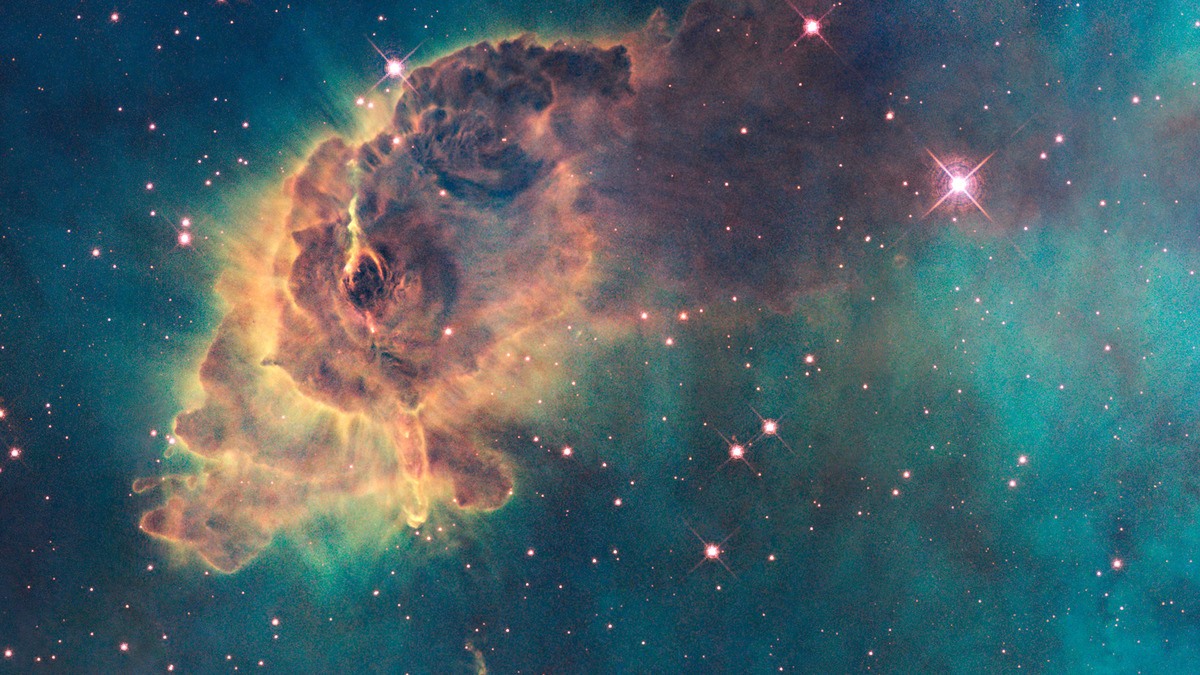
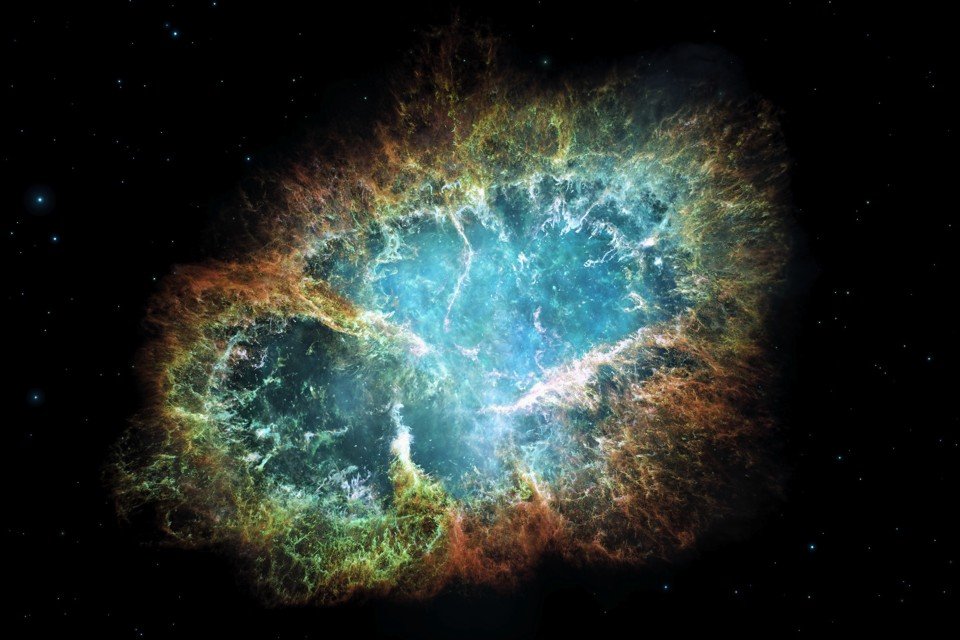


All stars begin their life in a _____.

Nuclear fusion
Gravity
Hydrogen
Friction


Neutron star
White dwarf
Black hole
Black dwarf
Main sequence stars
White dwarf
Supernova
Nebula

The professional who studies the stars is _____.
An astronaut.
An astrologer.
An astronomer.

Stars are small
Stars are close
Stars are far away
Our galaxy is called the _____.
What will be the next stage in our star the sun's life cycle?
Supernova
White dwarf
Blackhole
Red giant
A small, hot star near the end of its life is a star called a _____.
White dwarf
Red dwarf
Supergiant
Protostar
Gravity
Galaxies
Spaceships
Light
The Sun is our star made mostly of _____.
Helium
Hydrogen and helium
Hydrogen
Helium, hydrogen, and gold
Microwaves
Visible light
Gamma rays
Only a small portion
A very large portion
About half
Gamma rays
X-rays
Ultraviolet rays
Astronomers have invented telescopes that allow us to "see" beyond the visable range?
True
False
Which color has the longest wavelength?
Red
Orange
Yellow
Blue
Which color has the shortest wavelength?
Red
Orange
Yellow
Blue
The Big Bang Theory is the most widely accepted theory about the origin of the universe.
True
False
Which description is considered most accurate regarding what actually happened during the Big Bang?
Two galaxies collided causing an immense explosion as stars crashed into one another
All of what would become the universe was concentrated in a single small point, or singularity, which rapidly expanded into what is now stars, planets, galaxies, matter, and energy.
All matter emerged from a massive black hole at the center of the universe.
Parts of the sun were ripped off by massive internal explosions and were thrown into space where they cooled to become other things, like plants, comets, and other galaxies.
If something that makes light is moving away from you, it spreads the wavelengths of light out. This application of the Doppler effect is known as _____.
Blue shift
Green shift
Red shift
Black shift
A date that is commonly accepted by Big Bang theorists for the Big Bang is ____ years ago.
One hundred thousand
Two hundred and fifty million
Thirteen point seven billion
Ten trillion
Most distant galaxies show a red shift. This is considered evidence that the universe is _____.
Getting cooler
Expanding
Condensing into a small point
Swirling around
A galaxy showing blue shift is _____.
Very cold
Moving towards us
Dying
About to supernova
Observations of space indicate that most matter in the universe is _____.
Hydrogen, helium, and dark matter
Gold and plutonium
Oxygen and water vapor
Carbon
Big Bang theorists believe that there should be energy left over from the Big Bang, and it should be in the form of _____.
Low level microwave energy
Extreme heat
A swirling vortex
Visible light
What instrument has allowed us to look deep into space to observe things far away that give us hints to the past?
The Hubble telescope
The Eiffel Tower
Binkley's barometer
The Smith Space Balloon

Galaxies that are REDSHIFTED are _____.
Actually BLUE
Really NEAR earth
Invisible or not visible
Moving AWAY from us

If something that makes light is moving AWAY from you, it spreads the wavelengths of light out. This application of the Doppler effect is known as _____.
Blue shift
Green shift
Red shift
Black shift
A DATE that is commonly accepted by Big Bang theorists for the Big Bang is ____ years ago.
100,000
250 million
13.8 billion
10 trillion

A galaxy showing BLUE SHIFT is _____.
Very cold
Moving TOWARDS OR TO us
Dying
About to supernova
BLUE SHIFT of light means the star is moving _____.
Toward Earth
Away from Earth
Not moving
RED SHIFT is proof that the universe is _____.
Expanding (getting bigger)
Contracting (getting smaller)
Ever since the universe began, the universe has been _____.
Expanding
Contracting
Stays the same size
Which of the following is EVIDENCE for the Big Bang Theory?
Similar composition of Earth and the Moon
Stars appear to move
Cosmic background radiation

Cosmic Background Radiation is _____.
The remaining energy from the Big Bang.
Incredibly hot.
Visible to the human eye.
Only located in certain places in the universe.

Stars get larger
Stars get colder
Compared to the rest of the stars, our sun is considered _____.
Extremely large and cold
The H-R Diagram shows a relationship of a star's surface temperature and its _____.
Color
Size
Apparent magnitude
Absolute magnitude
The effective temperature of a star is related to its _____.
Solar system
Luminosity
Absolute magnitude
Color

Giant
Supergiant
Main-sequence
White Dwarf


Use the Hertzsprung-Russell Diagram to answer the following question. Spica is a _____
Hot and Bright Star
Cool and Bright Star
Hot and Dim Star
Cool and Dim Star

Use the Hertzsprung-Russell Diagram to answer the following question. Sirius B is a _____
Hot and Bright Star
Cool and Bright Star
Hot and Dim Star
Cool and Dim Star

Use the Hertzsprung-Russell Diagram to answer the following question. Epsilon Eridani is a _____
Hot and Bright Star
Cool and Bright Star
Hot and Dim Star
Cool and Dim Star
John observes three different colored stars. What can John infer about the three stars?


Left
Right
Up
Down
What best describes the Doppler Effect?

