wayground logo

Free Printable Worksheets

NEW

Font size

S
M
L
XL
Worksheets

Test Review

Total questions: 57

Worksheet time: 2hrs 27mins

Name
Class
Date
1.
Explain what happens to the potential energy of a rock as it falls off the side of a cliff.
a)
The kinetic energy decreases as the potential energy increases.
b)
The kinetic energy decreases as the potential energy decreases.
c)
The potential energy decreases as the kinetic energy increases.
d)
The potential energy decreases as the kinetic energy decreases. 
2.
When riding a roller coaster, you go up and down many hills. As you get to the top of a roller coaster, what energy change is taking place.
a)
Potential energy is changed into kinetic energy.
b)
Kinetic energy is changed into potential energy.
c)
Chemical energy is changed into heat energy.
d)
Heat energy is changed into chemical energy. 
3.

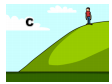
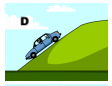
Which passenger has the most potential energy?

a)

A

b)

B

c)

C

d)

D

4.

Gravitational potential energy depends on the ________ and ________ of the object.

a)

Height and mass

b)

Friction and movement

c)

Mass and Movement

d)

Height and Friction

5.

What is the potential energy of a person flying down from a height of 1000 m that has a mass of 70 kg?

a)

1070 N

b)

70000 N

c)

686,000 N

d)

9800

6.

What is the potential of a soccer ball that is coming down if it has a mass of 0.35 kg and is coming down from a height of 7 meters.

a)

2.45 N

b)

24.01 N

c)

3.43 N

d)

68.6 N

7.

What is the energy of a 1325 kg mass that is rolling at a speed of 1.5 m/sec?

a)

19.4775 J

b)

19477.5 J

c)

1490.625 J

d)

1.497 J

8.

What is the energy of a 35 kg mass that is falling at a speed of 2 m/sec?

a)

35 J

b)

70 J

c)

686 J

d)

37 J

9.

What is the KE of a football which has a mass of 0.8 kg and is kicked at a velocity of 10m/s.

a)

80 J

b)

3.2 J

c)

160 J

d)

40 J

10.

You serve a volley ball with a mass of 2.1 kg. The ball leaves your hand with a speed of 30m/s. The ball has ____ kinetic energy. Calculate it.

a)

1890 J

b)

3780 J

c)

945 J

d)

31.5 J

11.

A rabbit of mass 3kg walks at a speed of 0.5m/s. Calculate its kinetic energy.

a)

0.5 J

b)

0.75 J

c)

0.255 J

d)

0.375 J

12.

Kinetic energy depends on the ________ and ________ of the object.

a)

Height and mass

b)

Friction and movement

c)

Mass and velocity

d)

Height and Friction

13.
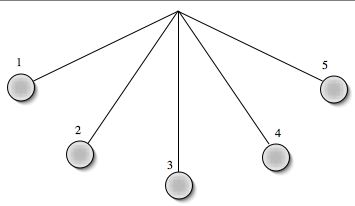
When a pendulum swings, at which point is potential energy at its greatest?
a)
1
b)
2
c)
3
d)
4
14.
At which point is potential energy greatest?
a)
W
b)
X
c)
Y
d)
Z
15.
At which point is kinetic energy greatest? 
a)
W
b)
X
c)
Y
d)
Z
16.

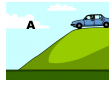
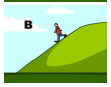
The formula for calculating the gravitational potential energy in an object is shown above. Which object will have the largest value for its GPE
a)
b)
c)
d)
17.

When figuring GRAVITATIONAL POTENTIAL energy, what matters more?

a)

speed

b)

height

c)

amount of fur

18.

Gravitational potential energy depends on the ________ and ________ of the object.

a)

Mass and height

b)

Friction and acceleration

c)

Mass and gravity

d)

Height and Friction

19.

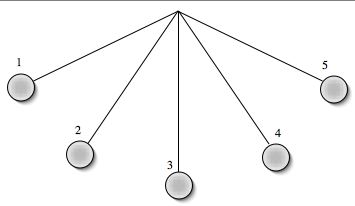
When a pendulum swings, at which point is kinetic energy the greatest?

a)

1

b)

2

c)

3

d)

when watching TV

20.

Is this a better example of Potential Energy or Kinetic Energy?

a)

Potential Energy

b)

Kinetic Energy

21.

How do you increase kinetic energy?

a)

move slower

b)

decrease mass

c)

move faster

d)

move higher

22.

How do you increase potential energy?

a)

move faster

b)

move slower

c)

move higher

d)

decrease mass

23.

Which point has the most potential energy?

a)

A

b)

B

c)

C

d)

A and C

24.

Which point has the least potential energy?

a)

A

b)

B

c)

C

d)

A and C

25.
As a boulder rolls from the top of a hill to the bottom, how does its potential and kinetic energy change?
a)
Potential and Kinetic energy both increase
b)
Potential increases and Kinetic decreases
c)
Potential decreases and Kinetic increases
d)
Potential and Kinetic energy both decrease
26.
The illustration shows a rollercoaster and indicates four different positions the car might be at as it moves along the track. At which point in the rollercoaster’s journey is its kinetic energy the greatest?
a)
W
b)
X
c)
Y
d)
Z
27.
The amount of potential energy possessed by an elevated object is equal to 
a)
the power to lift it
b)
the distance it is lifted
c)
force needed to list it
d)
work done lifting it
28.
Compressed springs and stretched rubber bands are examples.
a)
Potential Energy
b)
Stored Mechanical Energy
c)
Radiant Energy
d)
Kinetic Energy
29.
Energy stored in the bonds of atoms and molecules. 
a)
Chemical Energy
b)
Radiant Energy
c)
Stored Mechanical Energy
d)
Gravitational Energy
30.

Would would best complete this circuit?

a)

A wire

b)

A switch

c)

A battery

d)

A light bulb

31.

This circuit has a battery, buzzer, and switch.

When the switch is closed, the buzzer sounds because?

a)

the switch gives energy to the battery

b)

the buzzer is made of special plastic

c)

the wires are cooled by the surrounding air

d)

the electricity can flow in a complete path

32.

An incomplete circuit is shown.

To complete the circuit, a wire should be placed from?

a)

point D to point C

b)

point B to point C

c)

point A to point D

d)

point B to point D

33.

What is the function of a switch in a circuit?

a)

to make the current hotter or colder

b)

to turn on and off the flow of current

c)

to show the pathway that current flows

d)

to add more power to the circuit

34.

Choose the correct sentence.

a)

This circuit will work because it is an

open circuit

b)

This circuit will work because it is a

closed circuit

c)

This circuit will not work because it is an

open circuit

d)

This circuit will not work because it is a

closed circuit

35.

This is a/ an...

a)

zig zag

b)

Resistor

c)

Ammeter

d)

Battery

36.

This is a/ an...

a)

Ammeter

b)

Ampere

c)

Accelerometer

d)

Bulb

37.

This is a/ an...

a)

voltage

b)

Voltmeter

c)

Volume meter

d)

Velocity meter

38.

This is a/ an...

a)

Ampere

b)

Switch

c)

Bulb

d)

Battery

39.

This is a/ an...

a)

resistor

b)

Ammeter

c)

Voltmeter

d)

Switch

40.

This is a...

a)

Battery

b)

Lines

c)

Resistor

d)

bulb

41.
The picture shows an electrical circuit. This circuit is a series circuit because: 
a)
It has 3 light bulbs.
b)
The same current flows through all three light bulbs.
c)
It uses a single battery.
d)
The electrical current is divided between the three light bulbs.
42.
A series circuit has how many pathways for the electrons to flow?
a)
Two
b)
One
c)
Many
d)
Zero
43.
Which circuit is pictured below?
a)
Parallel
b)
Incomplete
c)
Series
44.
This is an example of a _______ circuit
a)
open
b)
series
c)
parallel
d)
square
45.
This is an example of a ______ circuit
a)
Series
b)
Parallel
c)
Open
d)
Dihexihedral
46.
What kind of circuit is this?
a)
Series
b)
Consecutive
c)
Parallel
d)
Training
47.
What kind of circuit is this?
a)
series
b)
parallel
48.
How do you calculate voltage?
a)
Current X Resistance
b)
Resistance ÷ Current
c)
Current ÷ Resistance
d)
Measure it with a ruler
49.
How do you calculate resistance?
a)
Voltage X Current
b)
Current ÷ Voltage
c)
Voltage ÷ Current
d)
Current X Amps
50.
What voltage is needed to cause a 2A current flow through a 10Ω resistor?
a)
5V
b)
0.2V
c)
20V
d)
200V
51.
What voltage is needed to cause a 50A current flow through a 10Ω resistor?
a)
15V
b)
500V
c)
500 kV
d)
0.2V
52.
What resistance is needed to cause a 50A current flow because of a 500V battery?
a)
10Ώ
b)
c)
2500Ώ
d)
550Ώ
53.
What word means how much energy is given to / removed from the electrons.
a)
Current
b)
Voltage
c)
Resistance
d)
Power
54.
What word means how hard it is for electrons to flow through.
a)
Current
b)
Voltage
c)
Resistance
d)
Power
55.
What word means how fast the electrons flow.
a)
Current
b)
Voltage
c)
Resistance
d)
Power
56.
If the battery produced 12.6 Volts and what would be the current flow be for a 6 Ohm resistor
a)
2.1 Amps
b)
2.4 Amps
c)
1.71 Amps
d)
15 Amps
57.
With the engine running the charging system produces 14.5 Volts what would the current flow be if a resistance of 6 Ohms was present
a)
2.41 Ohms
b)
2.52 Ohms
c)
2.1 Ohms
d)
0.3333 Ohms