
 Worksheets
Math
Total questions: 35
Worksheet time: 41mins
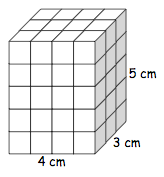

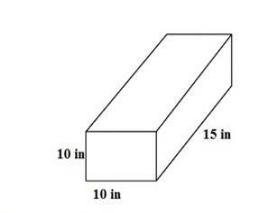
length = 9 m
height = 10 m
width = 12 m

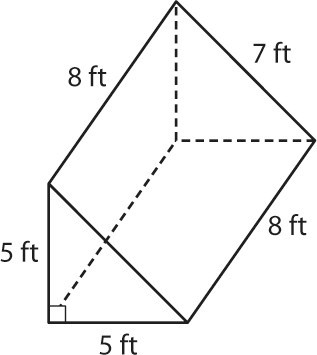

Find the total surface area of the triangular prism
92
86
106
112

Solve 4x−7(2−x) = 3 x + 2
X = 2
X = 3
X = 4
X = 6
Solve 3x – 5 = 10
X = 2
X = 5
X = 4
X = 6
Y=Mx+b
True
False

Does this make sense

Does this make sense

Does This make sense

Does this make sense

Does this make sense

Does this make sense

Does this make sense

When you stub ur toe
Yes
No
CAN THE SUBSTITUTION METHOD BE USED TO SOLVE ANY LINEAR SYSTEM IN TWO VARIABLES?
Yes, but the method works best if one of the equations contains a coefficient of 1 or –1 so that we do not have to deal with fractions.
No
Key steps to remember:
1) Get rid of any grouping symbols such as square brackets, parentheses, etc, by applying the Distributive Property of Multiplication over Addition.
2) Simplify both sides of the equation, if possible, by combining like terms.
3) Decide where you want to keep the variable because that will help you decide where to place the constant.
4) Eliminate numbers or variables by applying opposite operations: addition and subtraction are opposite operations as in the case of multiplication and division.
Ok
Ok
5x+10=3x+12
8y−3−2y=58y−3−2y=5
4(3m−2)=164(3m−2)=16
5x−10+5=20−5x5x−10+5=20−5x
Do these make sense?
(5)(4x) =
9x
20x
20
54x
(7)(x) =
7x
X
7
6
(1)(2x)=
12x
12
X
2x
(x+2)(x+6)=
x²+8x+12
x+8
x²+2x+6
8x
When functions are first introduced, you will probably have some simplistic "functions" and relations to deal with, usually being just sets of points. These won't be terribly useful or interesting functions and relations, but your text wants you to get the idea of what the domain and range of a function are. Small sets of points are generally the simplest sorts of relations, so your book starts with those.
State the domain and range of the following relation. Is the relation a function?
{(2, –3), (4, 6), (3, –1), (6, 6), (2, 3)}
The above list of points, being a relationship between certain x's and certain y's, is a relation. The domain is all the x-values, and the range is all the y-values. To give the domain and the range, I just list the values without duplication:
domain: {2, 3, 4, 6}
range: {–3, –1, 3, 6}
(It is customary to list these values in numerical order, but it is not required. Sets are called "unordered lists", so you can list the numbers in any order you feel like. Just don't duplicate: technically, repetitions are okay in sets, but most instructors would count off for this.)
While the given set does indeed represent a relation (because x's and y's are being related to each other), the set they gave me contains two points with the same x-value: (2, –3) and (2, 3). Since x = 2 gives me two possible destinations (that is, two possible y-values), then this relation is not a function.
Note that all I had to do to check whether the relation was a function was to look for duplicate x-values. If you find any duplicate x-values, then the different y-values mean that you do not have a function. Remember: For a relation to be a function, each x-value has to go to one, and only one, y-value.
Ok
Ok
Multiply out 2x(a − 3)
(a)
Multiply (7s + 2t)(7s − 2t)
(a)
Multiply (12 + 5ab)(12 − 5ab)
(a)
The quadratic equation in its standard form is ax^2 + bx + c = 0, where a, b are the coefficients, x is the variable, and c is the constant term. ... For writing a quadratic equation in standard form, the x^2 term is written first, followed by the x term, and finally, the constant term is written.
Ok
Ok

