wayground logo

Free Printable Worksheets

Font size

S
M
L
XL
Worksheets

Midterm Review - Social Studies Grade 6

Total questions: 86

Worksheet time: 1hrs 20mins

Name
Class
Date
1.

Who were the earliest humans?

a)

Hunters and Gatherers

b)

Blacksmiths

c)

Cobblers

d)

Farmers

2.

To tame wild animals and breed them for human use

a)

Agricultural Revolution

b)

Domesticate

c)

Surplus

d)

Specialization

3.
Put the following dates in order:
1.  3,200 BC – Sumerians invented Cuneifor
2. c. 8,000 BC – Agriculture was invented.
3. 100 AD
4.  4,000 BC – Plow is invented. Humans use bronze and writing
5. 6,500 BC – 5,500 BC Wheel invented
6. 2,000 BC –  Codes of Law are written
a)
1,2,3,4,5,6
b)
2,5,4,1,6,3
c)
3,4,1,2,5,6
d)
6,3,1,4,5,2
4.
study prehistoric and historic people and their cultures by studying artifacts
a)
Archaeologist
b)
Paleontologist
c)
Geographer
d)
Anthropologist
5.
study how places change and how people interacted with their environment
a)
Archaeologist
b)
Paleontologist
c)
Geographer
d)
Anthropologist
6.
Advantages people had after they discovered fire were:
a)
Hunt later at night
b)
Temper better tools
c)
Cook
d)
All the above
7.
Which is NOT a Stone Age innovation?
a)
Needle
b)
Wheel 
c)
Chisel
d)
Tractor
8.
Resources are items that are essential to life (food, water, shelter).
a)
False 
b)
True
9.
What happens to the population when a hunter gatherer community is healthy (there are enough resources for everyone) ?
a)
Increase
b)
Decrease
10.
One Way that farming changed the way people lived was____________________.
a)
They no longer were nomads
b)
Life expectancy was shorter
c)
They had to move around to new farms
11.
Record Keeping is a _________________.
a)
Way to communicate
b)
What DJ's do
c)

Requirement of a Civilization

12.
What is another word for farming?
a)
industry
b)
Paleolithic
c)
agriculture
d)
migration
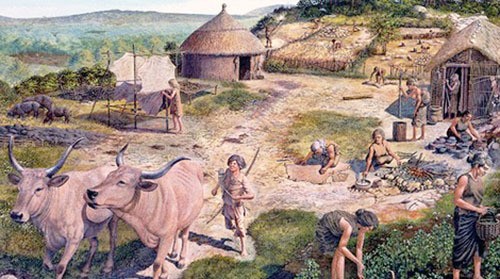
13.
Which development was a direct result of the Neolithic Revolution?
a)
Machines were used to mass- produce goods for markets
b)

a surplus of food led to more complex societies  
c)
Feudal manors provided the necessities of life.
d)
the centers of trade moved from the Mediterranean Sea to the Atlantic Ocean
14.
Which of the following is NOT a domesticated animal?
a)
cattle
b)
horses
c)
lions
d)
sheep
15.
Which of the following would NOT be a job someone might have in a Neolithic village?
a)
trader
b)
stone cutter
c)
potter
d)
car salesman
16.
Where did the first civilizations rise?
a)
On rivers
b)
Near mountains
c)
In North America
d)
Near Seas
17.
What was a major effect of the neolithic revolution?
a)
People began hunting and gathering
b)
The first permanent settlements
c)
A terrible war
d)
Human rights
18.

to have more than what is needed, desired, or required.

a)

pastoral

b)

environment

c)

agriculture

d)

surplus

19.

Where was the ancient land known as Mesopotamia?

a)

in northern Africa near the Nile River

b)

in eastern Europe along the Danuble River

c)

in central Asia between the Syr Darya and Amu Darya

d)

between the Tigris and Euphrates Rivers

20.
How did Sumerian farmers control the water supply?
a)
They built levees to prevent flooding.
b)
The dug canals to shape the paths the water took.
c)
They built reservoirs to store water for later use.
d)
All of the above.
21.
When farmers cleaned the canals, they were working for
a)
the king.
b)
their own benefit.
c)
a regular paycheck.
d)
the common good.
22.
This picture shows an area known as the..
a)
Farming Curve
b)
Fertile Crescent
c)
Green C
d)
Fertile Curve
23.
Who wrote a legal code that covered most areas of daily life?
a)
Gilgamesh
b)
Hammarabui
c)
Nineveh
d)
Sargon
24.
The Sumerian writing system was called
a)
Cuneiform
b)
Hieroglyphs
c)
English
d)
Sargon
25.
Which of the following were members of the upper class?
a)
kings and priests
b)
artisans
c)
merchants and traders
d)
scribes
26.
A Sumerian temple to honor their chief god was called a
a)
scribe.
b)
cradle.
c)
Gilgamesh.
d)
ziggurat.
27.
The few Sumerians who learned how to write often held high positions in society as what?
a)
artisans
b)
scribes
c)
heads of households
d)
merchants
28.
What was the main religion of the Sumerians?
a)
Monotheism
b)
Christianity
c)
Polytheism
d)
Judaism
29.
A city with political and economic control over the surrounding countryside
a)
City-State
b)
Country
c)
Villiage
d)
Culture
30.
Building dams, channels, canals, and ditches to bring water to crops 
a)
irrigation
b)
nomads
c)
ziggurat
d)
scribes
31.
The word "Mesopotamia" means
a)
middle of the fertile crescent
b)
land in the middle of the desert 
c)
land between the rivers
d)
land north of the sea
32.
Mesopotamians wrote on
a)
dirt
b)
rocks
c)
Paper
d)
Clay tablets
33.
The Fertile Crescent soil is...
a)
dry
b)
rich
c)
rocky
d)
unproductive
34.
Sumer is important because it was...
a)
the world's first civilization
b)
the world's largest empire
c)
where humans evolved
d)
where fishing villages first developed
35.
What is first needed for the development of a civilization?
a)
architectural knowledge
b)
food production
c)
military power
d)
mineral resources
36.
Polytheism is the belief that...
a)
spirits that control your life.
b)
the universe controls your life.
c)
there are many gods.
d)
there is a heaven.
37.
_______________ worked for the nobles and palaces. They were farmers, fisherman, and crafters.
a)
Slaves
b)
Priests
c)
Commoners
d)
Gods
38.

Where is the Indian Subcontinent located?

a)

Europe

b)

Asia

c)

North America

d)

Africa

39.

What mountain range separates the Indian Subcontinent from the rest of the continent?

a)

The Rockies

b)

The Grand Tetons

c)

The Himalayas

d)

The Sierra Madre

40.

What is a monsoon?

a)

A type of storm that causes flooding

b)

a Buddhist shrine

c)

the leader of an Indus Valley tribe

d)

a teacher

41.

Which religion has several thousand gods and believes in reincarnation?

a)

Buddhism

b)

Judaism

c)

Hinduism

d)

Christianity

42.

Siddartha Gautama was the founder of which religion?

a)

Jainism

b)

Buddhism

c)

Hinduism

d)

Islam

43.

Hindus believe the ultimate goal of existence is...

a)

for the soul to be reunited with Brahman

b)

to reach Nirvana

c)

To go to Heaven

d)

to join Odin in Valhalla

44.

A theocracy is ...

a)

a government with two or. more rulers

b)

a government with a king or queen

c)

a government where the citizens choose their leader

d)

a government where the religious leaders are also the political leaders

45.

What was the caste system?

a)

a rigid social hierarchy

b)

a method of irrigation

c)

how the leaders were chosen

d)

the set of laws that Ancient Indians followed

46.

What is the ultimate goal of existence according to Buddhists?

a)

for the soul to be reunited with Brahman

b)

To go to Heaven

c)

to reach Nirvana

d)

To join Odin in Valhalla

47.

The Maurya Empire's greatest ruler was...

a)

Asoka

b)

Nebuchadnezzar

c)

David

d)

Ramses II

48.

How did the Gupta Empire become wealthy?

a)

War

b)

Gold

c)

Salt

d)

Trade

49.

Why did Buddhism appeal to people in lower castes?

a)

Buddhism promised they could change their caste

b)

Buddhists don't believe in reincarnation so the caste system doesn't matter

c)

Buddhism rejects the caste system

d)

Buddhism didn't appeal to people in lower castes

50.

Who believe in the Four Noble Truths?

a)

Hindus

b)

Muslims

c)

Christians

d)

Buddhists

51.
The Indian language?
a)
Hieroglyphics
b)
Cuneiform
c)
Chinese
d)
Sanskrit
52.
Two large cities formed along this?
a)
Ganges River
b)
Indian Ocean
c)
Indus River
d)
India River
53.
Hired soldiers
a)
mercenaries
b)
missionaries
c)
missions
d)
mysteries
54.
People who work to spread their religious beliefs sent by Asoka?
a)
Preists
b)
Monks
c)
Missionaries
d)
Troops
55.
The effects that good or bad actions have on a person's soul?
a)
Karma
b)
Carma
c)
Beliefs
d)
Charisma
56.
The focusing of the mind on spiritual ideas?
a)
Meditation
b)
Mediation
c)
Mentioning
d)
Medical
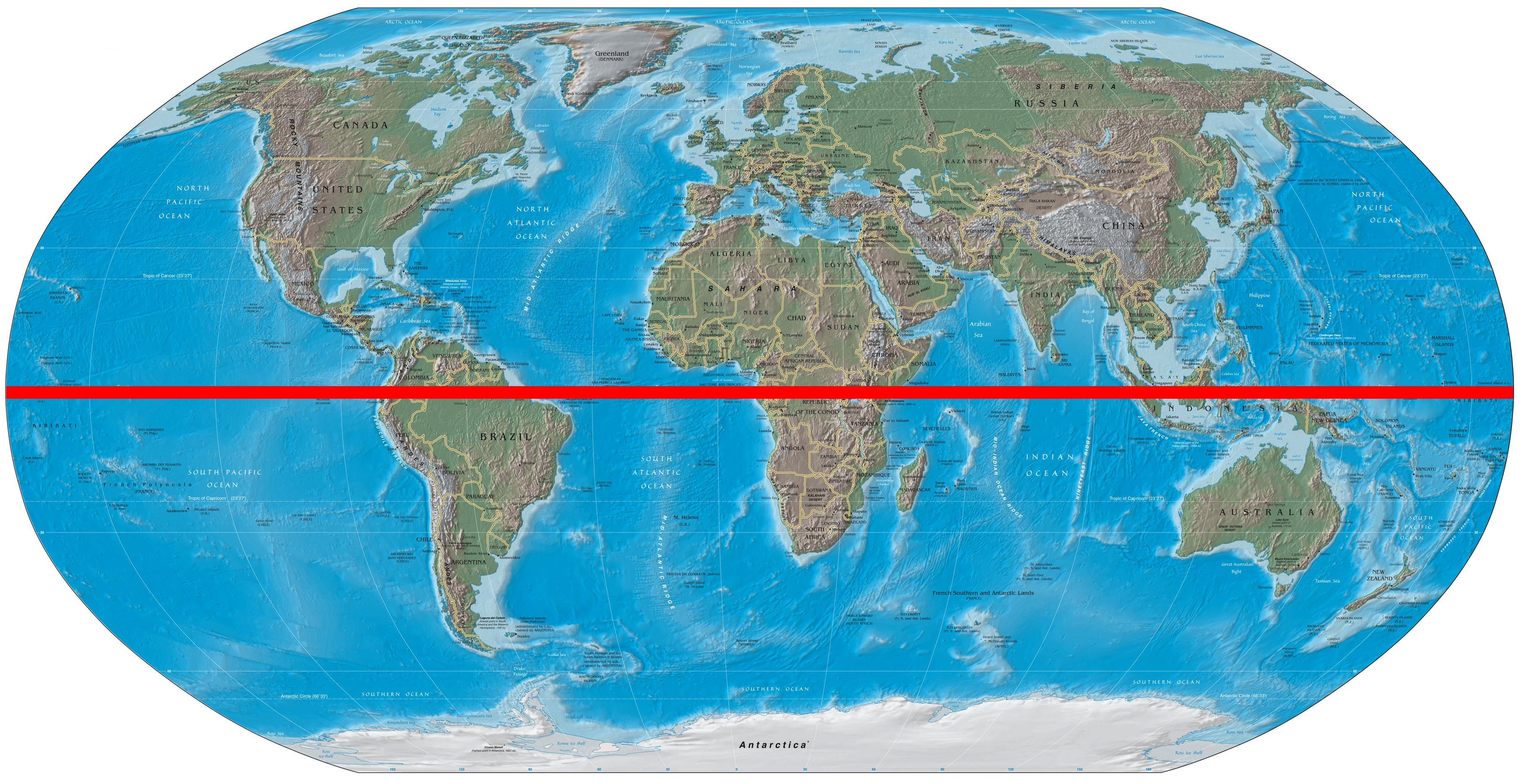
57.
What is the name of this line at 0 degrees latitude?
a)
Prime Meridian
b)
Equator
c)
North Pole
d)
South Pole
58.

What continent is pictured here?

a)

Asia

b)

Australia

c)

North America

d)

Africa

59.

What continent is pictured here?

a)

South America

b)

North America

c)

Asia

d)

Antarctica

60.

What continent is pictured here?

a)

Europe

b)

South America

c)

Africa

d)

Asia

61.

What continent is pictured here?

a)

South America

b)

North America

c)

Europe

d)

Australia

62.

What continent is pictured here?

a)

North America

b)

South America

c)

Asia

d)

Europe

63.

How many continents are there?

a)

7

b)

5

c)

12

d)

9

64.

How many oceans are there?

a)

7

b)

5

c)

4

d)

12

65.
What are the physical and human features of a location?
a)
perception
b)
place
c)
perspective
d)
landscapes
66.

Using the idea of PLACE, why would a person living in a thick forest most likely live in a home made out of wood?

a)

There are a lot of trees and lumber to build his/her home

b)

Amazon Prime delivers wood houses in two days

c)

Homes made out of bricks would be too expensive

d)

Homes made out of fish would be too smelly

67.

China is on which continent?

a)

Asia

b)

Africa

c)

North America

d)

Europe

68.

China's civilization developed between which two rivers?

a)

Yin and Yang

b)

Chang Jiang and Yangtze

c)

Shang and Zhou

d)

Huang He (Yellow River) and Yangtze (Long River)

69.
Line of rulers from the same family is a 
a)
cultural diffusion
b)

dynasty

70.
Chinese philosophy developed by Hanfeizi; taught that humans are naturally evil and therefore need to be ruled by harsh laws
a)
Confucianism
b)
Daoism
c)
Legalism
d)
Mandate of Heaven
71.
Which one of these achievements was Shi Huangdi responsible for?
a)
Standardized writing, measurement and currency
b)
Built the Great Pyramids
c)
Founded Islam
d)
Founded Christianity
72.
Why did Qin Shi huangdi build the Great Wall of China?
a)
For shelter
b)
For protection from invaders from the north
c)
For decoration
d)
For fun
73.

Which of the following was meant to protact Shi Huangdo in death?

a)

the Great Wall of China

b)

Confucian scholars

c)

an army of terra cotta warriors

d)

canals and irrigation systems

74.
Trade route that stretched from western China to southern Asia
a)
filial piety
b)
Silk Road
c)
Great Wall
d)
Anyang
75.
Ancient China was surrounded by desert, mountains and ocean. What impact did these natural borders have on the culture? 
a)
They helped to integrate the cultures of other world civilizations.
b)
They caused China to constantly be at war with other world civilizations.
c)
They helped China to establish trade with other civilizations.
d)
They isolated the Chinese civilization allowing it to develop independently. 
76.
In Ancient China, who was the center of authority in the family?
a)
The oldest female
b)
The oldest male
c)
The first born female
d)
The first born male
77.
The rivers' floods deposited fertile 
a)
sand
b)
gold
c)
kilt
d)
silt
78.
For what emperor was the Terra Cotta Warriors made for?
a)
Confucius
b)
Lao-Tzu
c)
Hammurabi
d)
Qin Shi Huangdi
79.

Cultural diffusion is best described as...

a)

sharing music from one culture to another

b)

the spreading of ideas, languages, and traditions fromone culture to another

c)

the spreading of religion

80.

Which of the following is NOT a part of culture?

a)

History

b)

Weather

c)

Language

81.

What statement is an example of cultural diffusion?

a)

Venezuela has large reserves of oil

b)

students in China learn Chinese in school

c)

young people dance to American rock music in Japan

82.

An item from the past is called_____________.

a)

Primary source

b)

Artifact

c)

Secondary source

d)

Oral tradition

83.

Oral tradition is

a)

Spreading history through pictures

b)

The tradition of brushing your teeth three times a day.

c)

Telling your friends about your day

d)

Spreading history through word of mouth.

84.

Materials that were created during the time of study are

a)

Tertiary sources

b)

Secondary sources

c)

Primary sources

d)

Historical sources

85.

Records of the past that are made up of or based on primary sources are called

a)

Historical sources

b)

Secondary sources

c)

Primary sources

d)

Record sources

86.

A _____ is something that gives us information we need.

a)

source

b)

state

c)

ship