wayground logo

Free Printable Worksheets

Font size

S
M
L
XL
Worksheets

World Hitstory EOY Test Review 2024

Total questions: 87

Worksheet time: 2hrs 15mins

Name
Class
Date
1.
A map showing mountains, rivers, oceans, elevation is what type of map?
a)

Political

b)

Physical

c)

Thematic

2.
A map showing boundaries of countries is what type of map?
a)

Political

b)

Physical

c)

Thematic

3.
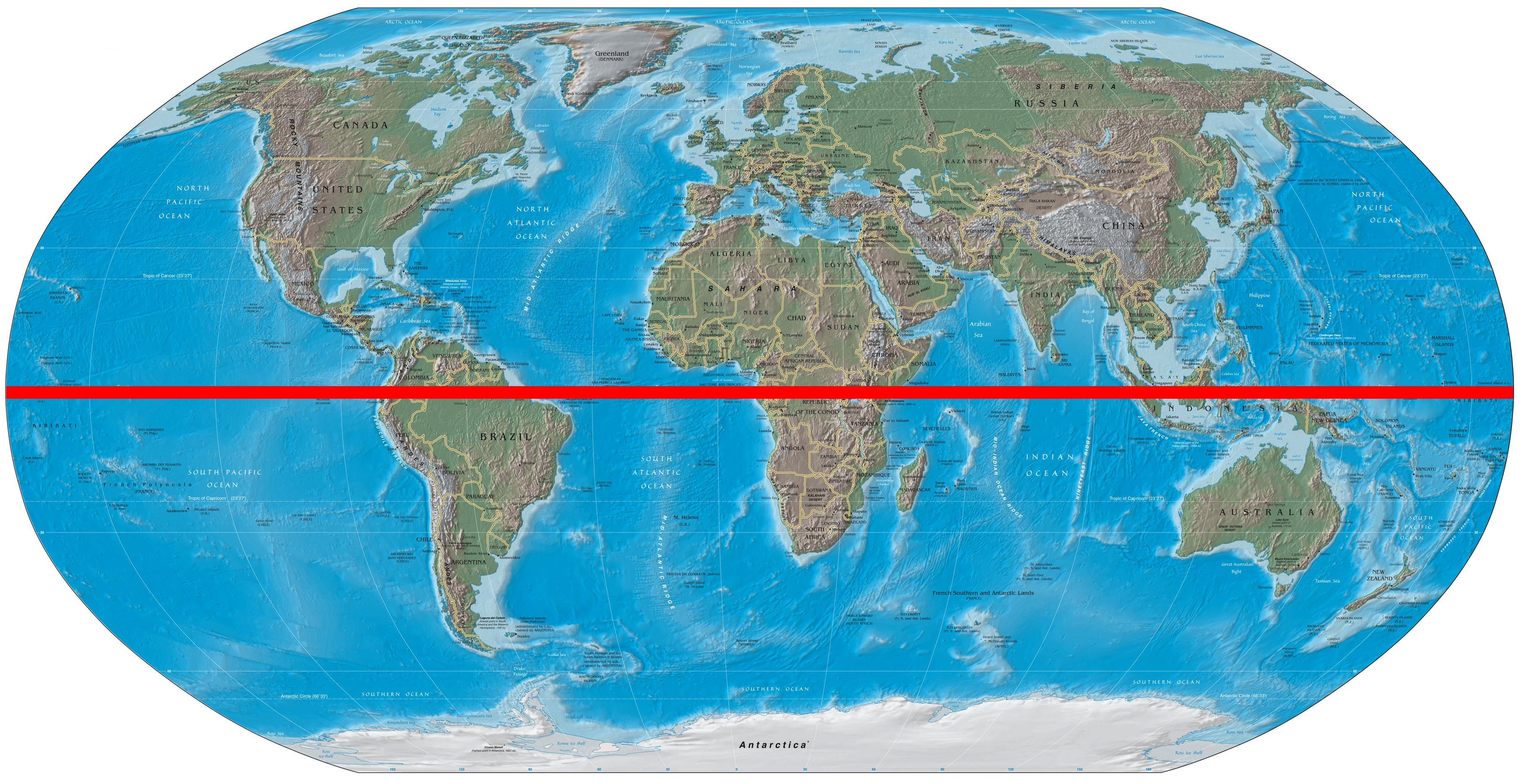
What is the name of this line at 0 degrees latitude?
a)
Prime Meridian
b)
Equator
c)
North Pole
d)
South Pole
4.

What are latitude and longitude lines?

a)

Imaginary lines that divide the Earth

b)

Visible lines that divide the Earth

c)

Long and short lines that divide the Earth

5.
Latitude lines go from east to west.
a)
True
b)
False
6.
The 0 degree mark of longitude is known as the ___________ ______________ measure from Greenwich England.
a)
Equator
b)
Prime Meridian
c)
International Date Line
d)
Contour Line
7.
What are the four MAIN directions on the Compass Rose?
a)
North, South, East, and West
b)
Northeast, Southeast, Northwest, Southwest
8.

The Declaration of Independence is a
Primary Source - True or False?

a)

True

b)

False

9.

A source created about an event or time-period by someone who was there

a)

Primary

b)

Secondary

10.
What type of source is this? An original photograph from the 1941 attack at Pearl Harbor that you found in your grandparents photo album
a)

Primary

b)

Secondary

11.

Why is it important to use primary sources in research?

a)

To add bias and subjectivity to research.

b)

To rely on secondary sources for information.

c)

To save time and effort in research.

d)

To ensure accuracy and reliability in research.

12.

What does an archeologist do?

a)

Study fossils and remains of living organisms

b)

Explain what animal a fossil came from

c)

Put fossils together for museums

d)

Study artifacts as a way of understanding how people lived in the past

13.

This person studies fossils

(a)  

14.
The way of life of a group of people that includes daily life, beliefs, customs, art, language technology and values.
a)
Culture
b)
Ethnocentrism
c)
Mascot
d)
Indian Boarding School
e)
Spearfishing Controversy
15.
Which best describes the nomadic lifestyle of the Paleolithic people? 
a)
They lived in large villages, where they raised crops and livestock.
b)
They migrated, or moved, from place to place
c)
They stayed in one place, living in caves and beneath rock shelters.
d)
They lived in small villages and farmed the land. 
16.
Which statement best describes hunters and gatherers?
a)
They followed animal herds and gathered fruits, berries, etc along the way.
b)
The tools they made from metal helped them to survive.
c)
They domesticated animals to help with daily activities. 
d)
They developed ways to bring water to their crops. 
17.
What is the greatest change between the Paleolithic and Neolithic cultures? 
a)
the shelters people used
b)
the way people got food for themselves
c)
the tools people used
d)
the clothes people wore 
18.
Which statement best describes the Neolithic people? 
a)
They lived in caves or built simple shelters.
b)
They migrated from place to place to hunt animals for food.
c)
They could settle in one place because they had a reliable food supply. 
d)
They used simple tools made from stone.
19.
Which statement best explains the greatest effect the emergence of agriculture had on early societies?
a)
The population steadily decreased.
b)
People were not able to specialize in just one trade. 
c)
Agriculture made it harder to find food. 
d)
The population steadily increased. 
20.
Which statement is true?
a)
During the Neolithic Era people migrated from place to place. 
b)
During the Paleolithic Era people migrated from place to place. 
c)
During the Neolithic Era people developed language.
d)
During the Paleolithic Era people used animals to help with farming. 
21.
How did the start of farming change early human tribes? 
a)
It forced them to stay in one place and build villages and cities.
b)
It caused them to continue to hunt animals and gather plants. 
c)
It ended fighting between the tribes for land.
d)
It stopped them from building temples for their gods.
22.

What event began the Neolithic Age?

a)

The use of writing

b)

Farming and permanent settlements

c)

Spoken language

d)

Domesticating dogs

23.

Why was fire important?

a)

It cooks meat and makes digestion easier

b)

It makes light

c)

Protection from animals

d)

Provides warmth

e)

All of the above

24.
A complex society that has cities, governments, art, religion, and writing.
a)
euphrates
b)
civilization
c)
mesopotamia
d)
empire
25.
What does the word "Mesopotamia" mean in the Greek language?
a)
first civilization
b)
new stone age
c)
people from the south
d)
land between the rivers
26.
What was the written language of Mesopotamia called?
a)
ziggurat
b)
scribe
c)
hieroglyphics
d)
cuneiform
27.
The Sumerians believed in many gods. This is called...
a)
monotheism
b)
polygods
c)
polytheism
d)
crazy!
28.
Name the civilization: 
- Nile River
- Hieroglyphics
- Pyramids
a)
Egypt
b)
Mesopotamia/
Sumer
c)
India
d)
China
29.
Name the civilization: 
- Tigris and Euphrates
- Cuneiform
- City-States
a)
Egypt
b)
Mesopotamia/
Sumer
c)
India
d)
China
30.
Name the civilization: 
- Huang He (Yellow) River
- Calligraphy writing
- Paper and Silk
a)
Egypt
b)
Mesopotamia/
Sumer
c)
India
d)
China
31.
Most early religious traditions can be categorized as -
a)
Monotheistic
b)
Polytheistic
c)
Atheistic
d)
Agnostic
32.

The ancient civilizations of Mesopotamia and Egypt were similar in that both cultures

a)

established trade routes to China

b)

used the ziggurat form for their temples

c)

developed along rivers

d)

used a hieroglyphic writing system

33.
What made Hammurabi famous?
a)
He was a powerful king who built an empire.
b)
He had some harsh laws.
c)
He conquered and enslaved the Jewish people.
d)
He created the first written laws.
34.

The Neolithic Revolution occurred when people discovered how to -

a)

grow food and domesticate animals

b)

trade with others in the same river valley

c)

fight wars using metal weapons

d)

make stone temples for religious ceremonies

35.

True or False: Early humans settled far away from rivers.

a)

True

b)

False

36.
What were pyramids?
a)

a place to store food surplus

b)
prisons
c)
tombs for pharaohs
d)
tombs for nobles
37.
What is Egyptian writing called?
a)
cuneiform
b)
hieroglyphic
c)
characters
d)
Sanskrit
38.
Who was at the top of the Egyptian social order?
a)
slaves
b)
pharaoh
c)
priests
d)
scribes
39.
Pyramids are built to 
a)
for worshipping the Gods
b)
to look strong and cool to other nations
c)
be a tomb for the Pharaoh
d)
to give farmers jobs when not farming
40.
What is a dynasty?
a)
a collection of queens
b)
a collection of kingdoms
c)
series of rulers from different families
d)
series of rulers from the same family
41.
What is the famous river in Egypt?
a)
Tigris
b)
Euphrates
c)
Nile
d)
Hudson
42.

How did the Nile River benefit Egyptians? (select all that apply)

a)

fresh drinking water

b)

floods destroyed homes and crops

c)

floods provided silt

d)

papyrus grew near the river

e)

a waterway for transportation

43.
Why do Pharaos get mummified?
a)
So their body doesn't decay
b)

So they can be put on display

c)

Because they wanted to be like Otzi

d)
To prepare them for the afterlife
44.

The process of preserving a body using salts and spices

a)

maranade

b)

soaking

c)

embalming

d)

papyrus

45.
One of the most powerful Greek City-States and birthplace of Democracy.
a)
Athens 
b)
Sparta 
c)
Thebes 
d)
Corinth 
46.
Which of the following are citizens in Ancient Athens? 
a)
Women 
b)
Slaves 
c)
Foreigners 
d)
Free Men 
47.
What is a form of government in which all citizens get a vote?
a)
Democracy
b)
Assembly
c)
Oligarchy
d)
Tyranny
48.

Why were people angry at Socrates?

a)

Because he was a bad teacher.

b)

Because he was a good teacher.

c)

Because sometimes he made people realize they did not know as much as they thought.

49.

Choose all items that describe SOCRATES:

a)

asked questions

b)

wrote many books

c)

Believed in obeying the law

d)

believed debating was important

e)

strongly believed the Greek gods and goddesses were real

50.

Philosophy's etymological definition

a)

Love for wisdom

b)

Scientific Knowledge

c)

Knowledge about reality

d)

Wisdom and Lovers

51.
Sparta is a Greek city- state recognized for its military strength.
a)
True
b)
False
52.

Society valued military strength over education

a)

Athens

b)

Sparta

53.

Which city-state had a Democracy where citizens voted?

a)

Sparta

b)

Athens

c)

Both

d)

Neither

54.

Which city-state believed in a well-rounded education (reading, writing, singing, fighting, etc)?

a)

Sparta

b)

Athens

c)

Both

d)

Neither

55.

In which city-state did women have more rights?

a)

Sparta

b)

Athens

c)

Both

d)

Neither

56.

Who would say: "Strict discipline makes for better soldiers."

a)

Athens

b)

Sparta

57.

Who would say: "Reading, writing, and arithmetic are the most valuable things to learn."

a)

Athens

b)

Sparta

58.

A wealthy, upperclass person in the Ancient Roman Republic

a)

patrician

b)

plebian

c)

counsul

d)

dictator

59.
An ordinary citizen in the ancient Roman Republic
a)
patrician
b)
plebian
c)
counsul
d)
mercenary
60.
A person elected to rule the Roman Republic for a short period in time of emergency
a)
emperor
b)
king
c)
counsul
d)
dictator
61.
Why did the Romans create the republic?
a)
So they would not have a king in control.
b)
To defend themselves.
c)
So that every person could be a citizen.
d)
So that judges could make laws.
62.
A series of conflicts between Rome and Carthage, Rome wins and expands its territory
a)
Pax Romana
b)
Peloponnesian War
c)
Persian War
d)
Punic War
63.
Which of the following statements most accurately describes the reasons that the plebeians demanded reforms in the republican government?
a)
Plebeians could take no part in the Roman government.
b)
They were slaves with no rights at all.
c)
The patricians couldn’t hold public office.
d)
The patricians shared wealth with only a few upper class plebeians.
64.

Who became the first and one of the greatest Roman Emperors?

a)

Augustus Caesar

b)

Xerxes

c)

King Darius

d)

Romana Caesar

65.

What was significant about the Punic Wars?

a)

It allowed Carthage to take control of the Mediterranean.

b)

It allowed Carthage to take control of Sicily.

c)

It allowed the Romans to take control of the Mediterranean.

d)

The Romans were able to take back control of Greece.

66.

A republic is a government where...

a)

one person is ion charge

b)

citizens elect representatives who serve in the assembly.

c)

a king and queen rule

d)

citizens vote directly for on the laws.

67.

Which major river supports life in India?

a)

Indus

b)

Tigris

c)

Nile

d)

Yangtze

68.

Refers to any one of the social groups on the Caste System.

a)

Karma

b)

Harappa

c)

Varna

d)

Atman

69.

A worldwide religion that has many gods and teaches that people have another life on earth after they die.

a)

Hinduism

b)

Meditation

c)

Siddhartha Gautama

d)

Subcontinent

70.

A social system determined by birth.

a)

Monsoon

b)

Meditation

c)

Nirvana

d)

Caste System

71.

All the actions (good or bad) in this life that affect your next life.

a)

Varna

b)

Karma

c)

Buddhism

d)

Nirvana

72.

A person's duties or responsibilities

a)

Dharma

b)

Reincarnation

c)

Meditation

d)

Subcontinent

73.

A religion centered around the teachings of the Buddha.

a)

Subcontinent

b)

Varna

c)

Meditation

d)

Buddhism

74.

A prince who discovered enlightenment and became known as the Buddha or the “Enlightened One.”

a)

Hinduism

b)

Siddhartha Gautama

c)

Nirvana

d)

Atman

75.

Major world religions that began in Ancient India.

a)

Judaism and Christianity

b)

Islam and Christianity

c)

Hinduism and Buddhism

d)

Judaism and Zoroastrianism

76.

In Buddhism, the Eightfold Path refers to

a)

the basic rules of behavior and belief leading to an end of suffering

b)

a place of worship

c)

the focusing of the mind on spiritual ideas

d)

the idea or belief that people are born again with a different body after death

77.

Buddha means

a)

The four main ideas of Buddhism

b)

Basic rules Buddhists should follow

c)

Holy texts of Buddhism

d)

"enlightened one". Siddhartha Gautama is the most famous Buddha but there have been others.

78.

The founder of Buddhism

a)

Siddharta Gautama

b)

Abraham

c)

Mohammed

d)

Jesus

79.

What happened when Siddhartha left his palace at the age of 29?

a)

He came back after a week of fun travels

b)

He was recognized and celebrated everywhere he went

c)

He never saw the outside of his palace

d)

He saw pain and suffering for the first time

80.

What question did Siddhartha have about life?

a)

What is the cause of the world's suffering?

b)

What is the meaning of life?

c)

What should I be when I grow up?

d)

Why do people practice different religions?

81.

Siddhartha's revelation led him to what are known as...

a)

The Four Noble Truths

b)

The Answers We Seek

c)

The Guidelines for Life

d)

The 12 Tables

82.
According to Buddha's teaching why do people suffer? 
a)
People suffer because they desire worldly things and self-satisfaction. 
b)
People suffer because they are mean. 
c)
People suffer because they don't go to school. 
d)
People suffer because they want to. 
83.

What impact did the Silk Road have on China?

a)

In enable the Han to expand Chinese territory.

b)

It allowed the Chinese to learn the process of making silk.

c)

It brought new ideas such as Buddhism into China.

d)

It made travel easier between northern and southern China.

84.

The right of a Chinese Dynasty to rule with the blessings of the gods is called...?

a)

The Mandate of Heaven

b)

The Dynastic Cycle

c)

The Heavenly Commandments

d)

The Oracle Bones

85.

How did geography affect the development of Chinese culture?

a)

Long coastlines made access to trade possible.

b)

Flat land made travel easy.

c)

Great Wall of China made travel along the top easier for traders.

d)

Tall mountains and deserts isolated China from other nations.

86.
A system of beliefs and values
a)
psychology
b)
physiology
c)
sociology
d)
philosophy
87.

Paper making, gunpowder, printing/wooden press, and magnetic compass are Ancient __________ Four Great inventions.

a)

Egypt

b)

China

c)

Greece

d)

India