wayground logo

Free Printable Worksheets

Font size

S
M
L
XL
Worksheets

Types of Chemical Reactions and Counting Atoms

Total questions: 47

Worksheet time: 28mins

Name
Class
Date
1.
Combining substances to form a new substance
a)
Displacement
b)
Synthesis
c)
Decomposition
d)
Oxidation
2.
Breaking down a substance into simpler substances
a)
Displacement
b)
Synthesis
c)
Decomposition
d)
Oxidation
3.
Switching one substance for another
a)
Displacement
b)
Synthesis
c)
Decomposition
d)
Oxidation
4.
What type of reaction is the equation C + O→ CO2?
a)
Synthesis Reaction
b)
Decomposition Reaction
c)
Single Displacement Reaction
d)
Double Displacement Reaction
5.
What type of reaction is the equation 2NaCl →2Na +Cl2?
a)
Synthesis Reaction
b)
Decomposition Reaction
c)
Single Displacement Reaction
d)
Double Displacement Reaction
6.
Cu + 2Ag(NO3) → 2Ag + Cu(NO3)
a)
Synthesis Reaction
b)
Decomposition Reaction
c)
Single Displacement Reaction
d)
Double Displacement Reaction
7.
Ca3(PO4)2 + 3 H2SO4 + 3 CaSO4 + 2 H3(PO4)
a)
Synthesis Reaction
b)
Decomposition Reaction
c)
Single Displacement Reaction
d)
Double Displacement Reaction
8.
Consider the chemical equation CH4 + 2 O2 → CO2 + 2 H2O. In this equation, CH4 is a
a)
product
b)
reactant
c)
displacement
9.
Consider the equation 4 Fe+3 O2 → 2 Fe2O3 . In this equation, 3 O2 is a
a)
product
b)
reactant
c)
compound
10.
Photosynthesis is a chemical reaction that involves the production of glucose (sugar) from carbon dioxide and water in the presence of sunlight. Photosynthesis is what kind of reaction?
a)
Exothermic
b)
Endothermic
c)
Decomposition
11.
During an endothermic reaction, what happens to energy in relation to the surroundings?
a)
released to
b)
absorbed from
c)
 mixed with
12.
During an exothermic reaction, what happens to energy in relation to the surroundings?
a)
released to
b)
absorbed from
c)
 mixed with
13.
In a cold pack, which type of reaction draws heat from the surroundings?
a)
exothermic
b)
endothermic
c)
exergonic
14.
Which generalized equation represents a synthesis reaction?
a)
A + BC → AC+ B
b)
A + B → AB
c)
AB → A + B
15.
Which generalized equation represents a decomposition reaction?
a)
A + BC → AC+ B
b)
A + B → AB
c)
AB → A + B
16.
Which generalized equation represents a single displacement reaction?
a)
A + BC → AC+ B
b)
A + B → AB
c)
AB → A + B
17.
One element replaces another in a compound.
a)
Synthesis
b)
Combustion
c)
Single Replacement
d)
Double Replacement
18.
This pictures simulates what type of reaction?
a)
Synthesis
b)
Decomposition
c)
Single Replacement
d)
Double Replacement
19.
Si + S8 --> Si2S4
a)
Synthesis (combination)
b)
Decomposition
c)
Single replacement
d)
Double replacement
20.
Pb(NO3)2 --> PbO + NO2 + O2
a)
Synthesis (combination)
b)
Decomposition
c)
Single replacement
d)
Combustion
21.
What is the left part of a chemical equation called?
H2 + O → H2O
a)
Reactants
b)
Products 
c)
Yields 
d)
Chemical Equation 
22.

Combustion reactions will always involve

a)

Oxygen and a solid

b)

Liquid nitrogen and heat

c)

Oxygen and heat/energy

d)

CO and H2O

23.

How many atoms of Hydrogen are in H2O

a)

1

b)

2

c)

3

d)

more than 3

24.

How many different elements are present in H2COCH2

a)

5

b)

4

c)

3

d)

2

25.

Calculate the number of Oxygen atoms in Al(OH)3

a)

1

b)

2

c)

3

d)

4

26.

The ______ are numbers found on the lower right-hand side of an element symbol.

a)

Coefficient

b)

Exponent

c)

Multiplier

d)

Subscript

27.

Coefficients in chemical formulas...

a)

Multiply just the first atom

b)

Add to the subscripts at the end of the molecule

c)

Multiply elements without subscripts

d)

Multiply EVERYTHING!

28.

4CF2Cl2

a)

C = 4, F = 4, Cl = 2

b)

C = 1, F = 8, Cl = 8

c)

C = 4, F = 8, Cl = 8

d)

C = 1, F = 4, Cl = 8

29.

C3H5(NO3)3

a)

C = 3, H = 5, N = 3, O = 9

b)

C = 3, H = 5, N = 1, O = 9

c)

C = 9, H = 15, N = 3, O = 9

d)

C = 9, H = 15, N = 1, O = 3

30.

H2SO4

a)

H = 2, S = 4, O = 4

b)

H = 2, S = 1, O = 4

c)

H = 8, S = 4, O = 4

d)

H = 2, SO = 4

31.

How many different elements are present in this molecule?

3 NH4C2H3O2

a)

15

b)

36

c)

5

d)

4

32.

A ______ is a number written in front of a chemical formula.

a)

Coefficient

b)

Subscript

c)

Exponent

d)

Coordinator

33.

How many Hydrogen atoms are in 4H2O?

a)

6

b)

8

c)

2

d)

4

34.

How many Oxygen atoms are in H2O?

a)

1

b)

2

c)

0

d)

4

35.

How many Magnesium atoms are in 10MgCl2?

a)

10

b)

5

c)

20

36.
How many elements are in C6H12O6?
a)
1
b)
2
c)
3
d)
4
37.

How many atoms are there TOTAL in H2SO4 ?

a)

6

b)

5

c)

7

d)

3

38.

How many Sodium atoms are in 6NaCl?

a)

1

b)

12

c)

6

39.

How many Nitrogen atoms are in (NH₄)₂CrO₄?

a)

1

b)

2

c)

8

d)

16

40.

What is C2H8O ?

a)

Element

b)

Letters

c)

Numbers

d)

Compound

41.

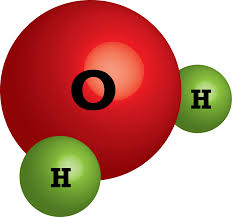
How many atoms of Hydrogen are in this compound?

a)

1

b)

2

c)

3

d)

4

42.

A subscript is the small number below the element symbol that tells the number of _______ of that element.

a)

atoms

b)

valence electrons

c)

protons

d)

elements

43.
Which of the following is a compound?
a)
Co
b)
O2
c)
C
d)
CO2
44.

How many Nitrogen atoms are in the in H2C3O4N5?

a)

2

b)

3

c)

4

d)

5

45.

How many atoms are present if there is no subscript following the element symbol?

a)

0

b)

2

c)

only 1

d)

1 million

46.

Are there any compounds on the periodic table?

a)

yes there are many

b)

no because only elements are on the periodic table

c)

I think they are?

d)

there is no way to tell

47.
How many atoms of Oxygen are in Fe(NO3)3 ?
a)
6
b)
3
c)
9
d)
1