
 Worksheets
Unit 5/5b Review
Total questions: 47
Worksheet time: 52mins
The chemical bond between a non-metal and another non-metal will be a ________ bond.
Metal
Covalent
Ionic
The chemical bond between a metal and a non-metal will be a _____ bond.
Metal
Ionic
Covalent
Beryllium and sulfur will form a ______ bond
Ionic
Covalent
Metalloid
Sodium and Bromine will make a _____ bond.
Ionic
Covalent
Metallic
Carbon and Oxygen will make a ___________ bond.
Ionic
Covalent
Metallic
If two fluorine atoms bond they will make a _____ bond.
Ionic
Covalent
Metallic
Ionic compounds are formed when one or more valence electrons are transferred from _____
a nonmetal atom to a metal atom
a metal atom to a nonmetal atom
a nonmetal atom to a nonmetal atom
a metal atom to a metal atom
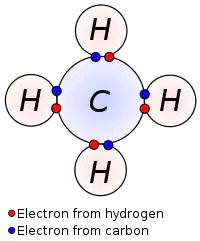
What kind of bond(s) are shown?
Ionic
Covalent
Metallic
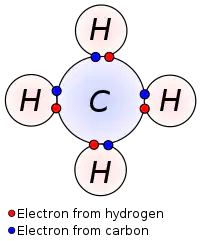
How many shared pairs of electrons are shown?
1
2
4
5
True or false: An atom becomes a positive ion when it gains an electron.
True
False. It becomes a neutral ion!
False. It becomes a negative ion!
Table Salt (NaCl) creates crystals. What type of bond is present in this compound?
Covalent
Ionic
Moleculuar
Metallic
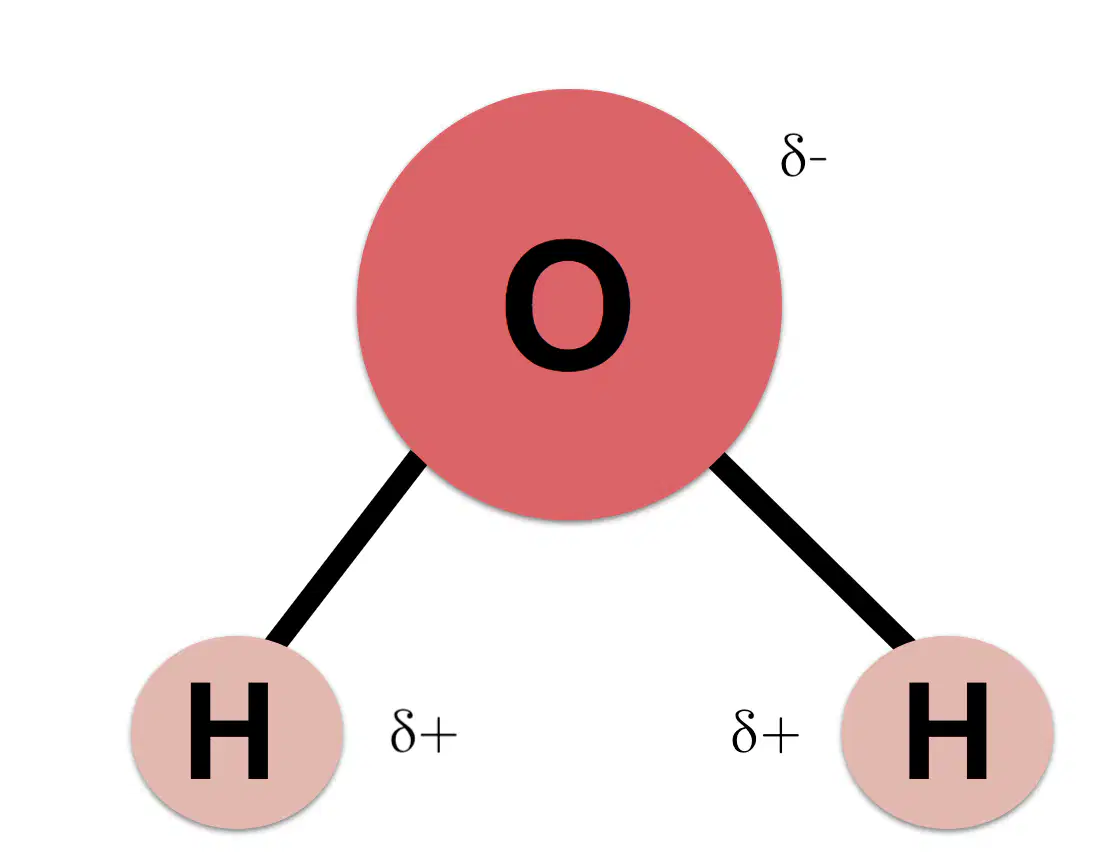
What do the lines in this water molecule represent?
A chemical bond
Sharing of electrons
A mixture
Which type of bonds will conduct electricity?
Ionic
Covalent
Molecular
Metallic
Chlorine gains 1 electron to complete the outermost energy level. What is it's charge?
1+
2+
-1
-2
If an aluminum atoms loses its three valence electrons, its charge becomes____________________.
3+
0
-3
8
Why do atoms bond?
They typically don't bond
To add or take away energy levels
To have a full inner shell
To have a full valence shell.
What is the number of valence electrons for Carbon (Group 14)?
1
2
4
5
Which sub-atomic particle is involved in chemical bonding?
Protons
Electrons
Neutrons
Valence electrons

What is the valence / oxidation number for barium (Ba)?
+1
-1
+2
-2
What is the correct formula for the compound, lithium oxide?
LiO
LiO2
Li2O
Li2O2
Name the following ionic compound: MgSO4
magnesium sulfoxide
magnesium sulfate
magnesium sulfide
magnesium oxide
The chemical compound for sodium phosphate would be:
Na3PO4
NaPO4
Na2PO4
Na(PO4)3
When bonded together, the chemical formula for Mg2+ and Cl- will be...
Mg2Cl
Mg2Cl2
MgCl2
MgCl
When bonded together, the chemical formula for Li+1 and P3- will be...
Li3P
LiP
LiP3
Li2P
What does the Law of Conservation of Mass state?
Matter cannot be gained or lost in a chemical reaction.
Matter can only be gained in a chemical reaction.
Matter can only be lost in a chemical reaction.
Matter can be gained and lost in a chemical reaction.
What is the left part of a chemical equation called? 2H2 + O2 --> 2H2O
Reactants
Products
Yield
What is the right part of a chemical equation called...
2H2 + O2 --> 2H2O
Reactants
Products
Yield arrow
What is the number before a chemical formula called?
Ex: 2H2 + O2 --> 2H2O
Coefficient
Atom
Subscript
Equation
Is the following chemical equation balanced?
Al + O2 --> 2Al2O3
Yes
No
How many different elements are in C6H12O6?
1
2
3
4
How many oxygen atoms are in Al2(SO4)3?
4
10
8
12
Which of the following is the correct name for the chemical formula Li2S?
Lithium sulfate
lithium sulfite
lithium sulfide
lithium hyposulfite
What is the formula for Sodium Oxide?
NaO
Na2O
ONa
NaO2
What coefficient should be used to make the following equation balanced?
N2+O2--> _NO
1
3
2
4
How many HCl molecules do you need to balance this equation?
Mg + __HCl ---> MgCl2 + H2
1
3
2
4
Identify the product(s) in the following chemical reaction:
Chromium oxide + Carbon → Chromium + Carbon monoxide
Chromium and carbon.
Chromium and carbon dioxide.
Chromium oxide and carbon
Chromium and carbon monoxide
According to The Law of Conservation of Mass, how does the total mass of the products compare to the total mass of the reactants?
They must be equal
The mass of the reactants must be greater than the mass of the products
The mass of the products must be greater than the mass of the reactants
What do exothermic reactions do?
Absorb energy
Release color
Release energy
Absorb color
A substance that increases speed of chemical reaction without being being changed is called:
Catalyst
Acid
Base
Pressure
Grinding a tablet into powder increases the rate of reaction due to increased...
Concentration
Temperature
Surface area
Reactant
If a chemical reaction is exothermic, the temperature would....
Stay the same
Decrease
Increase
Increasing the temperature of the reactants can do which of the following?
Slow number of collisions thus increasing reaction rate
Cause particles to lose speed thus decreasing reaction rate
Increase collisions between the particles thus increasing the rate
What do endothermic reactions do?
Absorb heat energy, making the surroundings cooler
Absorb heat energy, making the surroundings warmer
Release heat energy, making the surroundings cooler
Release heat energy, making the surroundings warmer
Which of the following would INCREASE reaction rate?
the particle size of the reactants is larger
concentration of the reactants is increased
temperature is decreased
the reaction is not stirred

Is this reaction exothermic or endothermic? Why?
Exothermic, because it's creating/releasing heat energy
Endothermic, because it's creating/releasing heat energy
Exothermic, because it's absorbing heat energy
Endothermic, because it's absorbing heat energy
What type of chemical reaction is shown below?
K2S + MgCl2 −−> 2KCl +MgS
Single replacement
Double replacement
Synthesis
Decomposition
What type of chemical reaction is shown below?
2Fe + 3Cl2 −−−> 2FeCl3
Single replacement
Double replacement
Synthesis
Decomposition

