
 Worksheets
Chemistry Part 1
Total questions: 45
Worksheet time: 42mins


Rows on the periodic table are called...
groups
periods
families
shells

Columns on the periodic table are called...
periods
groups or families
valence
energy levels

The groups/families on the periodic table correspond to the number of ________ in an atom.
valence electrons
energy levels
protons
neutrons
Rows on the periodic table correspond to the number of ________ in an atom.
neutrons
protons
electrons
energy levels

How many valence electrons does a nitrogen atom have?
3
7
5
1

Which element has 2 valence electrons?
H
Ca
Na
C

Which group has elements with a full valence shell?
Group 1
Group 2
Group 15
Group 18


How many valence electrons are in a sodium atom?
1
2
8
11

How many TOTAL subatomic particles are in an atom of Boron?
5
11
16
22
What part of the atom determines the chemical properties or reactivity?
Protons
Electrons
Valence Electrons
Energy levels
All atoms are most stable with (or would "prefer") how many electrons in their valence shell?
1
2
8
18

What groups are the most reactive METALS?
2 and 3
1 and 18
1 and 2
16 and 17
What groups are the most reactive NON-METALS?
1 and 2
16 and 17
2 and 17
1 and 16
Which elements have the most similar chemical properties?
boron and carbon
oxygen and sulfur
aluminum and bromine
argon and silicon
How do electrons of an element determine that element's reactivity?
If the valence shell has missing electrons it is very reactive to attract or lose more electrons.
If the valence shell has a full ring of electrons it is very reactive because it needs more.
If the valence shell has a full shell of electrons it is very reactive because it is already full.
If the valence shell has missing electrons it is not reactive because it is missing electrons.
How many valence electrons does a neutral atom with 15 protons have?
6 Valence Electrons
5 Valence Electrons
4 Valence Electrons
9 Valence Electrons

Which of the following lists contains atoms with the highest reactivity?
He, Ne, Ar
F, Cl, Br
Zn, Cd, Hg
C, Si, B
An atom has 18 protons and 8 valence electrons. Which statement would best identify this element?
The element is "happy" or stable because its outer energy level is filled.
The element has an atomic mass of 18.
The element is highly reactive with eight electrons in its outer shell.
The element is a metal.
Which two elements would have the same number of energy levels (shells)?
Nickel and Palladium
Magnesium and Lithium
None of these elements
Copper and Zinc
Determine which atom is being described here: Shiny, has the properties of both metals and nonmetals, and has three valence electrons.
Tin (Sn)
Boron (B)
Germanium (Ge)
Antimony (Sb)
Poor conductor of heat and electricity is a property of ___________.
metals
nonmetals
metalloids
Using the periodic table, determine the name of the element that has 2 valence electrons and 6 energy levels.
Francium
Barium
Molybdenum
hydrogen
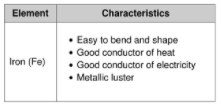
Iron (Fe) is most likely a
nonmetal
gas
metal
metalloid
Which of the following could be properties of nonmetals?
Poor electrical conductivity
Malleable
Dullness
Brittleness
Name this group: These metals are the most reactive.


Which of the following are physical properties of metals?
Luster
Conductivity
Malleability
Dull

