
 Worksheets
Chemistry Challenge
Total questions: 169
Worksheet time: 2hrs 7mins
Number of valence electrons in halogens is ..........
1
4
3
7
the positively charged subatomic particle contained in the nucleus of an atom
proton
neutron
electron
matter
a subatomic particle, contained in the nucleus of an atom, having the same mass as a proton but no electrical charge
proton
neutron
electron
matter
a negatively charged subatomic particle that orbits the nucleus of an atom
proton
neutron
electron
matter

Which color on the image of the periodic table corresponds with the noble gases.
red
black
blue
orange

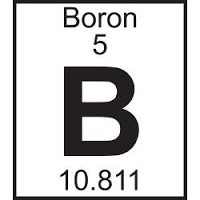
Use your periodic table to find which element has 5 protons.
Lithium
Calcium
Boron
Neon
The neutron has a ________________ charge.
negative
neutral
positive
low
Br2 (l) + KI (aq) →
Li + NaF ->


What is the BEST definition of a chemical reaction?
A change in matter that produces one or more NEW substances
When two things combine and EXPLODE.

According to the Law of Conservation of Mass,
matter is always created in a chemical reaction
matter is always destroyed in a chemical reaction
matter is created and then destroyed in a chemical reaction
matter is not created or destroyed in a chemical reaction
The law of conservation of mass can be demonstrated by a chemical reaction. Which of the following models of a chemical reaction best represents the law of conservation of mass?


When carbon and oxygen combine chemically, the mass of the product is
greater than the mass of the carbon plus the mass of the oxygen
equal to the mass of the carbon plus the oxygen
equal to the mass of the carbon
less than the mass of the carbon
The equation below shows the products formed when a solution of silver nitrate (AgNO3) reacts with a solution of sodium chloride (NaCl).
AgNO3 + NaCl → NaNO3 + AgCl
In this equation, the total mass of the reactants is
greater than the total mass of the products
equal to the total mass of the products
equal to the mass of AgCl
less than the mass of AgCl
How many total atoms are in this compound? Al2O3
2
5
6
3
A chemical reaction is when...
Atoms and molecules are destroyed
Atoms and molecules are created
Atoms and molecules break apart and regroup to form new products
Atoms and molecules go on vacation and relax a little
What is the reason why Noble gases are so stable?
They have an even number of electrons
They have no electrons
They have a full outer shell of electrons
They bond with other atoms
Covalent bonds are formed between...
2 non-metals
a metal and a non-metal
2 metals
2 ions
Which of these is not a covalent molecule?
MgO
CO2
HCl
CH4
Chlorine has 7 electrons in it's outer shell. How many covalent bonds does it need to make to complete it's outer shell electrons?
1
2
3
4
Oxygen has 6 electrons in it's outer shell. How many covalent bonds does it need to make to complete it's outer shell electrons?
1
2
3
4
Carbon has 4 electrons in it's outer shell. How many covalent bonds does it need to make to complete it's outer shell electrons?
1
2
3
4

What is the correct formula for this molecule?
CH
C1H4
CH4
C4H
An atom with 1 valence electron 'needs' a full shell, so it can either gain 7 electrons or lose 1. Which is more likely to occur?
nothing
gain 7
lose 1
How many valence electrons does Boron have?
1
2
3
4
When an atom loses an electron, it becomes a
positive ion
negative ion
How are ionic bonds formed?
transfer of electrons
sharing of electrons
Water is an example of what?
molecular compound (covalent compound)
ionic compound
Salt is an example of what?
ionic compound
covalent compound
Ionic bonds form between two ions that have
negative charges
positive charges
opposite charges

Cations are...
Positive
Negative
Neutral

Anions are...
Positive
Negative
Neutral

An atom becomes _________ when it gains electrons.
Positive
Negative
Neutral

An atom becomes _______ when it loses electrons.
Positive
Negative
Neutral
Molecules
Ionic compounds
Covalent compounds
Valence electrons are transferred
Ionic bonds
Covalent bonds
Conducts electricity well when melted or dissolved
Ionic compounds
Covalent compounds
Poor electrical conductivity
Ionic compounds
Covalent compounds
Always a solid at room temperature
Ionic compounds
Covalent compounds
Generally high melting & boiling points
Ionic compounds
Covalent compounds
Generally, atoms form bonds so that _______________.
Each atom loses its electrons
Each atom has a stable electron configuration
Each atom has an unstable electron configuration
Each atom gains electrons

What kind of bond does this show?
Ionic
Covalent

What kind of bonds are shown here?
Covalent
Ionic

What type of bonding does this picture show?
Ionic
Covalent

What type of bonding does this picture show?
Ionic
Covalent
(OH)2
Mg + __HCl ---> MgCl2 + H2
What type of reaction is this?
__H2O2 ----> __H2O + O2
Mn + _ HNO3 → Mn(NO3)2 + H2

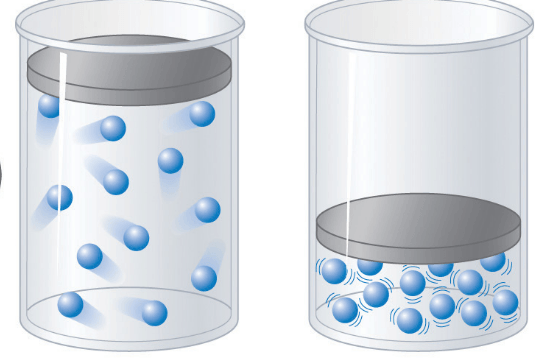

If I want more sugar to dissolve in water, I should heat the water
true
false
The ______ is the smaller part of the solution.
solute
solvent
system of a down
The electrons in a nonpolar covalent molecule are shared...
Evenly
Unevenly
Electrons are not shared
None of the Above
In a polar covalent bond, the electrons gather around...
The atom with the Greatest Electronegativity
The atom with the Lowest Electronegativity
Each atom Equally
None of the Above
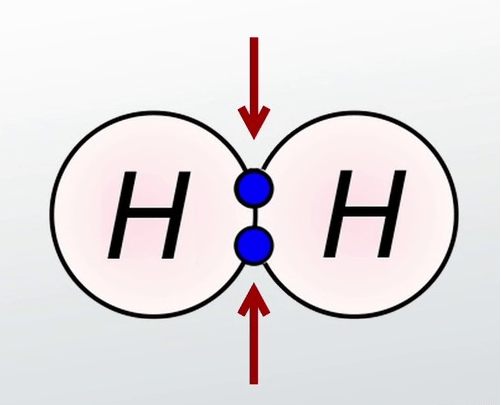
In water, hydrogen bonds hold together
hydrogen and oxygen atoms in different molecules.
hydrogen atoms in the same molecule.
hydrogen and oxygen atoms in the same molecule.
hydrogen atoms in different molecules.
Which of the following has the highest boiling point?
HBr
HI
HF
HCl
Hydrogen bonds _______as compared to the covalent bonds.
are weaker
have fluctuating strengths
are of equal strength
are stronger
The correct ranking of bonds or forces in order from strongest to weakest is:
covalent bond, van der Waals force, hydrogen bond
van der Waals force, hydrogen bond, covalent bond
hydrogen bond, covalent bond, van der Waals force
covalent bond, hydrogen bond, van der Waals force
Polar molecules tend to have lower boiling points than nonpolar molecules.
true
false
BRASS is made when copper dissolves in Zinc. This is an example of:
solution
colloid

Which substance is MOST soluble at 0 ºC?
KCI
NaNO3
NaCl
Ce2(SO4)3

A type of mixture where the particles are larger than those in a solution but not heavy enough to settle out.
Homogeneous mixture
Colloid
Suspension
Compound

Air has no weight.
True
False
Air is made up of a mixture of many different kinds of gases.
True
False

Which box below shows a more dense object?
Left
Right
A fraction of crude oil is made up of:
Hydrocarbons of similar chain lengths
Numbers
Large hydrocarbons
Alkenes only
Shorter hydrocarbons have:
Higher boiling points
Lower boiling points

What is the structure shown?
Methane
Propane
Ethane
Butane
Distillation is a technique which separates substances based on which physical property?
density
viscosity
boiling point
melting point
A sour taste is a characteristic of:
acids
bases
neutral
pH scale
A substance that is 3 on the pH scale would be a(n):
acid
base
neutral
solute
Taste bitter
acids
bases
neutral
pH paper


What is the reading of the meniscus?
36mL
45mL
35.0mL
30.5mL
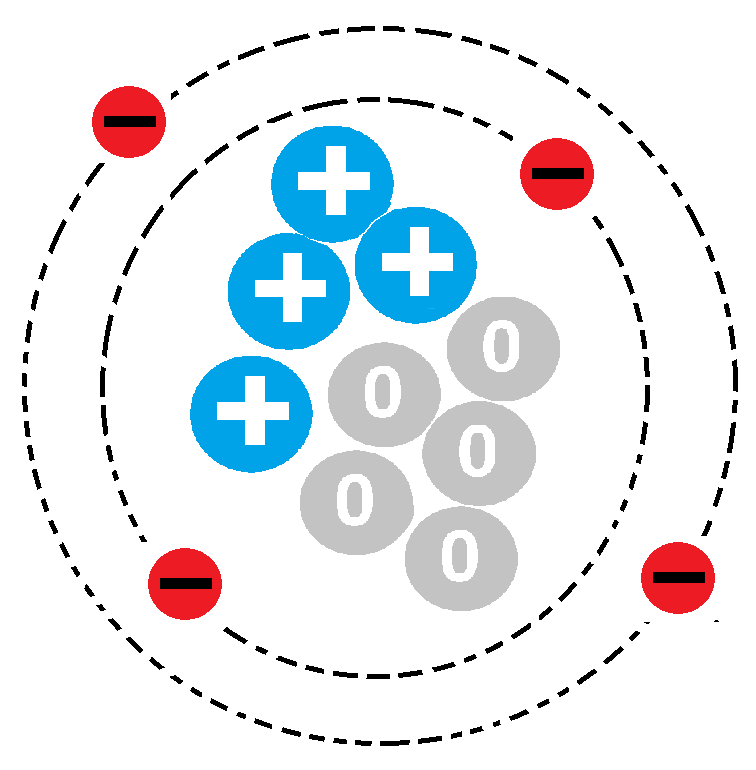
What is the reading of the meniscus?
36mL
45mL
35.0mL
30.5mL
Taste bitter
acids
bases
neutral
pH paper
2 C2H6 + 7 O2 → 4 CO2 + 6 H2O
Ethane (C2H6) combusts in the above reaction. What is the mole ratio of carbon dioxide to water?


What is Avogadro's number?
6.02 x 10²³
1 mole
600 million
6.02
One mole of carbon dioxide (CO2) contains 6.02 x 10²³ _____.
atoms
formula units
ions
molecules
How many atoms are in 1 mole of Iodine (I)?
6.022 x 10²³
4.022 x 10²³
6.022 x 1025
4.022 x 1025
Molar mass of NaOH is ______________________
40 grams/mol
50 grams/mol
45 grams/mol
38 grams/nol
How many liters would you need to make a 1 M solution if you have 6 mol of sodium hydroxide (NaOH)?
2
3
4
6
A solution that is able to dissolve additional solute is best described as _____.
supersaturated.
saturated.
unsaturated.

if something can burn then it is-------------
flammable
cold
easy to break
turns black

What is the number of valance electrons in Iodine ?
1
3
53
7
Ionization energy is...
the energy required to add an electron to a specific atom
The energy needed to remove one of the valance electrons in an atom .
the energy required to shield the outer electrons from the nucleus
a measure of the ability of an atom to attract electrons


Protons + __________ = atomic mass
electrons
neutrons
neither
tool used to measure the MASS of an object
graduated cylinder
beaker
test tube
balance scale
When water changes state, from ice to steam, it is a ____________ change in matter
chemical
combustion
physical
solubility
When heat is added to matter, what happens to its particles?
They move slower.
They move closer together.
They move faster.
They do not change.
2. Holly has a cube of sugar. She crushes it into powder. What has changed about the sugar?
The mass
The weight
The shape
The shape and the mass


Which of the following is a test tube?


What is this science tool?
jar
beaker
thermometer
ruler

What is the name of the tool shown?
Goggles
Lab coat
Gloves
Binoculars

What is the name of the tool show?
Tube
Needle
Dropper
Syringe


What is this?
beaker
telescope
microscope
spring scale

What is this?
A Beaker
An Erlenmeyer Flask
A Test Tube
A Vial
An atom of carbon has 6 protons and 7 neutrons in its nucleus. If the atom is neutral, how many electrons does it have?
0
7
6
13

