
Font size
 Worksheets
Chemical Equations and the Mole (Ch. 10, 11)
Total questions: 159
Worksheet time: 1hrs 6mins
Determine the number of atoms of each element that appears on each side of the equation: 2Al + 6HCl → 3AlCl₃ + 3H₂. The number of atoms of Al on the left side is _____, and on the right side is _____.
(a)
Determine the number of atoms of each element that appears on each side of the equation: Ba(ClO₃)₂ → BaCl₂ + 2O₂
Ba: 1, Cl: 2, O: 6 on both sides
Ba: 1, Cl: 2, O: 3 on both sides
Ba: 1, Cl: 1, O: 6 on both sides
Ba: 2, Cl: 2, O: 6 on both sides
Balance the following equation: ___SiCl₄(l) + ___H₂O(l) → ___SiO₂(s) + ___HCl(aq)
SiCl₄(l) + 2H₂O(l) → SiO₂(s) + 4HCl(aq)
SiCl₄(l) + H₂O(l) → SiO₂(s) + HCl(aq)
2SiCl₄(l) + 4H₂O(l) → 2SiO₂(s) + 8HCl(aq)
SiCl₄(l) + 4H₂O(l) → SiO₂(s) + 2HCl(aq)
Balance the following equation: ___Au₂S₃ + ___H₂ → ___Au + ___H₂S
1, 3, 2, 3
2, 6, 4, 6
1, 2, 2, 3
2, 3, 4, 6
Solid barium and oxygen gas react to produce:
solid barium oxide
liquid barium oxide
gaseous barium oxide
barium hydroxide
Liquid bromine reacts with solid phosphorus (P₄) to produce:
solid diphosphorus pentabromide
liquid diphosphorus pentabromide
gaseous diphosphorus pentabromide
aqueous diphosphorus pentabromide
Gaseous hydrogen chloride reacts with gaseous ammonia to produce:
Solid ammonium chloride
Liquid ammonium chloride
Gaseous ammonium chloride
Aqueous ammonium chloride
Write the balanced chemical equation for the reaction in which sodium hydroxide and calcium bromide react to produce solid calcium hydroxide and sodium bromide. The reaction occurs in water.
2 NaOH + CaBr2 → Ca(OH)2 + 2 NaBr
NaOH + CaBr2 → Ca(OH)2 + NaBr
2 NaOH + CaBr2 → Ca(OH)2 + NaBr2
NaOH + CaBr2 → Ca(OH)2 + 2 NaBr
2Mo(s) + 3O2(g) → 2MoO3(s) is an example of which type of reaction?
Combustion
Synthesis
Decomposition
Single displacement
What is the product when dinitrogen tetrahydride (l) reacts with oxygen (g)?
Nitrogen dioxide (g) and water (l)
Ammonia (g) and water (l)
Nitrogen monoxide (g) and hydrogen (g)
Nitrogen (g) and water (l)
Identify this type of reaction, Cl2 + 2KI --> I2 + 2KCl
Synthesis
Single replacement
Double replacement
Decomposition
single replacement
double replacement
decomposition
synthesis
The reaction XY --> X + Y is an example of _____.
synthesis
decomposition
single replacement
double replacement
The reaction AB + XY --> XB + AY is an example of ______.
synthesis
decomposition
single replacement
double replacement
Which of the following is an example of a single replacement reaction?
2NaF --> 2 Na + F2
P2O5 + 3 H2O --> 2H3PO4
2FeCl3 + 3Zn --> 2Fe + 3ZnCl2
C6H12O6 + 6O2 --> 6CO2 + 6 H2O
Which of the following is an example of a decomposition reaction?
2NaF --> 2 Na + F2
P2O5 + 3 H2O --> 2H3PO4
2FeCl3 + 3Zn --> 2Fe + 3ZnCl2
C6H12O6 + 6O2 --> 6CO2 + 6 H2O
Which of the following chemical equations is an example of a double replacement reaction?
2Al2O3 --> 4Al + 3O2
2C5H10 + 15O2 --> 10CO2 + 10H2O
2MgCl2 + Na2CO3 --> 2 NaCl + MgCO3
K2O + H2O --> 2 KOH
Which of the following chemical equations is an example of a combustion reaction?
2Al2O3 --> 4Al + 3O2
2C5H10 + 15O2 --> 10CO2 + 10H2O
2MgCl2 + Na2CO3 --> 2 NaCl + MgCO3
K2O + H2O --> 2 KOH
What class of reaction best describes the equation below:
2HgClO3 ----> 2HgO + Cl2
Synthesis
Decomposition
Single Replacement
Double Replacement
Combustion

Define: Net Ionic Equation
a balanced chemical equation in which all the reactants and products are given by their chemical formula.
a chemical equation that shows all soluble species broken into their respective ions.
a chemical equation showing only the species which are actively involved in the reaction.
Write the chemical equation that represents the dissociation of the ionic compound Na2(SO4) .
Na+2 + (SO4)-1
2 Na+1 + (SO4)-1
Na+2 + (SO4)-4
2 Na+1 + (SO4)-2
Which of the following shows the correct disassociation of the reaction for BaCl2?
Ba 2+ (aq) + Cl2 - (aq) → BaCl2 (s)
Ba 2+ (aq) + 2 Cl - (aq) →BaCl2 (s)
BaCl2 (aq) →Ba 2+ (aq) + 2 Cl - (aq)
BaCl2(s)→Ba 2+(aq)+ 2Cl- (aq)
What 2 ions appear on both sides of the equation?
Na+ (aq) + Cl- (aq) + Ag + (aq) + (NO3)+ (aq) → Na+ (aq) + (NO3) + AgCl(s)
Ag and NO3
Na and Cl
Na and NO3
Ag and Cl
CuCl2(aq) + NaOH(aq) → Cu(OH)2(s) + NaCl(aq)
CuCl2(aq) + NaOH(aq) → Cu(OH)2(s) + NaCl(aq)
Identify the complete ionic reaction for products of this reaction: (final answer is not balanced)
HCl + Mg(OH)2 →
→ MgCl2 + H2O(l)
→ Mg2+ + Cl-1 + H2O(l)
→ Mg2+ + Cl-1 + H+1 + O2-
→ MgCl2 + H2O(l) + CO2(g)
A balanced chemical equation is a direct presentation of which law?
law of multiple proportions
law of conservation of mass
ideal gas law
law of conservation of momentum
In a chemical equation, the number written in front of the chemical formula is called the _________.
equation
product
coefficient
reactant
Considering the following precipitation reaction:
Pb(NO3)2(aq) + 2KI(aq) → PbI2(s) + 2KNO3(aq)
What is the correct complete ionic equation?
Pb2+ + (NO3)2- + 2K+ + 2I- → PbI2(s) + 2K+ + 2NO3-
Pb2+ + 2NO3- +2K+ + I- → PbI2(s) + 2K+ + NO3-
Pb2+ + 2NO3- + 2K+ + 2I- → PbI2(s) + 2K+ + 2NO3-
Pb2+ + 2NO3- + 2K+ + 2I- → Pb2+ + 2I- + 2K+ + 2NO3-

When some ionic compounds form through reactions in solution, they fall out as a ___
consolidated element
heavy sludge
dense discharge
solid precipitate
CuCl2(aq) + NaOH(aq) → Cu(OH)2(s) + NaCl(aq)
In writing the chemical equation for a reaction that produces a precipitate, what abbreviation of the physical state must appear with one of the products?
(s)
(g)
(l)
(w)
Considering the following precipitation reaction:
Pb(NO3)2(aq) + 2KI(aq) → PbI2(s) + 2KNO3(aq)
Which compound would not form ions in the complete ionic equation?
PbI2
KNO3
Pb(NO3)2
KI
Considering the following precipitation reaction:
Pb(NO3)2(aq) + 2KI(aq) → PbI2(s) + 2KNO3(aq)
What is the correct complete ionic equation?
Pb2+ + (NO3)2- + 2K+ + 2I- → PbI2(s) + 2K+ + 2NO3-
Pb2+ + 2NO3- +2K+ + I- → PbI2(s) + 2K+ + NO3-
Pb2+ + 2NO3- + 2K+ + 2I- → PbI2(s) + 2K+ + 2NO3-
Pb2+ + 2NO3- + 2K+ + 2I- → Pb2+ + 2I- + 2K+ + 2NO3-
42-51.
Answer the questions below after watching the video
What are net ionic equations primarily used to represent?
The theoretical yield of a chemical reaction
The actual species involved in a chemical reaction
The role of spectator ions in a reaction
The complete molecular structure of compounds
What happens to sodium chloride (NaCl) when it is dissolved in water?
It changes into a different compound
It forms Na+ and Cl- ions
It remains undissolved as a solid
It reacts immediately to form a gas
What does the term 'aqueous' signify in a chemical equation?
The substance is a pure solid
The substance is dissolved in water
The substance is in a plasma state
The substance is in a gaseous state
Which compound is formed as a precipitate in the reaction between silver nitrate and sodium chloride?
Sodium Nitrate (NaNO3)
Silver Nitrate (AgNO3)
Silver Chloride (AgCl)
Sodium Chloride (NaCl)
Which ions are involved in forming the precipitate in the discussed reaction?
Na+ and Cl-
Ag+ and Cl-
Na+ and NO3-
Ag+ and NO3-
What state does Silver Chloride (AgCl) assume in the reaction?
Aqueous
Gas
Plasma
Solid
Why is it important to understand the solubility of compounds when writing net ionic equations?
To determine which compounds form precipitates
To predict the color change in the reaction
To calculate the pH of the solution
To measure the conductivity of the solution
What is the role of spectator ions in a net ionic equation?
They react to form new compounds
They remain unchanged and do not participate in the reaction
They increase the rate of the reaction
They decrease the solubility of compounds
In the reaction, which compound remains dissolved and does not form a precipitate?
Silver Chloride (AgCl)
Sodium Nitrate (NaNO3)
Sodium Chloride (NaCl)
Silver Nitrate (AgNO3)
What is the purpose of writing a total ionic equation?
To calculate the amount of energy released
To predict the products of the reaction
To display all ions, indicating which are spectators
To show only the ions that participate in the reaction

Magnesium can be burned in oxygen to produce solid magnesium oxide.
Mg + O2→ MgO
Mg+ O→ MgO
Mg + CO2 → MgO + C
Mg + O2→ Mg2O2

Sodium reacts with chlorine gas to produce sodium chloride.
NaCl→ Cl + Na
Na+ CO2 → NaCO2
Na + Cl2→ NaCl
Na + Cl → NaCl
Magnesium + ________ --> magnesium oxide
What is missing?
Hydrogen
Sulphur
Oxygen
Oxide

Identify the product(s) in this word equation
Sodium
Sodium chloride
Sodium and Chlorine
Sodium and sodium chloride
The new substances formed in a chemical reaction are called
Reactants
Atoms
Products
Reagents

In this chemical reaction zinc is a...
Product
Reactant
Neither

What does the symbol inside the circle mean?
"yields, or produces"
"dissolved in water"
"forms a precipitate"
"released as a gas"
Which of the following statements is TRUE?
A molecule is smaller than an atom.
A molecule is made of atoms.
Molecules are found inside of atoms.
Which of the following symbols represents a compound?
Co
Br
Fe
CO
What does the symbol CaCO3 represent?
An element
A compound
An atom
None of the above
Which of these is NOT the correct way to read the symbol in a chemical equation?
(g) = grams
(aq) = solution
(s) = solid
(l) = liquid
Which of the following chemical equations is correct for the word equation:
Solid magnesium is burned in oxygen gas to produce solid magnesium oxide.
Mg + O2→ MgO (aq)
Mg+ O→ MgO (s)
Mg + CO2 → MgO (s) + C
Mg + O2→ MgO (s)
__Ag2O →__ Ag +___O2

Identify the correct equation (may not be balanced) for the following word equation: Iron reacts with solid sulfur to produce iron (II) sulfide powder.
Fe + S → Fe2S
Fe + S → FeS
Fe2 + S→ Fe2S2
Fe + S2 → Fe2S
Identify the correct equation (may not be balanced) for the following word equation: sodium phosphate and calcium chloride produce calcium phosphate and sodium chloride
Na3PO4 + CaCl2 --> Ca3(PO4)2 + NaCl
Na3PO4 + CaCl2 --> Ca4PO2 + NaCl
NaPO4 + CaCl2 --> Ca(PO4)2 + NaCl
NaPO4 + CaCl2 --> Ca2(PO4)3 + NaCl
Potassium iodide + lead nitrate --> _____________ + lead iodide
What is missing?
lead nitrate
potassium nitrate
nitrogen
potassium iodide

When lead reacts with oxygen, a yellow lead(II) oxide powder is produced.
Pb + O2 → PbO
Pb + O2→ PbO2
Pb2 + O2→ Pb2O
Pb + O → PbO

When hydrogen reacts with sulfur, a smelly gas, dihydrogen monosulfide, is produced.
H2 + S → HS
H2 + S → H2S
H + S→ HS
H + S→ H2S
Hydrogen gas and nitrogen monoxide gas forms water and nitrogen gas.
H2 + NO --> H2O + N2
H + NO --> H2O + N
H2 + N2O3 --> H2O + N2
H + NO --> H2O + N2
Barium metal and water yields barium hydroxide and hydrogen gas
Ba + H2O --> Ba(OH)2 + H2
Ba2 + H2O --> Ba(OH)2 + H
Ba + H2O --> BaOH2 + H
Ba2 --> Ba(OH)2 + H2
Calcium oxide and water produces calcium hydroxide
CaO + H2O --> Ca(OH)2
Ca2O2 + H2O --> Ca(OH)2
CaO + H2O --> CaOH
Ca2O2 + H2O --> Ca(OH)2
Aluminum and oxygen produces aluminum oxide
Al + O2 --> Al2O3
Al + O --> Al2O3
Al3 + O2 --> Al2O3
Al + O --> AlO
1. The Best Friend's Club uses "invisible ink" to write notes to each other. The invisible ink is actually lemon juice that is clear when it dries on paper, but turns brown when a club member holds a burning candle under the paper. Once it is heated, it is never invisible again.
What type of change is occurring when the paper is heated?
Chemical Change
Physical Change
Elemental Change
Temperature Change
A student mixes two clear liquids together. After a few minutes, a white powdery solid can be seen settling on the bottom of the test tube. Which of the following is a conclusion that the student can draw based on these observations? The two clear liquids-
were pure substances before they were mixed
are toxic and should be handled with extreme caution
have gone through a chemical change in which a new substance called a precipitate was produced
have been stored too long and are no longer good
Shredding paper is an example of a
chemical change
physical change
physical property
chemical property
A student added white crystals to a clear liquid. The crystals dissolved in the liquid. After a few seconds, the liquid became quite warm and then turned bright red in color. Indications that a chemical change was taking place could be observed when –
the white crystals were added to the clear liquid.
the crystals dissolved in the liquid leaving only the liquid visible
There are no indications of chemical change
the temperature of the liquid increased and an unexpected color change occurred.
A student observes some sugar as it is heated and burns. The student concludes that a chemical reaction has occurred. Which of the following observations about the burning sugar provides evidence of a chemical reaction?
Heat is added to the sugar crystals.
The sugar melts and becomes a liquid.
Gas is produced as the sugar turns black.
No evidence of chemical reaction is present.

The brown color of a cut apple can be called
physical change
chemical change
evidence of chemical reaction
all of the above
Which results in a change of identity in matter?
Physical
Chemical
Both
Identity doesn't change
Is rust on a car physical or chemical?
Physical
Chemical
Both
Neither
What are examples of physical properties?
Color
Temperature
Malleability
Flammability
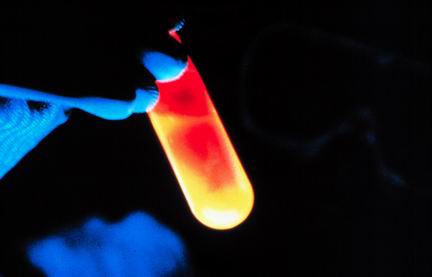
Which is not evidence that a chemical reaction has occured
Production of flames
Change in temperature or heat
freezing
Production of light
Which of the following does not exhibit a chemical change?
a phase change
productions of gas
change in color
all of the choices
Dynamite explosion
Physical Change
Chemical Change
Melting of salt
Physical Change
Chemical Change
Physical change is a type of change in which a substance does not transform into another substance.
True
False
Chemical reaction is a process in which one or more substances are converted to one or more different substances with a new set of properties.
True
False
Endothermic reaction is a formation of bubbles due to production of a gaseous substance.
True
False
Which is NOT an empirical formula?
Al2(SO4)3
C6H6
C3H8O
NH4Br
How many moles of Cl are in 3 moles of CaCl2?
1
2
3
6
How many moles of H are in one mole of the compound (NH4)3PO4?
4
3
12
7
You have 19.7 grams of a material and wonder how many moles were formed. Your friend tells you to multiply the mass by grams/mole. Is your friend correct?
Yes, you multiply mass by molar mass
No, you divide mass by molar mass
No, you multiply by Avogadro's number
No, you divide by Avogadro's number
What is the formula for calculating percent composition?


What information do you need to calculate percent composition by mass?
Temperature of the system in Kelvin
Chemical formula or actual masses
The abundance of each isotope
Number of protons and electrons
How many atoms are in 1 mole of Iodine (I)?
6.022 x 10²³
4.022 x 10²³
6.022 x 1025
4.022 x 1025
What is Avogadro's number?
6.02 x 10²³
1 mole
600 million
6.02
How do you find the molar mass for an element?
Add the atomic masses of all the atoms in the compound.
You convert into molar mass from a mass given to you
You can only be given molar mass, it can't be calculated

What is the Molar Mass of Platinum (Pt)?
195.08 g/mol
78 g/mol
106.4 g/mol
145 g/mol
What is the difference in molar mass and formula weight?
You get molar mass from the periodic table, but you get formula weight from Avogadro's number.
Formula weight is the weight of 1 mole, while molar mass is the mass of only 1 particle
There is no difference.
Molar mass is the mass of 1 mole, while formula weight is the weight (mass) of only 1 particle
What are the units of molar mass and of formula weight?
molar mass: g/mol
formula weight: amu
molar mass: amu
formula weight: g/mol
g/mol for both
amu for both
What is the correct equation to determine how many calcium ions (Ca2+) in 2 moles?


This cannot be determined as calcium is not bonded.
How many moles of Na contain 1.45 x 10²¹ atoms of Na?
8.73 x 1044 moles
8.73 moles
0.00241 moles
2.41 x 1044 moles
What is the correct equation to calculate the number of moles in 3.13 x 1026 molecules of H2O2?


How many moles are in 6.02 x 10²³ molecules of H2O?
1 mole
2 moles
6.02 moles
602000000000000000000000 moles
A mole is:
The SI unit for mass
The SI unit for the amount of a substance
The SI unit for volume
The SI unit for area
Which has the most particles?
1 mole H2
1 mole Na1+
1 mole Al(OH)3
These are all the same

Why is the mole used in chemistry?
The mass of atoms is in AMUs which is too hard to convert to grams.
A dozen is not a scientific amount.
Chemists needed to make chemistry easier to understand.
It makes counting large numbers of small particles easier.
How is moles abbreviated?
M
m
mol
ml
The mole is 6.022 x 10²³ atoms or molecules of any substance. This number is also named after the scientist who calculated it. This was:
Perrin
Avogadro
Einstein
Newton
How many grams is one mole of Sodium?
32.07
118.71
150.36
22.99
How many grams is 2 moles of Helium?
4.00
8.00
2.02
4.04

Find the molecular weight of Vitamin A - C20H30O
286.46 amu
240.22 amu
29.019 amu
129.46 amu

Find the molecular weight of carbon monoxide - CO
16 amu
12.011 amu
28.011 amu
29.019 amu
What are the units used for Gram Formula Mass?
amu
grams
mol
g/mol
Determine the gram formula mass of KCl
74.548 amu
35.45 amu
74.548 g/mol
35.45 g/mol
When a question asks you to calculate mass, your units should be
liters
grams
molecules
atoms
When a question asks you to calculate volume, your units should be
liters
grams
molecules
atoms
When a question asks you to calculate atoms, your units should be
liters
grams
molecules
atoms
6.02 x 10²³ _____.
What is the difference between a formula unit and a molecule?
formula unit - ionic compound
molecule - covalent/molecular compound
formula unit - big
molecule - small
formula unit - covalent/molecular compound
molecule - ionic compound
formula unit - small
molecule - big
When translating coefficients in a chemical reaction, "atoms" describes
ionic compounds
single elements
molecular compounds
diatomic molecules
When translating coefficients in a chemical reaction, "formula units" describes
ionic compounds
single elements
molecular compounds
diatomic molecules
When translating coefficients in a chemical reaction, "molecules" describes
ionic compounds
single elements
molecular compounds
diatomic molecules
Name this compound: Br2
dibromine
bromine gas
dibromide
bromide gas
Name this compound: Cl2
dichlorine
chlorine gas
dichloride
chloride gas
Atoms, molecules, or formula units?
H2
one formula unit of hydrogen gas
one atom of hydrogen gas
one molecule of hydrogen gas
Atoms, molecules, or formula units?
2 CBr4
two formula units of carbon tetrabromide
two atoms of carbon tetrabromide
two molecules of carbon tetrabromide
Atoms, molecules, or formula units?
Br2
one formula unit of bromine gas
one atom of bromine gas
one molecule of bromine gas
Atoms, molecules, or formula units?
5 PF3
five formula units of phosphorus trifluoride
five atoms of phosphorus trifluoride
five molecules of phosphorus trifluoride
Atoms, molecules, or formula units?
3 PbI2
three formula units of lead (II) iodide
three atoms of lead (II) iodide
three molecules of lead (II) iodide
Atoms, molecules, or formula units?
6 NH4NO3
six formula units of ammonium nitrate
six atoms of ammonium nitrate
six molecules of ammonium nitrate
Atoms, molecules, or formula units?
4 Ca
four formula units of calcium
four atoms of calcium
four molecules of calcium
Atoms, molecules, or formula units?
8 P
eight formula units of phosphorus
eight atoms of phosphorus
eight molecules of phosphorus
Atoms, molecules, or formula units?
4 NaCl
four formula units of sodium chloride
four atoms of sodium chloride
four molecules of sodium chloride

Determine the amount of moles in CuBr that are in 276.9 g of the compound.
3.2 mol
1.7 mol
2.1 mol
1.9 mol

Determine the number of moles of AlNO3 that are in 264 g of the compound.
2.97 mol
3.45 mol
2.73 mol
1.86 mol

Find the mass of 3.8 mol of H2O. Round to the nearest tenth.
57.9 g
54.8 g
68.4 g
62.3 g

Find the mass of 5.82 mol of MgCl2. Round to the nearest tenth.
552.9 g
436.8 g
55.2 g
554.1 g
What is correct equation that should be used to determine how many molecules is 0.75 moles of (NH4)3PO4?


What percentage of the total atomic mass of carbon monoxide (CO) is composed of carbon?
29%
43%
57%
73%
What percentage of the total atomic mass of carbon monoxide (CO) is composed of oxygen?
29%
43%
57%
73%
What percentage of the total atomic mass of magnesium bromide (MgBr2) is composed of bromine? Hint - consider the mass of both atoms of bromine in your calculation.
13%
43%
63%
87%
What percentage of the total atomic mass of lithium phosphide (Li3P) is composed of phosphorus?
13%
29%
40%
60%
A chemical formula that shows the actual # and kinds of atoms present in one molecule of a compound is called_________
ionic formula
covalent formula
empirical formula
molecular formula
What is the empirical formula for C4H6?
CH
CH3
C2H3
C4H6
NaCrO4 and Na2Cr2O7
C2H4O2 and C6H12O6
C3H6O3 and C2H6O2
CH4 and C2H6
How would you calculate the molar mass for C4H6?
12.0111 + 1.00794
4(12.0111) + 6(1.00794)
2(12.0111) + 3(1.00794)
6(12.0111) + 4(1.00794)
The empirical formula of a substance is CH2O. The molar mass is 180g/mol. What is the molecular formula?
CH2O
C3H6O3
C6H12O6
C12H6O12
What is the correct chemical formula for barium hydroxide octahydrate?
Ba(OH)2 . 8H2O
Ba(OH)2 . H2O
8Ba(OH)2 . H2O
Ba . 8(OH)2
Find the percent composition of Cu2S?
Cu= 67.987%; S= 32.013%
Cu= 79.854%: S= 20.145%
Cu= 35.946%; S= 64.054%
Cu= 39.925%; S= 20.151%
Select all empirical formulas
C8H12
C2H3
CH3
C4H10
C2H5


