wayground logo

Free Printable Worksheets

Font size

S
M
L
XL
Worksheets

1.2 Atomic Origins Part 1

Total questions: 168

Worksheet time: 5hrs 36mins

Name
Class
Date
1.

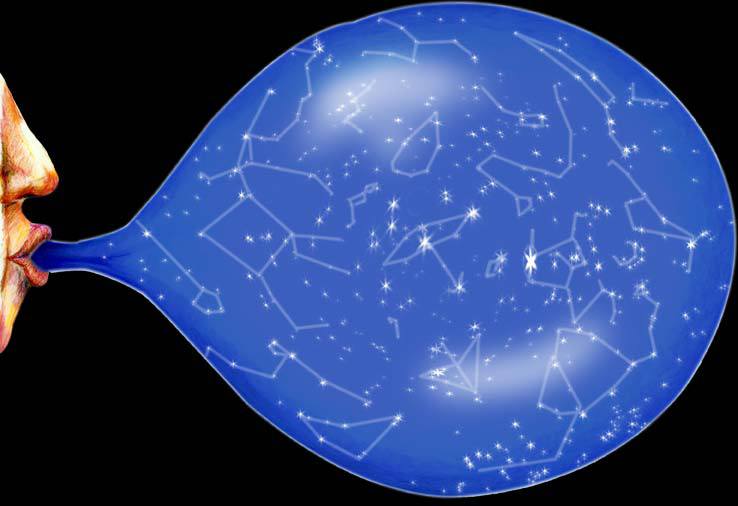
The Big Bang Theory suggests that our universe formed as the result of a huge explosion that sent all existing matter flying outward from a single point. The Big Bang Theory is supported by which of these observations?

a)

All matter in the universe is composed of the same atoms.

b)

All galaxies appear to be moving away from all other galaxies.

c)

All stars in the universe are approximately the same age.

d)

The universe is relatively the same temperature in all locations.

2.

The Big Bang Theory suggests that our universe originated hot long ago?

a)

10 - 20 billion years ago

b)

10 - 20 million years ago

c)

10 - 20 thousand years ago

d)

10 - 20 centuries ago

3.

Cosmic Microwave Background Radiation (CMBR) is the term used to describe the residual microwave radiation observed everywhere in the universe that seems to have no single source. The observation of CMBR is used as evidence of The Big Bang Theory because it is believed to be -

a)

The result of collisions between neighboring galaxies.

b)

Particles of dust that have absorbed radioactivity.

c)

Radiation left over from the rapid expansion of matter.

d)

Light energy emitted from the source of The Big Bang.

4.

A reaction in which two light nuclei combine to produce a nucleus of heavier mass, resulting in the release of a large amount of energy.

a)

Nuclear Bomb

b)

Nuclear Fusion

c)

Nuclear Fission

5.

Most scientists believe the Big Bang Theory explains which of the following questions?

a)

How our planets and moons formed

b)

How our universe began

c)

How the sun turns hydrogen into helium

d)

How fast light travels through space

6.
What does the Big Bang theory suggest?
a)
The universe was just there
b)
The Milky Way is the only solar system
c)
The universe is continually expanding
d)
The universe is collapsing in toward a single point
7.
What were the original two elements in our universe?
a)
Lithium and Carbon
b)
Hydrogen and Neon
c)
Helium and Chlorine
d)
Hydrogen and Helium
8.
What is the atomic number?
a)
the number of protons
b)
the number of protons and neutrons
c)
the number of neutrons
d)
the number of protons and electrons
9.

As galaxies move away from our galaxy

a shift on the electromagnetic spectrum is noticed. This phenomena is

called _____________.

a)

redshift

b)

blueshift

10.

Atoms of the same element which have a different number of neutrons are called _________________.

a)

ions

b)

isotopes

c)

quarks

d)

molecules

11.
What is the mass number defined as?
a)

average mass of all isotopes

b)
the number of protons and neutrons
c)
the number of neutrons
d)
the number of protons and electrons
12.

How many neutrons does C-14 contain? (tap to enlarge the image)

a)

6

b)

7

c)

14

d)

8

13.

How many neutrons does an atom of the isotope Neon-22 have? (tap to enlarge the image)

a)

12

b)

10

c)

22

d)

20

14.

How many electrons are in an neutral atom with an atomic number of 50?

a)

5

b)

48

c)

50

d)

119

15.
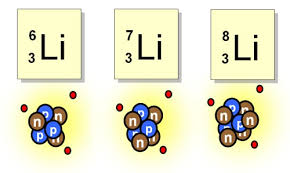
which atom has  4 neutrons?
a)
Li-6
b)
Li-7
c)
Li-8
d)
they have the same # of neutrons
16.

The average atomic mass of an element is the ___.

a)

average of the mass number and the atomic number for the element

b)

average of the masses of the isotopes of the element

c)

total mass of the isotopes of the element

d)

number of protons + number of neutrons

17.

A neutral atom of chlorine-35 can be described as the following EXCEPT

a)

contains 17 protons

b)

contains 35 electrons

c)

contains 18 neutrons

d)

has a mass of 35 amu

18.

An element with 11 protons, 11 electrons, and 12 neutrons is identified as

a)

sodium - 11

b)

magnesium - 12

c)

sodium - 23

d)

magnesium - 34

19.

Which of the following is the nuclear symbol for lithium-6

a)

b)

c)

20.

The correct hyphen notation for the nuclear symbol given is

a)

chromium - 24

b)

chromium - 50

c)

chromium - 74

d)

chromium - 26

21.

The hyphen notation of an atom of calcium with 20 protons, 20 electrons, and 22 neutrons is

a)

calcium - 20

b)

calcium - 40

c)

calcium - 62

d)

calcium - 42

22.

A radioactive atom is any atom that contains an unstable _____.

a)

energy level

b)

nucleus

c)

orbital

d)

electron

23.

Radiation therapy can be used to treat what condition?

a)

acne

b)

cancer

c)

indigestion

24.

Which elements are most

abundant in the visible

universe?

a)

Hydrogen and Carbon

b)

Carbon and Helium

c)

Hydrogen and Oxygen

d)

Hydrogen and Helium

25.
Why is the abundance of H/He throughout galaxies an important piece of evidence supporting the Big Bang?
a)
H/He were two of the first elements to form following the Big Bang.
b)
H/He are highly reactive generating hot spots.
c)
H/He are high mass elements formed from supernovae.
d)
All the above
26.
What is the atomic number for an element with three protons?
a)
2
b)
1
c)
3
d)
6
27.

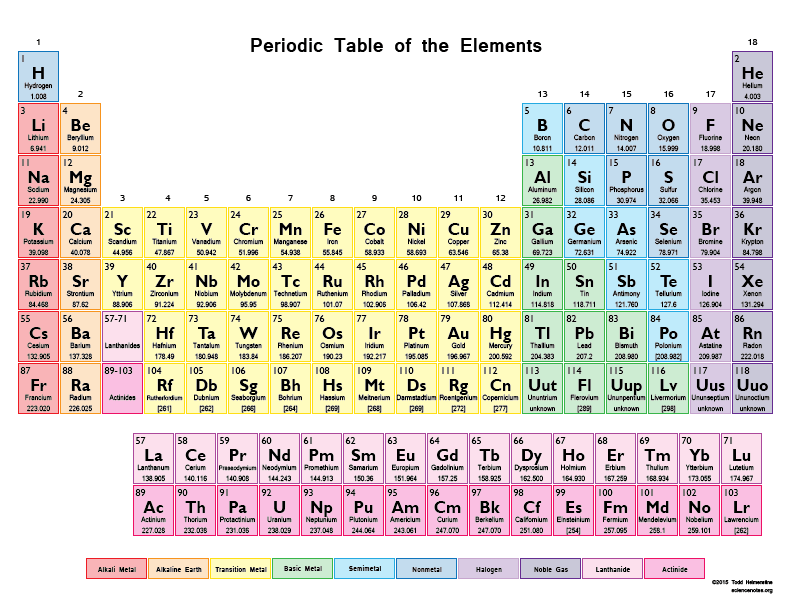
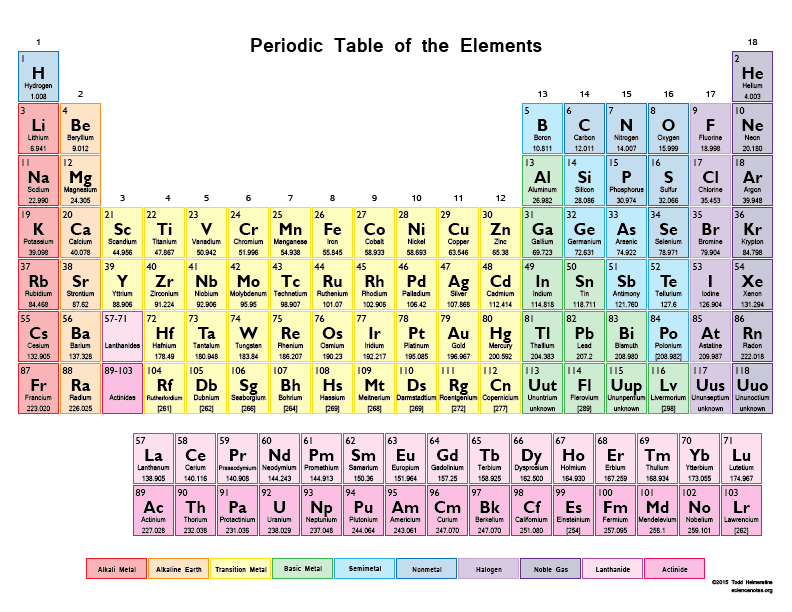
What is the atomic number of Nickel? (enlarge the periodic table)

a)

110

b)

28

c)

46

d)

78

28.

Atoms of the same element which have a different number of neutrons are called _________________.

a)

ions

b)

isotopes

c)

quarks

d)

molecules

29.

How many neutrons does an atom of the isotope Neon-22 have? (tap to enlarge the image)

a)

12

b)

10

c)

22

d)

20

30.

How many electrons are in an atom with an atomic number of 50?

a)

5

b)

8

c)

50

d)

2

31.

An atom of silicon has 14 protons and 15 neutrons. What is the mass number of this atom of silicon?

a)

14

b)

15

c)

29

d)

28.085

32.
Rutherford's gold foil experiment provided evidence that...
a)
negative and positive charges are spread evenly throughout the atom.
b)
alpha particles have a positive charge.
c)
gold is not a dense as previously thought.
d)
there is a dense positively charged nucleus at the center of an atom.
33.

What results did Rutherford observe in his Gold-Foil experiment?

a)

He observed that all alpha particles did go through a gold-foil in straight lines

b)

He observed that most alpha particles did not go through a gold-foil and stopped on one side of the gold foil.

c)

He observed that a small number of alpha particles bounced off the gold-foil at very large angles

d)

He observed that all alpha particles slightly deflected from the straight line when going through a gold-foil
34.
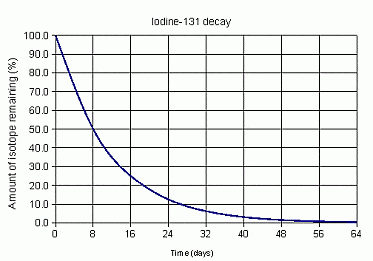
What is the half-life of iodine-131?
a)
32 days
b)
8 days
c)
16 days
d)
24 days
35.

Subatomic particles with a negative charge

a)

Electrons

b)

Neutrons

c)

Protons

d)

Quarks

36.
Subatomic particles with a positive charge
a)
neutrons
b)
atomic mass
c)
protons
d)
isotopes
37.
Subatomic particles that are neutral in charge
a)
Neutrons
b)
Protons
c)
Nucleus 
d)
Electrons
38.

Look at this picture of Argon off the periodic table. Which of the following is true for this element?

a)

18 protons

b)

40 protons

c)

22 protons

d)

21.9 protons

39.

Which part of an atom is used to identify it?

a)

number of protons

b)

number of neutrons

c)

number of electrons

40.

The atomic mass of an atom is equal to

a)

number of protons plus number of neutrons

b)

number of protons plus number of electrons

c)

number of electrons plus the number of neutrons

41.
The nucleus of an atom is made of
a)
electrons and protons
b)
electrons and neutrons
c)
protons and neutrons
d)
empty space
42.
Outside the nucleus of an atom are these
a)
protons
b)
neutrons
c)
quarks
d)
electrons
43.
The mass of this particle is so small that it is not counted.
a)
proton
b)
electron
c)
neutron
d)
quark
44.
The charge of the nucleus of all atoms or ions
a)
positive
b)
negative
c)
neutral
d)
sometimes positive and sometimes negative
45.
The number of these determines which element an atom is.
a)
neutrons
b)
electrons
c)
protons
46.
All atoms of a particular element have the same number of these
a)
electrons
b)
neutrons
c)
protons
47.
Which of these phrases best describes an atom?
a)
a positive nucleus surrounded by a hard negative shell
b)
a positive nucleus surrounded by a cloud of negative charges
c)
a hard sphere with postive and negative charges on the outside
d)
a negative nucleus surrounded by protons and neutrons
48.
What is true about an atom?
a)
Most of the space in an atom is taken up by the nucleus
b)
Atoms are mostly empty space
c)
Atoms have no mass
d)
Electrons have much more mass that protons or neutrons.
49.
The term "neutral" means
a)
having only a little bit of charge
b)
having a positive charge
c)
having a negative charge
d)
having no charge at all
50.

Which elements are most

abundant in the visible

universe?

a)

Hydrogen and Carbon

b)

Carbon and Helium

c)

Hydrogen and Oxygen

d)

Hydrogen and Helium

51.

How does Cosmic Microwave Background Radiation support the Big BangTheory? Select 2

a)

Microwaves are found everywhere in the universe.

b)

Microwaves occurred at the time of the Big Bang

c)

Microwaves are useful in our everyday lives

52.

How does the abundance of hydrogen and helium support the Big Bang Theory.

a)

Hydrogen and helium are elements on the Periodic Table

b)

Hydrogen and helium are in the same ratio throughout the universe.

c)

Hydrogen and helium have many current uses today

53.
Galaxies that are redshifted are:
a)
actually blue.
b)
really far away.
c)
invisible.
d)
moving away from us.
54.
The universe is expanding!  This means that:
a)
all of the galaxies are spreading out.
b)
the universe must have started from a single point.
c)
the universe is cooling down.
d)
all of the above.
55.

The Cosmic Background Radiation is:

a)

the remaining energy from the big bang.

b)

incredibly hot.

c)

visible to the human eye.

d)

only located in certain places in the universe.

56.
The universe is ____________ years old.
a)
8.13 billion
b)
13.8 billion
c)
1.83 billion
d)
381 million
57.
What were the original two elements in our universe?
a)
Lithium and Carbon
b)
Hydrogen and Neon
c)
Helium and Chlorine
d)
Hydrogen and Helium
58.

In relation to us, most galaxies are…

a)

Moving toward us

b)

Moving away from us

c)

Not moving

59.
The most abundant element in the universe today is:
a)
water
b)
hydrogen
c)
oxygen
d)
carbon
60.

Which scientist discovered the electrons?

a)

Dalton

b)

Thomson

c)

Atristotle

d)

Bohr

61.

Bohr discovered that electrons are located in

a)

the nucleus

b)

inside protons

c)

electron cloud

d)

circular orbits around the nucleus

62.

What is a particle with one negative charge called?

a)

electron

b)

proton

c)

quark

d)

neutron

63.

The smallest particle of an element that still represents that element.

a)

Nucleus

b)

electron

c)

proton

d)

atom

64.

What is a particle with one positive charge called?

a)

proton

b)

electron

c)

neutron

d)

quark

65.

What is the center of an atom called?

a)

nucleus

b)

electron cloud

c)

proton center

d)

photon center

66.

What is the neutral particle found in the nucleus called?

a)

proton

b)

neutron

c)

electron

d)

quark

67.

All matter is made of

a)

energy

b)

atoms

c)

electrons

d)

compounds

68.
In Dalton's Atomic Theory, all elements consist of __________ that cannot be divided.
a)
Atoms
b)
Parts
c)
Molecules
d)
Hydrogen
69.

Who was the Greek philosopher who called the smallest particle of matter an "atom"?

a)

Democritus

b)

Aristotle

c)

J.J Thompson

d)

Einstein

70.

Which of the following is/are conclusions based on Rutherford’s gold foil experiment?

a)

Atom is mostly empty space

b)

The nucleus is positively charged

c)

The atom has a small dense nucleus

d)

All answers are correct

71.
Who is the scientist who proposed the "solar system" model of an atom where the electrons orbit around the nucleus?
a)
Democritus
b)
Niels Bohr
c)
Ernest Rutherford
d)
Chadwick
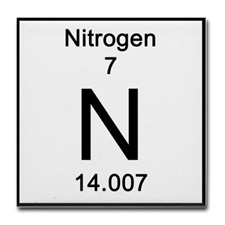
72.
What is the number of protons that the element in this image contain?
a)
14
b)
7
c)
15
d)
18
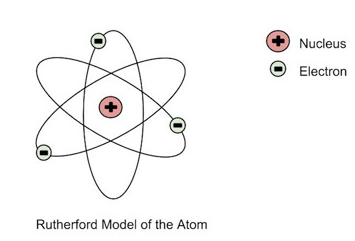
73.
What number indicates the nucleus?
a)
1
b)
2
c)
3
d)
4
74.
Rutherford's gold foil experiment provided evidence that...
a)
negative and positive charges are spread evenly throughout the atom.
b)
alpha particles have a positive charge.
c)
gold is not a dense as previously thought.
d)
there is a dense positively charged nucleus at the center of an atom.
75.
J.J. Thomson provided evidence that an atom...
a)
is the smallest particle of matter
b)
contains negatively charged particles
c)
has an overall negative charge
d)
has an overall positive charge
76.

The majority of an atom's mass exists where?

a)

In the nucleus

b)

In the electron cloud

c)

In the space between the nucleus and the electrons

d)

In the neutrons

77.
What did James Chadwick discover?
a)
neutrons
b)
electrons
c)
the atomic theory
d)
protons
78.

Where are the electrons located?

a)

outside the nucleus

b)

inside the nucleus

c)

in the middle of the atom

d)

in areas that contribute to the atom's mass

79.
Ernest Rutherford discovered that the atom was mostly _________________ and has a _______________ charged nucleus.
a)
empty space, positively
b)
empty space, negatively
c)
full of protons, positively
d)
full of neutrons, negatively
80.

Which model was created after the discovery of electrons?

a)

Dalton's

b)

Rutherford's

c)

Quantum Mechanical Model

d)

Plum Pudding

81.

Who discovered electrons?

a)

Rutherford

b)

Bohr

c)

J.J. Thompson

d)

Democritus

82.

What is a particle with one negative charge called?

a)

electron

b)

proton

c)

quark

d)

neutron

83.

Rutherford and his students did experiments that showed

a)

quark

b)

nucleus

c)

proton

d)

electron

84.

Used the word "atomos" to decsribe the uncuttable (indivisible) atom.

a)

Democritus

b)

Thomson

c)

Bohr

d)

Dalton

85.
Which model of the atom proposed that atoms were positive spheres with negative electrons in them?
a)
Heliocentric Model
b)
Solid Sphere Model
c)
Plum Pudding Model
d)
Planetary Model
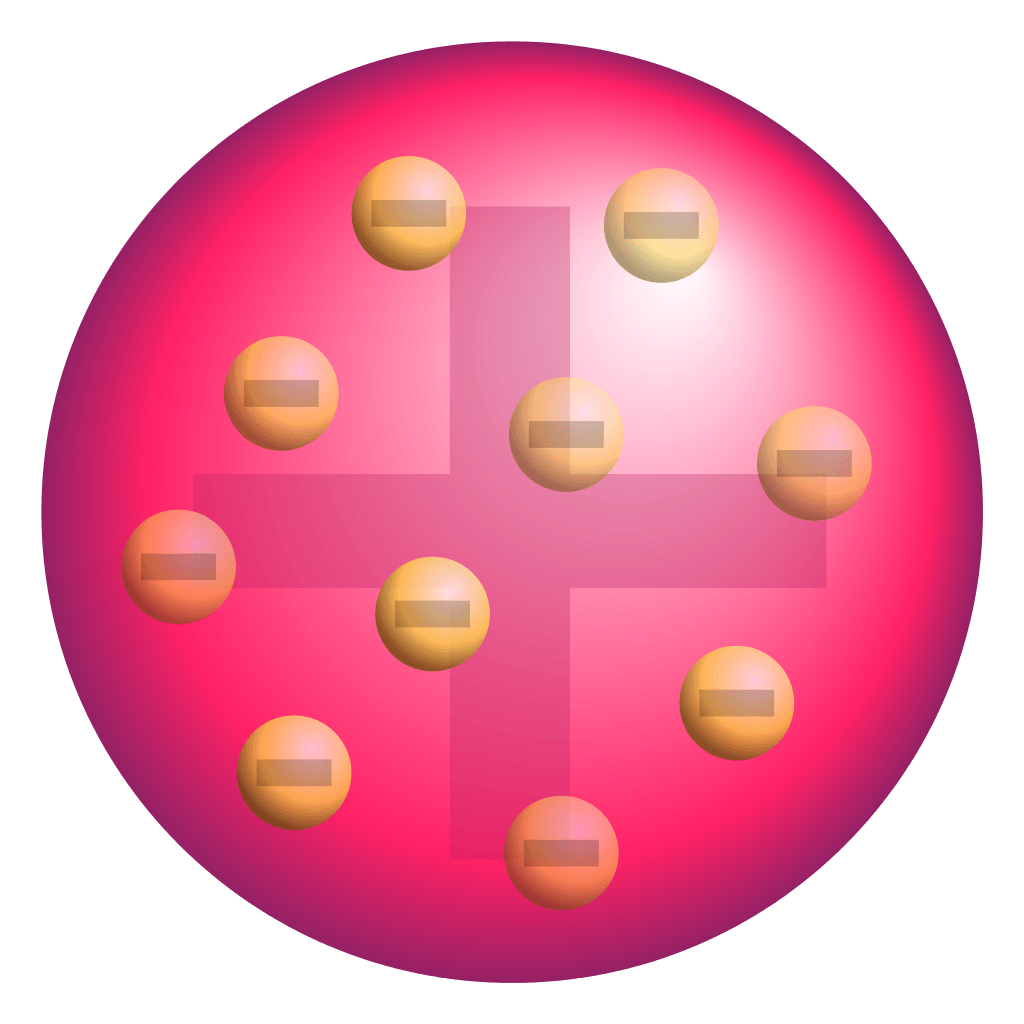
86.
Who's model is this?
a)
Thomson
b)
Rutherford
c)
Democritus
d)
Bohr
87.
In Dalton's Atomic Theory, all elements consist of __________ that cannot be divided.
a)
Atoms
b)
Parts
c)
Molecules
d)
Hydrogen
88.
In the Thomson Model, he discovered the existence of what particle?
a)
Electrons
b)
Protons
c)
Neutrons
d)
Quarks
89.
Rutherford’s experiment determined that the nucleus of an atom is tiny, dense and  ______ charged. 
a)
neutrally
b)
negatively
c)
positively
90.

The cathode ray experiments led to which particle being discovered?

a)

Nucleus

b)

Proton

c)

Neutron

d)

Electron

91.

The alpha particles in Rutherford’s experiments were used to -

a)

Identify chemical properties

b)

Bombard sheets of gold

c)

Identify the melting point

d)

Determine the molecular mass

92.

In a famous experiment conducted by Ernest Rutherford, a few positively charged alpha particles were scattered by a thin gold foil. Which of the following is a conclusion that resulted from this experiment?

a)

The nucleus is negatively charged.

b)

The atom is a dense solid and is indivisible.

c)

The mass is conserved when atoms react chemically.

d)

The nucleus is very small and the atom is mostly empty space.

93.

Who is recognized for discovering the nucleus.

a)

John Dalton

b)

JJ Thomson

c)

Ernest Rutherford

d)

Neils Bohr

94.
How many neutrons does the isotope of lithium have?
a)
8
b)
3
c)
4
d)
5
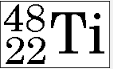
95.
How many protons does this isotope of titanium have?
a)
22
b)
26
c)
70
96.
How many neutrons in C-14?
a)
6
b)
7
c)
14
d)
8
97.
How many neutrons does the isotope below have?     89 36Kr
a)
53
b)
36
c)
89
d)
125
98.
How many neutrons does an atom of the isotope Neon-22 have?
a)
12
b)
10
c)
22
d)
20
99.

Isotopes of an element have a different number of...

a)

Protons

b)

Neutrons

c)

Electrons

d)

Mass

100.

Potassium-39 has how many neutrons?

a)

19

b)

18

c)

20

d)

21

101.

Nickel-59 has how many neutrons?

a)

30

b)

31

c)

32

d)

33

102.

Bromine-80 has how many neutrons?

a)

41

b)

42

c)

44

d)

45

103.

12 protons and 13 neutrons

a)

Mg-12

b)

Mg-13

c)

Mg-25

d)

Mg-24.305

104.

There are two primary isotopes found in any sample of copper: copper-63 and copper-65. The isotope 65Cu composes 69.2% of the sample and 63Cu comprises the other 30.8%. Based on this data, what is the atomic mass of copper?

a)

29 amu

b)

63.546 amu

c)

64.4 amu

d)

63.6 amu

105.
How many neutrons does an atom of the isotope Neon-22 have?
a)
12
b)
10
c)
22
d)
20
106.
Four isotopes of lead include lead-204, lead-206, lead-207, and lead-208.  The average atomic mass of lead is 207.2.  Which isotope of lead is likely to be the most abundant.
a)
204
b)
206
c)
207
d)
208
107.
An atom is electrically neutral when
a)
protons and neutrons are the same
b)
protons and electrons are the same
c)
neutrons and electrons are the same
d)
neutrons balance the protons and electrons
108.
Two isotopes of carbon are carbon-12 and carbon-14.  These isotopes differ from one another by two protons.
a)
true
b)
false
109.

Isotopes of an element have a different number of...

a)

Protons

b)

Neutrons

c)

Electrons

d)

Mass

110.

Bromine-80 has how many neutrons?

a)

41

b)

42

c)

44

d)

45

111.

76 protons and 114 neutrons

a)

Osmium-114

b)

Osmium-76

c)

Osmium-190

d)

Osmium-190.23

112.
An isotope has three forms.  30% have a mass of 4 amu, 20% have a mass of 5 amu and 50% have a mass of 3 amu.  Average atomic mass will be closest to
a)
2 amu
b)
3 amu
c)
4 amu
d)
5 amu
113.
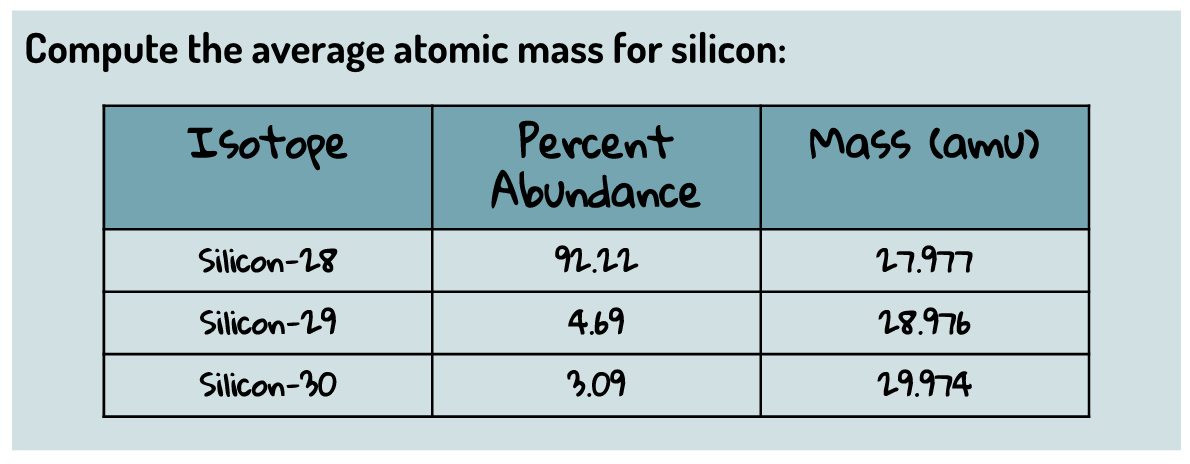
Compute the average atomic mass for silicon:
a)
27.977
b)
28.09
c)
28.976
d)
The average mass cannot be determined from provided information.
114.
Oxygen has 8 protons. What is oxygen's atomic number?
a)
16
b)
8
c)
15.999
d)
0
115.
An isotope has three forms.  30% have a mass of 4 amu, 20% have a mass of 5 amu and 50% have a mass of 3 amu.  Average atomic mass will be closest to
a)
2 amu
b)
3 amu
c)
4 amu
d)
5 amu
116.
An element has two naturally occurring isotopes. One is 10.013 amu and is 19.9% abundant. The other is 11.01 amu and is 80.1% abundant. What is the average atomic mass? What element is it?
a)
9.012, Beryllium
b)
12.011, Carbon
c)
6.941, Lithium
d)
10.812, Boron
117.
Compute the average atomic mass for silicon:
a)
27.977
b)
28.09
c)
28.976
d)
The average mass cannot be determined from provided information.
118.
Oxygen has 8 protons. What is oxygen's atomic number?
a)
16
b)
8
c)
15.999
d)
0
119.
A neutral atom of Carbon-13 has ________ electrons and _________ neutrons
a)
13, 13
b)
6, 7
c)
7, 7
d)
6, 6
120.
Isotopes are atoms of the same element that have the same number of __________ but different number of __________ . Therefore, isotopes of the same element have different masses. 
a)
protons, neutrons
b)
protons, electrons
c)
neutrons, protons
d)
electrons, protons
121.
The  mass of an atom is located  in the ___________ and the volume of an atom is made of the ____________
a)
electron cloud, nucleus
b)
electron cloud, energy levels
c)
nucleus, electron cloud
d)
nucleus, neutrons
122.
Do the following atoms belong to the same element? Explain
       Aluminum-27
       An atom with 14 protons and 13 neutrons
a)
Yes because they have the same number of protons
b)
Yes because they have the same mass
c)
No because they have different number of protons
d)
No because they have different number of neutrons
123.
What is the atomic number of Neon, Ne?
a)
10
b)
20.1798
c)
10.1798
d)
7
124.
A neutral atom would become an ion that has a charge of 2+ by 
a)
Losing two protons
b)
Losing two neutrons
c)
Losing two electrons
125.
If neutral copper atom (atomic number 29) becomes an ion that has a charge of 2+, how many electrons does the resulting ion have?
a)
27
b)
28
c)
29
d)
31
126.
Fluorine has an atomic number of 9. What can you conclude about an atom of fluorine from this fact?
a)
it has 9 protons
b)
it weighs 9 grams
c)
it has 9 electron shells
d)
it has a boiling point of 9 degree celsius
127.
In what part of an atom can protons be found?
a)
inside the electron
b)
inside the neutron
c)
inside the atomic nucleus
d)
inside the electron shells
128.
If a sulfur atom has 16 protons, 16 electrons, and 16 neutrons, its atomic mass is:
a)
16
b)
32
c)
48
d)
64
129.
If a hydrogen atom has 1 proton, 1 electron, and 1 neutron, its atomic number is:
a)
1
b)
2
c)
3
d)
4
130.
On the periodic table, how is atomic mass represented?
a)
As an average of the mass of different isotopes
b)
as the exact mass of every atom
c)
as the mass of the most common isotopes
d)
As the masses of all protons added together
131.
What do carbon-12 and carbon-14 have in common?
a)
they have same number of protons
b)
they have the same number of neutrons
c)
they have the same atomic mass
d)
they have the same atomic weight
132.
What is an ion?
a)
A Charged Atom
b)
A Large Atom
c)
A Small Atom
d)
A Cute Atom
133.

What did scientists use to look for positively charged particles in the atom?

a)

Electron microscope

b)

Anode ray tube

c)

X-ray machine

d)

Particle accelerator

134.

What were the anode rays referred to as?

a)

Electrons

b)

Protons

c)

Neutrons

d)

Positrons

135.

How many times heavier is a proton compared to an electron?

a)

2 times

b)

10 times

c)

100 times

d)

1837 times

136.

What do isotopes of an element have in common? How do they differ?

a)

They have the same number of protons but different number of neutrons.

b)

They have the same number of neutrons but different number of protons.

c)

They have the same number of electrons but different number of protons.

d)

They have the same number of protons, neutrons, and electrons.

137.

C-12 is an isotope of carbon; what is its atomic number and its atomic mass number?

a)

Atomic number: 6, Atomic mass number: 12

b)

Atomic number: 12, Atomic mass number: 6

c)

Atomic number: 6, Atomic mass number: 6

d)

Atomic number: 12, Atomic mass number: 12

138.

Two atoms are found to contain the same number of neutrons. Can we use this information to determine that they are the same element? Explain.

a)

Yes, because the number of neutrons determines the element.

b)

No, because the number of neutrons does not determine the element.

c)

Yes, because the number of neutrons and protons determines the element.

d)

No, because the number of neutrons and protons does not determine the element.

139.

Use the table below find the average atomic mass of lithium (Li). Isotope % Abundance Atomic Mass Li-6 7.59% 6.015121 u Li-7 92.41% 7.016003 u

a)

6.94 u

b)

6.98 u

c)

7.01 u

d)

7.05 u

140.

Use the table below to find the average atomic mass of oxygen (O). Isotope % Abundance Atomic Mass O-16 99.75% 15.994916 O-17 00.04% 16.999132 O-18 00.21% 17.999153

a)

15.99 u

b)

16.00 u

c)

16.01 u

d)

16.02 u

141.

Why is the atomic mass number and the average atomic mass different?

a)

The atomic mass number is the sum of protons and neutrons, while the atomic mass is the average mass of all isotopes.

b)

The atomic mass number is the average mass of all isotopes, while the atomic mass is the sum of protons and neutrons.

c)

The atomic mass number is the number of protons, while the atomic mass is the number of neutrons.

d)

The atomic mass number is the number of neutrons, while the atomic mass is the number of protons.

142.

What is the term for atoms of the same element that have different numbers of neutrons?

a)

Isomers

b)

Isotopes

c)

Ions

d)

Isobars

143.

What is the atomic mass of an element with 7 protons and 7 neutrons?

a)

7 u

b)

14 u

c)

21 u

d)

28 u

144.

The average mass of all carbon (C) atoms is 12.011 u. Do most carbon atoms have 6 neutrons or 7 neutrons? Explain.

a)

6 neutrons, because the average mass is closer to the mass of C-12.

b)

7 neutrons, because the average mass is closer to the mass of C-13.

c)

6 neutrons, because the average mass is closer to the mass of C-13.

d)

7 neutrons, because the average mass is closer to the mass of C-12.

145.

O-16 is an isotope of oxygen; what is its atomic number and its atomic mass number?

a)

Atomic number: 8, Atomic mass number: 16

b)

Atomic number: 16, Atomic mass number: 8

c)

Atomic number: 8, Atomic mass number: 8

d)

Atomic number: 16, Atomic mass number: 16

146.
An isotope has three forms.  30% have a mass of 4 amu, 20% have a mass of 5 amu and 50% have a mass of 3 amu.  Average atomic mass will be closest to
a)
2 amu
b)
3 amu
c)
4 amu
d)
5 amu
147.
Oxygen has 8 protons. What is oxygen's atomic number?
a)
16
b)
8
c)
15.999
d)
0
148.
A neutral atom of Carbon-13 has ________ electrons and _________ neutrons
a)
13, 13
b)
6, 7
c)
7, 7
d)
6, 6
149.
Isotopes are atoms of the same element that have the same number of __________ but different number of __________ . Therefore, isotopes of the same element have different masses. 
a)
protons, neutrons
b)
protons, electrons
c)
neutrons, protons
d)
electrons, protons
150.
The  mass of an atom is located  in the ___________ and the volume of an atom is made of the ____________
a)
electron cloud, nucleus
b)
electron cloud, energy levels
c)
nucleus, electron cloud
d)
nucleus, neutrons
151.
A neutral atom would become an ion that has a charge of 2+ by 
a)
Losing two protons
b)
Losing two neutrons
c)
Losing two electrons
152.
Fluorine has an atomic number of 9. What can you conclude about an atom of fluorine from this fact?
a)
it has 9 protons
b)
it weighs 9 grams
c)
it has 9 electron shells
d)
it has a boiling point of 9 degree celsius
153.
In what part of an atom can protons be found?
a)
inside the electron
b)
inside the neutron
c)
inside the atomic nucleus
d)
inside the electron shells
154.
If a sulfur atom has 16 protons, 16 electrons, and 16 neutrons, its atomic mass is:
a)
16
b)
32
c)
48
d)
64
155.
If a hydrogen atom has 1 proton, 1 electron, and 1 neutron, its atomic number is:
a)
1
b)
2
c)
3
d)
4
156.
On the periodic table, how is atomic mass represented?
a)
As an average of the mass of different isotopes
b)
as the exact mass of every atom
c)
as the mass of the most common isotopes
d)
As the masses of all protons added together
157.
What do carbon-12 and carbon-14 have in common?
a)
they have same number of protons
b)
they have the same number of neutrons
c)
they have the same atomic mass
d)
they have the same atomic weight
158.
What is an ion?
a)
A Charged Atom
b)
A Large Atom
c)
A Small Atom
d)
A Cute Atom
159.
Do the following atoms belong to the same element? Explain
       Aluminum-27
       An atom with 14 protons and 13 neutrons
a)
Yes because they have the same number of protons
b)
Yes because they have the same mass
c)
No because they have different number of protons
d)
No because they have different number of neutrons
160.

Imagine you're a detective, and your mission is to identify a mysterious substance. You need to figure out what it is, its properties, and how it interacts and changes. Which science would you use to solve this mystery?

a)

Physics

b)

Chemistry

c)

Biology

d)

Geology

161.

Imagine you're a tiny explorer, journeying into the heart of matter itself! What would you say is the tiniest particle you'd encounter that still keeps its own unique properties?

a)

A bustling Molecule city

b)

An adventurous Atom

c)

An elemental Element

d)

A complex Compound

162.

Can you guess how many unique types of chemical elements are there in our vast universe?

a)

90

b)

118

c)

50

d)

60

163.

Ready for a cosmic journey? Here's your question: What's the most widely accepted theory about how our universe came into existence?

a)

Is it the String Theory?

b)

Or, could it be the Big Bang Theory?

c)

Maybe it's the Quantum Theory?

d)

Or is it the Relativity Theory?

164.

Can you guess the name of the spectacular event that happened approximately 14 billion years ago and is considered the grand opening of our universe?

a)

Big Bang

b)

Black Hole

c)

Supernova

d)

Galaxy Formation

165.

Imagine you're a time-traveling scientist! Can you tell us the name of the heat that's been hanging around since the Big Bang and we can still observe today?

a)

Cosmic Background Radiation

b)

Thermal Energy

c)

Solar Radiation

d)

Nuclear Fusion

166.

Imagine you're a tiny particle during the Big Bang. What would happen if you, a matter, bumped into your opposite, an antimatter?

a)

You'd both annihilate each other

b)

You'd both form stable atoms

c)

You'd both transform into photons

d)

You'd both create a singularity

167.

Imagine you're a time-traveling scientist! What do you think happened when the universe cooled down enough for stable atoms to form?

a)

The universe threw a party and became transparent!

b)

The universe put on a cloak and became opaque.

c)

The universe had a growth spurt and expanded rapidly.

d)

The universe decided to shrink and contracted.

168.

Imagine you could travel back in time to the moment of the Big Bang. What do you think happened to the photons from that spectacular event?

a)

They've been on a cosmic journey, propagating through the universe ever since

b)

They vanished without a trace, disappearing completely

c)

They underwent a magical transformation into matter

d)

They hit the gym and bulked up, becoming more energetic