wayground logo

Free Printable Worksheets

Font size

S
M
L
XL
Worksheets

Env Sci Evolution Review

Total questions: 40

Worksheet time: 30mins

Name
Class
Date
1.

What is the age of Earth?

a)

1 billion years

b)

1.8 billion years

c)

4.6 billion years

d)

3.9 billion years

2.
Who was the first naturalist to study evolution?
a)
Charles Darwin
b)
Gregor Mendal
c)
Carolus Linneaus
d)
Thomas Edison
3.
This is a process by which organisms inherited advantageous traits that tend to reproduce more successfully than the other organisms do. 
a)
Artificial selection
b)
Natural selection
c)
Populations
d)
Environment
4.
This is a process in which organisms gradually change over time.
a)
Environment
b)
Competition
c)
Evolution
d)
Fossils
5.
This is a group of organisms of the same species that live in a specific geographical area.
a)
Environment
b)
Evolution
c)
Biological diversity
d)
Populations
6.
These are natural differences within a species.
a)
Evolution
b)
Genetic variation
c)
Biological diversity
d)
Populations
7.
This is an inherited trait that helps an organism survive and reproduce in its environment.
a)
Evolution
b)
Population
c)
Environment
d)
Adaptation
8.
This is the trace or remains of an organism that lived long ago, most commonly preserved in sedimentary rock.
a)
Competiton
b)
Extinction
c)
Evidence
d)
Fossil
9.
Survival of the fittest or when favorable adaptations reproduce faster is called what?
a)
Evolution
b)
Adaptation
c)
Natural selection
d)
Fossilization
10.
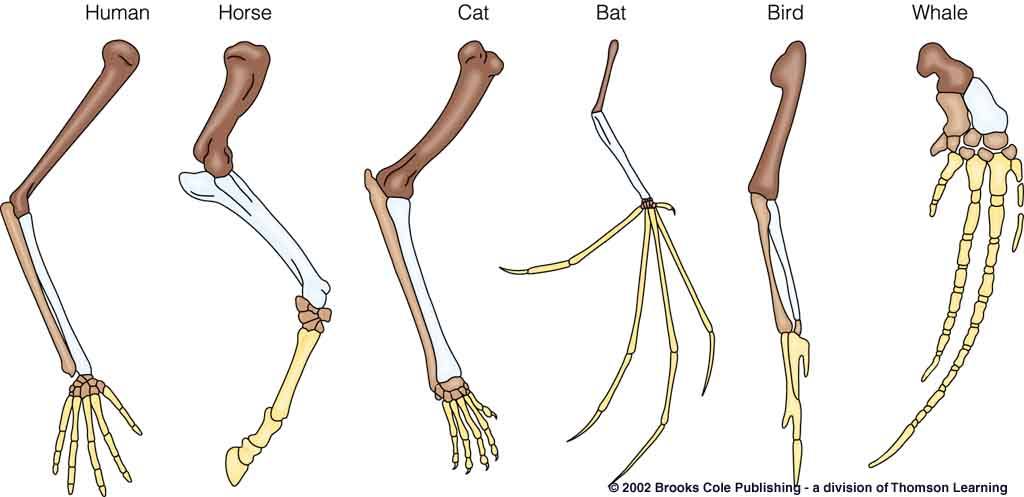
Structures with the same parts have different functions; suggests that organisms share a common ancestry
a)
vestigial structures
b)
homologous structures
c)
adaptive radiation
d)
fossil
11.
Which of the following is an example of a vestigial structure?
a)
the wings of a red-tailed hawk
b)
the hind limbs of a house cat
c)
the fins of sharks
d)
the tailbone of a human
12.
The diagram shows fossils in different rock layers. Which of these statements about the age of these fossils is most likely correct?
a)
Fossil A and C are the same age
b)
Fossil B is older than fossil C
c)
Fossils A is older than fossil B
d)
Fossil D is older than fossil C
13.

What do we call a change in a species over time?

a)

Adaptation

b)

Evolution

c)

Extinction

d)

Environmental influences

14.
Ostrich wings are examples of
a)
homologous structures
b)
vestigial structures
c)
adaptations
d)
traits
15.
Why do embryologist study embryos?
a)
to see if they are related
b)
to understand adaptations
c)
to determine the age
d)
to learn what parents are vestigial
16.
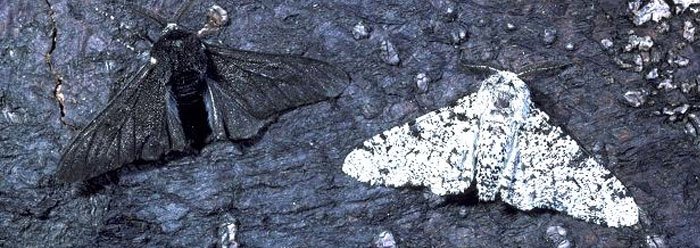
The environment around Manchester, England, changed during the Industrial Revolution.  How did this change affect peppered moths living in the area?
a)
Natural selection favored moths with dark wings because predators could not see them on the soot-colored trees.
b)
Natural selection favored moths with white wings that were easy for predators to see.
c)
Natural selection favored moths with white wings because predators could not see them on the soot-colored trees.
d)
Natural selection caused moths with white wings to become extinct.
17.
Which layer is oldest?
a)
A
b)
W
c)
G
d)
Z
18.
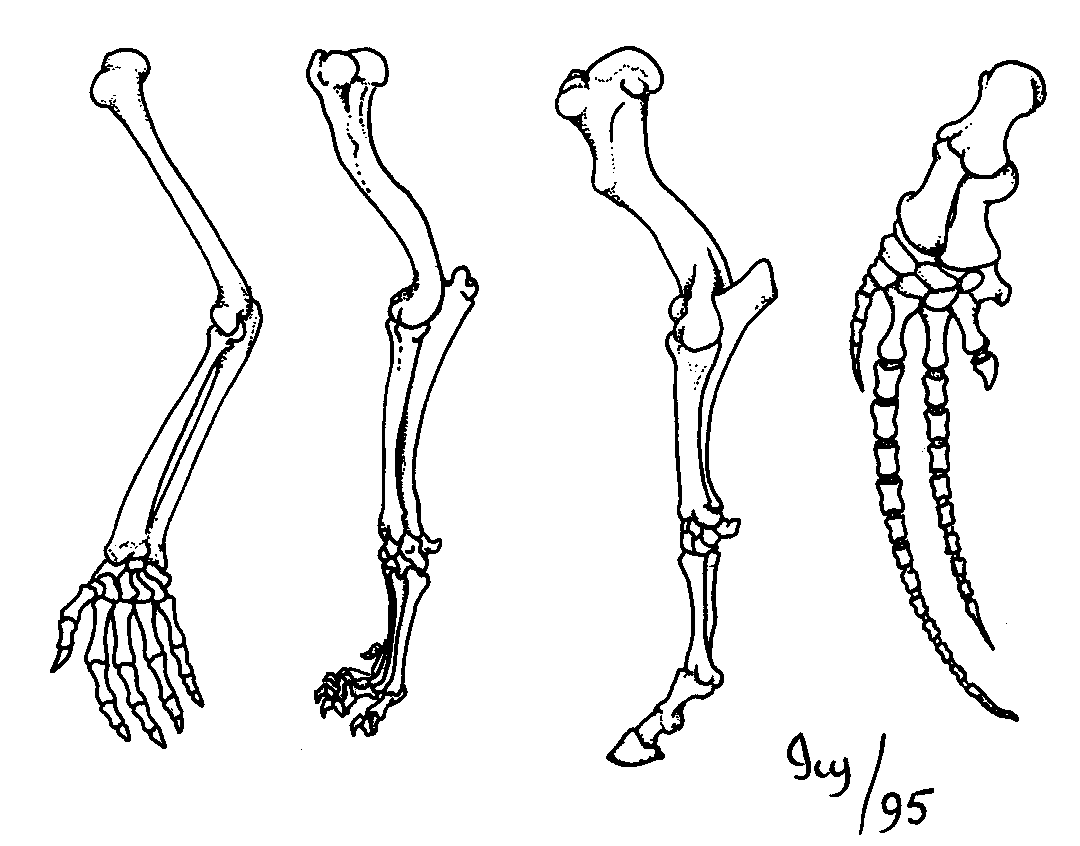
The structures shown are_________
a)
homologous
b)
heterologous
c)
analogous
d)
vestigial
19.
In natural selection, the selective agent is the
a)
humans
b)
mutations
c)
breeders
d)
environment
20.
what did Charles Darwin observe in finch populations of the Galapagos Islands off the coast of South America?
a)
different species on different islands
b)
all species on one of the islands
c)
identical species on all the islands
d)
the same species as North America
21.
What is the process in which humans breed organisms for certain traits?
a)
natural selection
b)
inheritance
c)
artificial selection
d)
descent withOUT modification
22.
Darwin wrote that organisms with traits that are best suited to the environment will ________________
a)
increase in number
b)
become extinct
23.
Some organisms that share a common ancestor have features that have different functions, but similar structures.  These are known as
a)
vestigial structures
b)
analogous structures
c)
homologous structures
d)
fossil structures
24.
What increases genetic variation when animals move from one population to another
a)
genetic drift
b)
sexual selection
c)
bottleneck effect
d)
gene flow
25.
This mechanism of evolution occurs when populations migrate.
a)
Extinction
b)
Gene flow
c)
Genetic drift
d)
Natural Selection
26.
Why are advantageous traits more likely to be passed onto offspring?
a)
Because they are more likely to survive and reproduce.
b)
Because they come from dominant alleles.
c)
Because they come from recessive alleles.
d)
Because the trait is an acquired phenotype.
27.
Natural selection is when ____________ decides who survives and who doesn't
a)
nature
b)
humans
c)
animals
d)
years
28.
The trees these moths used to live on were white, but have been covered in soot from coal factories. Which moth will be more successful in this environment?
a)
Dark moth
b)
Light moth
c)
Both will be equally successful
d)
Neither will be successful
29.

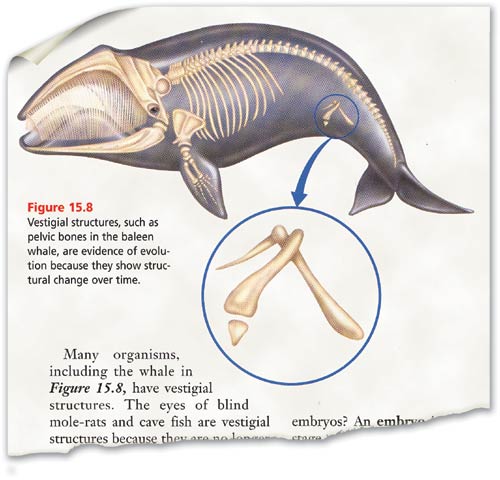
Whales are aquatic mammals that contain a pelvis (hip) bone. Even though it does not aid in its movement, the function must have been used by a common ancestor of the whale. Thus, the pelvis is referred to as a(n)

a)

vestigial structure

b)

analogous structure

c)

homologous structure

30.
A theory has significant evidence to support it.  True or False
a)
True
b)
False
31.
Genetic differences between organisms of the same species
a)
Variation
b)
Adaptation
c)
Behavior
d)
Environment
32.
The long and sharp beak of a woodpecker is an example of:
a)
Natural Selection
b)
Selective Breeding
33.
The scientific name for humans is _______ ____
a)
Homo sapiens
b)
Homo neandertal
c)
homo Sapiens
d)
homo sapiens
34.
__________ characters are similar characteristics that have evolved separately in two unrelated organisms.
a)
analogous
b)
homologous
c)
cladistic
d)
phylogenic
35.
_________ characters may or may not be similar between two organisms but they developed from a common ancestor.
a)
homologous
b)
analogous
c)
cladistic
d)
phylogenic
36.
Which of the following is a term for a group of similar organisms that can reproduce fertile offspring?
a)
individual
b)
population
c)
species
d)
fossil
37.

What is the difference between allopatric and sympatric speciation?

a)

Allopatric involves a physical barrier while sympatric does not

b)

Sympatric involves a physical barrier while allopatric does not

c)

Allopatric involves founder effect while sympatric does not

d)

Sympatric involves founder effect while allopatric does not

38.

Which of the following is an example of an ancestral trait?

a)

Teeth

b)

Tails

c)

Bird wings

d)

Hip bones

39.

Which of the following is NOT a principle of Hardy-Weinberg Equilibrium?

a)

Very large population with no genetic drift

b)

No emigration or immigration

c)

Random mating where no sexual selection occurs

d)

Allopatric speciation

40.

What is fitness?

a)

Mrs. Cantin getting swoll at the gym

b)

An organism's reproductive success and ability to survive

c)

The health of an ecosystem

d)

An example of a derived trait