
 Worksheets
Topic 7 Merged Review
Total questions: 49
Worksheet time: 1hrs 25mins

A hydra reproduces when an outgrowth, or bud, forms and continues to develop until it falls off of the parent. This is an example of:
Binary Fission
Sporulation
Budding
Vegetative Propagation
How does the DNA of the offspring formed from asexual reproduction compare to the parent?
none of the DNA is transferred to the offspring
half of the DNA is transferred to the offspring
the DNA of the offspring is identical to the DNA of the parent
none of these are correct
A multicellular organism that typically reproduces through budding.
bacteria
hydra
planaria
yeast
none of these
Which of these is NOT an advantage of asexual reproduction.
Enables organisms to reproduce without a mate
Requires less time and energy
Results in little genetic variation
Enables organisms to produce large amounts of offspring
Enables plants to spread and colonize an area in a short period of time
Which types of organisms typically reproduce by binary fission?
hydra
bacteria
planaria
plants
all of these
When a new organism grows on the body of its parent until it can survive on its own.
budding
binary fission
regeneration
vegetative reproduction
mitotic cell division
An example of an organisms that can typically reproduce through regeneration.
starfish / sea stars
sponges
planarians
all of these

What type of asexual reproduction is shown in the diagram?
budding
sporulation
vegetative propagation
binary fission
A type of asexual reproduction performed in a laboratory that produces identical individuals from a cell or from a cluster of cells taken from a multicellular organism.
cloning
regeneration
binary fission
budding
vegetative reproduction
True or False: Binary Fission is a way to reproduce asexually.
True
False
Which process is considered to be faster?
Asexual Reproduction
Sexual Reproduction
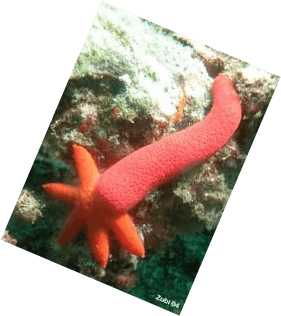
What type of asexual reproduction is taking place?
Fishermen work hard to catch and remove all the starfish that get into their favorite shell fishing beds and the “underwater farms” where they raise clams and oysters. In the past, they put the starfish into their boats, cut them up with knives, and then throw the pieces of starfish overboard. They thought this would kill the starfish. What they did not know was that each piece of starfish will grow into a whole new animal.
Regeneration
Vegetative propagation
Budding
Binary Fission
Which type of asexual reproduction is taking place?
A planarian is a flatworm. If a planarian was injured by a predator, it could re-grow its body parts. If the body parts were not eaten by the predator, the part could re-grow into a whole new planarian as well.
Budding
Binary Fission
Vegetative propagation
Regeneration

What type of asexual reproduction is shown in the diagram?
budding
binary fission
sporulation
regeneration
Occurs when an animal offspring grows from a piece of its parent.
binary fission
budding
mitotic cell division
regeneration
How many parent(s)are needed for asexual reproduction?
2
1
3
It depends.
Before cells can divide, what must be copied?
mitochondria
cytoplasm
DNA
Cell Wall

The chromosomes line up across the middle of the cell in which phase?
Anaphase
Interphase
Prophase
Metaphase

Identify the phase of cell division/mitosis.
prophase
metaphase
anaphase
telophase

Which shows the stages of cell division/mitosis in the correct order?
C,D, B, A, F, E
D,A,F,C,E,B
B,E,C,F,A,D
C,B,D,A E,F

This diagram depicts which phase of cell division/mitosis?
prophase
metaphase
anaphase
telophase

What phase of cell division/mitosis is pictured?
Prophase
Metaphase
Anaphase
Telophase
Which of the following is NOT an example of cell division/mitosis?
Growth
Repair of damaged cells
Replacement of dead cells
Reproducing
How many daughter cells are produced in cell division/mitosis?
1
2
3
4

Which phase of cell division/mitosis is shown here?
Anaphase
Cytokinesis
Telophase
Metaphase

Which phase of cell division/mitosis is shown here?
Cytokinesis
Interphase
Anaphase
Metaphase

Which phase of cell division/mitosis is shown here?
Cytokinesis
Anaphase
Telophase
Prophase

What phase of cell division/mitosis is represented by letter A?
Anaphase
Metaphase
Prophase
Telophase
Interphase

What phase of cell division/mitosis is represented by letter C?
Anaphase
Metaphase
Prophase
Telophase
Interphase

What phase of cell division/mitosis is represented by letter D?
Anaphase
Metaphase
Prophase
Telophase
Interphase
What phase of cell division/mitosis is represented by letter E?
Anaphase
Metaphase
Prophase
Telophase
Interphase
What phase of cell division/mitosis is represented by letter B?
Anaphase
Metaphase
Prophase
Telophase
Interphase
Male and female reproductive cells are collectively known as:
spores
pollen
gametes
offspring
____________________ occurs when a male gamete (sperm) combines with a female gamete (egg).
sporulation
fertilization
fission
regeneration
How many parents are required for sexual reproduction?
0
1
2
3
What are some advantages of asexual reproduction are: (select all that apply - there are 2)
it only requires one organism
it takes less energy than sexual reproduction
offspring are different from the parent
there is a lot of genetic variety
What is an advantage of sexual reproduction?
genetic variation in offspring
offspring are identical
is less complicated than asexual reproduction
What is the single cell produced by fertilization called?
Sperm
Zygote
Gamete
Egg
What is the male gamete called?
Zygote
Egg
Sperm
Fertilization
What is the female gamete called?
Zygote
Egg
Sperm
Fertilization

A human being has a body cell that has 46 chromosomes. How many would be found in a gamete?
23
46
69
92

Which letter(s) in the diagram correspond to cells that are haploid(have half the normal amount of DNA)?
A
B
C
A and B

What is one of the advantages for an organism to reproduce sexually?
survival of the fittest
overproduction
genetic variation
cloning

