wayground logo

Free Printable Worksheets

Font size

S
M
L
XL
Worksheets

chemistry

Total questions: 175

Worksheet time: 5hrs 52mins

Name
Class
Date
1.

An electron is

a)

positively charged

b)

neutral

c)

negatively charged

2.

atomic number is

a)

the number of protons

b)

the number of electrons

c)

the number of neutrons

d)

the location of an atom on the periodic table

3.

Atomic Mass is the number of

a)

protons and neutrons in the nucleus of an atom

b)

protons and electrons in the nucleus of an atom

c)

neutrons and electrons in the nucleus of an atom

4.

Conservation of mass means

a)

all the atoms present before a chemical reaction are not present after

b)

atoms present before chemical reactions are present after

c)

new substances and new elements are formed in a chemical reaction

5.

An elements is

a)

a substance that cannot be split into simpler substances

b)

a substance that can be split into simpler substances

6.

A pure substance that is a compound is made out of

a)

particles of more than one type of atom

b)

particles of the same type of atom

c)

a mixture of two or more substances that can be physically separated

7.

A molecule is

a)

a singular particle of a particular element

b)

another name for an element

c)

2 or more atoms that are combined

8.

which of the statements on physical changes are correct

a)

A physical change cannot be reversed

b)

A physical change is a change in state

c)

A physical change is a change in form

d)

A physical change is where new substances are formed

9.

Signs of a chemical change include;

a)

change of colour, change of temperature, precipitate (solid) formed, gas released.

b)

change of colour, reversing back to original form, precipitate (solid) formed, gas released.

10.

Characteristics of metals on the periodic table are

a)

they are not able to be oxidised

b)

they are poor conductors of heat and electricity

c)

have free electrons

11.

Water is the product of the reactants:

a)

oxygen and water

b)

oxygen and carbon

c)

hydrogen and oxygen

12.

In a chemical reaction, reactants contact each other, bonds between atoms in the reactants

are broken, and

a)

atoms rearrange and form new bonds to make the products.

b)

atoms remain the same and do not form new bonds to make the proudcts

13.

The type of reaction that releases energy as heat is called

a)

endothermic

b)

exothermic

c)

respiration

d)

photosynthesis

14.

if an acid is diluted it

a)

has a large amount of water mixed into it

b)

has a small amount of water mixed into it

c)

is very 'acidus' sour

d)

is corrosive and cannot be eaten

15.

which of the statements on physical changes are correct

a)

A physical change cannot be reversed

b)

A physical change is a change in state

c)

A physical change is a change in form

d)

A physical change is where new substances are formed

16.

bases are the same as an acid

a)

true

b)

false

17.
How many protons does an atom of mercury have?
a)
200.6
b)
120
c)
80
d)
0
18.
Which properties are characteristic of the group 1 metals?
a)
high reactivity and the formation of stable compounds
b)
high reactivity and the formation of unstable compounds
c)
low reactivity and the formation of stable compounds
d)
low reactivity and the formation of unstable compounds
19.
What is Reactivity?
a)
The characteristics of a substance that can be observed without changing the identity of the substance.
b)
A property making a substance react with certain substances
c)
When a substance combines with another to form a new substance.
d)
I really don't know at all.
20.
Gold, which is in Group 11 on the periodic table, is an example of a(n) ____________
a)
Alkali Metal 
b)
Other Metal 
c)
Transition Metal
d)
Alkaline Earth Metal
21.
Metalloids are atoms that combine properties of both metals and non-metals.  Which characteristics are included with metalloids?
a)
Shiny, ductile, semiconductors
b)
Dull, not malleable, not conductive
c)
Luster, liquid, silver
d)
No luster, not ductile
22.
Which is an example of a physical property?
a)
ability to react with acid
b)
 state of matter
c)
flammability
d)
ability to react with oxygen
23.
Which of the following is a physical property?
a)
melting point
b)
flammability
c)
ability to rust
24.
Which group of the periodic table is composed of inert (not reactive)  gases?
a)
alkali metals
b)
alkaline earth metals
c)
halogens
d)
noble gases
25.
Some clues of a chemical change include..
a)
Melting, Breaking, Crushing
b)
Bending,Boiling, Foaming
c)
Evaporating, Cutting, production of heat
d)
Fizzing, Foaming, Change in color
26.
Is mold growing on cheese a physical or chemical change?
a)
Physical 
b)
Chemical
27.
How many atoms of carbon (C) are in C6H12O6?
a)
3
b)
6
c)
12
d)
24
28.
How many Sodium (Na) are in 6NaCl?
a)
1
b)
12
c)
6
29.
How many Aluminum are in Al2O3?
a)
3
b)
2
c)
5
30.
How many Hydrogen are in 4H2O?
a)
6
b)
8
c)
2
d)
4
31.
The substances listed on the left side of a chemical equation are the
a)
Products
b)
Coefficients
c)
Precipitates
d)
Reactants
32.
In chemical reactions, what does the principle of conservation of mass mean?
a)
Matter is not created or destroyed.
b)
The total mass of the reactants is greater than the total mass of the products.
c)
The total mass of the reactants is less than the total mass of the products.
d)
Matter is not changed.
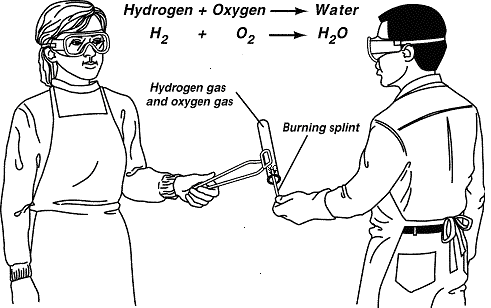
33.
Identify the reactant(s) and product(s) of the reaction.
a)
All three are reactants and none are products.
b)
Hydrogen and water are the reactants, and oxygen is the product.
c)
Water and oxygen are the reactants, and hydrogen is the product.
d)
Hydrogen and oxygen are the reactants, and water is the product.
34.
The substances listed on the right side of a chemical equation are the
a)
Yields
b)
Reactants
c)
Products
d)
Precipitates
35.
How many HCl molecules do you need to balance this equation? 
Mg +  __HCl --->  MgCl2 + H2
a)
1
b)
2
c)
3
d)
4
36.
Which one is a compound?
a)
Co
b)
Br
c)
Fe
d)
CO
37.
Which one is an element?
a)
Co
b)
CO
c)
CO2
d)
CO3-2
38.
How many elements are found in the following molecule? Mg(ClO3)2
a)
1
b)
4
c)
3
d)
5
39.
Which number should go in the blank?
_ H2 + O2 -> 2 H2O
a)
1
b)
2
c)
3
d)
0
40.
Which number should go in the blank?
2 Na+ _ Cl2 -> 2 NaCl
a)
1
b)
2
c)
3
d)
0
41.
Which of the following shows the correct way to balance the chemical equation?
Fe + O2 -> Fe2O3
a)
4Fe + 3O2 -> 2Fe2O3
b)
2 Fe + 3O2 -> Fe2O6
c)
4 Fe + O6 -> 2Fe2O3
d)
None of the options are correctly balanced.
42.
Which of the following reactions is balanced?
a)
2CH4 + O2 -> CO2 + H2O
b)
CH4 + 2O2 -> CO2 + H2O
c)
CH4 + 2O2 -> CO2 + 2H2O
d)
None of the chemical equations are balanced.
43.
Balance this equation.
_CF+ _Br-- _CBr+ _F2
a)
2,1,2,1
b)
1,2,2,1
c)
1,2,1,2
d)
2,2,2,2
44.
Balance this equation.
_CH4 + _O--> _CO+ _H2O
a)
1,2,1,1
b)
2,1,2,1
c)
1,2,1,2
d)
0,2,0,2
45.
Balance this equation
_Al +_HCl --> _H+_AlCl3
a)
2, 6, 3, 2
b)
it is already balanced
c)
4, 12, 3, 4
d)
2, 1, 4, 5
46.

Which is the Law of Conservation of Matter?

a)

matter cannot be created or destroyed, it only rearranges

b)

matter can be created but it cannot be destroyed, it never rearranges

c)

matter can be destroyed but it cannot be created, it usually just rearranges

d)

matter is an unproven theory created by Hans Geiger
47.
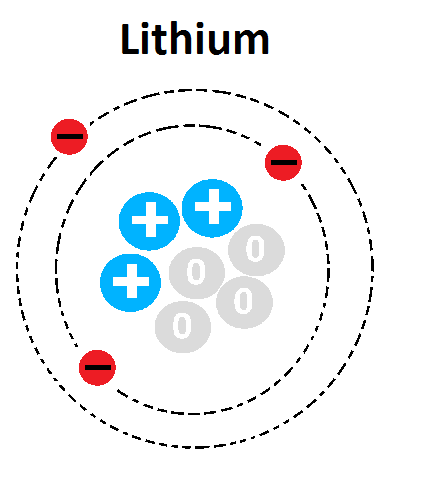
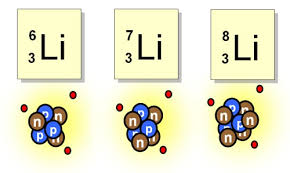
which atom has  4 neutrons?
a)
Li-6
b)
Li-7
c)
Li-8
d)
they have the same # of neutrons
48.
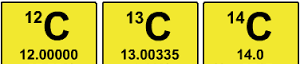
What do these isotopes of carbon all have in common?
a)
neutrons & mass number
b)
atomic number and neutrons
c)
atomic number and electrons
d)
protons, atomic number, and mass number
49.
Isotopes are atoms of the same element with different #’s of __________ & therefore different __________.
a)
n0 ;  atomic #’s
b)
p+ ; atomic #’s
c)
e- ; atomic masses
d)
n0 ; atomic masses
50.
What is the atomic number?
a)
the number of protons
b)
the number of protons and neutrons
c)
the number of neutrons
d)
the number of protons and electrons
51.
What is the mass number defined as?
a)
the number of protons
b)
the number of protons and neutrons
c)
the number of neutrons
d)
the number of protons and electrons
52.
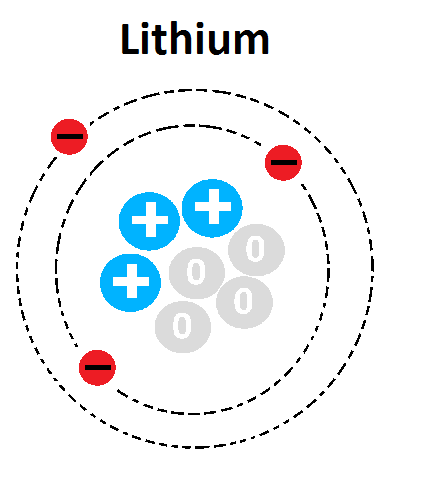
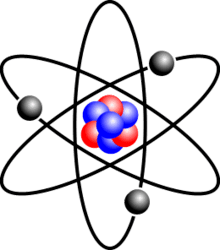
What is the atomic number of this atom?
a)
1
b)
3
c)
4
d)
7
53.

What is the mass number of this atom?

a)

1

b)

3

c)

4

d)

7

54.

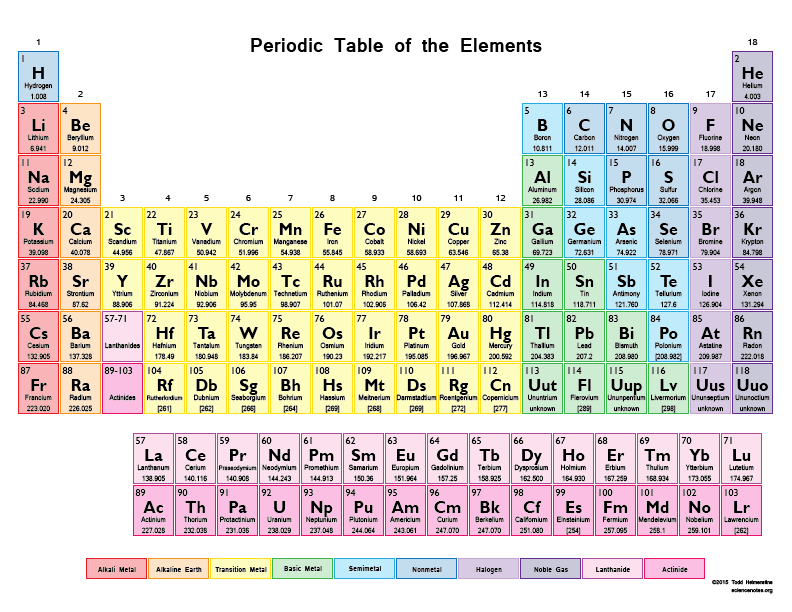
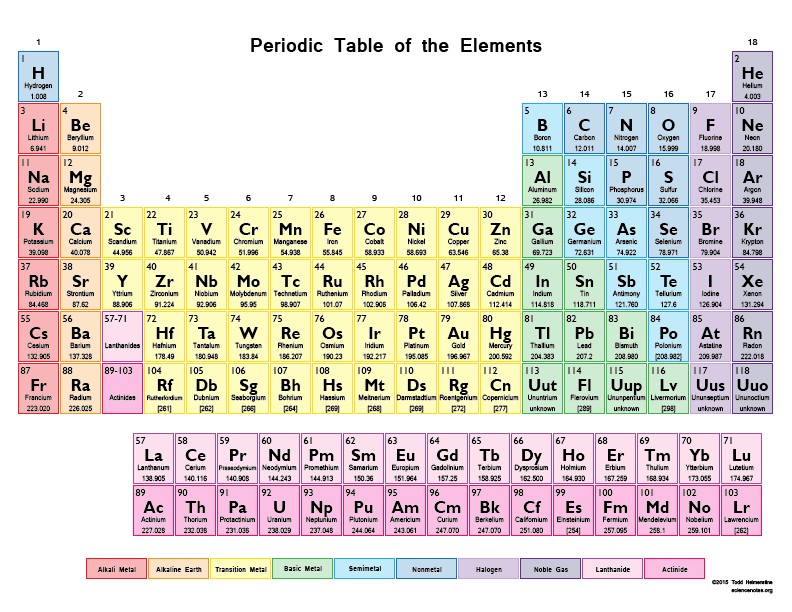
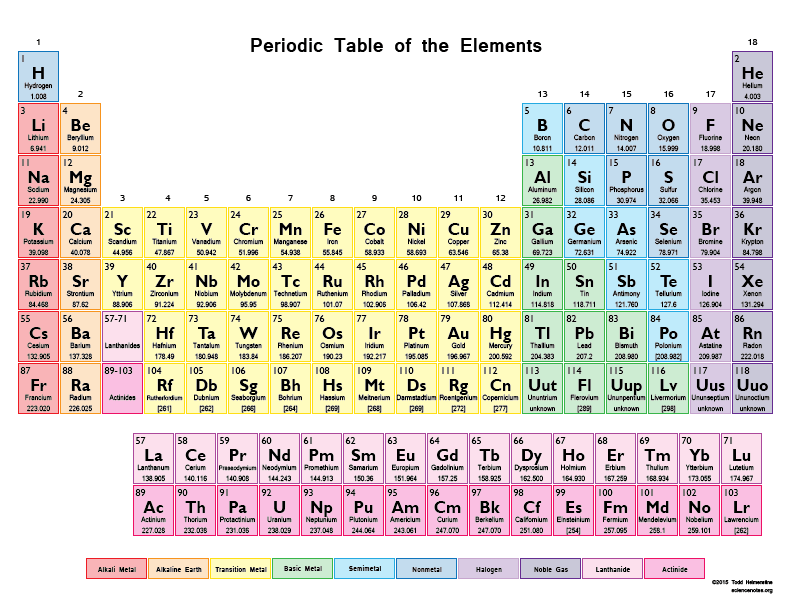
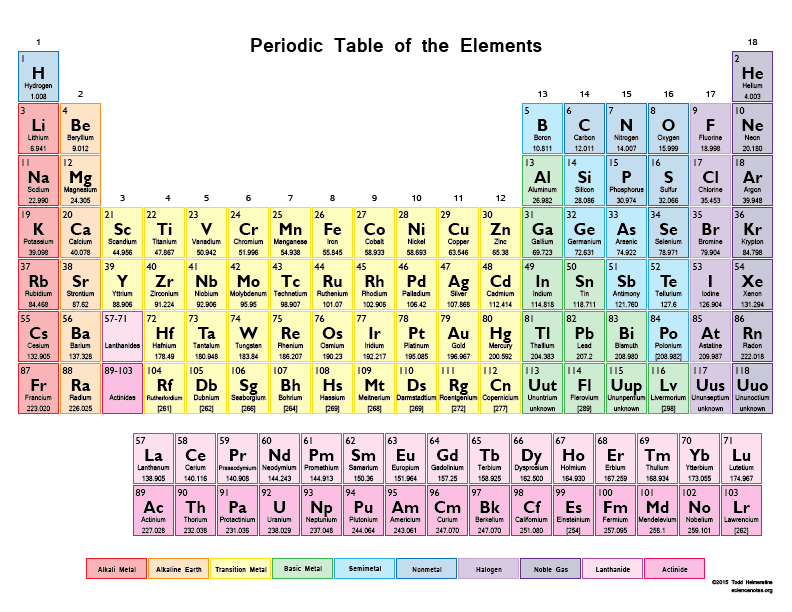
What is the atomic number of Barium, Ba? (enlarge the periodic table)

a)

20

b)

38

c)

56

d)

88

55.

How many protons are in a sodium atom, Na? (tap to enlarge the periodic table)

a)

Sodium has 1 proton.

b)

Sodium has 3 protons.

c)

Sodium has 11 protons

56.

An element has the mass number 12 and atomic number 6. The number of neutrons in it is:

a)

6

b)

10

c)

4

d)

8

57.

Which subatomic particle has a negative charge in the atom?

a)

proton

b)

neutron

c)

electron

d)

quark

58.

How many neutrons does C-14 [atomic #6] contain? (tap to enlarge the image)

a)

6

b)

7

c)

14

d)

8

59.

How many neutrons does an atom of the isotope Neon-22 have? (tap to enlarge the image)

a)

12

b)

10

c)

22

d)

20

60.

If an atom has 10 electrons, how many protons does it have?

a)

0

b)

1

c)

10

d)

5

61.

Isotopes have different numbers of

a)

protons

b)

neutrons

c)

electron

d)

properties

62.

How many neutrons does an atom of Nitrogen-13 have? (tap to enlarge the image)

a)

6

b)

7

c)

13

d)

5

63.

Atoms of the same element which have a different number of neutrons are called _________________.

a)

ions

b)

isotopes

c)

quarks

d)

molecules

64.

What is the atomic number of Nickel? (enlarge the periodic table)

a)

110

b)

28

c)

46

d)

78

65.

How many neutrons does the isotope of lithium - 8 have?

a)

8

b)

3

c)

4

d)

5

66.

How many electrons are in an atom with an atomic number of 50? You will need a periodic table to help you.

a)

5

b)

8

c)

50

d)

2

67.

The number in Kr-84 represents what about Krypton?

a)

The number of electrons

b)

The number of protons

c)

The mass number

68.
2HI --> H2 + I2
a)
synthesis
b)
decomposition
c)
single replacement
d)
double replacement
69.
Zn + H2S --> ZnS + H2
a)
synthesis
b)
combustion
c)
single replacement
d)
double replacement
70.
CH4 + O2 --> CO2 + H2
a)
single replacement
b)
double replacement
c)
acid base
d)
combustion
71.
FeS + HCl --> H2S + FeCl2
a)
synthesis
b)
combustion
c)
single replacement
d)
double replacement
72.
Mg + HCl --> MgCl2 + H2
a)
combustion
b)
synthesis
c)
decomposition
d)
single replacement
73.
How many atoms of carbon (C) are in C6H12O6?
a)
3
b)
6
c)
12
d)
24
74.
Balance this equation
_N+ _H--> _NH3
a)
1,2,3
b)
1,3,2
c)
1,1,2
d)
2,1,1
75.
Balance this equation
_Zn+_HCl-->_ZnCl+_H2
a)
1,1,2,1
b)
1,1,1,2
c)
1,2,1,1
d)
2,1,1,1
76.
What does the Law of Conservation of Mass state?
a)
Matter cannot be gained or lost in a chemical reaction.
b)
Matter can only be lost in a chemical reaction.
c)
Matter can only be gained in a chemical reaction.
d)
Matter can be gained and lost in a chemical reaction. 
77.
Balance this equation:
P4+O2  -->  P2O3
a)
3 P4+ O--> 2 P2O3
b)
 P4+ O--> 2 P2O3
c)
 P4+ 3 O2 --> 2 P2O3
d)
 P4+ 2 O--> 3 P2O3
78.
What is the left part of a chemical equation called?
2H2 + O2 --> 2H2O
a)
Reactants
b)
Products 
c)
Yields 
d)
Chemical Equation 
79.
What is the right part of a chemical equation called...
2H2 + O2 --> 2H2O
a)
Reactants
b)
Products 
c)
Yields 
d)
Chemical Equation 
80.
What is the little number after an element in a chemical equation called.
Example: H2
a)
Coefficient 
b)
Subscript
c)
Atom
d)
Equation
81.
Is the following equation balanced?...
Al + O2 --> 2Al2O3
a)
Yes!
b)
No!
82.
What is the number before a chemical formula called?
Ex: 2H2 + O2 --> 2H2O
a)
Coefficient
b)
Subscript
c)
Atom
d)
Equation
83.
How many aluminum atoms are in Al2(SO4)3?
a)
1
b)
2
c)
3
d)
4
84.

Balance this equation

_Al +_HCl --> _H2 +_AlCl3

a)

2,6,3,2

b)

it's already balanced

c)

4,12,3,4

d)

2,1,4,5

85.

How many Mn atoms are found in the following compound?

3 Cr(MnO4)6

a)

3

b)

4

c)

6

d)

18

86.

How many Hydrogen are in 4 H2O?

a)

6

b)

8

c)

2

d)

4

87.

How many Sodium (Na) are in 6 NaCl?

a)

1

b)

12

c)

6

88.

The coefficient in 3 H2O is

a)

6

b)

5

c)

2

d)

3

89.

Mg + N2 →Mg3N2

a)

Synthesis

b)

Decomposition

c)

Single replacement

d)

Combustion

90.
What is the atomic number?
a)
the number of protons
b)
the number of protons and neutrons
c)
the number of neutrons
d)
the number of protons and electrons
91.
What is the atomic number of this nucleus?
a)
1
b)
3
c)
4
d)
7
92.
What is the atomic number of this atom?
a)
4
b)
5
c)
9
d)
none of the above
93.
What is the atomic number of this atom?
a)
9
b)
10
c)
19
d)
27
94.
What is the atomic number of this atom?
a)
2
b)
4
c)
6
d)
none of the above
95.
What is the atomic number of this atom?
a)
1
b)
2
c)
3
d)
4
96.
What is the atomic number of this atom?
a)
7
b)
14
c)
21
d)
none of the above
97.
What is the atomic number of this atom?
a)
8
b)
16
c)
24
d)
none of the above
98.
Which particle has a positive charge?
a)
electron
b)
orbital
c)
proton
d)
neutron
99.
This particle determines what element you have - the elements identity.
a)
electron
b)
proton
c)
neutron
d)
valence shell
100.
The atomic number of Hydrogen is
a)
1
b)
2
c)
3
d)
4
101.
The atomic number of Lithium is
a)
3
b)
4
c)
5
d)
6
102.
The atomic number of Titanium is
a)
22
b)
23
c)
20
d)
24
103.
The atomic number of Nitrogen
a)
7
b)
6
c)
8
d)
9
104.
The atomic number of Cobalt is
a)
27
b)
26
c)
25
d)
24
105.
The atomic number tells you what?
a)
number of electrons
b)
number of protons
c)
number of neutrons
d)
both electrons and protons in an atom.
106.
Which particle has a positive charge?
a)
electron
b)
orbital
c)
proton
d)
neutron
107.
The atomic number of Titanium is
a)
22
b)
23
c)
20
d)
24
108.
What is the atomic number?
a)
the number of protons
b)
the number of protons and neutrons
c)
the number of neutrons
d)
the number of protons and electrons
109.
What is the atomic number of this nucleus?
a)
1
b)
3
c)
4
d)
7
110.
__________ would have some characteristics of metals and some characteristics of nonmetals.
a)
Gold
b)
Sodium
c)
Arsenic
d)
Bismuth
111.
___________ is the only metal that is a liquid at room temperature.
a)
Platinum
b)
Water
c)
Tin
d)
Mercury
112.

where are the metaloids found

a)

far left, vertical

b)

stair step/diagonal

c)

far right horizontal

d)

at the bottom

113.

What is the name of group number 1?

a)

halogens

b)

noble gases

c)

alkali metals

d)

alkaline earth metals

114.

What is the name of group number 2?

a)

transition metals

b)

halogens

c)

metaloids

d)

alkaline earth metals

115.

What group number are the halogens found?

a)

18 (8A)

b)

1

c)

2

d)

17 (7A)

116.

Periodic law states that the elements are arranged according to their atomic ________ so that elements with similar chemical properties are in the same ________ and properties repeat periodically.

a)

numbers, rows

b)

masses, rows

c)

masses, column

d)

numbers, column

117.

A grouping of elements based on similar chemical properties, arranged by columns in the periodic table; also known as a group

a)

family

b)

period

c)

row

d)

isotope

118.

A row on the Periodic Table of Elements

a)

family

b)

period

c)

row

d)

isotope

119.

Metals (select all that apply)

a)

are found on the right side of the periodic table.

b)

are found on the left side of the periodic table.

c)

are good conductors of heat and electricity.

d)

are brittle.

e)

are malleable and ductile.

120.

Nonmetals (select all that apply)

a)

are found on the right side of the periodic table.

b)

are found on the left side of the periodic table.

c)

are good conductors of heat and electricity.

d)

are brittle.

e)

can be solid, liquids, or gases at room temperature.

121.

Which element is found in group 2, period 6?

a)

Oxygen (O)

b)

Barium (Ba)

c)

Selenium (Se)

d)

Carbon (C)

122.

Which halogen is found in period 4?

a)

Krypton (Kr)

b)

Xenon (Xe)

c)

Bromine (Br)

d)

Iodine (I)

123.

Which element has similar chemical properties as sodium but has 7 energy levels?

a)

Francium (Fr)

b)

Cesium (Cs)

c)

Rubidium (Rb)

d)

Potassium (K)

124.

Elements that have the same number of energy levels are said to be in the same ______.

a)

group

b)

period

c)

family

d)

classification

125.
_AgNO3 + _Cu _Cu(NO3)2 + _Ag
a)
2 AgNO3 + 2 Cu → 3 Cu(NO3)2 + 1 Ag
b)
2 AgNO3 + 1 Cu → 1 Cu(NO3)2 + 2 Ag
c)
1 AgNO3 + 2 Cu → 2 Cu(NO3)2 + 1 Ag
d)
3 AgNO3 + 2 Cu → 3 Cu(NO3)2 + 2 Ag
126.

_____Fe+_____Cl2→_____FeCl3

a)

2,3,4

b)

2,3,2

c)

3,2,3

d)

3,2,1

127.

_____Fe+_____O2→_____Fe2O3

a)

4,3,2

b)

2,3,4

c)

4,3,4

d)

2,3,2

128.

_____FeBr3+_____H2SO4→_____Fe2(SO4)3+_____HBr

a)

1,2,3,4

b)

2,3,4,6

c)

2,3,1,6

d)

1,3,5,2

129.

_____C4H6O3+_____H2O→_____C2H4O2

a)

2,2,4

b)

1,3,1

c)

2,1,2

d)

1,1,2

130.

__Na + __Cl2 → __NaCl

a)

1,1,2

b)

2,1,2

c)

2,1,1

d)

already balanced

131.

__NaClO3 → __NaCl + __O2

a)

2,2,2

b)

2,2,3

c)

3,2,2

d)

1,2,3

132.

__(NH4)3PO4 + __Pb(NO3)4 → __Pb3(PO4)4 + __NH4NO3

a)

2,1,1,6

b)

1,2,2,3

c)

4,3,1,12

d)

4,2,1,12

133.

__Na + __Cl2 → __NaCl

a)

1,1,2

b)

2,1,2

c)

2,1,1

d)

already balanced

134.

__NaClO3 → __NaCl + __O2

a)

2,2,2

b)

2,2,3

c)

3,2,2

d)

1,2,3

135.

____ CH4 + ____ O2 → ____ CO2 + ____ H2O

a)

2,1,3,1

b)

1,2,1,2

c)

1,2,2,1

d)

2,1,1,2

136.

____ NaF + ____ Br2 → ____ NaBr + ____ F2

a)

3,1,2,1

b)

1,2,3,4

c)

2,1,2,1

d)

1,2,1,2

137.

_____ Na3PO4 + _____ KOH → _____ NaOH + _____ K3PO4

a)

1,3,3,1

b)

1,3,2,1

c)

2,3,3,1

d)

1,1,3,1

138.

_____ GaF3 + ____ Cs → ____ CsF + ____ Ga

a)

1,1,3,1

b)

1,2,3,1

c)

2,3,3,1

d)

1,3,3,1

139.

____ C5H14 + ____ O2 → ____ CO2 + ____ H2O

a)

1,8,5,7

b)

2,12,5,14

c)

3,27,15,24

d)

2,17,10,14

140.

___C3H8 +___O2 → ___CO2 + ___H2O

a)

1,5,3,4

b)

2,10,6,8

c)

already balanced

d)

1,5,5,4

141.

__Na + __Cl2 → __NaCl

a)

1,1,2

b)

2,1,2

c)

2,1,1

d)

already balanced

142.

__NaClO3 → __NaCl + __O2

a)

2,2,2

b)

2,2,3

c)

3,2,2

d)

1,2,3

143.

__(NH4)3PO4 + __Pb(NO3)4 → __Pb3(PO4)4 + __NH4NO3

a)

2,1,1,6

b)

1,2,2,3

c)

4,3,1,12

d)

4,2,1,12

144.

____ Na3PO4 + ____ KOH → ____ NaOH + ____ K3PO4

a)

1,3,3,1

b)

1,3,2,1

c)

2,3,3,1

d)

1,1,3,1

145.

____ CH4 + ____ O2 → ____ CO2 + ____ H2O

a)

2,1,3,1

b)

1,2,1,2

c)

1,2,2,1

d)

2,1,1,2

146.

____ NaF + ____ Br2 → ____ NaBr + ____ F2

a)

3,1,2,1

b)

1,2,3,4

c)

2,1,2,1

d)

1,2,1,2

147.

__H2O2 → __H2O + __O2

a)

already balanced

b)

2,1,1

c)

2,2,1

d)

2,1,2

148.

__BF3 + __Li2SO3 → __B2(SO3)3 + __LiF

a)

2,3,1,3

b)

2,3,1,6

c)

4,4,2,12

d)

3,3,1,9

149.

__C6H12O6 + __O2 → __H2O + __CO2

a)

1,6,6,6

b)

already balanced

c)

1,6,1,6

d)

2,12,12,12

150.

____ BaS + ____ PtF2 → ____ BaF2 + ____ PtS

a)

1,1,1,1

b)

1,2,1,1

c)

1,1,1,2

d)

2,1,1,1

151.
At the end of chemical reactions, what is the total mass of the reactants compared to the total mass of the products?
a)
the product is doubled
b)
the product is half the mass of the reactants
c)
the mass is the same
d)
the mass changes depending on the reaction
152.
Why is the following chemical equation not balanced?
H2 + O2 --> H2O
a)
each side of the equation has a different number of oxygen atoms
b)
each side of the equation has a different number of hydrogen atoms
c)
each side has the same mass
153.
Which of the following shows the correct way to balance the chemical equation?
Fe + O2 -> Fe2O3
a)
4Fe + 3O2 -> 2Fe2O3
b)
2 Fe + 3O2 -> Fe2O6
c)
4 Fe + O6 -> 2Fe2O3
d)
None of the options are correctly balanced.
154.
How many elements are in C6H12O6?
a)
6
b)
12
c)
3
d)
24
155.
The red numbers in the image below represent ________.
a)
subscripts
b)
coefficients
c)
I don't know.
d)
None of the answers are correct.
156.
The blue numbers in the image below represent ________.
a)
I don't know.
b)
coefficients
c)
subscripts
d)
None of the answers are correct.
157.
Which are the reactants in the following reaction?
2Mg + O2 ---> 2MgO 
a)
Mg and O
b)
MgO
c)
Mg and MgO
d)
O and MgO
158.
In a chemical reaction, everything to the right of the arrow are called ______________.
a)
products
b)
yields
c)
molecules
d)
reactants
159.
Is the following equation balanced or unbalanced?
Fe + S --> FeS
a)
balanced
b)
unbalanced
160.
How many oxygens are in Al₂(SO₄)₃?
a)
4
b)
12
c)
7
d)
24
161.
How many hydrogens are in 4H2O?
a)
6
b)
8
c)
2
d)
4
162.
Na3PO4 +  KOH ---> NaOH +  K3PO4
a)
1 Na3PO4+3 KOH
--->
3 NaOH +  1 K3PO4
b)
2 Na3PO4+2 KOH
--->
3 NaOH +  1 K3PO4
c)
1 Na3PO4+2 KOH
--->
2 NaOH +  1 K3PO4
d)
3 Na3PO4+3 KOH
--->
3 NaOH +  1 K3PO4
163.
P+ O2  --->  P2O3
a)
3 P4+1 O---> 2 P2O3
b)
1 P4+1 O---> 2 P2O3
c)
1 P4+ 3 O2 ---> 2 P2O3
d)
1 P4+ 2 O---> 3 P2O3
164.
Which of the following symbols is not a correct indication of the phase of a substance in a reaction? 
a)
(s)=solid
b)
(g)=grams
c)
(l)=liquid
d)
(aq)= aqueous
165.
What are the states of matter?
a)
solid, liquid, and juice
b)
solid and liquid
c)
solid and gas
d)
solid, liquid, and gas
166.

Which form of matter has a definite shape and takes up space (has definite volume)?

a)

liquid

b)

solid

c)

gas

d)

clay

167.
Particles move quickest
a)
solid
b)
liquid
c)
gas
d)
solid, liquid and gas
168.
Definite volume but not definite shape
a)
solid
b)
liquid
c)
gas
d)
solid, liquid and gas
169.
Flammability (burns)
a)
Physical Property
b)
Chemical Property
170.
Solubility (dissolves)
a)
Physical Proeprty
b)
Chemical Property
171.

Burning a piece of paper is an example of a

a)

Physical Change

b)

Chemical change

172.

Tearing paper into small pieces is an example of a

a)

Mixture

b)

Physical change

c)

Chemical change

173.

Which of the following is a chemical change?

a)

Cutting bread

b)

Slicing carrots

c)

Melting butter

d)

Soured milk

174.

Which of the following is a physical change?

a)

Ice melting

b)

Baking potatoes

c)

Rusty nail

d)

Rotting wood

175.

Which change creates a NEW substance?

a)

Physical change

b)

Chemical Change