
 Worksheets
Meteorology Review
Total questions: 40
Worksheet time: 15mins

In which layer of the atmosphere is the ozone layer located?
Troposphere
Stratosphere
Thermosphere
Exosphere
During the day, cool air from over the ocean blowing into land is a(n) ______.
Coriolis effect
aurora borealis
sea breeze
land breeze
Don't sail into the ___________! The windless zone at the equator where warm air is rising up.
Polar Easterlies
NE Trade Winds
Prevailing Westerlies
Doldrums
Oxygen makes up about _______ of Earth's atmosphere.
10%
20%
50%
80%

In which layer of the atmosphere does weather, clouds, and smog occur?
Troposphere
Stratosphere
Mesosphere
Thermosphere
The surface winds that are responsible for most of the weather movement across the US are the _______.
Doldrums
NE Trade Winds
Prevailing Westerlies
Polar Easterlies
The instrument that measures air pressure is a _______.
thermometer
barometer
psychrometer
anemometer

A scientist who studies weather is a ___________.
volcanologist
seismologist
meteorologist
podiatrist
When severe weather COULD occur, a(n) _______ is issued by the National Weather Service.
Watch
Warning
Amber Alert
Ozone Alert

The weather map symbol shown here indicates a ______ front.
Warm
Cold
Occluded
Stationary
A line on a weather map that connects places with the same temperature is a(n) _______.
Equalbar
Equaltherm
Isobar
Isotherm
Why do sea breezes and land breezes occur at the beach?
Because the land heats and cools more quickly than the water.
Because the land heats and cools more slowly than the water.
Because the land and the water heat and cool at the same rate.
Because the sand gets hot due to conduction from the Sun.
When fossil fuels like coal or gasoline are burned, _______ is released into the air.
Helium
Oxygen
Carbon dioxide
Hydrogen
The factor with the greatest affect on climate is ________.
Large bodies of water
Mountains
Latitude
Moonlight

The transfer of heat energy from the Sun to the Earth is through the process of __________.
Radiation
Conduction
Convection

Thin, wispy clouds high in the troposphere that usually accompany good weather are _____ clouds.
Stratus
Cirrus
Cumulus
Cumulonimbus
Weaker than normal trade winds over the Pacific Ocean cause a short-term climate change caused _______.
the Coriolis Effect
the Heat Island Effect
El Nino
La Nina
The frozen water on Earth makes up the _________.
biosphere
lithosphere
atmosphere
cryosphere
Polar (boreal) climates are ________.
cold and dry
cold and wet
warm and dry
warm and wet
Natural causes like ________ can cause acid rain.
burning gas in cars
volcanic eruptions
burning coal to make electricity
burning natural gas to heat our homes
Because buildings and pavement heat quickly and cool slowly, cities have _______.
a rain shadow
Lake Effect snow
a Heat Island effect
the Coriolis effect

You burn your feet walking across hot sand because of _______.
Radiation
Conduction
Convection
An acid is a substance with a pH of ________.
less than 7
exactly 7
more than 7
When water evaporates from the wet cotton of a wet bulb thermometer, _______.
the temperature of the wet bulb thermometer goes up
the temperature of the wet bulb thermometer stays the same
the temperature of the wet bulb thermometer goes down

According to the station model shown here, the current temperature for this location is _____.
80 *F
76 *F
129 *F
50%

What does a "H" mean when it's placed on a weather map?
Hot
Heat
High Pressure
Hippogriff spotted in the area
At 65 *F the air is capable of holding 80 grams of water vapor per cubic meter. If the air is actually holding 60 grams of water vapor per cubic meter, what is the relative humidity in the room?
25%
50%
75%
100%
When is the relative humidity 100%?
When the air is saturated
When the temperature is at or lower than the dew point
When water vapor begins to condense

You have 10 mL of Sprite and 10 mL of 7Up. You add 5 drops of phenolphthalein indicator to each. Then you add NaOH (base) to each soda until the soda turns pink. It takes 25 drops of NaOH to turn the Sprite pink and 30 drops of NaOH to turn the 7UP pink. Which soda is more acidic?
Sprite
7Up
1816 - the "Year Without a Summer - was caused by ________.
Global Warming
the Greenhouse effect
El Nino
the eruption of the volcano Mt. Tambora

As you rise higher into the troposphere, the air gets _____ and _____.
thinner, warmer
thinner, colder
thicker, warmer
thicker, colder
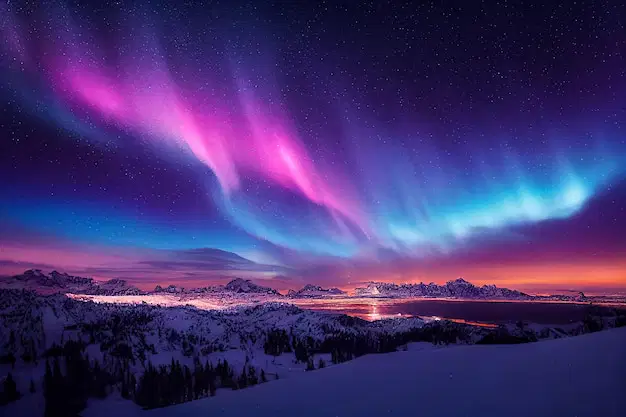
The aurora borealis, or the Northern Lights, are caused by the interaction of solar wind and the _________.
troposphere
stratosphere
mesopshere
ionosphere
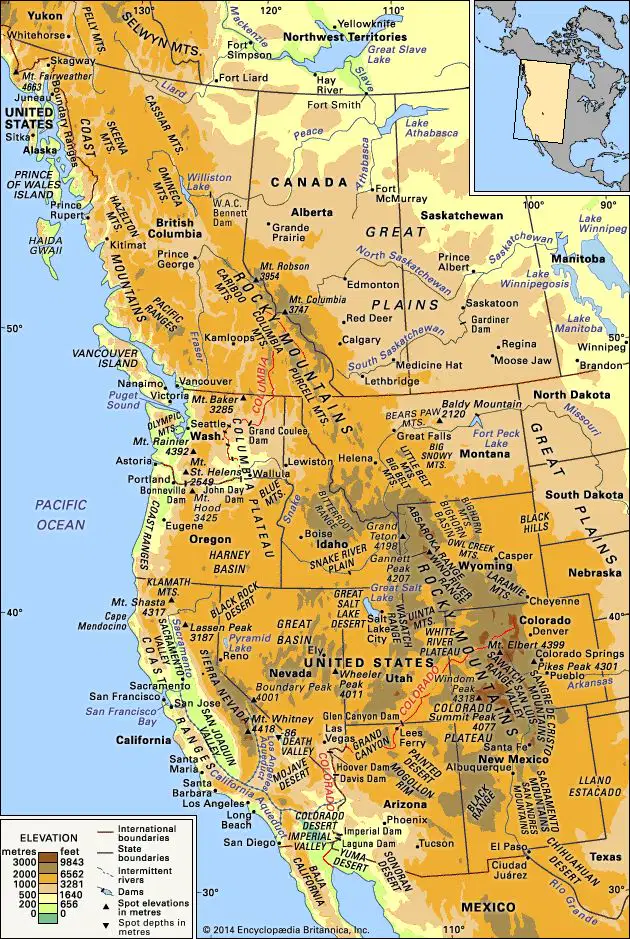
The __________ side of a mountain range is usually dry with little precipitation.
windward
leeward

The most abundant (common) gas in Earth's atmosphere is ________.
carbon dioxide
oxygen
nitrogen
water vapor

The _____________ are responsible for moving most of the weather across the United States.
doldrums
trade winds
prevailing westerlies
polar easterlies
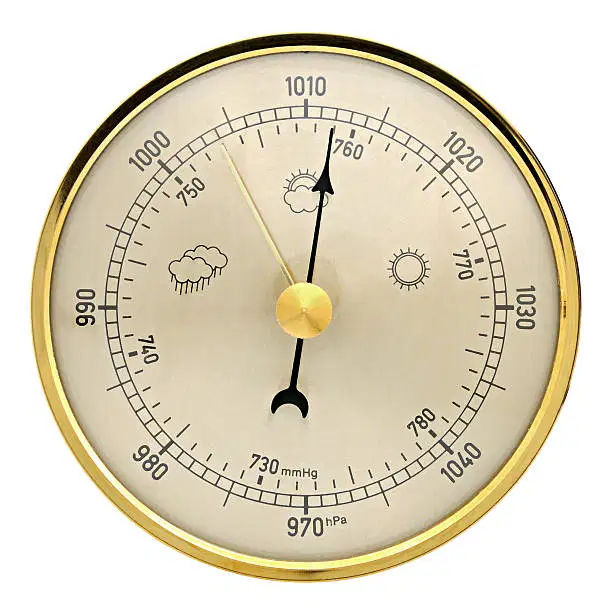
Meteorologists use a ________ to measure air pressure.
barometer
thermometer
psychrometer
anemometer
A cold front is moving through the area! Expect ______.
temperatures to rise and sunshine
temperatures to drop and sunshine
temperatures to rise and rain/snow
temperatures to drop and rain/snow

An air mass that forms over a tropical desert would likely be _____.
warm and humid
cold and humid
warm and dry
cold and dry
_______ air is more dense.
warm
cold
Acid rain can weather statues and buildings made of marble, which contains the mineral ______.
pyrite
halite
diamond
calcite

