Worksheets
Unit 10
Total questions: 48
Worksheet time: 24mins
The diaphragm links the respiratory to the muscular system because...
it is made of skeletal muscle tissue that helps you breath.
it is made of smooth muscle tissue that helps you breath.
it is made of cardiac muscle tissue that helps you breath.
The digestive and respiratory systems pair together to ...
bring carbon dioxide and wastes to cells for diffusion.
bring oxygen and wastes to cells for diffusion.
bring oxygen and nutrients to cells for cellular respiration.
bring carbon dioxide and nutrients to cells for cellular respiration.
The digestive and respiratory rely on the ___ systems to transport needed materials to the cells.
circlatory and excretory
circulatory and muscular
nervous and digestive
nervous and skeletal
The immune system fights diseases. The circulatory system pairs with the immune system because ___.
blood is made in the bones.
plasma carries nutrients.
red blood cells carry oxygen.
white blood cells fight infection.
What tissue type carries information from your brain to the heart telling it to pump blood.
nerve tissue
epithelial tissue
muscle tissue
connective tissue
Why are the lungs, the major organ of the respiratory system, also considered an excretory organ?
They get rid of carbon dioxide, a cellular waste
They get rid of oxygen, a cellular waste
They get rid of urea, a cellular waste
They get rid of salt, a cellular waste
What systems do neurons depend on to be able to conduct cellular respiration (a process that has the key ingredients of oxygen and glucose)?
excretory, digestive, circulatory
musculoskeletal, nervous, respiratory
nervous, excretory, digestive
respiratory, digestive, circulatory
All organ systems have this at its most basic unit.
Cells
Neurons
Tissues
Organs
What body system helps break down food?
Respiratory System
Digestive System
Nervous System
Circulatory System
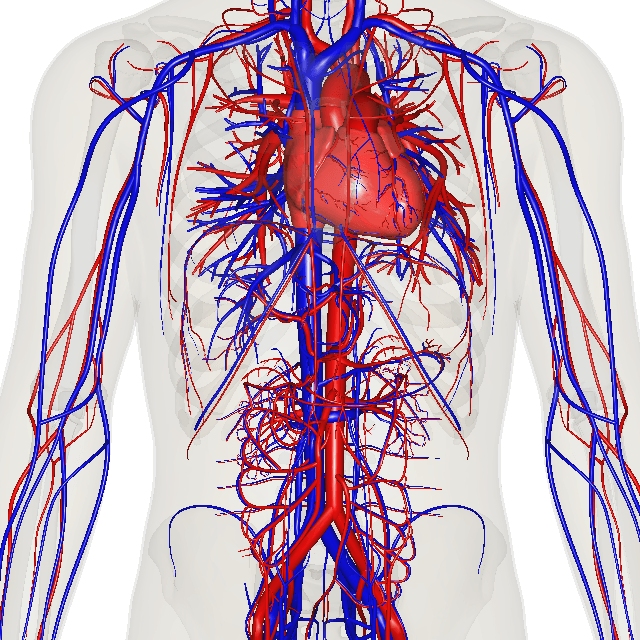
What body system transports nutrients & oxygen to and carbon dioxide and waste from the cells?
Circulatory System
Nervous System
Digestive System
Respiratory System
What body system takes oxygen into the body and gives off carbon dioxide?
Circulatory System
Digestive System
Respiratory System
Nervous System
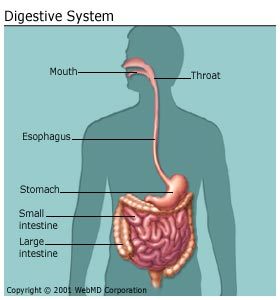
The digestive system is made up of which of the following organs?
Brain, nerves and spinal cord
Lungs, trachea and mouth
Esophagus, stomach, small intestine and large intestine
Mouth, brain, cells and large intestine
The respiratory system consists of what organs?
Mouth, stomach, small intestine, large intestine
Heart, cells, lungs
Brain, spinal cord, nerves
Mouth, nose, trachea, lungs
What organs make up your nervous system?
Mouth, esophagus, stomach
Brain, stomach, small intestine
Brain, spinal cord and nerves
Lungs, diaphragm and stomach
By having the Skeletal System the body...
Is able to move
body is supported
Can protect its major organs
All of these
What is a major role of the endocrine system?
release hormones to control many body functions
digest and absorb food
transport nutrients through the blood
first line of defense from infection

The scenario above is best described by the interaction of what three body systems?
X=respiratory system, Y=circulatory system, Z=reproductive system
X=muscular system, Y=nervous system, Z=immune system
X=circulatory system, Y=immune system, Z=muscular system
X=muscular system, Y=digestive system, Z=circulatory system

A deer hears a predator approaching and begins to run for safety. The deer has primarily engaged what body systems to escape?
nervous, respiratory, and muscular systems
muscular, digestive, and immune systems
respiratory, endocrine, and excretory systems
muscular, reproductive, and circulatory system

The table above lists the types of white blood cells found in humans, indicates how abundant they are, and describes their functions. The two most abundant types of white blood cells may both be involved in a response to which of these?
Injury
Heat
Allergens
Bacterial Infection

The diagram above represents an example of how the body regulates itself. This diagram describes what relationship in body systems?
The circulatory system and nervous system interact to absorb nutrients.
The circulatory system and digestive system interact to defend the body from diseases.
The circulatory system and nervous system interact to maintain homeostasis.
The nervous system and immune system interact for reproduction.
Which scenario below best describes the interaction between the endocrine and reproductive system.
Hormones are produced causing ovulation in a female.
Muscles are contracted, pushing food from the stomach into the small intestine.
A male rabbit sees and chases a female rabbit.
A bird lays her eggs, and protects them from possible predators.
What body function is identified in the process described below?
Respiratory System – mucus in the lungs traps an infectious bacteria cell
Immune System – T-cells attack the bacteria cell
Nervous System – triggers a cough to remove the mucus from the lungs along with the destroyed bacteria
regulation of body temperature
absorption of nutrients
defense
reproduction
Animal body systems often coordinate their actions to carry out specific functions for the whole animal. Which of these correctly describes the interaction of two biological systems for a specific purpose in the human body?


During the final stages of human gestation, receptors for the hormone oxytocin increase on the smooth muscle cells of the uterus. The release of oxytocin during labor stimulates the smooth muscle tissue in the wall of the uterus. The vigorous contraction of the uterine smooth muscle helps push the baby through the birth canal so that delivery can occur. This process involves the interaction of which organ systems?
endocrine and muscular only
endocrine and reproductive only
endocrine, muscular, and reproductive
endocrine, reproductive and excretory
Which of the following functions at the same organizational level as the kidney in the human excretory system?
Skeleton
Epithelial Tissue
Urinary Bladder
A squamous cell
When a person is suddenly cut by a sharp object, a nervous impulse is sent along a sensory neuron to the spinal cord. The impulse is immediately transmitted through motor neurons to produce a response. Which of the following correctly identifies and describes this response?
Conditioned
Learned
Reflex
Voluntary
A person sweats during exercise to maintain a constant internal temperature. This is an example of –
Homeopathic
Stabilization
Equalization
Homeostasis
Which two systems alert the young bird to the danger and help produce the vomit it uses as a defense?
Nervous and Digestive
Integumentary and Muscular
Immune and Respiratory
Excretory and Reproductive

Based on this diagram, which two systems interact to maintain homeostasis?
The nervous and reproductive systems work together to stimulate the production of insulin.
The circulatory and endocrine systems work together to keep blood sugar levels constant.
The excretory and nervous systems work together to convert glycogen into glucose.
The immune and circulatory systems work together to circulate blood through the pancreas.
Which of the following is an example of the endocrine system directly interacting with the nervous system?
The vertebrae protect the spinal cord from injury.
Hormones provide feedback that affect neuron processing.
Sensory receptors in bones send signals about body position to the brain.
The brain sends signals that control the speed at which food moves through the intestines.
Which body systems work together to protect the body from pathogens?
Muscular and Vascular
Digestive and Excretory
Circulatory and Immune
Endocrine and Reproductive
When the level of carbon dioxide in the blood is too high, the excess carbon dioxide reacts with water and produces carbonic acid. The carbonic acid causes the blood pH to become more acidic. When the blood pH becomes too acidic, chemoreceptors in the brain instruct the body to react and maintain homeostasis in blood pH. Which of these responses by the body would eliminate the excess carbon dioxide and help maintain homeostasis in blood pH?
Increasing the body temperature by shivering
Increasing glucose levels in the blood
Breathing more deeply and frequently
Decreasing the heart rate

According to the diagram below, how does the level of organization in biological systems progress?
Increasing in complexity from left to right
Increasing in complexity from right to left
Increasing in complexity from top to bottom
Increasing in complexity from bottom to top