
NEW
Font size
 Worksheets
Types of energy and Conservation of energy
Total questions: 40
Worksheet time: 27mins


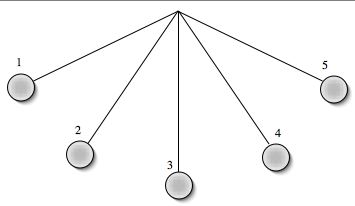

The picture is an example of _____ .

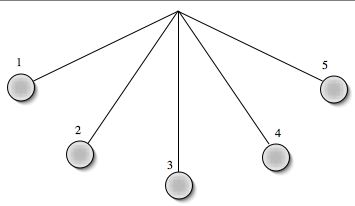
The picture is demonstrating an example of ______ .


What two factors affect an object's kinetic energy?
area and volume
mass and weight
weight and height
mass and speed

Where would this tossed baseball have the least amount of kinetic energy?
point W
point X
point y
point z
Where would this tossed baseball have the greatest amount of kinetic energy?
point W
point X
point y
point z
Increasing an object's mass will increase its kinetic energy.
true
false
Increasing an object's speed will increase its kinetic energy.
false
true

An apple rolling on a table
potential
kinectic

An apple sitting on the edge of the table.
Potential
Kinetic
What kind of energy is stored energy?
Potential
Kinetic
None of the above
All of the above
The faster an object moves, the ________ kinetic energy it has.
more
less
none of the above
same

At which point is potential energy greatest?
W
X
Y
Z

What is the GPE at point A
14 J
12 J
6 J
8 J

What is the KE at point B?
14 J
12 J
6 J
8 J

What is the Total Energy of the system?
14 J
12 J
6 J
8 J

What is the Total Mechanical Energy at point A?
500,000 J
400,000 J
200,000 J
50,000 J
What is the KE at point F?
500,000 J
250,000 J
300,000 J
0 J

What is the KE 1/4th of the way down?
15,000 J
3,750 J
7,500 J
11,250 J
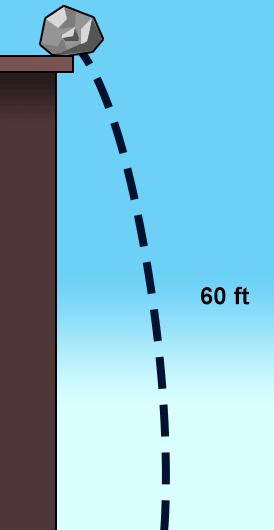
The rock in the picture is pushed over the edge and it begins to fall. Which type of energy conversion is taking place?
mechanical to heat
sound to mechanical
potential to kinetic
kinetic to potential

How does the mass of a bowling ball that has been rolled down the lane affect the kinetic energy?
The kinetic energy does not depend on the mass of the bowling ball.
The kinetic energy is increasing proportional to the mass of the bowling ball.
The kinetic energy is decreasing proportional to the mass of the bowling ball.
The kinetic energy is increasing proportional to the square of the mass of the bowling ball.
When gasoline is burned in a car engine, ________ energy is converted into _________ energy.
heat, chemical
chemical, potential
mechanical, chemical
chemical, mechanical
What form of energy does a compressed spring have?
heat energy
kinetic energy
chemical energy
potential energy
Maria’s father started a fire in the fireplace. He crumpled some paper, lit a match, and soon the logs in the fireplace were burning. In this case, the stored chemical energy in the logs was changed into
electrical energy.
mechanical motion.
heat and light energy.
electrical and heat energy.

The light bulb converts electrical energy into light and _________.
chemical
electromagnetic
heat
nuclear

A drawn bow possesses mechanical energy in the form of _______________. After the arrow is released, the energy is transformed into _________________.
potential energy; mechanical energy
elastic potential energy; kinetic energy
gravitational potential energy; kinetic energy
elastic kinetic energy; mechanical kinetic energy
A pole vaulter runs forward, plants his pole, rises in the air and lands. What point represents his greatest amount of gravitational potential energy?
when he initially lands
as he runs forward to plant the pole
just before he starts to fall to the ground
after take-off as the pole expands and lifts the vaulter toward the bar
The Law of Conservation of Energy states that energy is never __________________ or _________________, only transferred.
created, destroyed
created, subtracted
added, subtracted
destroyed, subtracted

